 Reem's California Mission: Best Mediterranean Food, Za'atar, and Community
Restaurants
Cubs Score Checking: SF Restaurants With Live Game Tickers and Chicago-Style Menus
San Francisco restaurants with live MLB tickers and Chicago-inspired menus let Cubs fans track scores during business dinners without the sports bar atmosphere. Discreet monitoring options balance professional dining with game-day loyalty.
When a Cubs fan on business dinner duty needs to monitor the cubs score while entertaining a client or colleague, San Francisco offers restaurant options that split the difference between dedicated sports bars and ticker-free fine dining. These venues install wall-mounted score displays or encourage table-side MLB app use, often pairing the technology with Chicago-themed menus that nod to Midwest transplants. The challenge lies in confirming ticker visibility from your reserved table, understanding whether audio accompanies the visual feed, and determining if the Chicago-style deep dish or Italian beef meets authenticity standards or leans toward Bay Area reinterpretation. Weeknight dinner meetings demand subtlety—glancing at a distant screen between courses requires less explanation than streaming a game on your phone, yet not every establishment positions monitors where diners seated for conversation can easily see them. Verifying these details before booking prevents the awkward pivot to smartphone checking mid-pitch.
Text Karpo your SF neighborhood, whether you need a quiet or lively atmosphere, and if you want Chicago-style food. We'll send three restaurants with live Cubs score tickers and table visibility, plus one sports-bar private-room option if your dinner group wants full game audio.
Ticker Placement and Table Sightlines
Wall-mounted score tickers vary widely in placement strategy. Some restaurants install them near the bar area, assuming patrons waiting for tables or nursing pre-dinner drinks will appreciate the feed, but dining room sightlines may be obstructed by columns, booth dividers, or angled seating arrangements. Calling ahead to describe your preferred table location—corner booth for privacy, window seat for natural light, or central four-top for equal conversation access—lets hosts confirm whether the ticker remains visible from that spot. Establishments with multiple screens may rotate between different sports feeds, so asking whether MLB coverage is guaranteed during your reservation window prevents surprise basketball or soccer dominance.
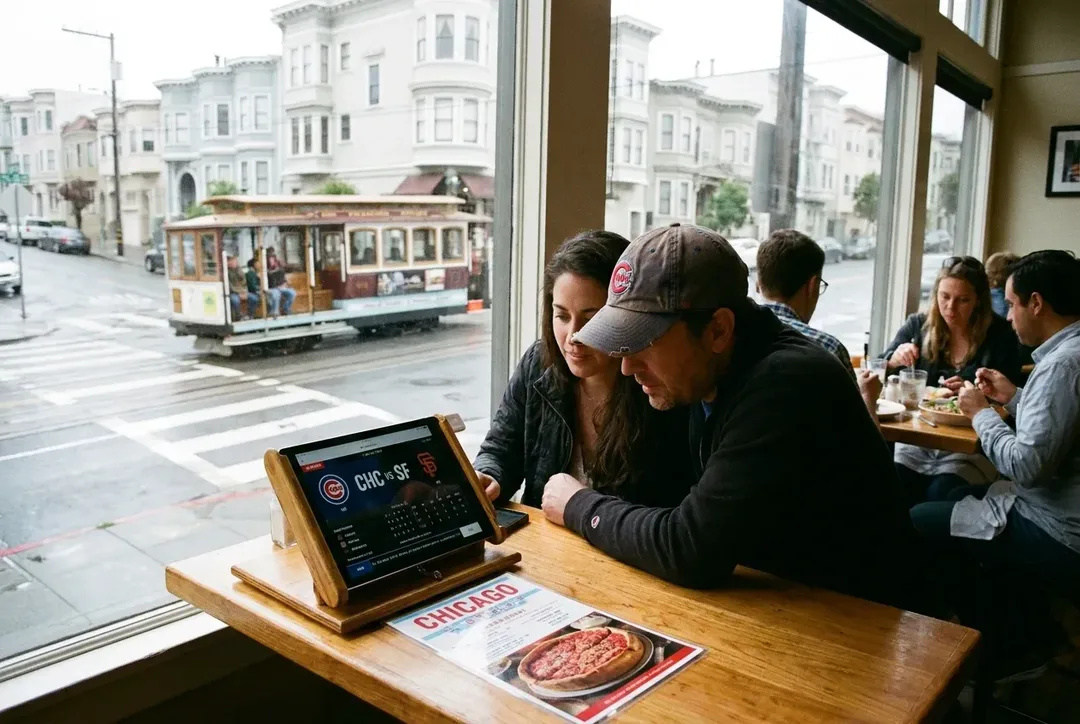
Beginner discreet score-checkers benefit from requesting tables within fifteen feet of the display, a distance that allows quick peripheral glances without turning your back to a client. Some venues dim screens during peak dinner hours to preserve ambiance, a policy worth clarifying when you book. If the restaurant lacks dedicated tickers, inquire whether table-side tablet menus include live sports widgets or whether staff permit phone use for score apps as long as devices remain on silent and face-down between checks. The tradeoff: closer proximity to screens often means noisier bar adjacency, while quieter dining rooms push you farther from visual feeds.
Audio Policies and Ambient Noise Balance
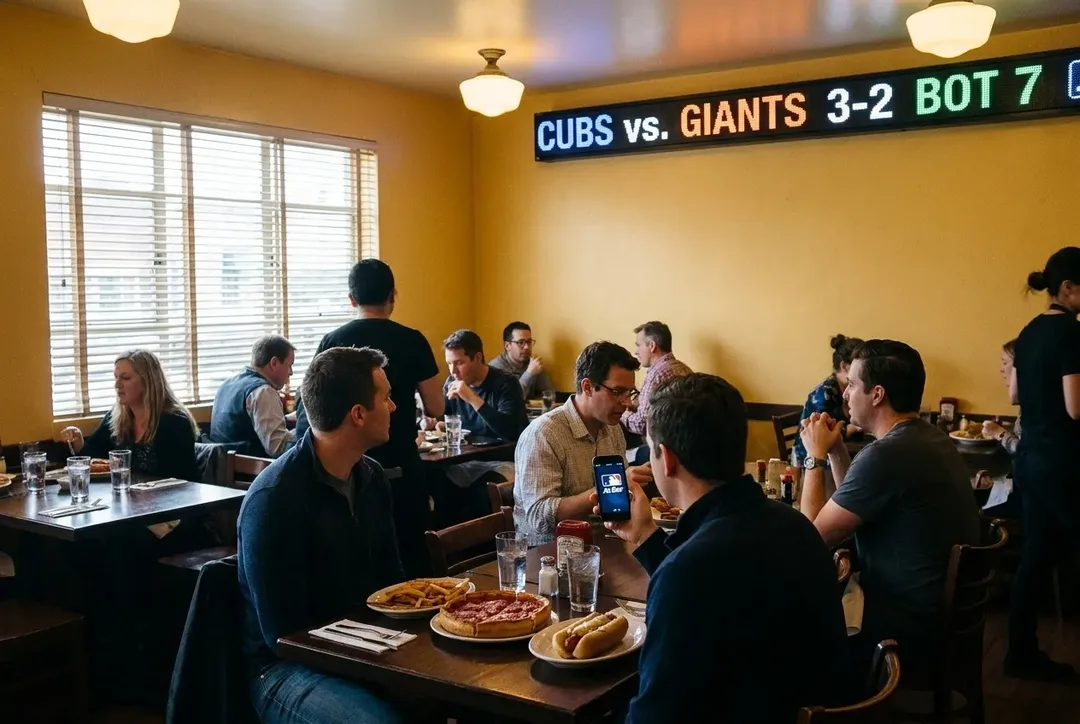
Audio availability transforms passive score-watching into immersive game-following, but few restaurants outside dedicated sports bars pipe play-by-play through dining room speakers. Most establishments reserve sound for bar zones, leaving dining areas with background music or conversational hum. This silence suits business dinners where client discussions take priority, yet it also means missing critical moments—a disputed call, a manager's ejection, or a walk-off celebration—that scores alone don't convey. Asking whether the venue offers closed captioning on ticker feeds provides a middle path, delivering context without disrupting table conversation.
Some restaurants compromise by offering single-ear wireless headsets at the host stand, a solution that lets one diner monitor commentary while maintaining polite engagement. This approach works best when your companion understands your Cubs fandom in advance and you've framed the dinner as a dual-purpose evening. The difficulty escalates if audio suddenly activates for a major play—nearby tables may cheer or groan, pulling your attention from the client's quarterly report recap. Confirming the restaurant's noise policy during playoff weeks versus regular season games helps set expectations; October intensity often prompts venues to raise volumes even in traditionally quiet sections.
Chicago Menu Authenticity Versus Bay Area Adaptation
San Francisco restaurants advertising Chicago-style menus range from faithful reproductions—cornmeal-crusted deep dish with chunky tomato sauce layered above cheese, Italian beef sandwiches dipped in jus with giardiniera—to California hybrids incorporating local ingredients like Dungeness crab or avocado. Authenticity matters when you're using the meal to bond with a Midwest-born client or demonstrate hometown loyalty, but Bay Area adaptations may appeal to colleagues unfamiliar with Chicago's heavier flavor profiles. Asking whether the kitchen imports specific ingredients (Vienna Beef hot dogs, Turano rolls, sport peppers) versus sourcing local equivalents reveals the restaurant's commitment level.
The tradeoff surfaces in portion sizes and preparation speed. Authentic deep dish requires forty-minute bake times, a duration that conflicts with efficient business dinners unless you order it as a shared appetizer arriving mid-meal. Thinner tavern-style pizzas or Chicago hot dogs deliver faster, letting you synchronize food arrival with game innings. Some venues list Chicago items as specials rather than permanent menu fixtures, so confirming availability when you book prevents last-minute menu pivots. If your client prefers lighter California cuisine, choosing a restaurant that offers both Chicago classics and local seafood or salads avoids forcing thematic dining on an uninterested companion.
Reservation Timing and Game Schedule Coordination
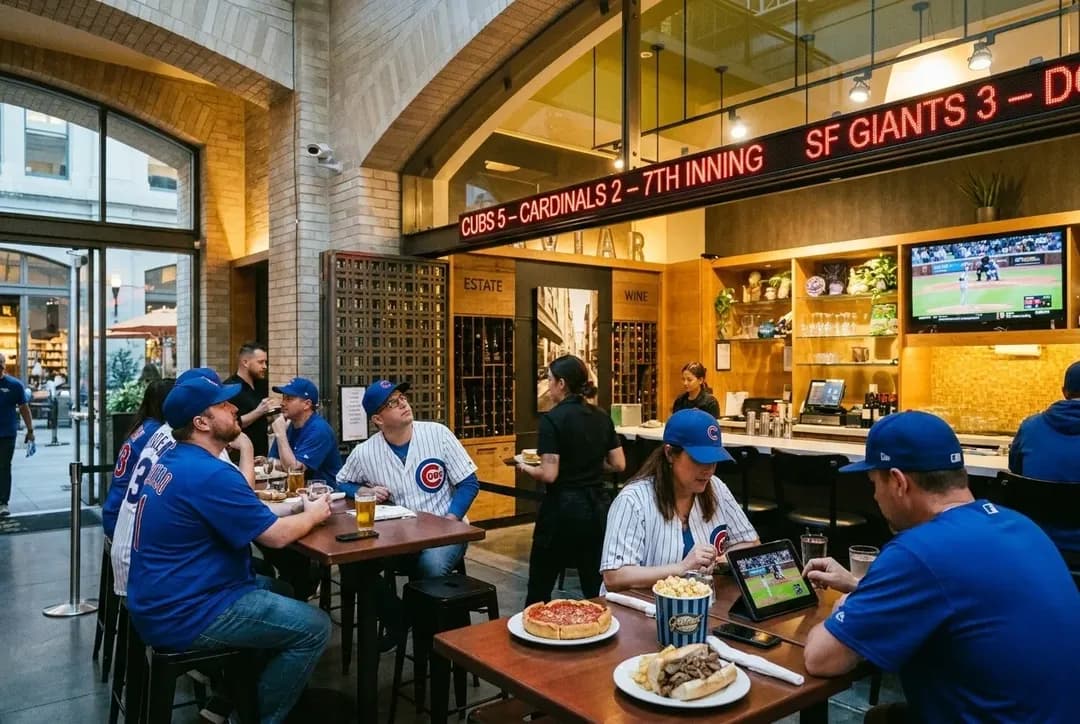
Aligning your dinner reservation with Cubs game timing requires checking first pitch schedules against typical business meal windows. Weeknight games often start at 7:05 PM Central (5:05 PM Pacific), meaning a 6:00 PM San Francisco dinner reservation lets you arrive as the game begins, monitor early innings over appetizers, and track the outcome through dessert if the contest remains close. Later 7:00 PM reservations risk missing the first third of the game unless you arrive early for bar seating, a move that may read as overly casual for formal client dinners. Restaurants with flexible seating policies sometimes accommodate requests to linger at the bar with drinks before transitioning to your table, bridging the gap between game start and reservation time.
West Coast road trips complicate scheduling—when the Cubs play in San Francisco, evening games start at 6:45 PM or 7:15 PM local time, compressing your window. Day games (12:05 PM or 3:05 PM Central starts) finish before dinner, eliminating live monitoring but opening post-game discussion opportunities. Confirming whether the restaurant displays final scores or highlights reels after games conclude helps you decide if a later reservation still serves your purpose. Some venues switch tickers to news or other sports once games end, erasing your conversation hook unless you've captured key moments on your phone.
Backup Strategies and Discreet Monitoring Etiquette
When ticker visibility fails or game coverage shifts unexpectedly, having a backup monitoring strategy preserves your ability to track the cubs score without derailing the dinner. MLB's At Bat app delivers pitch-by-pitch updates via silent notifications, letting you glance at your phone during natural conversation pauses—when your companion visits the restroom, when the server recites specials, or between courses. Positioning your phone face-up beside your water glass rather than in your lap signals transparency; most clients tolerate occasional glances at a visible device more readily than suspecting hidden activity. Framing your interest upfront—"I'm a lifelong Cubs fan and there's a close game tonight; I may check the score once or twice"—sets expectations and often prompts shared sports stories.
The multitasking difficulty lies in maintaining genuine engagement while monitoring scores. Asking your companion about their own sports loyalties or recent travel creates openings to check updates without seeming distracted. Some diners set score thresholds—only checking if the game enters extra innings, if the Cubs trail by one in the ninth, or if a no-hitter reaches the seventh—to limit interruptions. San Francisco's Muni system, accessible via routes throughout the city per SFMTA guidance, means post-dinner transit offers additional monitoring time if the game extends beyond your meal. The decision guide ultimately weighs your Cubs fandom intensity against the business relationship's importance, a balance only you can calibrate for each specific dinner.
Tags: #Cubsfans #businessdining #sportsbars #Chicagofood #livegametracking #MLBscores #restauranttechnology #clientdinners #SanFranciscorestaurants #scoretickers #deepdishpizza #weeknightdining #discreetmonitoring #gameschedules #Midwestcuisine
Sources consulted: Source 1: sf.gov · Source 2: sfmta.com · Source 3: sfpl.org · Source 4: sf.gov
All trademarks are the property of their respective owners.
Ask Karpo first
Ask Karpo to turn this San Francisco idea into a current plan for your date, budget, companion, transit preference, and energy level. Karpo can narrow the route and flag what to verify before you go.
Ask Karpo for more information.
Keep reading
- Reem's California Mission: Best Mediterranean Food, Za'atar, and Community
 Finding Burmese Restaurants Open Near Me: Burma Love in Mission
 Outer Sunset Seafood Near Me: Hook Fish Co's Day-Boat Delights