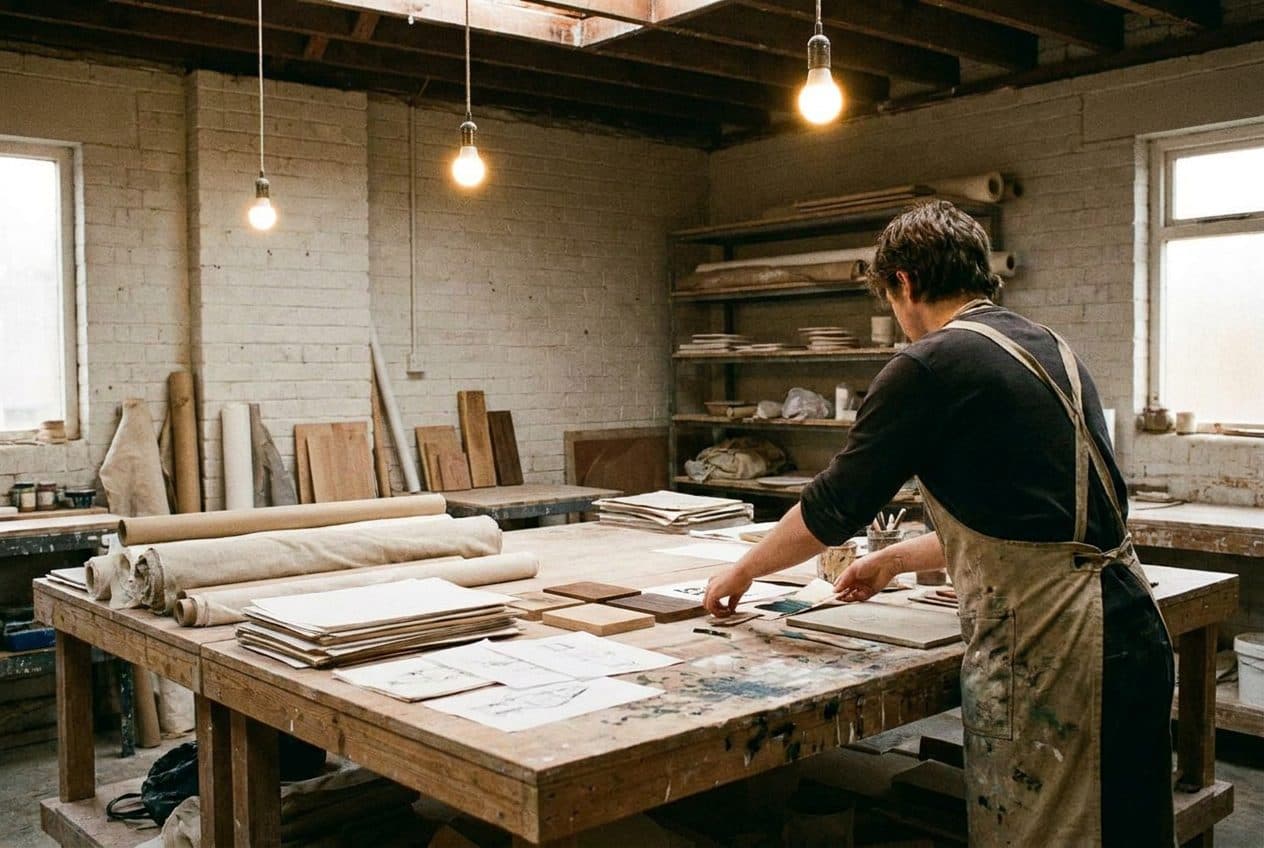
The studio sits on a block where the bass from a passing car competes with the sound of a glass cutter scoring a clean line. Crown Heights has always been a neighborhood of overlapping rhythms, and this particular workshop — tucked into a storefront that once sold fabric — has found its own tempo. Tuesday nights, the room fills without a single Instagram post or flyer in a coffee shop window.
A Storefront That Kept Its Bones
The space still carries traces of its previous life. Bolts of fabric no longer line the walls, but the tin ceiling remains, pressed into geometric patterns that echo the work happening below. Eight stations occupy the main room, each with a light box, a grinding wheel, and a small rack of glass sheets arranged by color. The layout forces a certain intimacy — bodies pivot and reach past one another, and conversations happen whether intended or not. A back room holds the kiln and the soldering stations, separated by a curtain of heavy canvas that smells faintly of flux. The instructor, a ceramicist who pivoted to glass work after a residency at a now-defunct Bed-Stuy collective in the early 2010s, designed the flow herself. She wanted people moving, not planted.
The Tuesday Night Congregation
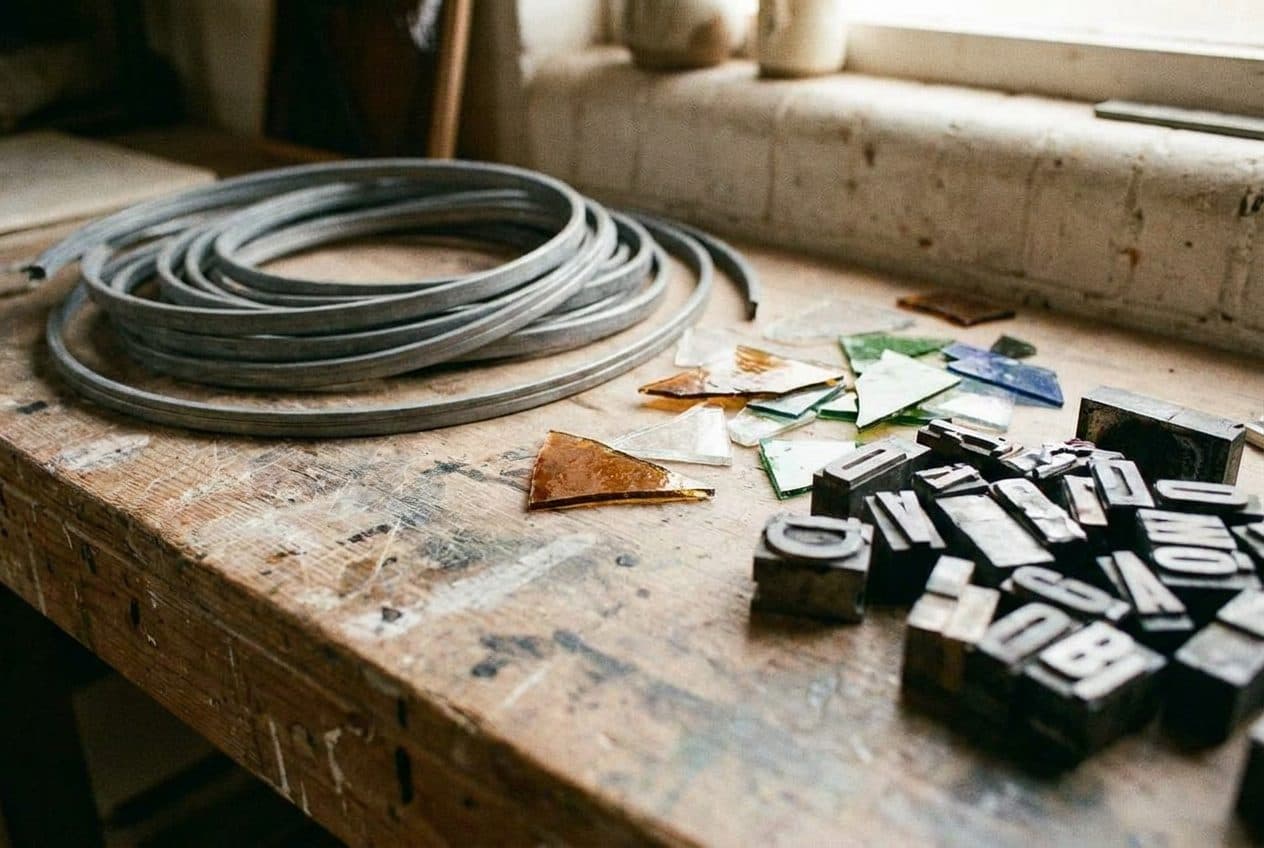
Sessions run from early evening until around nine-thirty, though stragglers often linger past ten. The crowd skews toward people in their late twenties to early forties, a mix that reflects the block itself — longtime residents from the Caribbean community that has anchored this stretch for decades sit alongside recent transplants still learning which bodega stays open latest. The workshop has become a rare shared space, the kind of room where a retired postal worker and a freelance graphic designer might argue about the merits of cathedral glass versus opalescent. Nobody signs up expecting to make friends, but the format makes isolation difficult. Projects require waiting — for the grinder, for the soldering iron to heat — and waiting breeds conversation.
What Gets Made Here
Beginners almost always start with sun-catchers: small, single-pane pieces that require cutting, foiling, and soldering but forgive imprecision. The learning curve is steep enough to feel like an accomplishment, gentle enough to prevent early frustration. Those who return for a second session typically graduate to the studio's signature beginner panel — a simple geometric design, roughly eight by ten inches, featuring three interlocking hexagons. The pattern teaches corner work and the discipline of keeping solder lines even. Most students finish it across two Tuesday nights, leaving with something that actually catches light well when hung in a window. Advanced students work on their own projects, occasionally glancing over to offer unsolicited advice that ranges from genuinely helpful to charmingly wrong.
The Instructor's Quiet Authority
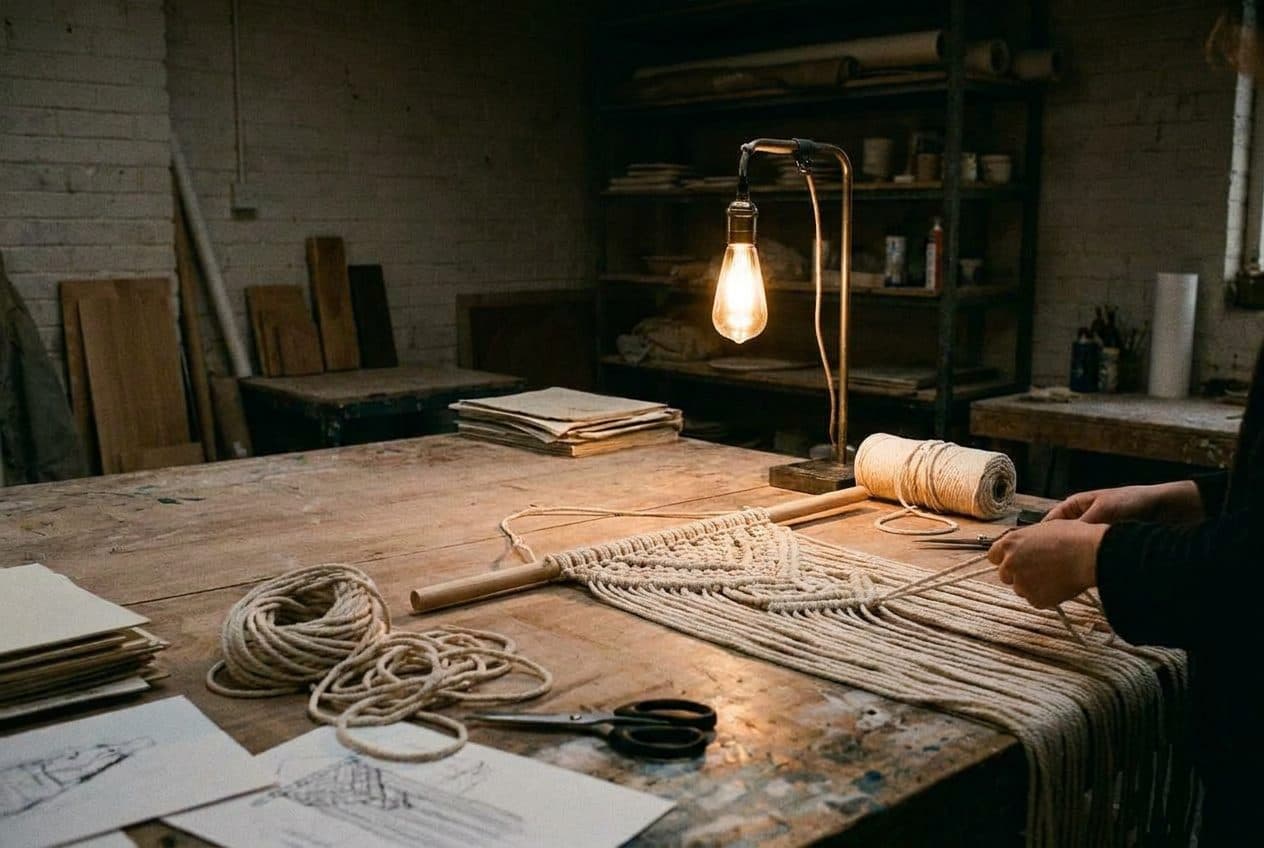
She moves through the room like someone who has taught a thousand nervous hands to hold a glass cutter at the correct angle. Her background in ceramics shows in the way she talks about material — glass, she insists, has moods, and the job is to work with them rather than against them. Her connection to Crown Heights predates the current wave of studios and galleries; she was part of a loose network of artists who shared warehouse space along Atlantic Avenue before rents pushed everyone outward. The workshop emerged from that displacement, a deliberate attempt to create something rooted rather than transient. She knows the block's history, knows which neighbors remember the fabric store, knows whose grandmother used to buy cloth there for church dresses. This knowledge shapes the studio's ethos: the space belongs to the neighborhood first, to the craft second.
The Waitlist That Moves
Word-of-mouth operations develop reputations for scarcity, and this one is no exception. A waitlist exists, maintained in a spiral notebook rather than a digital queue. But the list moves faster than most people expect — turnover happens naturally as students finish projects and life intervenes. Someone gets a new job with Tuesday night obligations. Someone moves to another borough. The instructor estimates that most names clear within three to four weeks, though she warns against treating that as a guarantee. The trick, according to regulars, is to show up in person rather than sending a message. A face registers differently than a name on a screen. The notebook sits on a small table near the entrance, and adding a name takes thirty seconds. Persistence reads as genuine interest, and genuine interest gets rewarded.
Practical Notes
The studio occupies a storefront along one of Crown Heights' main commercial corridors, reachable via the A or C trains with a short walk through blocks lined with hair salons, jerk chicken spots, and the occasional new wine bar. Tuesday sessions begin in the early evening; showing up a few minutes before start time is advisable, as the instructor gives a brief orientation that late arrivals miss. The workshop operates on a per-session fee that falls in the moderate range for Brooklyn craft classes — not cheap, but not the premium pricing of Manhattan equivalents. Materials are included for beginners; advanced students working on larger projects may need to purchase additional glass. Walk-ins are not accommodated; the waitlist is the only path in. The notebook closes once sessions reach capacity, so those serious about attending should plan accordingly.
Why It Holds
Crown Heights has seen waves of change wash through its blocks, each one threatening to dissolve what came before. The stained glass workshop persists because it operates on a different logic — no algorithm, no promotional budget, just a room where people make things with their hands and talk to strangers who become familiar. The light through the front window shifts as evening deepens, catching the edges of half-finished panels and casting colored shadows across the workbenches. Whoever walks in on a Tuesday finds a version of the neighborhood that resists easy categorization, a place where the old and new coexist not through branding but through proximity. The glass, after all, requires patience. So does everything worth keeping.
Tags: #StainedGlassWorkshop #CrownHeightsBrooklyn #BrooklynCreatives #TuesdayNightClass #HandmadeNYC #GlassArt #WordOfMouthOnly #BrooklynWorkshops #CraftCommunity #NYCArtScene #NeighborhoodStudio #SlowCraft #LocalMakers #CreativeWorkshops #BrooklynNights
Sources consulted: timeout.com · nycgo.com · thrillist.com
All trademarks are the property of their respective owners.
Ask Karpo first
Want to know whether there's a spot in an upcoming Tuesday session, what to bring to a first stained glass class, and whether the Crown Heights studio has any walk-in capacity? Ask Karpo for the current schedule and a neighborhood route worth building around.