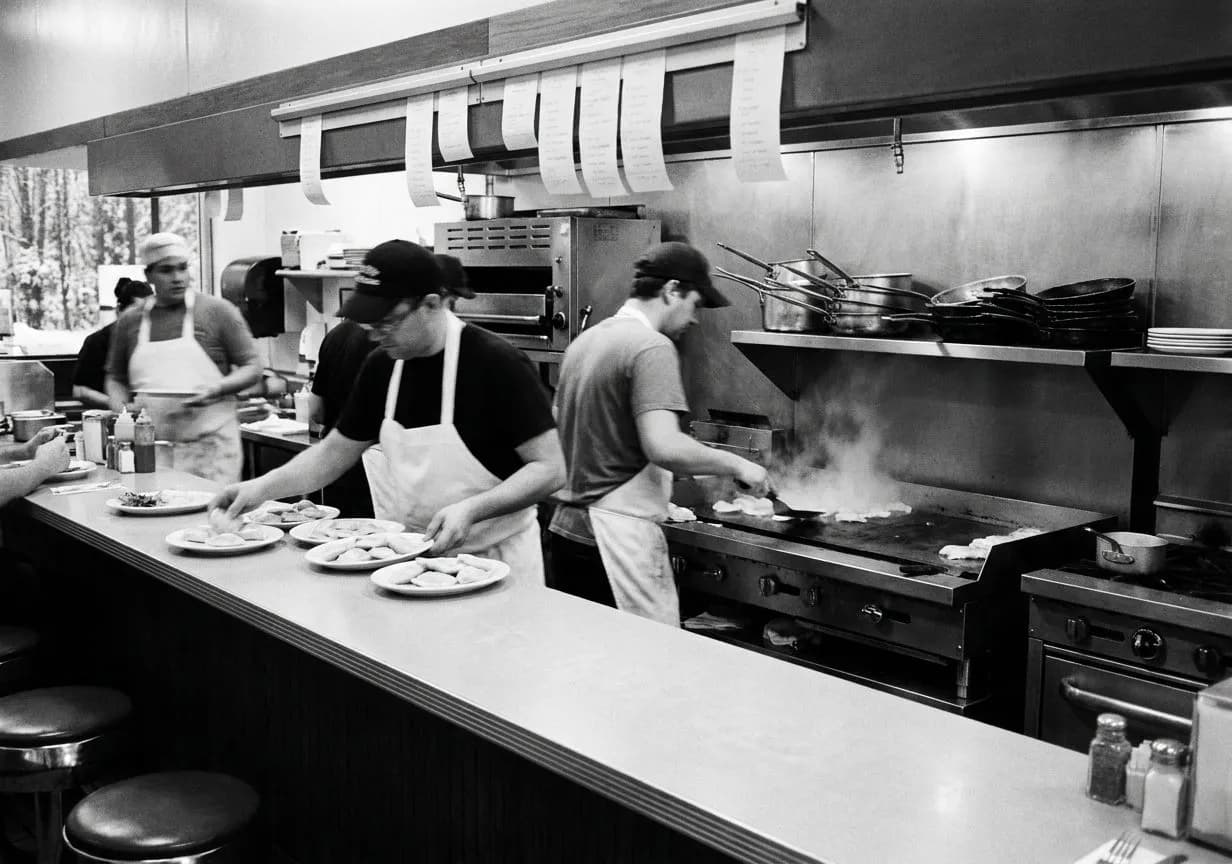
The chrome-pedestal stools at Veselka's Formica counter have hosted more late-night confessions, first-date anxieties, and post-shift decompression sessions than most therapists' offices. This is the front-row perch for one of the city's last true 24-hour diners, a Second Avenue institution where the kitchen never closes and the pierogi recipe hasn't budged since Eisenhower's first term. The counter itself—blonde Formica edged in stainless steel—faces an open kitchen where cooks move with the unhurried precision of people who've plated the same six pierogi fillings ten thousand times. It's a hand-rolled anchor in a neighborhood that forgot what affordable means.
The sightline advantage
Not all counter stools are created equal. The center stool offers the widest sightline into the open kitchen and is positioned directly in front of the pierogi plating station, where cooks work during peak hours. From this vantage, you watch the entire choreography: the flick of tongs lifting kielbasa from the griddle, the ladle of borscht that never drips, the plating of pierogi with a small pool of sour cream and a scattering of caramelized onions. It's dinner and theater, though the performers couldn't care less about your attention.
The counter spans about fifteen stools in total, each one a swivel throne upholstered in red vinyl that's been patched more than once. The chrome pedestals are bolted to the floor—no wobble, no give. Overhead, fluorescent tubes cast the same flat, unforgiving light that has illuminated every shift change, every breakup, every solo late-night meal since the Ford administration. The Formica reflects just enough of that light to make the whole scene feel like a Edward Hopper painting with better carbs.
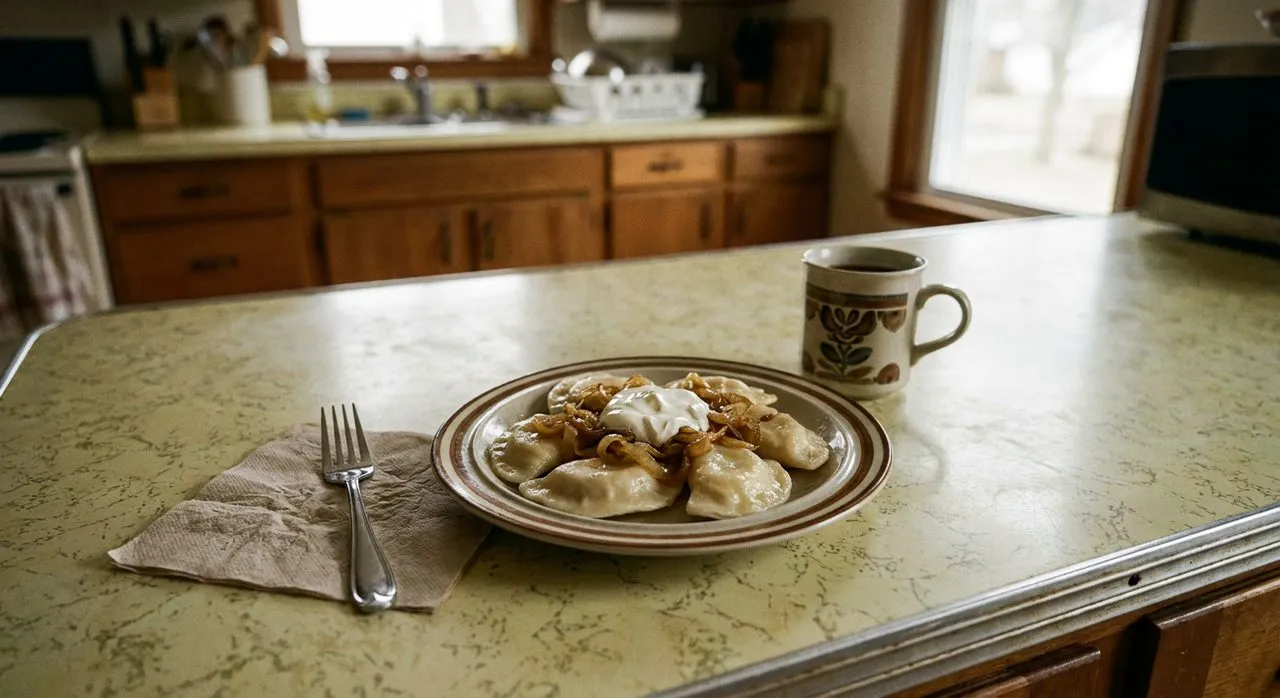
The basement pierogi operation
Veselka's pierogi aren't sourced from some industrial kitchen in New Jersey. They're made by hand in the basement kitchen each morning starting at 6am, where a small team rolls dough, spoons filling, and crimps edges in a process that has remained fundamentally unchanged for seven decades. The potato-cheese filling recipe has remained unchanged since the restaurant's 1955 opening—a stubborn allegiance to consistency that borders on the radical in a city that fetishizes the new.
The menu offers six filling options: potato, cheese, potato-cheese, sauerkraut, meat, and prune. The potato-cheese are the house specialty and the safe bet for first-timers, though the sauerkraut version has a sharp, fermented tang that pairs well with the late-night crowd's preference for bold flavors. Each order comes as a half-dozen dumplings, boiled then pan-fried to achieve that ideal textural contrast—tender interior, crisp-edged exterior. They arrive on an oval plate with a dollop of sour cream and a tangle of onions cooked low and slow until they turn golden and sweet.
The optimal ordering strategy
First-timers should start with the potato-cheese pierogi and a bowl of borscht—the beet soup arrives jewel-toned and earthy, served hot with a side of rye bread. If you're hungry enough to warrant a second round, add the kielbasa platter or the stuffed cabbage, though the pierogi alone are substantial enough to anchor a meal. The menu sprawls across breakfast, lunch, and dinner categories, but the Ukrainian standards are why you're here.
Coffee flows freely, refilled without asking by servers who've mastered the art of attentive invisibility. It's diner coffee—hot, strong, unremarkable in the best way. The check arrives face-down on a small tray, and the total rarely cracks thirty dollars even if you've ordered generously. In a neighborhood where a grain bowl costs eighteen dollars, Veselka's pricing feels like a glitch in the matrix, a relic of an economic reality that no longer governs the East Village.
The late-night ecosystem
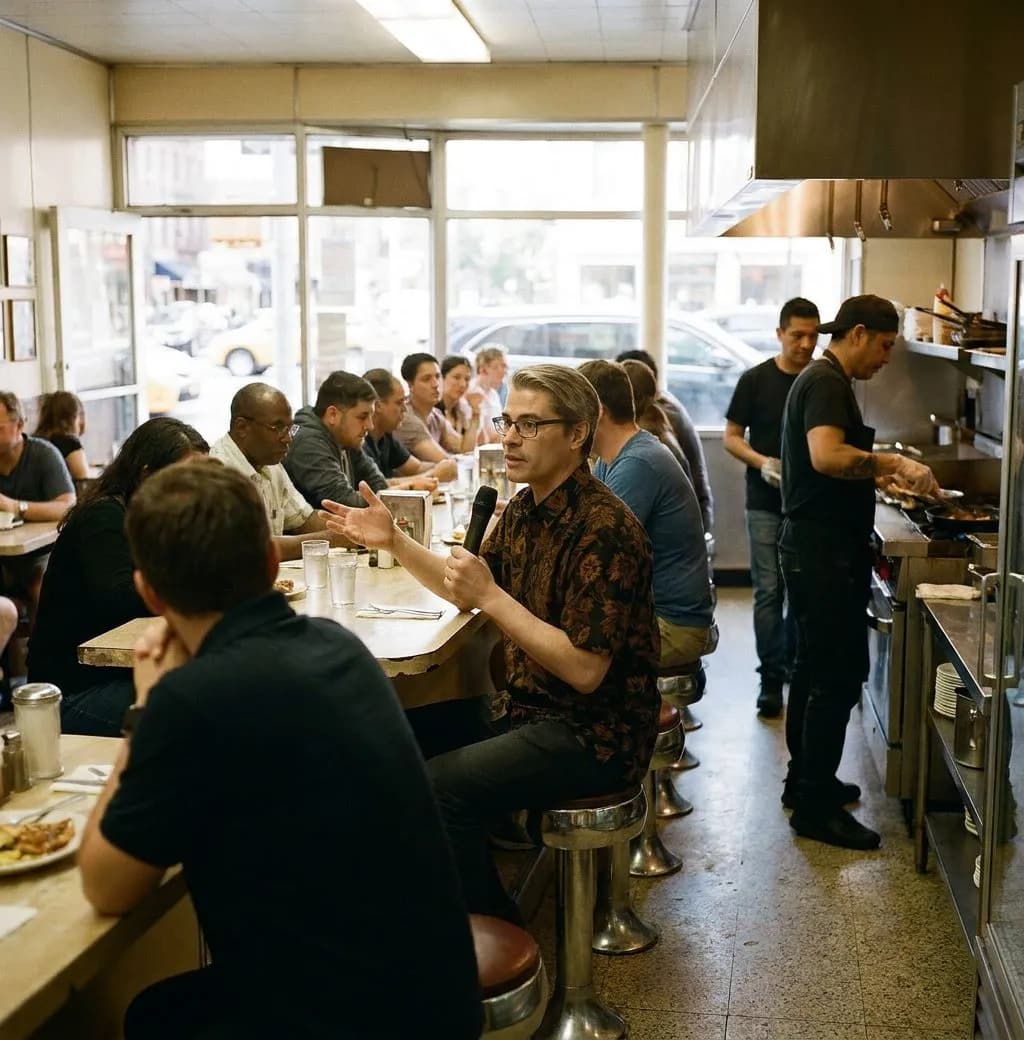
Veselka's 24-hour schedule means it serves every slice of the city's circadian rhythm. The breakfast crowd skews older and quieter. Lunch brings NYU students and neighborhood office workers. Dinner is families and early-date couples. But the counter fills first during the post-bar rush between 2am and 4am on weekends, when regulars say the late-night counter crowd includes the most varied cross-section of East Village residents and visitors you'll find anywhere in the neighborhood.
That's when the counter becomes a social incubator: bartenders still in their blacks, club kids in improbable outfits, insomniacs with laptops, tourists who stumbled in from some ill-advised weekend plans, neighborhood lifers who've been coming here since the Ramones played CBGB down the block. Everyone united by hunger and the fluorescent glow, by the shared understanding that Veselka doesn't judge and doesn't close. The kitchen works the same steady pace at 3am as it does at 3pm, and there's something deeply reassuring about that constancy.
What hasn't changed
The East Village has cycled through punk, then gentrification, then hyper-gentrification, and now something beyond naming—a kind of algorithmic homogenization where every storefront could be anywhere. Veselka has absorbed all of it without flinching. The menu has expanded slightly over the decades (there's now a vegan borscht, a concession to late-2026 dietary politics), but the core offerings remain identical to what was served when the restaurant opened on this corner of Second Avenue and 9th Street.
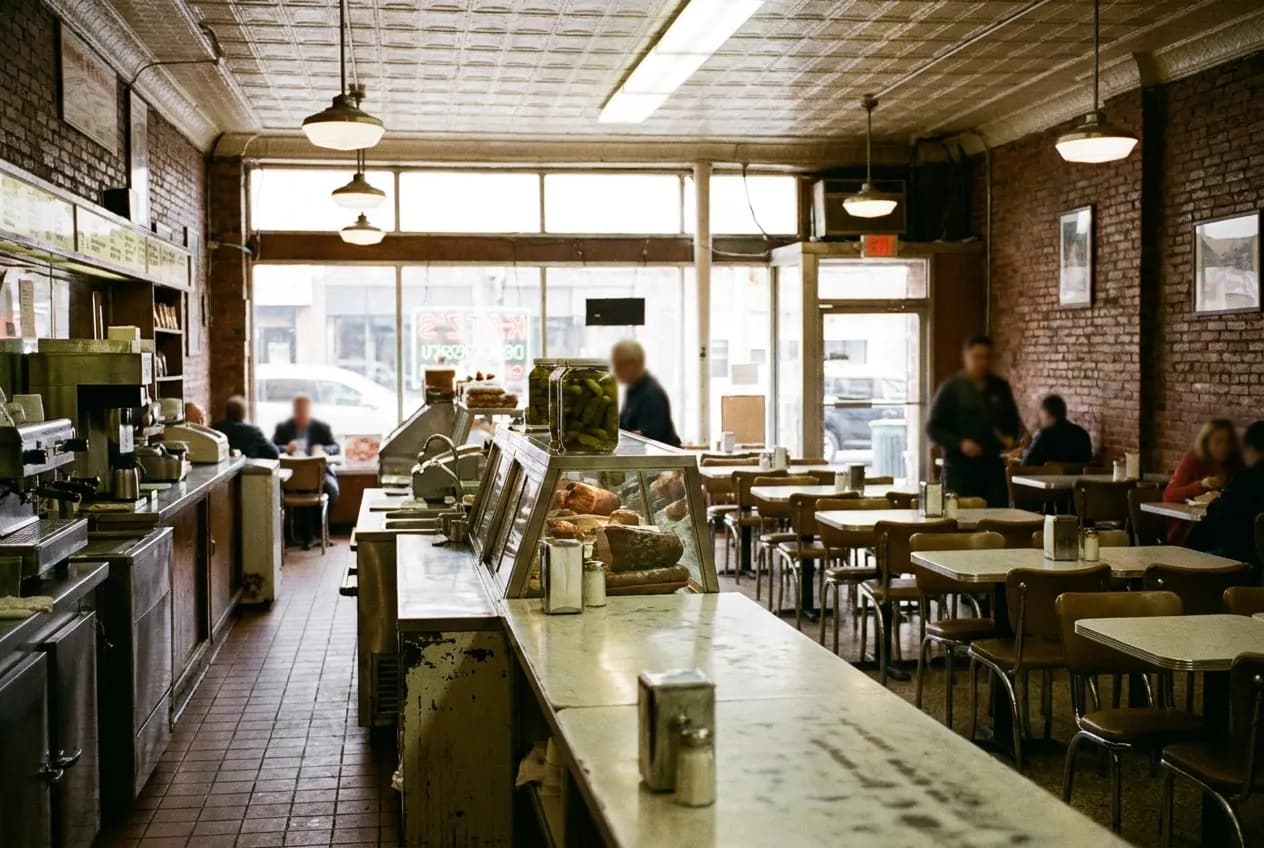
The interior hasn't been renovated so much as maintained—same tile floor, same counter, same booths along the window. It's not nostalgic set-dressing; it's just what happens when a place keeps working and no one sees a reason to change it. The result is a kind of accidental time capsule, a space that feels both dated and timeless, where the passage of decades registers only in the slow accumulation of wear on surfaces that were never precious to begin with.
Why the counter matters
Booths offer privacy and elbow room, but the counter is where Veselka reveals itself. It's the vantage point that transforms a meal into a small spectacle, that makes you complicit in the kitchen's rhythm. You see the cook's hand reach for the ladle before you taste the soup. You watch your pierogi hit the pan, hear the sizzle, smell the butter browning. The transaction becomes transparent, almost intimate, in a way that booth dining never quite achieves.
And in a city that increasingly feels designed to keep you moving, consuming, optimizing, the Veselka counter offers something rarer: permission to sit and stay. To linger over a second cup of coffee. To eavesdrop on the conversation two stools over. To occupy a small square of space without agenda or time limit, anchored by pierogi that taste exactly as they did when your parents—or grandparents—first ordered them. It's not revolutionary. It's better than that. It's reliable.
Practical notes
Veselka is located at 144 Second Avenue at East 9th Street in the East Village. Nearest subway: Astor Place (6) or Second Avenue (F/M) or Delancey Street–Essex Street (F/M/J/Z). The restaurant has historically operated 24 hours, but current hours should be verified directly the counter is first-come, first-served with no reservations. The space is ground-level accessible with a small step at the entrance. Expect cash and card acceptance. Verify current hours directly, though the 24-hour schedule has held since 1954. Bring patience during the post-midnight weekend rush and an appetite sized for generous portions. Street parking is scarce; the subway is your best approach.
Tags: #PullUpAChair #Veselka #EastVillage #NYC #CounterCulture #24HourDiner #Pierogi #UkrainianFood #LateNightEats #SecondAvenue #DinerLife #OpenKitchen #HandmadeFood #NeighborhoodGem #NYCFood
Please drink responsibly. Must be of legal drinking age.
Sources consulted: Veselka (Wikipedia) · Pierogi · East Village · Diners (NY Times) · East Village Business District
All trademarks are the property of their respective owners.