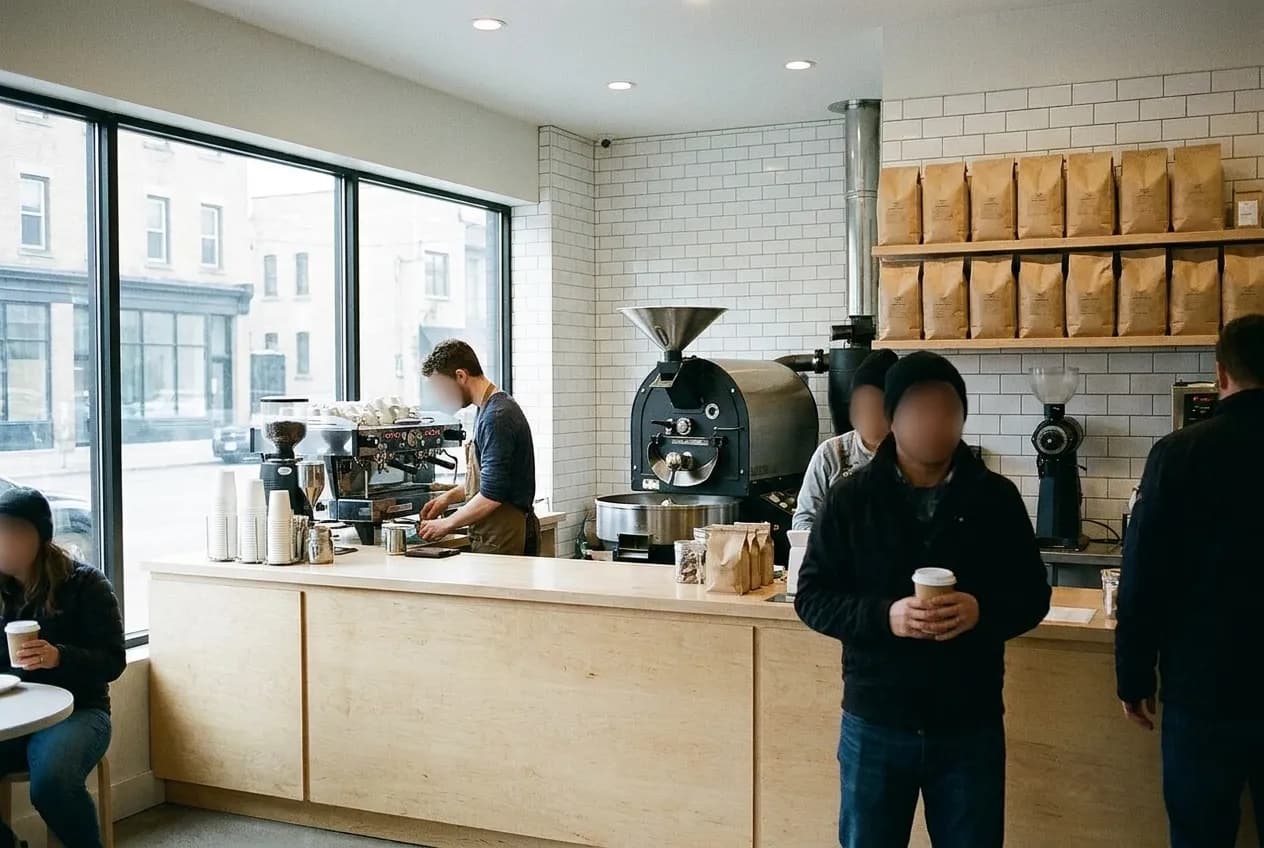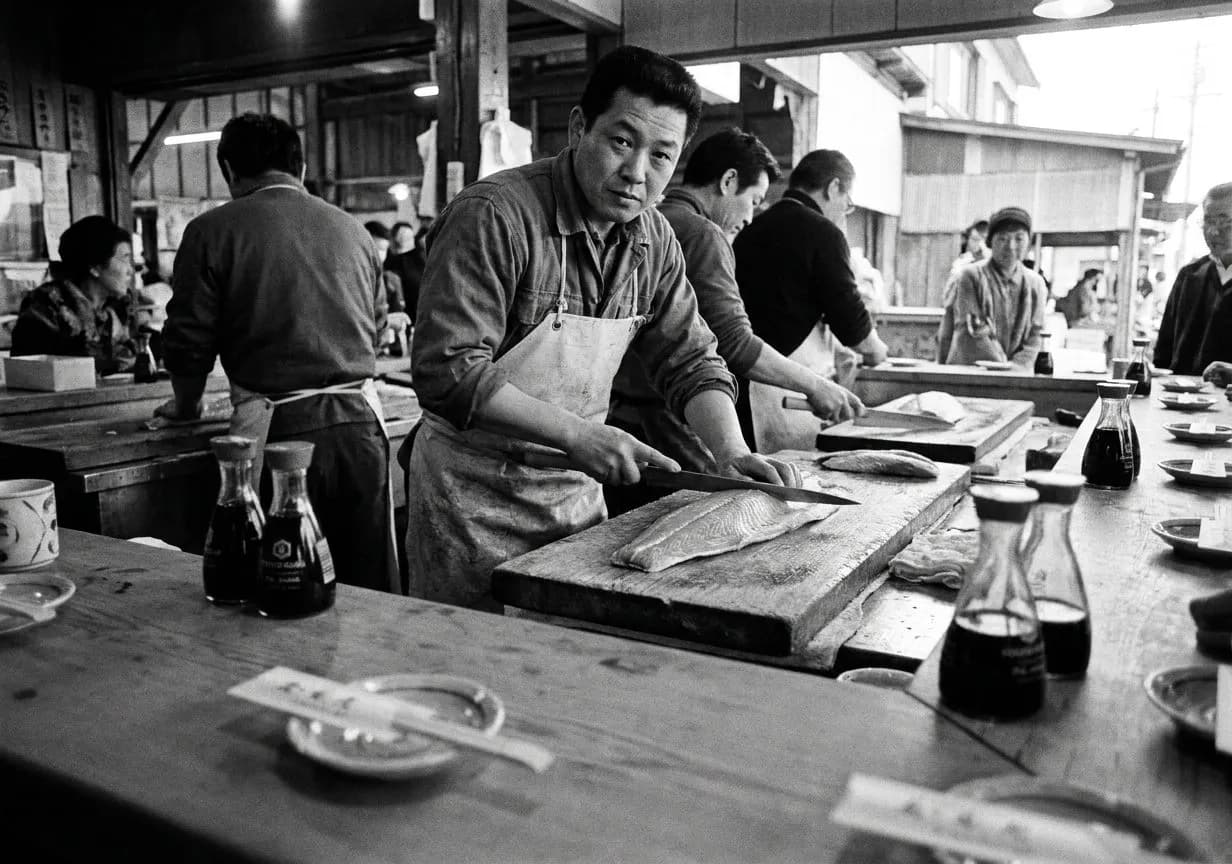
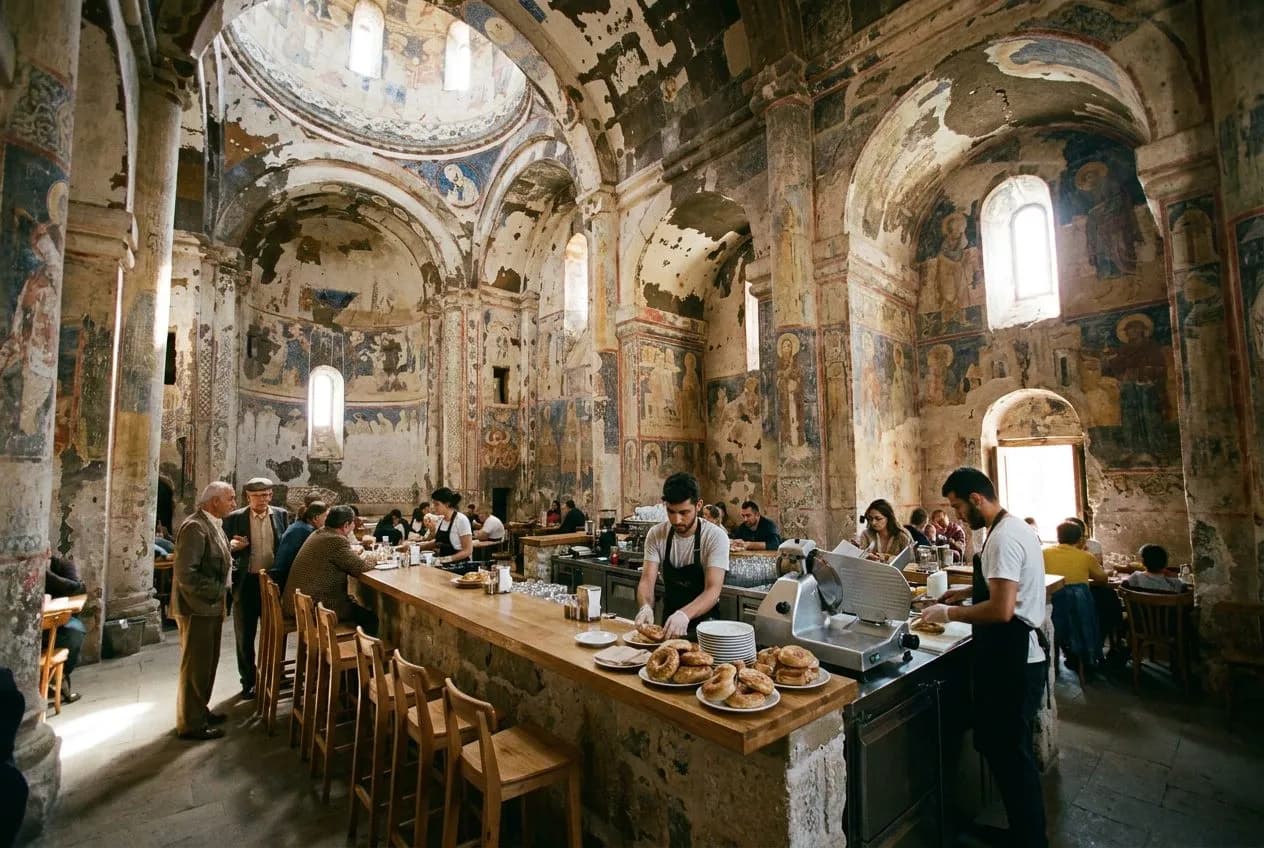
The counter at Russ & Daughters Cafe runs along the north wall, a stretch of polished wood and close quarters where solo diners and couples claim stools within arm's reach of the slicing station. This is not a place to hide behind a menu or scroll in anonymity. The slicer stands just beyond the counter, knife angled against a side of salmon, carving translucent ribbons that pool onto wax paper with a soft, deliberate sound. The everything bagel arrives still radiating warmth from the toaster, its seed crust leaving a trail on the plate. For those who prefer their smoked fish sliced to order and their morning meal staged in full view, these seats deliver.
The counter configuration and sightlines that matter
Counter seats three through five, counting from the Orchard Street end, offer the most direct view of the slicing station. From these stools the knife work unfolds at eye level—the angle of the blade, the pressure applied to separate flesh from skin, the small adjustments that determine whether a slice holds together or tears. Seats one and two face the kitchen pass instead, where plated orders move from cook to server, a view of logistics rather than craft. The slicer misses them entirely.
The difference is not trivial. Positioned at seat four on a late-summer weekday morning, the motions become hypnotic: the long draw of the blade, the pause to assess thickness, the practiced lift that transfers each slice without tearing. The wooden board shows years of knife marks, a topography of previous cuts. Light from the front windows catches the salmon's oily sheen. This is the counter's primary draw, the reason regulars angle for the center stools rather than settle for the ends.
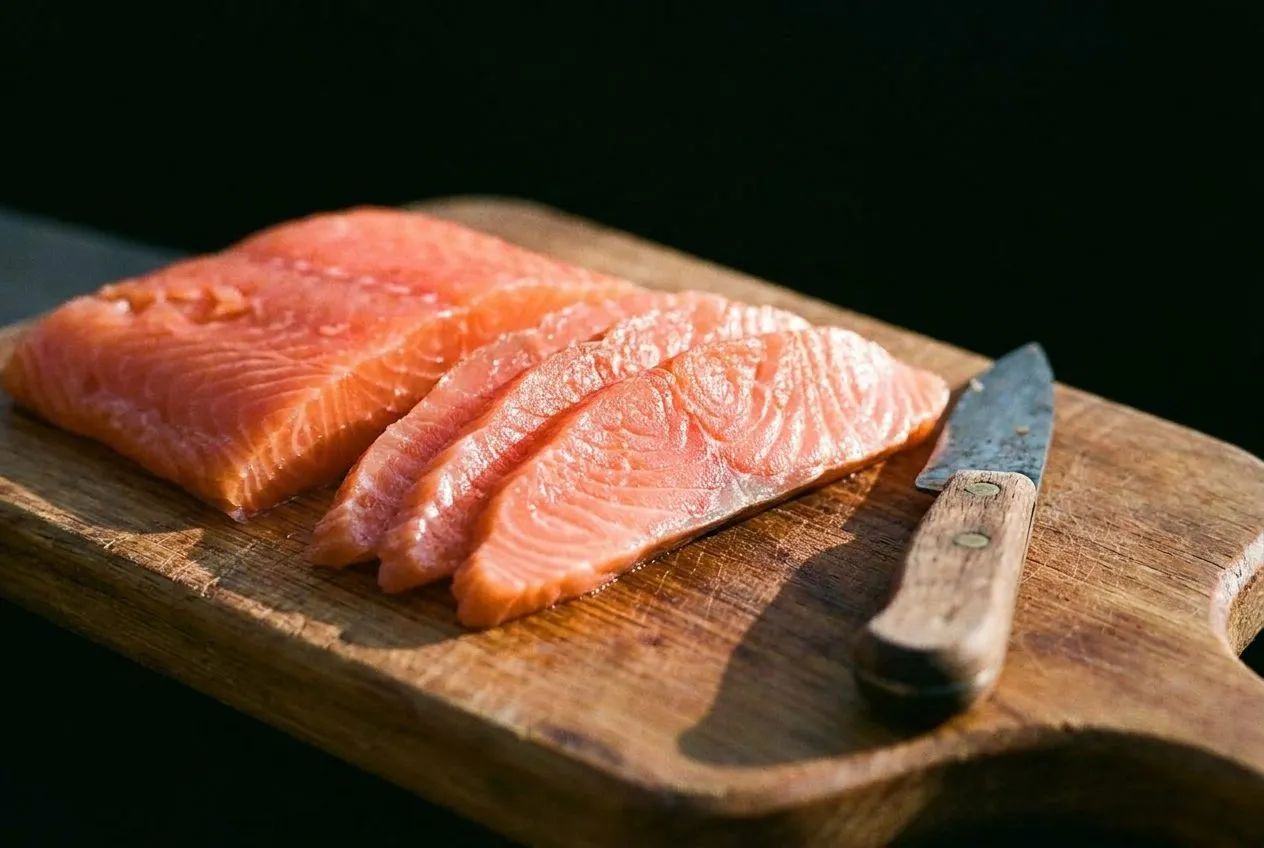
Lox sliced to order, knife technique on display
Each order is sliced fresh, the slicer working from a whole side of Nova or belly lox depending on what the ticket specifies. The knife is long, thin, flexible—designed to follow the contour of the fish rather than fight it. The motion is fluid, a single smooth pull that yields slices thin enough to drape but substantial enough to carry flavor. There is no machine hum, no industrial precision. Just steel on salmon and the faint scent of smoke and salt lifting into the air.
The slicing station doubles as theater and proof of concept. In an era when most nyc restaurants pre-portion to save time, the visible hand-slicing signals a different priority. It slows service slightly, but that hesitation is the point. By late 2026 the ritual feels almost defiant, a small insistence that some things should not be rushed or hidden behind kitchen doors. The slicer does not perform or narrate. The work itself is the show.
Bagels toasted warm, everything seeds scattered
Bagels are toasted to order and arrive warm, the interior still yielding slightly when pressed, the exterior carrying just enough crispness to hold up under a schmear and a stack of lox. Requesting untoasted is common among purists who prefer the bagel's chew unaltered by heat. The everything bagel seeds—sesame, poppy, garlic, onion, salt—are applied generously enough that some always fall onto the plate, a small edible debris field that gets scooped up with a fingertip or left behind depending on one's commitment to completion.
The toasting timing is calibrated to the order flow. A bagel requested at the start of the meal arrives warm but not scalding, ready to accept cold butter or cream cheese without turning them to liquid. On a slower morning the warmth lingers through the first half of the meal. During a weekend rush the bagel may cool slightly by the time the lox lands, though it remains superior to the room-temperature default at most appetizing counters.
The weekday early window and weekend crush
The eight to nine-thirty a.m. window on weekdays is the quietest stretch, when counter seats turn over quickly and waits rarely exceed ten minutes. The dining room hums with low conversation and the clink of flatware on ceramic, but the frantic energy of brunch service has not yet arrived. Light slants through the front windows at a sharp angle. Coffee refills come without flagging. This is the hour for regulars who have sorted out that arriving before the flood means sitting down immediately and watching the slicer work without craning over a neighbor's shoulder.
Weekend brunch service from ten a.m. onward is a different proposition entirely. Waits stretch to thirty or sixty minutes depending on party size and timing, and advance reservations are recommended for anyone unwilling to idle on Orchard Street. The counter fills first because solo diners and couples can be seated quickly, but turnover slows as orders stack and the kitchen hits capacity. By mid-morning the dining room thrums with the particular chaos of a popular weekend spot, voices layered over the hiss of the espresso machine and the rhythmic thunk of bagels hitting the toaster rack.
What the counter seat offers beyond the sightline
Choosing the counter is not only about proximity to the slicing station. It is also about the compression of time and space, the way a solo diner becomes part of the room's rhythm rather than isolated at a table for two. Conversations with neighbors happen or do not, but the possibility lingers. The server knows your order before the second visit. The slicer makes eye contact, a brief acknowledgment that you are watching and that the work is worth watching.
The counter collapses the distance between preparation and consumption in a way that feels increasingly rare. There is no pass window, no swinging kitchen door to mark the boundary. The salmon is cut, plated, and set in front of you within seconds, the board still showing the imprint of the knife. The everything bagel seeds fall onto your plate while the slicer moves on to the next order. The ritual is small, repeatable, and specific—a reminder that even the most visited neighborhood spots can hold moments worth returning for.
Practical notes
Russ & Daughters Cafe is located at 127 Orchard Street on the Lower East Side. The nearest subway is Delancey Street–Essex Street, served by the F, J, M, and Z trains. Street parking is scarce; public garages are available within a few blocks. Hours vary; verify directly before visiting. The cafe is accessed by a short step at the entrance; the interior layout is compact, and restrooms are small. Counter seating is first-come during walk-in hours. Bring cash for tips, though cards are accepted for payment. Weekday early mornings offer the shortest waits and clearest sightlines to the slicing station.
Tags: #RussAndDaughtersCafe #PullUpAChair #LowerEastSide #OrchardStreet #SmokedFish #LoxAndBagels #CounterSeating #NYCRestaurants #AppetizingShop #SlicedToOrder #BreakfastCounter #BagelCulture #EarlyMorningNYC #SummerDining #CityEats
Sources consulted: Lox · Russ & Daughters Official Site · Lower East Side Guide · New York Times Restaurants
All trademarks are the property of their respective owners.