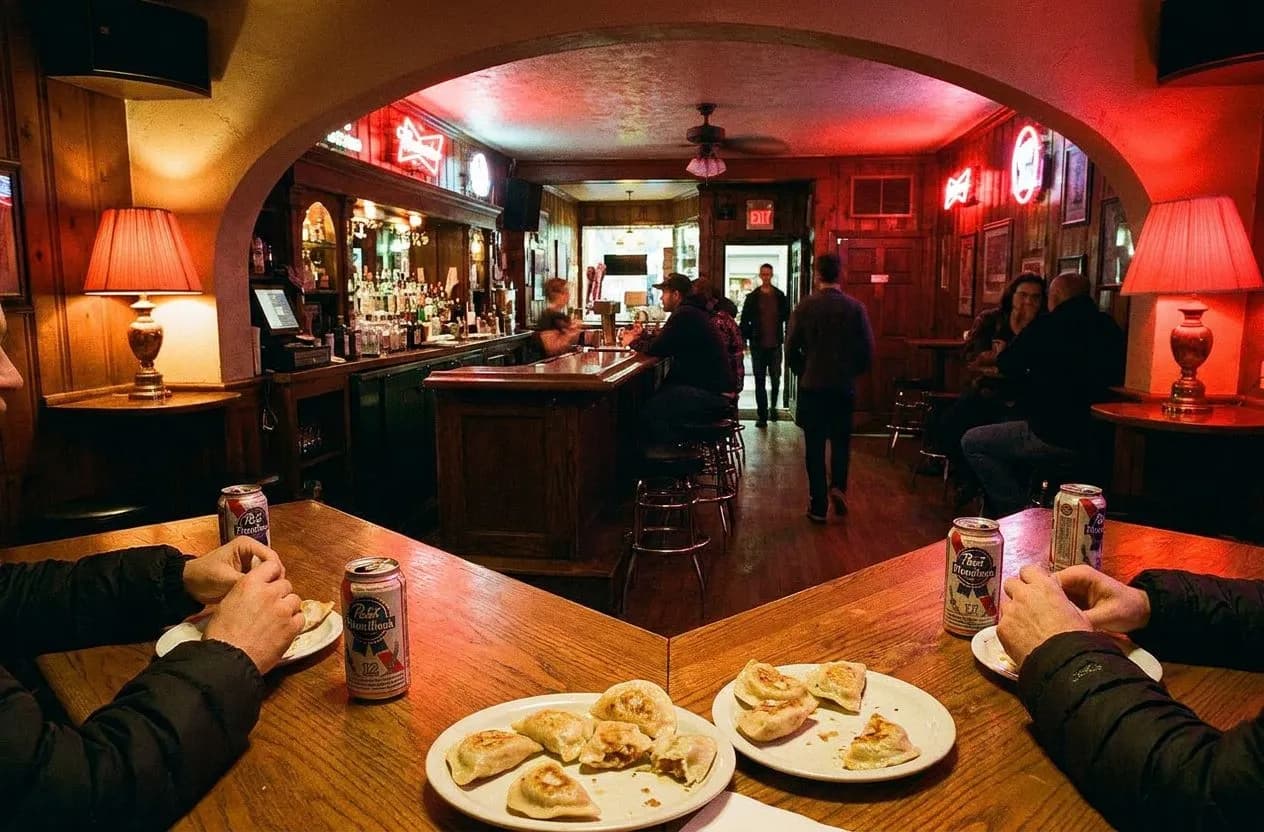
There's a corner table at Sophie's Bar in the East Village where you can watch the entire night unfold in two acts. From this vantage point—wedged at the boundary between the narrow front room and the deeper back space—you see who orders the pierogi, who claims the bar stools first, and who discovers the second room exists. It's a dive bar in the truest sense: dim overhead bulbs, scarred wood tables, paper plates as dinnerware, and a crowd that values cheap beer over craft cocktails. The corner table isn't marked as prime real estate by anything other than its location, but the regulars know. They claim it early and hold it late.
The pierogi protocol
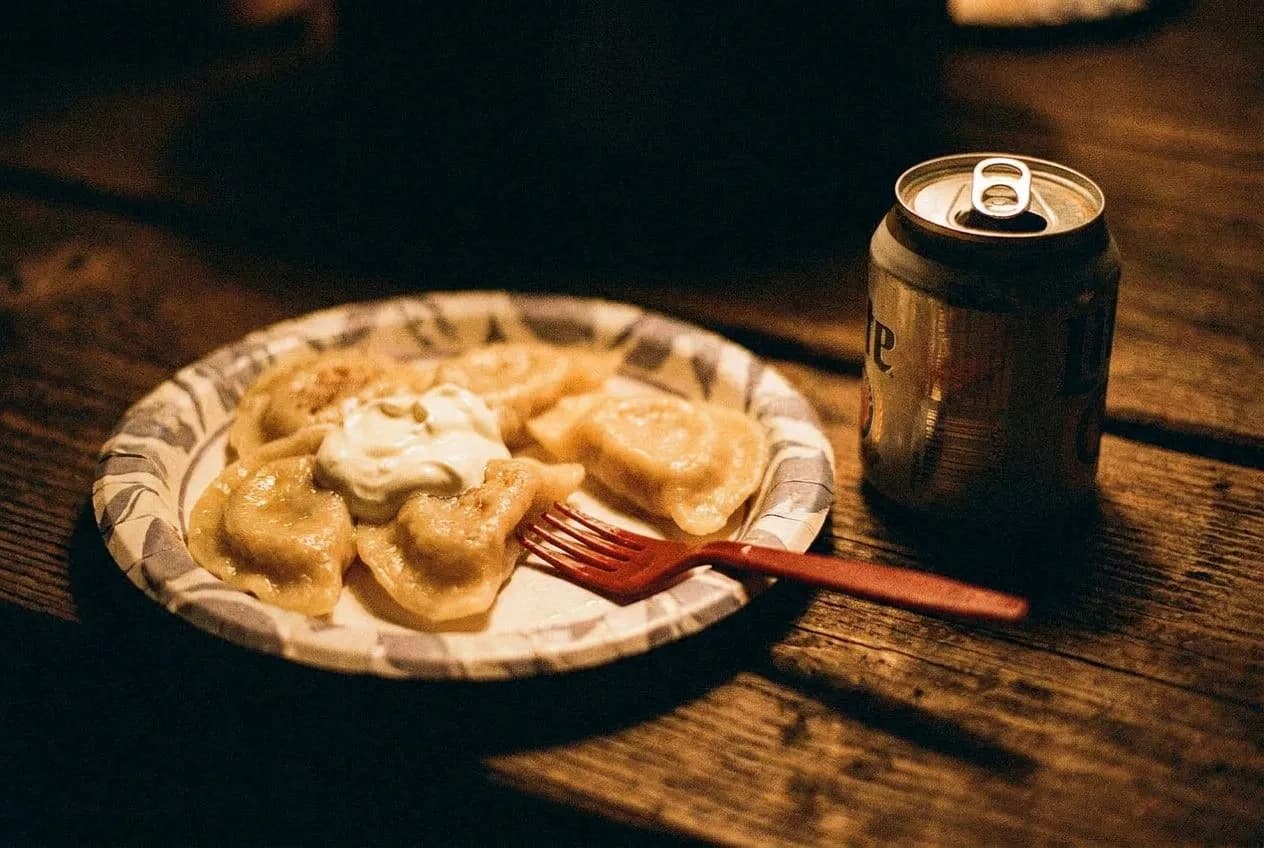
Sophie's offers one food option: pierogi. They arrive on flimsy white paper plates with a small plastic cup of sour cream balanced on the side. The kitchen protocol is straightforward and unhidden. Order at the bar, and the bartender microwaves them to order—a process that takes approximately ninety seconds. You hear the hum of the microwave even from the tables. When the timer beeps, the plate comes out steaming, and you're expected to carry it back to your seat yourself.
The pierogi are best eaten immediately while still hot, before the paper plate starts to wilt under the steam and the filling cools to room temperature. They're potato and cheese, reliably dense, and the sour cream is necessary rather than optional. No one pretends this is artisanal. It's fuel that pairs well with the third or fourth PBR, and it costs less than most cocktail garnishes in neighboring blocks.
There's something endearing about a bar that solves the food question with a single microwave and a case of pierogi. It sets expectations immediately: this is not a place optimizing for Instagram or impressing a first date. It's a place for weekend plans that prioritize conversation over ambiance, where the food exists to extend your drinking stamina rather than to be discussed at length.
The geography of two rooms
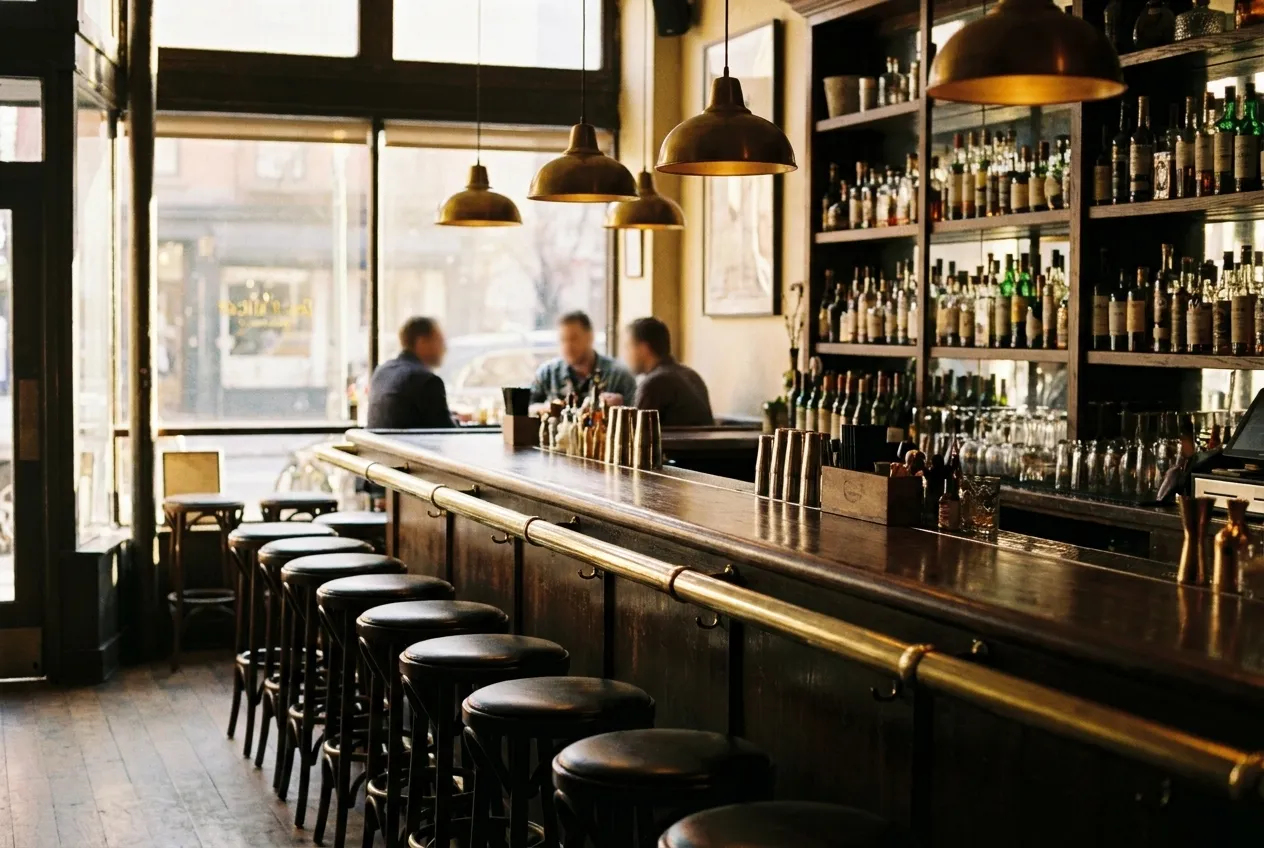
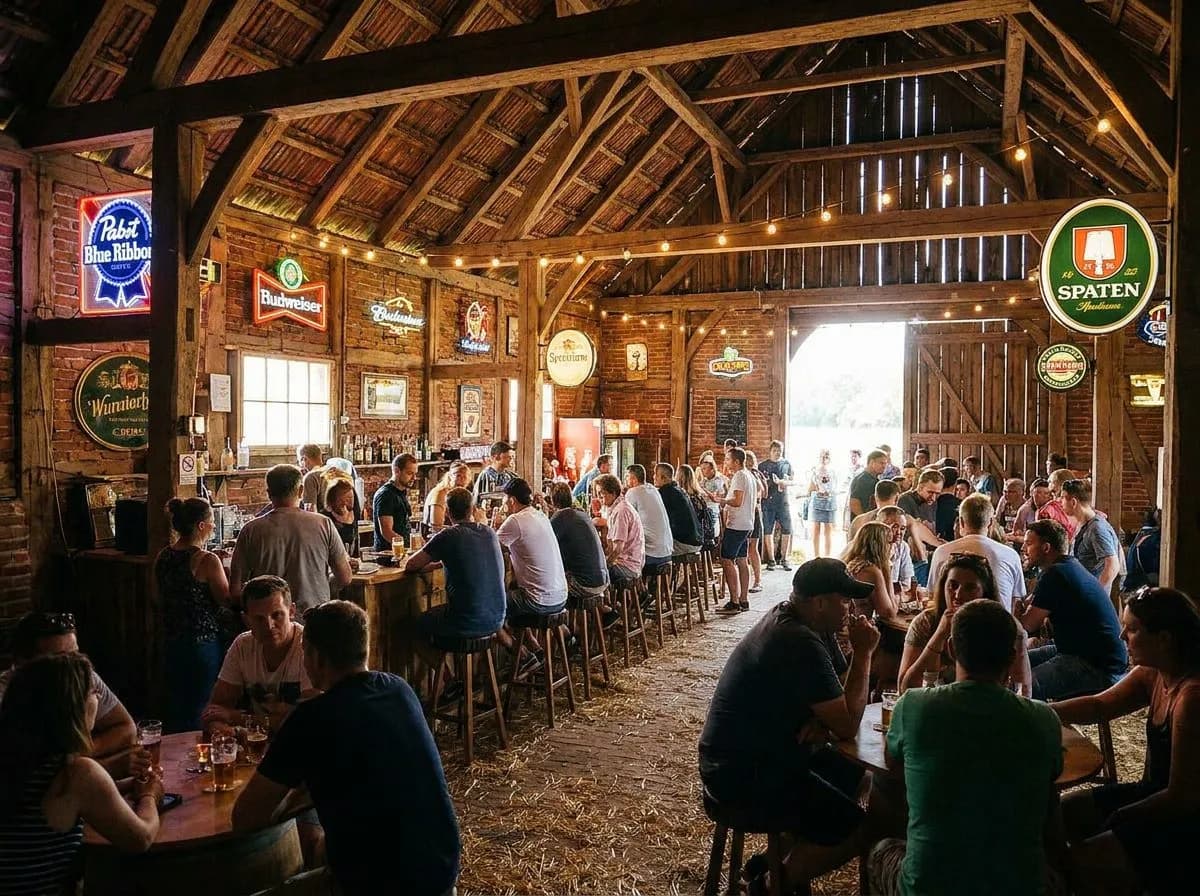
Sophie's is split into two distinct rooms. The front is narrow, dominated by the bar itself and a handful of tables pressed against the wall. The back room is larger, with more tables and slightly better lighting, but it remains largely empty until midnight when the front bar reaches capacity. This isn't a matter of signage or bartender direction—there are no arrows pointing toward overflow seating, no host managing table rotation. People discover the back room organically, usually when they're forced to navigate past the bathrooms and notice the extra space.
Before midnight, the back room feels like a waiting area. A couple might take a table there if the front is packed by ten, but otherwise it sits quiet, lit but uninhabited. After midnight, when bodies are three-deep at the bar and finding a stool becomes competitive, the back room fills gradually. It becomes the spillover zone for groups who want to sit rather than stand, who prioritize conversation volume over proximity to the bartender.
Why the corner table matters
The corner table at the boundary between front and back rooms is considered prime seating by regulars for reasons that become obvious once you sit there. You have a clear sightline to the front door, so you see who's arriving. You can monitor the bar to gauge when the bartender is free. And you can watch the back room's population shift from zero to full as the night progresses. It's the table that lets you observe without being cornered, that offers the illusion of privacy while keeping you connected to the room's energy.
On weekends, this table is typically claimed by ten p.m. and held until closing. Regulars arrive early, stake their claim with a round of beers, and settle in. They know that giving up the corner table means losing it for the night—there's no stepping out for a cigarette and expecting it to remain open. The table accommodates four comfortably, six if everyone's friendly. By eleven, when the bar begins to swell, sitting there feels like a minor victory.
The lighting and the sound
The lighting at Sophie's is dim in that specific dive-bar way: enough to see faces but not enough to read anything smaller than a phone screen without squinting. The bulbs are warm-toned, casting everything in amber. It flatters no one and everyone equally. The back room is slightly brighter, which is one reason people avoid it early—it feels exposed compared to the front's dim huddle.
Sound layers predictably as the night progresses. Early evening, you hear the jukebox clearly—classic rock, punk, the occasional pop outlier. Conversations are distinct. By midnight, voices layer into a steady hum, punctuated by laughter and the clatter of empty cans being cleared. The microwave beeps every few minutes. The back room, even when full, remains quieter than the front; sound doesn't carry well past the boundary where the corner table sits.
Who drinks what
PBR is the most common order at Sophie's, tallboys sold at a price point that makes ordering rounds easy. The beer list is short and unpretentious: domestic lagers, a handful of imports, nothing on tap that requires explanation. Liquor is available but not the draw. This is a beer bar with a jukebox, not a cocktail bar with a concept.
The crowd skews toward neighborhood regulars in their late twenties through early forties, people who've lived in the East Village long enough to have watched rent double but still haven't left. They're bartenders on their nights off, line cooks, artists who work day jobs. Sophie's offers them a space where cheap beer is the norm rather than the exception, where no one judges the paper-plate pierogi, where you can sit at the corner table for three hours without anyone asking if you're ready to close out.
Late winter rhythms
In late winter, as winter stretches into early spring, Sophie's holds its appeal as a refuge from the cold. The front door opens frequently, letting in blasts of February and March air that remind you why you're drinking indoors. The back room, insulated by the front, stays warmer. People peel off layers and drape coats over chair backs, creating soft barriers between tables.
The bar doesn't change with the seasons in any meaningful way—no holiday decorations, no seasonal menu, no themed nights. It remains consistent, which is part of the appeal. You know what you're getting at Sophie's, whether it's January or July. The corner table offers the same view year-round, the pierogi take the same ninety seconds, and the back room fills at the same predictable hour.
Practical notes
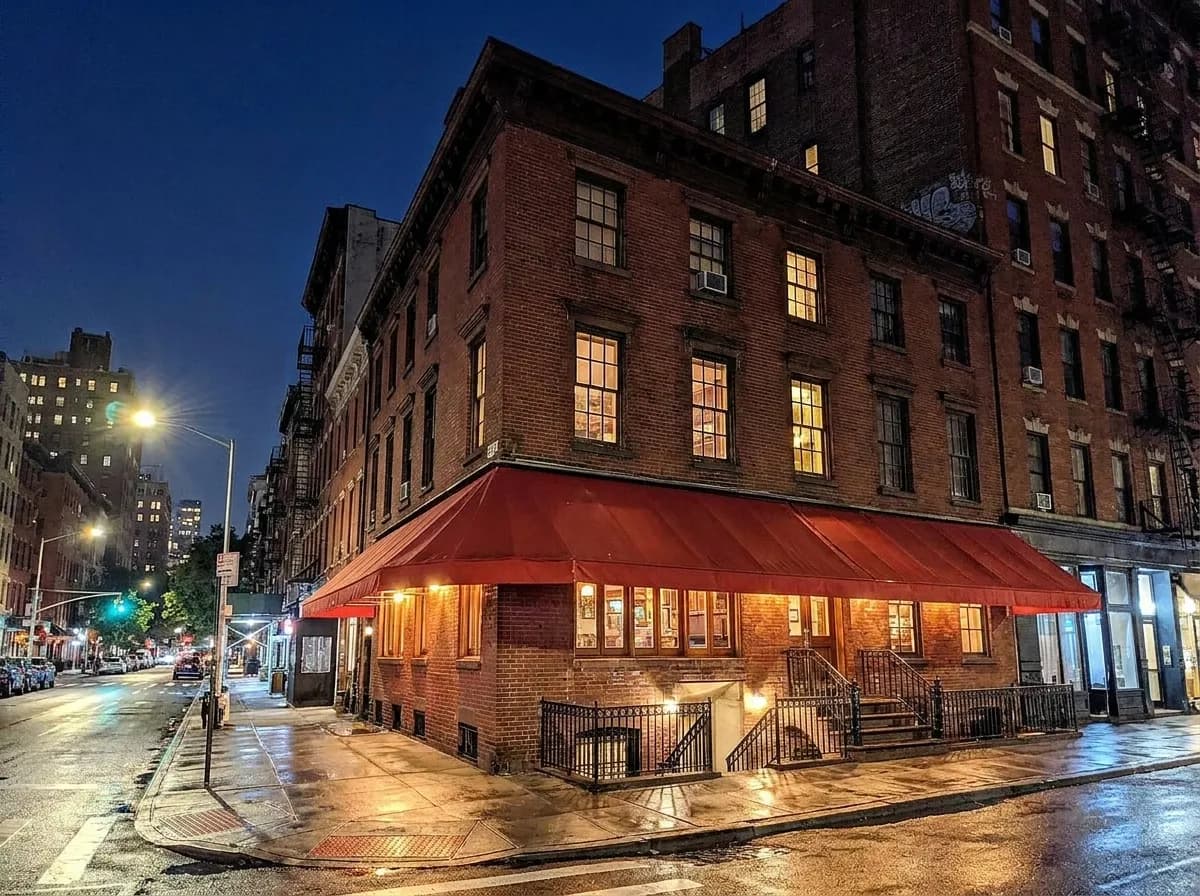
Sophie's Bar is located on East Fifth Street in Manhattan's East Village; the nearest subway stop is Second Avenue (F train) or Astor Place (6 train). Hours vary but generally run late into the night; verify hours directly as schedules shift seasonally. The bar is cash-friendly; an ATM is available inside. Accessibility is limited—there are steps at the entrance and tight quarters throughout. Come prepared to stand if you arrive after eleven on weekends, or aim for early evening if you want the corner table. Pierogi are the only food; nearby late-night spots offer alternatives if you need more substantial fare.
Tags: #PullUpAChair #SophiesBar #EastVillage #NYCDiveBars #PierogiOnPaperPlates #CornerTable #NeighborhoodBars #CheapBeerNYC #LateNightEats #WinterInTheCity #DiveBarChronicles #EastVillageBars #BackRoomSeating #WeekendPlansNYC
Please drink responsibly. Must be of legal drinking age.
Sources consulted: East Village, Manhattan · Pierogi · NYC Official Guide: East Village · Time Out New York: Bars
All trademarks are the property of their respective owners.