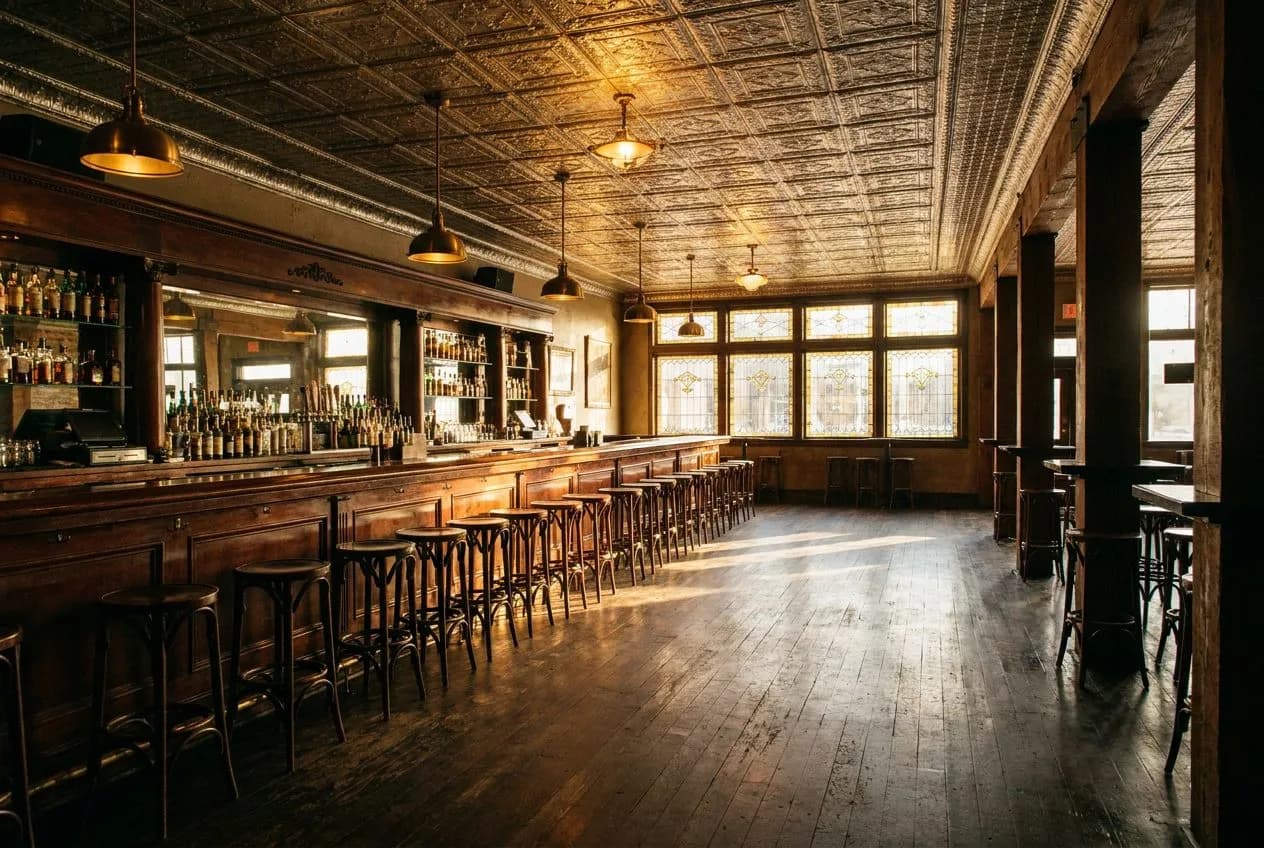
There's a specific stool at Fanelli Café in SoHo that catches the afternoon just right. Not metaphorically—physically, measurably right. The corner seat nearest the Prince Street window sits where nineteenth-century wavy glass refracts late sun upward onto the pressed-tin ceiling, sending ripples of light across the bar's worn mahogany. It's the kind of detail you notice once and return for deliberately, folding it into weekend plans without announcing it as such. The bar has operated since 1847, and the interior feels like it's absorbed every decade without trying to curate them. No Edison bulbs. No reclaimed anything. Just old.
The geography of the corner
The corner stool in question sits at the front of the bar, where Prince Street light enters unobstructed. The window glass is original—genuinely old, not distressed—with that irregular thickness that bends light unexpectedly. On clear afternoons the effect is almost liquid, the ceiling rippling like a pond surface. The mahogany bar curves here, darkened by a century and a half of elbows and spilled beer.
SoHo has changed around Fanelli's in ways that make the bar feel increasingly anachronistic. The neighborhood's cast-iron buildings now house flagship stores and restaurants with month-long reservation books. Fanelli's still has a phone that sometimes gets answered. The pressed-tin ceiling, installed sometime in the late eighteen-hundreds, remains unpainted. The floor is hex tile, chipped in the high-traffic zones, and the back booths are dark wood that's been re-varnished exactly as many times as necessary and no more.
The unspoken reservation system
The corner stool nearest the Prince Street window operates under an informal but ironclad code. A regular—rumored to be a photographer who's lived in the neighborhood since the seventies—arrives at four-fifteen Tuesday through Saturday. The bartenders hold the seat until four-thirty, turning away tourists with a polite gesture toward other available stools. If the regular doesn't appear by half past, the stool is released to general seating. The system has never been posted or announced; it simply is.
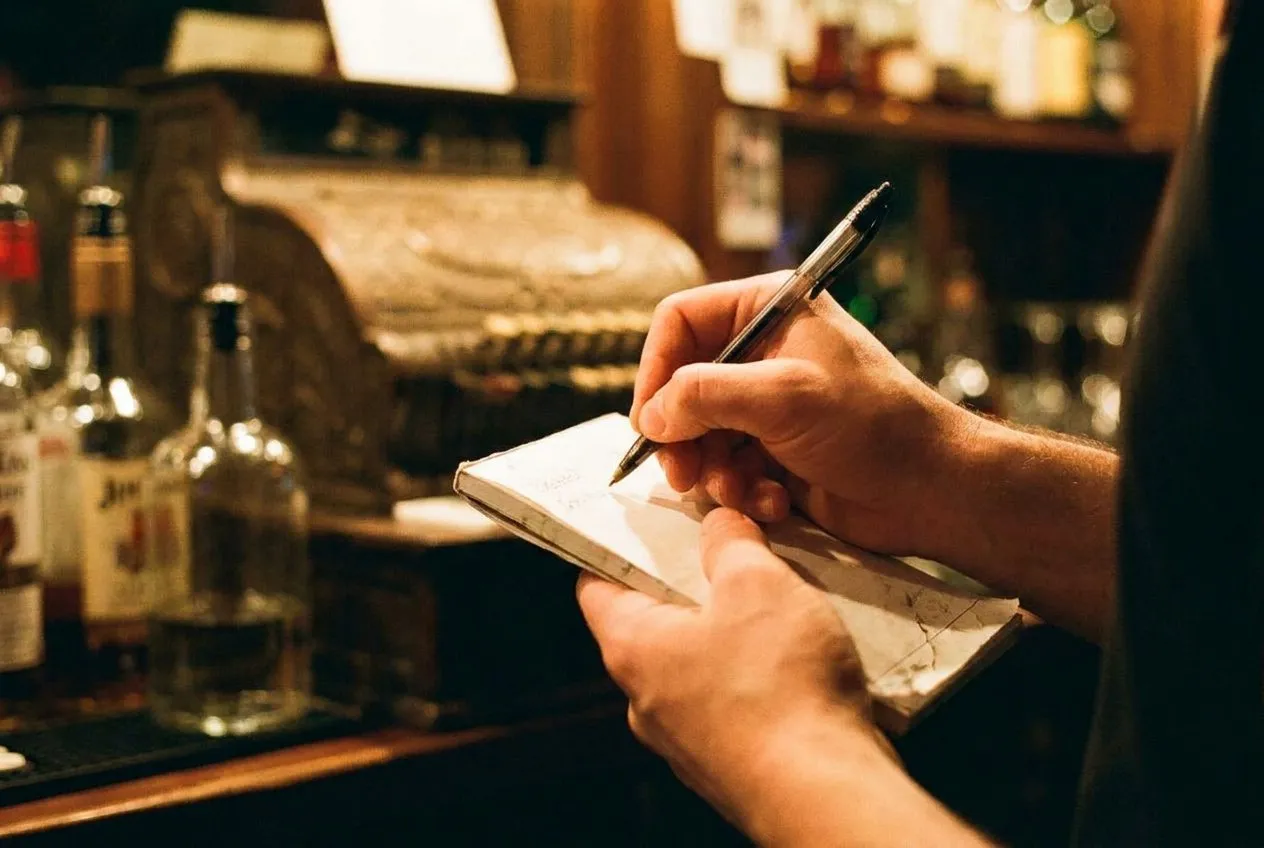
This isn't the kind of place that takes reservations or maintains a host stand. The regulars know each other by silhouette and drink order, not necessarily by name. The bartender—there are three who rotate shifts, all of whom have worked here for at least a decade—can identify a regular by posture before the door fully opens. Orders arrive unprompted. Tabs are hand-written on small paper slips, added in pen, no iPad in sight.
The afternoon window
Timing matters here. The stretch between three and six in the afternoon offers the quietest service and the best light for that corner stool. Lunch has cleared, dinner hasn't started, and the bar settles into a rhythm that feels almost meditative. A handful of regulars. The hiss of the beer tap. The scrape of a stool. After seven the space fills with neighborhood locals—the ones who've held onto rent-stabilized apartments or bought lofts when SoHo still had artists—and the kitchen slows considerably under volume.
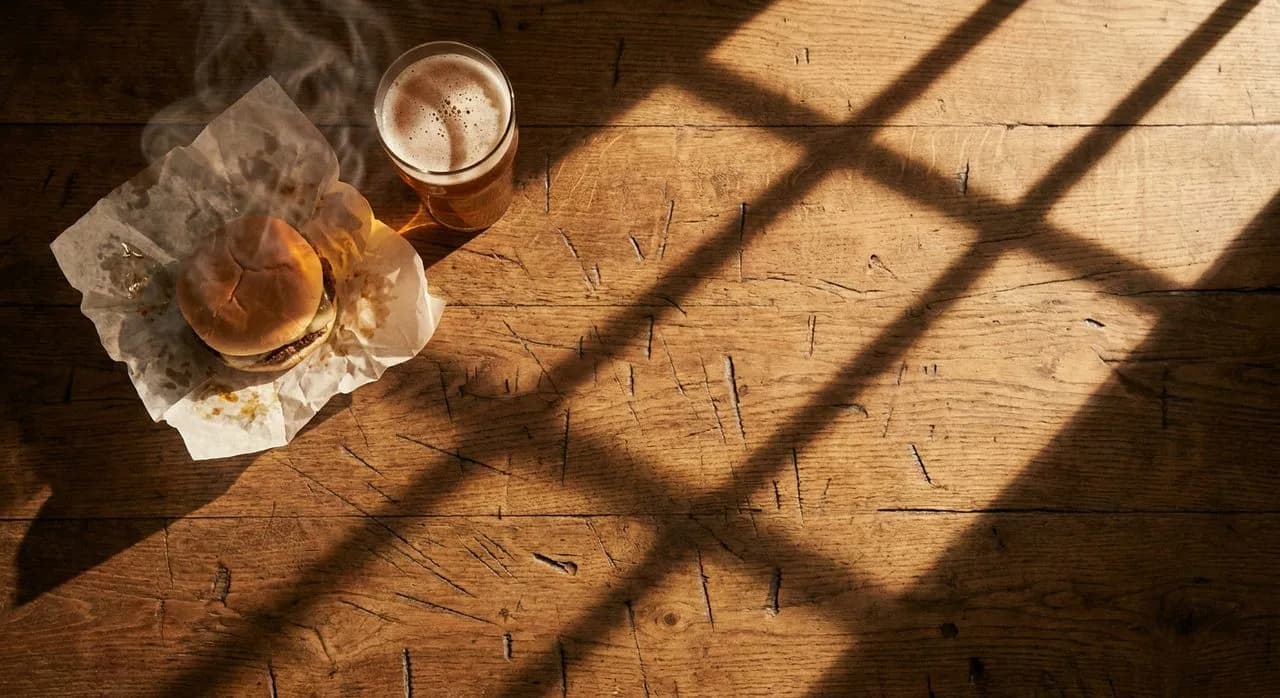
The burger arrives on wax paper without ceremony or garnish. It's a good burger in the way that places with nothing to prove make good burgers: hot, greasy, appropriately salted. The fries come in a pile. There is no aioli. The menu has expanded minimally over the decades, adding a few salads that no one orders and keeping the core offering narrow. This is not a place that reinvents itself seasonally.
The cash-only rule
Fanelli's accepts cash and may have limited payment options; verify current payment policy directly before publishing. The nearest ATM sits two blocks north on Broadway, and bartenders will not hold tabs for ATM runs. This isn't a stance or a branding exercise—it's simply how the register works and has always worked. First-timers often miss the small sign by the door and discover the policy only when settling up. The bartender will point toward Broadway with the same neutral expression they've used for this interaction thousands of times.
The cash policy filters the clientele in subtle ways. It weeds out the casual drop-ins who expect Apple Pay and Amex acceptance as baseline. It rewards the people who read the room, who notice the absence of card readers and payment terminals before ordering. In late 2026, as even street carts have gone digital, the deliberate analog nature of Fanelli's feels less like nostalgia and more like quiet resistance.
What the place is not
Fanelli's does not appear on influencer roundups of nyc restaurants with regularity, which is perhaps its greatest asset. The lighting is too dim for food photography. The space doesn't photograph well—it reads as dingy rather than atmospheric in images, though in person the distinction is clear. There are no house cocktails with clever names. The wine list exists on a laminated card and includes six options.
This is not a destination bar in the contemporary sense. It doesn't have a signature drink or a James Beard-nominated bartender. What it has is continuity. The same hex tile. The same tin ceiling. The same hand-written tabs and wax-paper burgers and corner stool that catches the light just so. In a neighborhood that has turned over its inventory almost entirely since the eighties, that constancy is its own kind of luxury.
Why the corner matters
The corner stool is not objectively superior to any other seat in the bar. It's not more comfortable—the stools are uniformly un-padded. It doesn't offer better access to the bartender or a superior sightline to the door. What it offers is light and angle, the specific convergence of wavy glass and pressed tin and late-afternoon sun that happens in that spot and nowhere else.
Regulars understand this in the way you understand your own apartment's quirks—which floorboard creaks, which burner runs hot. The corner stool is a known quantity in a city that rebuilds itself every fifteen years. It'll be there tomorrow, and the day after, and probably in another decade when the rest of SoHo has turned over again. That's worth claiming a four-fifteen arrival time for. That's worth protecting.
Practical notes
Fanelli Café sits at 94 Prince Street at the corner of Mercer in SoHo. Nearest subway: N/R/W to Prince Street or 6 to Spring Street, both a short walk. Street parking in SoHo is near-impossible; public garages are plentiful and expensive. The bar opens daily—verify hours directly as they shift seasonally. Arrive between 3pm and 6pm for the quietest window and best light at the corner stool. Bring cash; the nearest ATM is two blocks north on Broadway. The space is small, narrow, and not wheelchair accessible. No reservations. No table service for bar seating. Dress code is nonexistent.
Tags: #FanelliCafe #SoHoBars #PullUpAChair #NYCRestaurants #CashOnly #OldNewYork #NeighborhoodBar #SinceTheNineteenthCentury #AfternoonLight #HandWrittenTabs #ClassicBurger #RegularsOnly #QuietHours #WavyGlass #TimelessNYC
Please drink responsibly. Must be of legal drinking age.
Sources consulted: Fanelli Café - Wikipedia · SoHo, Manhattan · NYC Tourism - SoHo · New York Times - NY Region
All trademarks are the property of their respective owners.