Some bars offer menus the size of magazines. McSorley's Old Ale House on East 7th Street offers two words: light or dark. The ale arrives in pairs—two mugs, always—and the choice ends there. The corner stool nearest the front window holds none of the glamour of a banquette or the conviviality of the bar rail, but it commands something better: a sightline that takes in both the historic potbelly stove and the front door in a single sweep. Regulars who arrive before 3pm on weekdays know this. They also know not to explain it.
The geometry of the stool
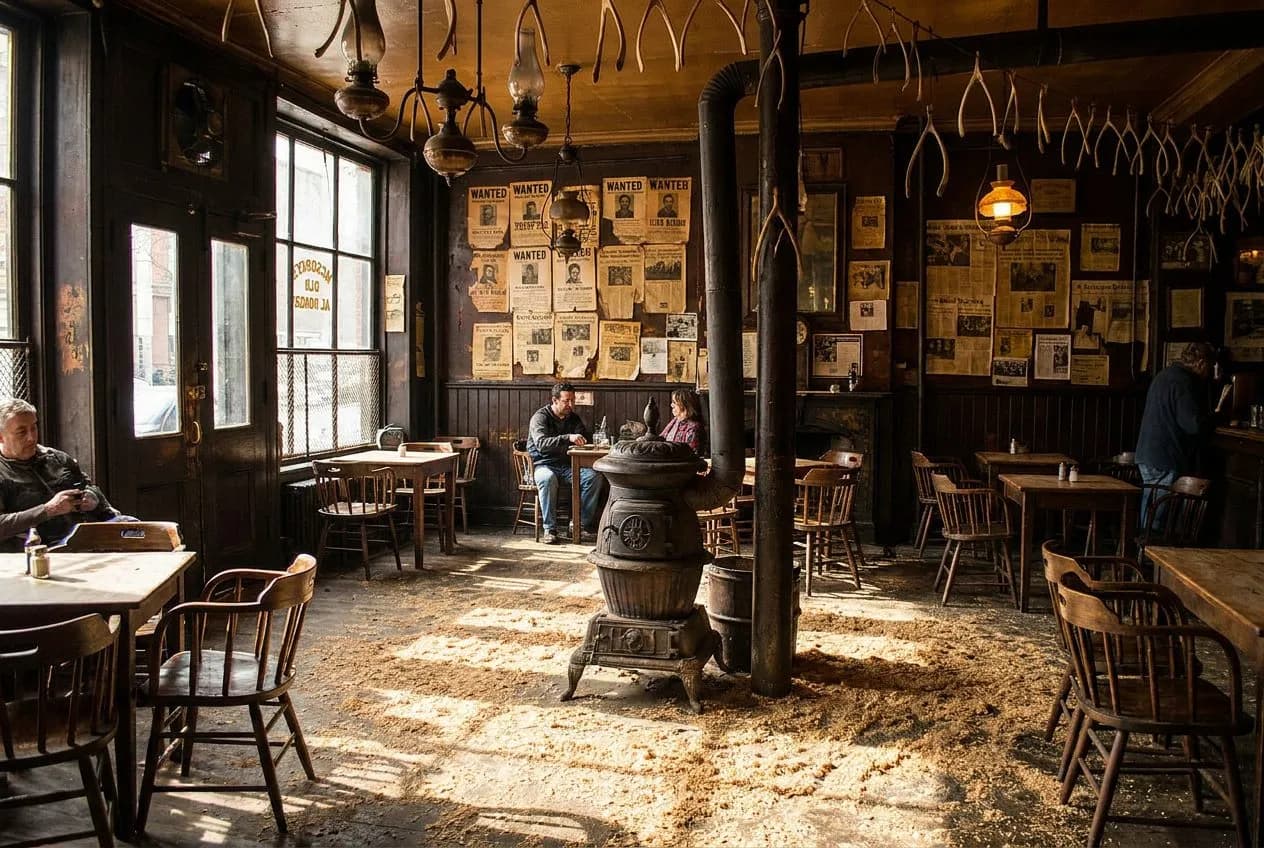
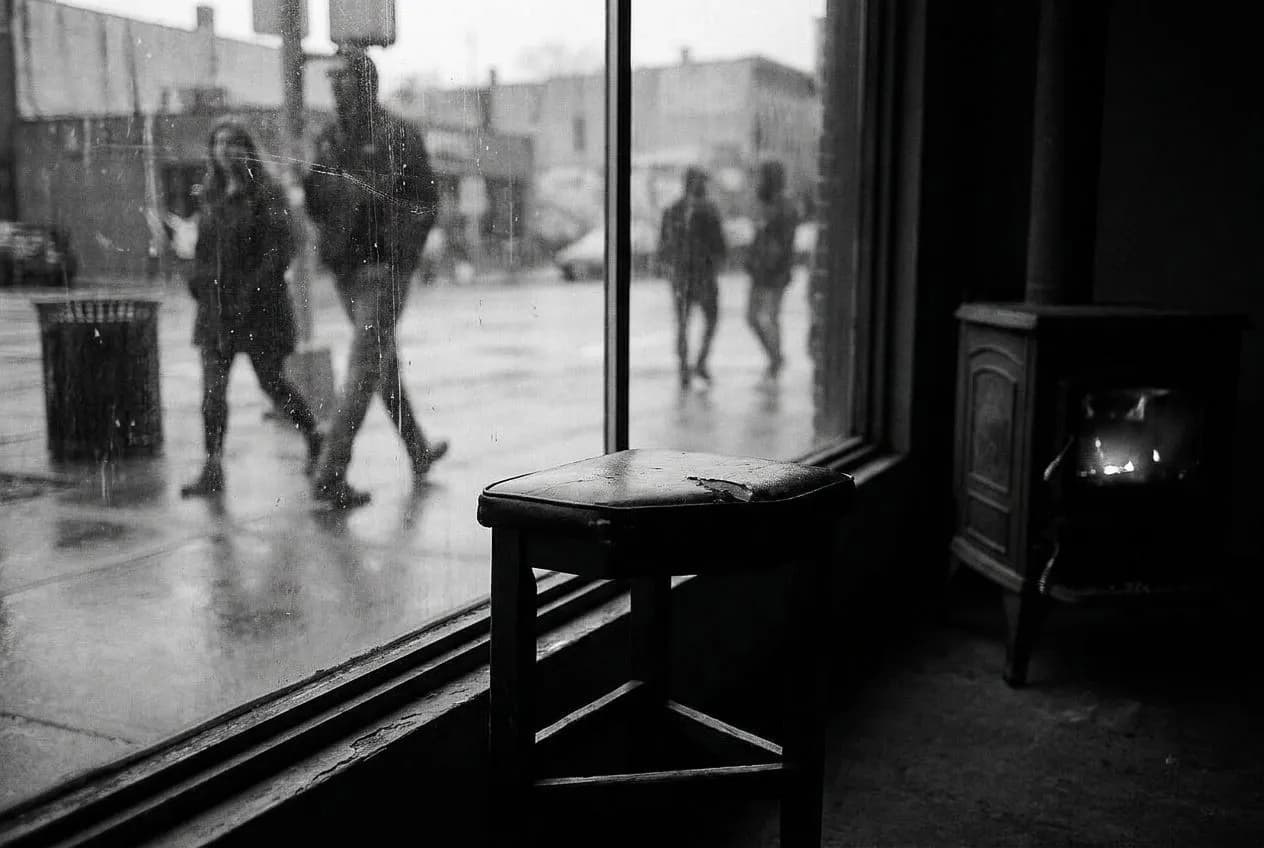
The stool itself is unremarkable—worn oak, no back, a seat burnished to a dull sheen by more than a century of corduroy and denim. What matters is the angle. Positioned just so, you can watch the stove's black bulk anchor the room while tracking every arrival through the heavy wooden door. The front window filters afternoon light into something amber and diffused, the kind that makes you forget whether it's late summer 2026 or late summer 1926.
This is not a perch for conversation. The bar rail, where elbows jostle and voices rise over the din, handles that duty. The corner stool is for watching: the bartender's practiced pull, the sawdust catching boot prints, the way regulars nod without speaking. It's a seat for people who prefer their weekend plans to include observation over participation, at least for the first round.
The stove and its archive
The potbelly stove hasn't heated the room in decades—radiators handle that now—but it remains the room's visual anchor, a cast-iron relic from the year McSorley's opened. Around it, the walls wear their history without curation: yellowed newspaper clippings shellacked into permanence, photographs of firefighters and policemen, wanted posters from wars nobody living remembers. Above, wishbones dangle from the gas lamps, brittle and gray. Soldiers left them before shipping out to World War I, a tradition of return that not all honored.
From the corner stool, you can read the dates on some of the clippings if the light cooperates. Mostly you take in the cumulative effect: a room that functions as its own archive, where nothing gets thrown away and every surface tells a version of New York that predates zoning laws and craft cocktail menus. The stove presides over it all, a monument to the idea that some things should simply stay put.
Two mugs, no negotiation
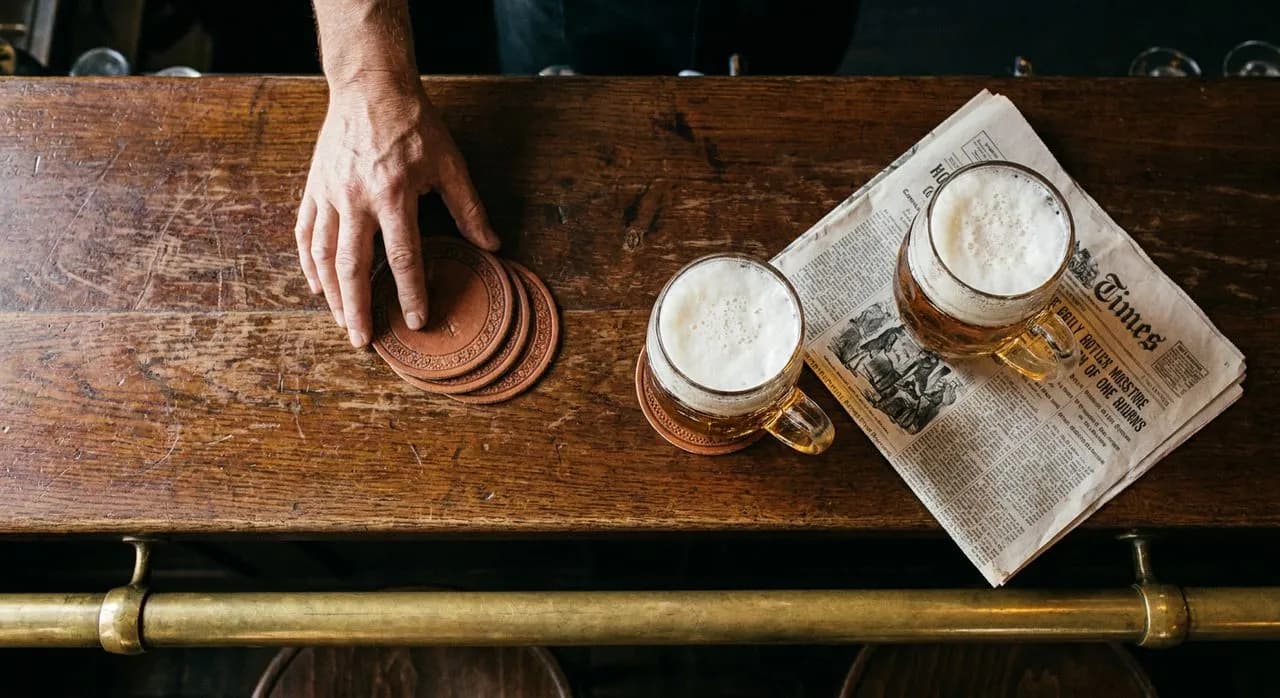
The two-mug minimum is not a suggestion. Order one beer and two arrive, foam sliding down the sides of heavy glass mugs that feel substantial in the hand. Light or dark—the house brews its own, recipes unchanged since the 19th century—and the choice genuinely matters less than you'd think. Both taste of malt and yeast and a certain unapologetic thickness that modern palates might call unrefined. That's the point.
You drink them slowly or quickly, but you drink them both. The rhythm of the room depends on it: the bartender's pull, the clink of glass on wood, the two-mug cadence that keeps the evening moving without rush. By your second pair, the stool feels less uncomfortable. By your third, you understand why people have been coming here since your great-grandparents were young.
Sawdust and the Monday smell
The sawdust on the floor is refreshed regularly, a ritual as fixed as the two-ale rule. It catches spills and mutes footsteps and lends the room a scent somewhere between lumber yard and old pub—because that's exactly what it is. Veterans of the place say the smell shifts on Mondays, when a full week's supply arrives from a lumber yard in Maspeth, the fresh pine more assertive before it absorbs its first night of beer and boot traffic.
From the corner stool, you can watch the sawdust patterns form and reform as patrons move between bar and booth and bathroom. The sweep pattern hasn't changed since Prohibition—long, even strokes that respect the floorboards underneath. It's the kind of detail you notice only from a stationary position, the kind that separates the room's architecture from its theater.
Last call, signaled without words
McSorley's closes at 1am, but last call comes earlier, announced not by a bell or a shout but by a house signal unchanged since the 1960s. Watch for it around 12:45am: the bartender's two-finger whistle, sharp enough to cut through the noise, followed by a clockwise arm circle that sweeps the room. No words necessary. Regulars drain their mugs and settle their tabs. First-timers look around, briefly confused, then follow suit.
It's a piece of operational choreography that feels at home in a place where tradition trumps efficiency. From the corner stool, you see the signal clearly, giving you a few extra seconds to decide whether to order one more pair or call it a night. Either choice feels correct in a room that has absorbed a century and a half of such decisions without judgment.
When to claim the stool
Weekday afternoons before 3pm offer the best odds of securing the corner stool, when the lunch crowd has thinned and the evening surge hasn't begun. Weekend nights bring bridge-and-tunnel crowds, bachelorette parties, tourists clutching their phones—all perfectly welcome, but none conducive to the quiet observation the corner stool rewards. Late summer and early fall in 2026 should follow the same rhythms the bar has honored for decades: slower midweek, chaotic Friday and Saturday, Sunday a wild card.
The stool doesn't get reserved. You claim it by arriving early and staying put, by ordering your pairs and watching the room fill and empty and fill again. It's not a hack or a secret—regulars will tell you straight if you ask—but it's the kind of knowledge that separates those who visit McSorley's from those who know it.
Practical notes
McSorley's Old Ale House, 15 East 7th Street, Manhattan. Nearest subway: Astor Place (6 train) or Third Avenue/8th Street (R, W) are nearby, depending on route. Street parking is a fantasy; skip it. Hours shift slightly by season—verify directly before trekking over. Cash preferred, though cards are accepted. The bar is not accessible; stairs at the entrance and a centuries-old layout make wheelchairs impractical. Bring patience for crowds, especially Thursday through Saturday after 7pm. No food beyond crackers and cheese. Come thirsty, leave satisfied.
Tags: #McSorleysOldAleHouse #EastVillage #NYCRestaurants #PullUpAChair #WeekendPlans #NYCBars #HistoricNYC #AleHouse #DowntownManhattan #NewYorkCity #Summer2026 #BeerCulture #ClassicNYC #ManhattanBars #NYCHistory
Please drink responsibly. Must be of legal drinking age.
Sources consulted: McSorley's Old Ale House · East Village, Manhattan · NYC Official Guide: East Village · The New York Times: New York
All trademarks are the property of their respective owners.