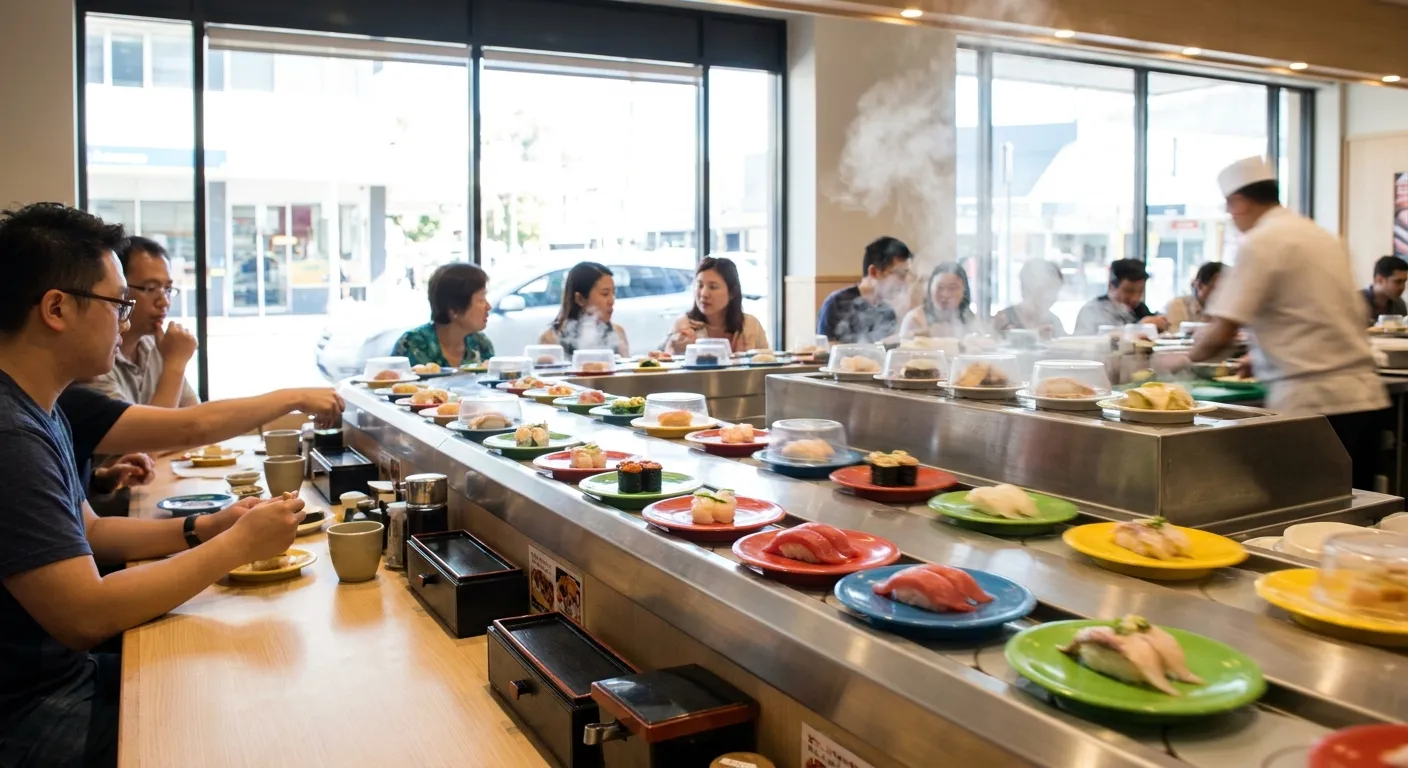
There are nights for the hushed omakase counter, and then there are the other nights: a group that can't agree, kids with opinions, a Tuesday that needs to cost less than a parking ticket. That's what kaiten — conveyor belt sushi — was invented for. Plates glide past, you grab what looks good, nobody has to commit to anything, and the bill is just a stack of color-coded plates counted at the end.
San Francisco's kaiten scene is small but surprisingly varied: one big-chain belt with a prize machine, a cluster of old-school conveyors in Japantown, two rooms where the sushi arrives by miniature train or rocket, and a boat pond in Mission Dolores. Here's how the format works and where it's worth sitting down.
How Kaiten Sushi Actually Works
The system is beautifully simple. Sushi rides a looping belt past every seat; plates are color- or pattern-coded by price; you take what you want as it passes and your empties get tallied at the end. Most modern spots add a tablet, so you can order specific items made fresh — those usually arrive on a separate express track or straight from the chef. A few ground rules keep it fun for everyone:
- Only take a plate you're going to eat — nothing goes back on the belt, ever.
- Use the tablet for anything you care about. Fresh-ordered fish beats anything that's been riding the loop.
- Keep your plate stack visible; it's your receipt.
- Ask the chef or staff what just came out if you can't tell how long something's been circulating.
- Going with kids? Sit them belt-side. It's the cheapest dinner theater in the city.
Stonestown: Kura's Full Arcade Experience
Kura Revolving Sushi Bar in the Stonestown Galleria is the maximalist version of the format: a proper revolving belt, a separate express belt for tablet orders, and the Bikkura-Pon prize system, which dispenses a capsule toy from an overhead machine for every 15 plates your table feeds into the slot. Plates run cheap — most sit at a single flat price of a few dollars — and the menu stretches past nigiri into udon, ramen, and desserts. It's a national chain, and here that's the point: the machinery works, the turnover keeps fish moving, and a family of four leaves fed and entertained without a painful bill. Expect a wait on weekends; the robots have fans.
Japantown's Conveyor Cluster: Tenroku and Izumi
Japantown holds the city's real kaiten tradition, and Tenroku Sushi on the Kinokuniya Building's second floor is its standard-bearer. The belt is genuine, the portions are generous — cuts of fish draped well past the rice — and plates mostly run $5 to $10, which a late-2025 review of every restaurant in the Japan Center malls ranked as the best conveyor value in the complex. You can also order directly from the chef behind the counter, which is the move for anything delicate.
A bridge away in the Japan Center West Mall, Izumi is the budget seat: a bare-bones room where the belt does the talking and the bill stays gentle. It's not trying to impress anyone, which is exactly what you want when the goal is a fast, cheap, hot-tea-and-ten-plates kind of night.
When the Sushi Arrives by Train (or Rocket)
San Francisco also runs a delivery-vehicle branch of the kaiten family. At Hikari Bullet Train Sushi & Bar on Post Street in Japantown, there's no belt to browse — you order everything on a tablet and a miniature shinkansen whisks it from the kitchen to your table, occasionally assisted by a robot. The gimmick gets the headlines, but the quiet surprise is the fish, which consistently outperforms the price point. It's the best kid-dinner in the neighborhood and a completely defensible adult one.
Down at 1695 Market Street, Rocket Sushi does the same trick with a miniature rocket that shoots plates to your table — and extends the format to ramen and even cheesecake, because when you own a food-delivery rocket you use it. The sushi is solid, the room is casual, and the whole operation closes on the early side, so treat it as a dinner-before-nine spot.
Boats on Church Street: Warakubune
Warakubune, on Church Street at the edge of the Castro and Mission Dolores, is the city's nostalgic take: little wooden boats float past the counter carrying sushi, moat-style, the way the format looked before belts went high-tech. The room is cozy, the pace is fast, and regulars treat it as a beloved neighborhood ritual rather than a novelty. It runs evening hours and keeps a couple of dark nights early in the week, so check before you cross town.
Which Spot for Which Night
Quick routing: Kura for families, big groups, and anyone who wants the full arcade; Tenroku for the best fish-per-dollar on an actual belt; Izumi for the cheapest functional version; Hikari for kids and tablet-native dates; Rocket for a casual Market Street dinner; Warakubune for the retro boat romance. None of them require planning beyond maybe a short wait — that's the entire appeal of the genre.
Kaiten Sushi FAQs
Is conveyor belt sushi fresh?
At busy spots, yes — high turnover means plates don't ride long, and many kaiten restaurants time-track plates and pull stragglers. Your insurance policy is simple: go at busy hours, watch what's coming straight from the kitchen, and use the tablet or chef for made-to-order pieces.
How much does kaiten sushi cost in SF?
Plates generally run from a few dollars at the budget belts up to around $10 for premium items, and a satisfying meal typically lands well under what a sit-down sushi dinner costs elsewhere in the city. Prices shift, so treat the plate-color menu at your seat as the source of truth.
Is conveyor belt sushi good for kids and groups?
It's the single best sushi format for both. Kids get moving food, prize machines, and miniature trains; groups get zero menu negotiation, individual bills that sort themselves plate by plate, and a pace everyone controls. Ask Karpo before you go and it'll point you to whichever belt, boat, or bullet train is closest.