Sold out is a status on a website, not a fact about a room. On any given night in New York a meaningful number of the people who bought tickets do not come, venues hold back inventory for production and guest lists that never get claimed, and a handful of institutions deliberately keep seats out of the advance market to sell them cheaply on the day. None of this is secret, but it is scattered across a dozen different policies that all work differently, which is why most people give up at the checkout page. Here is the order to work through it.
The day-of window is short and it never gets announced twice — a rush drop at nine in the morning, a box-office release at six, a door line that moves at half nine. Text Karpo the show you want and get what is actually still available today, where you physically have to stand to claim it, and what the realistic fallback is three blocks away if it goes.
Nine in the morning: the app drop
The most reliable same-day inventory in the city is released digitally at nine in the morning. The Public Theater puts a limited number of rush tickets into the TodayTix app at 9AM on the day of each public performance, with a two-ticket limit, and they stay live until they sell out or until two hours before curtain. That is the template most rush programmes in New York follow, and it means the useful part of your day-of effort happens before you have finished your coffee, not at seven in the evening.
Treat it as a queue, not a lottery. Have the app open and logged in with a card saved before nine, because the failure mode is almost never that nothing was released — it is that you spent ninety seconds entering payment details. Rush tickets are final sale and non-transferable, so buy the pair you will actually use.
Standing room is an in-person product
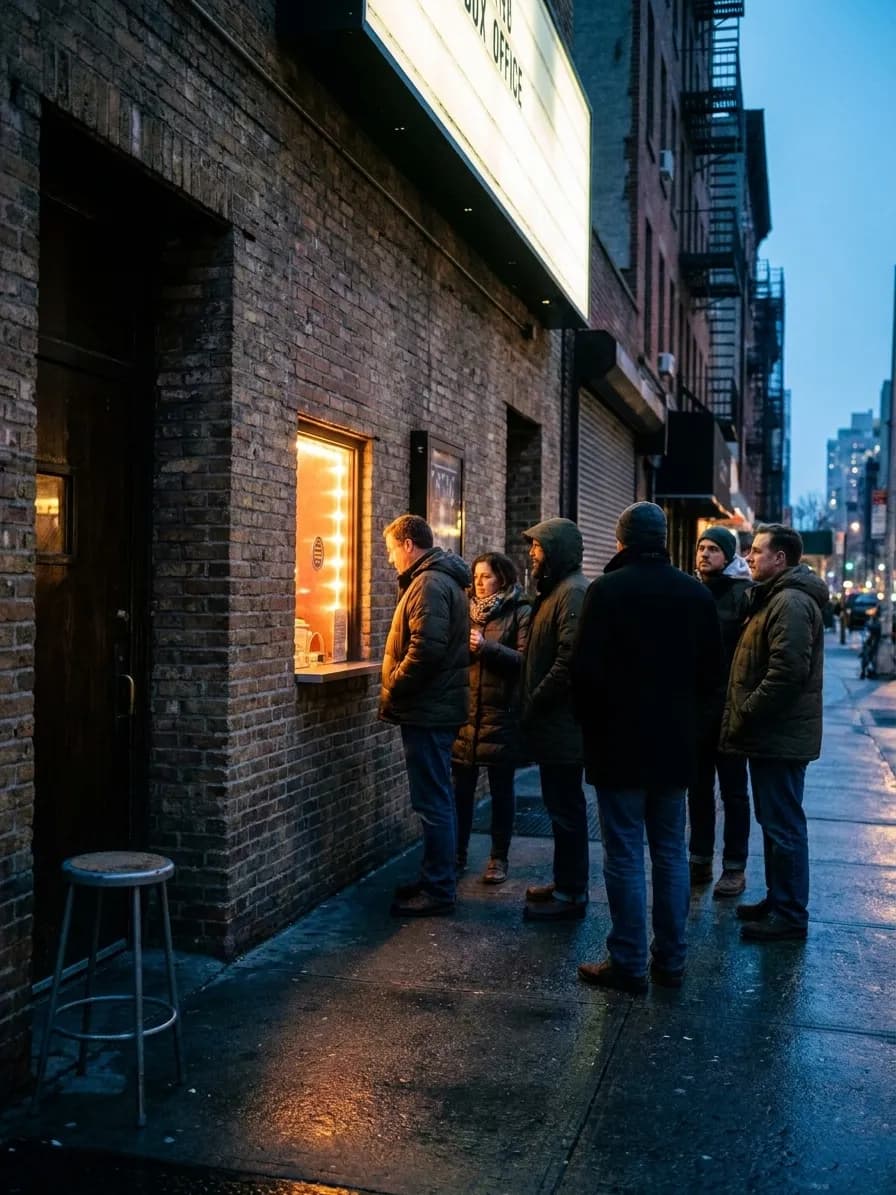
This is the rule people get wrong most often. Standing room tickets are sold at the theatre box office, in person, on the day — there is no online purchase and no advance reservation, and at most houses they only go on sale once the performance is genuinely sold out. If a website is showing you standing room availability, it is not standing room; it is an obstructed seat with an optimistic name.
The practical consequence is that standing room requires a trip you might waste. Make the trip anyway if you are already nearby, ask the box office directly rather than looking at a screen, and ask a second question while you are there: whether they expect any returns closer to curtain. Box-office staff will usually tell you honestly, because a returned ticket they cannot resell helps nobody.
The classical rooms are the cheap ones
New York's orchestras and opera houses run same-day and student rush programmes that are considerably better value than anything in the pop market, and they are chronically undersubscribed by people under forty who assume the ticket costs two hundred dollars. The New York Philharmonic runs both student and same-day rush; Lincoln Center publishes its rush, student and young-adult offers on a single discounts page. The Lincoln Center TKTS booth is also worth knowing as an alternative to the Times Square one — same same-day discounts, indoors, and without the crowd.
If the point of the evening is to hear something live rather than to see one specific act, this is where the value in the city sits, and it is not close.
Small rooms: the door is the whole system
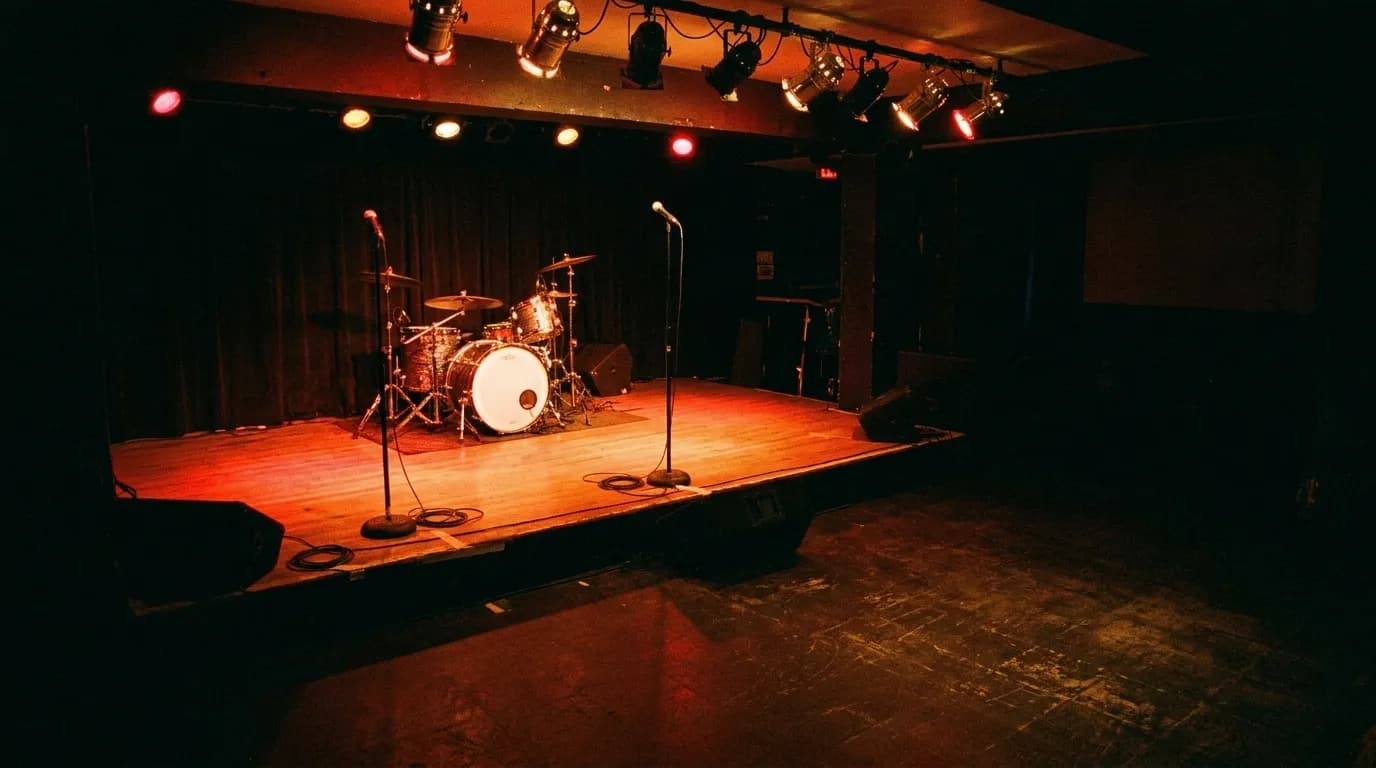
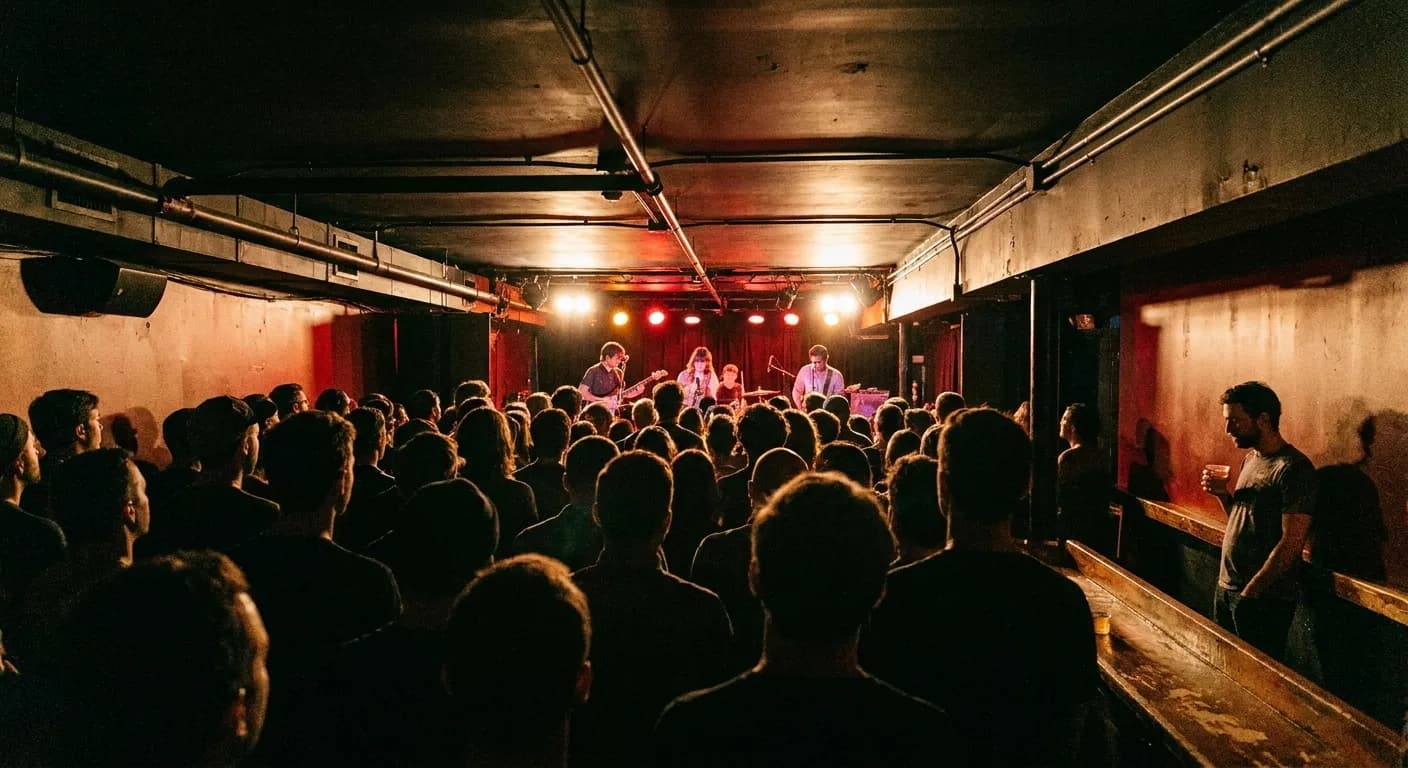
Below about four hundred capacity, most New York venues do not run a rush programme because they do not need one. Advance sales are a convenience, and a proportion of the room is simply held for the door. At that scale the useful questions are what time doors open, whether the headline goes on at nine or at eleven, and whether the venue is cash-only at the door — a surprising number still are.
The tactic that works is arriving for the opener rather than the headliner. You get in without drama, you pay the same cover, you are inside before the queue forms, and you have seen a band you would not have chosen. On a weeknight in New York the second half of that sentence is frequently the better half of the evening.
What not to bother with
Resale prices for a show tonight are not a market, they are a countdown, and they move in whichever direction the seller's nerve breaks first. For a genuinely in-demand act they go up in the last two hours; for everything else they collapse after doors, which is exactly when you can no longer safely buy from a stranger. Anything requiring you to meet someone outside a venue to receive a transfer is not worth the evening it might cost you.
The other thing to skip is the assumption that a sold-out show has a hidden entrance. It does not. What it has is a box office with a phone number, and calling it at five in the afternoon takes ninety seconds and is more informative than any amount of refreshing.
A workable day-of sequence
Nine in the morning: check the rush app for anything you would actually attend. Midday: check the venue's own site, not a marketplace, because returns are posted there first. Five in the afternoon: call the box office and ask two questions — are there returns, and do they sell standing room. Seven: if the answer was no, go to the venue anyway if it is on your way, because the queue you join at seven is twelve people, and the queue at half eight is ninety.
And carry a second option. New York's real advantage on a Tuesday night is not that you can get into the sold-out show; it is that there are four other rooms within a fifteen-minute walk of it with space, and at least one of them is playing something you would have paid for anyway.
Tags: #concertsinnyc #nycconcerts #rushtickets #standingroomonly #soldout #nycnightlife #livemusicnyc #boxoffice #dayofshow #lowereastside #brooklynmusic #manhattanmusic #nycthisweek #lastminutetickets
All trademarks are the property of their respective owners.
Ask Karpo first
Every venue in New York handles the day of the show differently, and none of them advertise it — some release returns at six, some sell standing room only in person, some never open anything up at all. Ask Karpo which of tonight's rooms are worth turning up to cold, what time their door line actually starts moving, and what else is playing within a ten-minute walk if the answer is no.