Ask anyone in Los Angeles where to see live music and you will get the Hollywood Bowl and the Greek. Both are great and both are seasonal, outdoor, enormous and priced accordingly. The city underneath them is far more interesting: a 1,200-seat amphitheatre across the freeway from the Bowl, a Gehry concert hall with an experimental black box underneath it, a string of 1920s movie palaces on Broadway, and a set of free outdoor series that run all summer without asking for anything.
Half of these venues sell out quietly and the free ones fill up an hour before downbeat. Ask Karpo who is playing near you this week, which shows still have tickets, and what time you would need to arrive to get a decent spot.
The Ford, which is the Bowl's small sibling
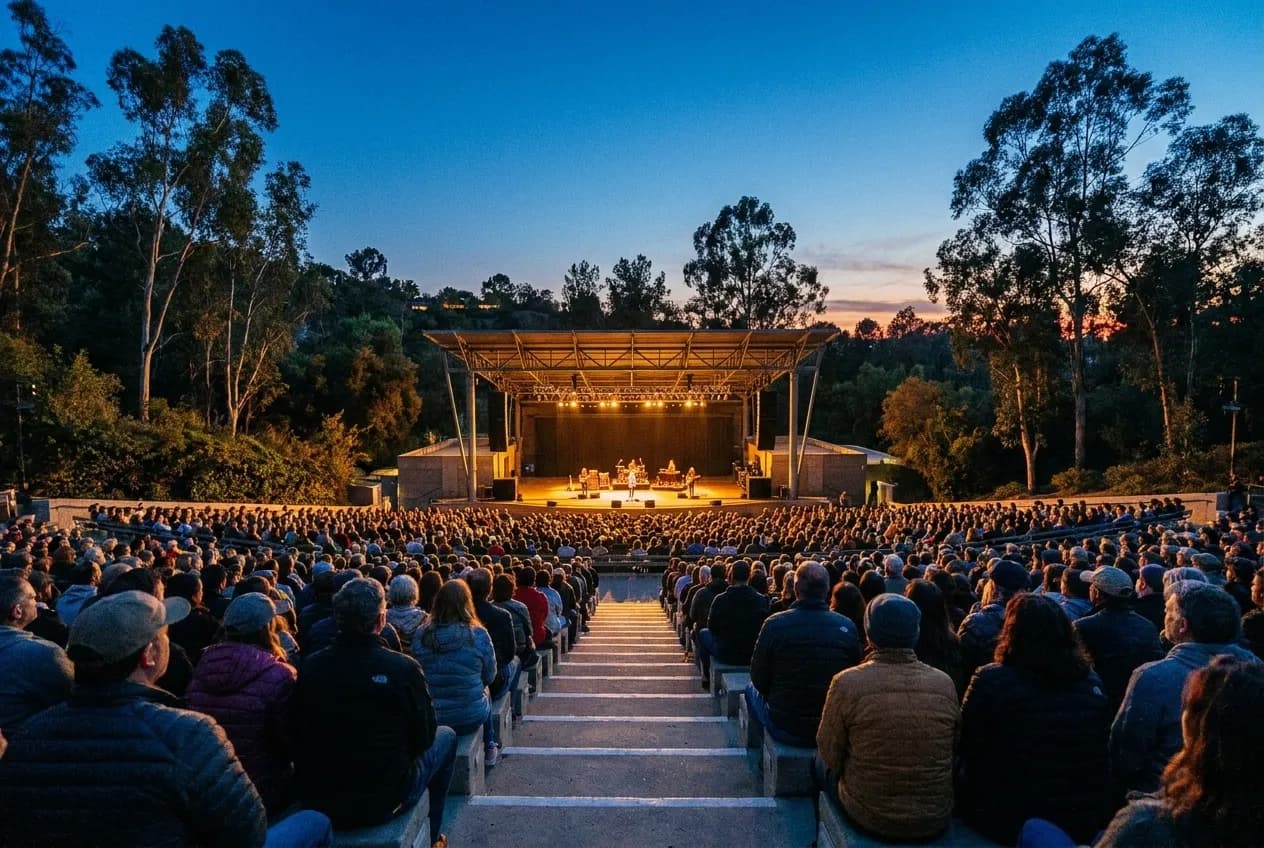
The John Anson Ford Amphitheatre sits on the other side of the 101 from the Bowl, cut into the hillside, seating around 1,200 with the Cahuenga Pass rising behind the stage. It is the size where you can hear a single instrument properly and see the players' hands, and its programming leans toward the city's own communities rather than the touring circuit — which means the bill is frequently something you would never have chosen and will remember for years.
Downtown: a Gehry hall and a black box under it
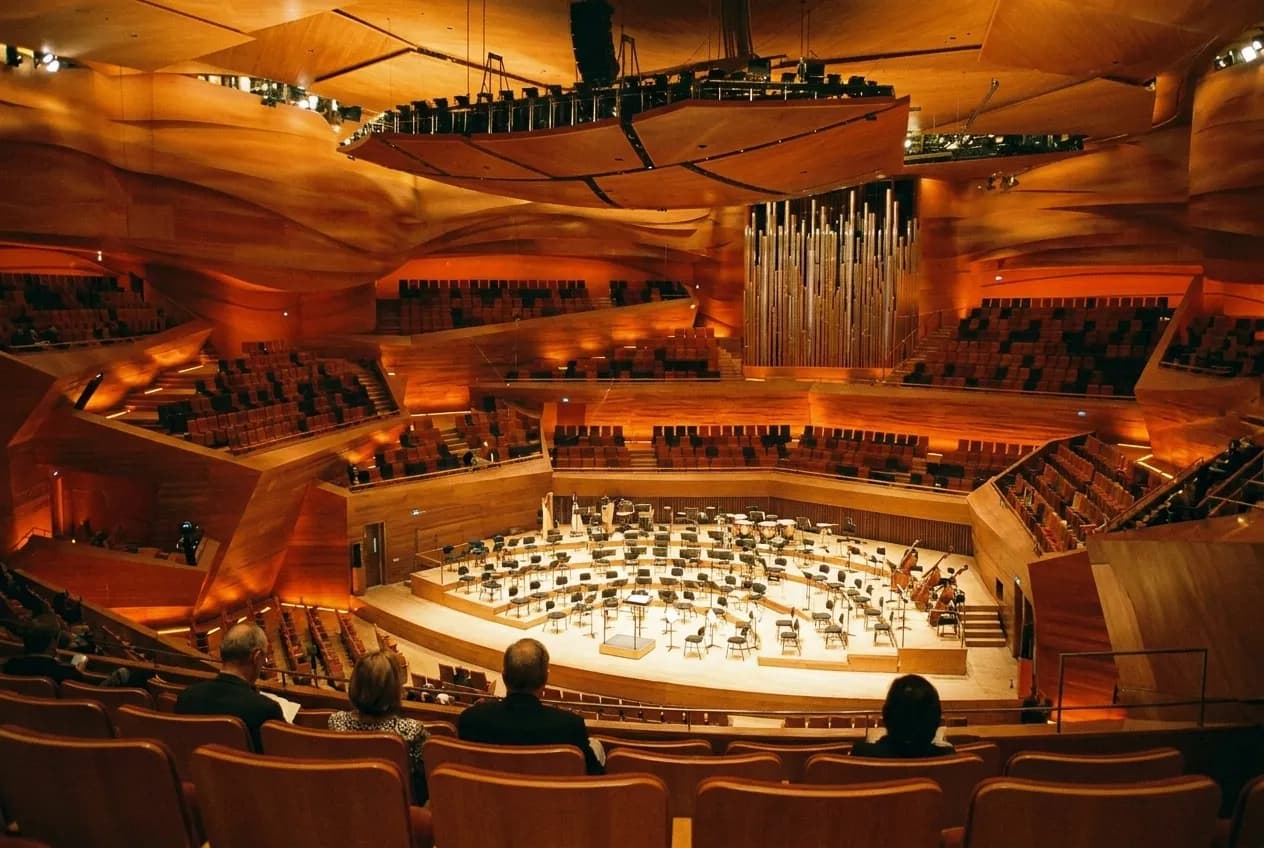
Walt Disney Concert Hall is the Los Angeles Philharmonic's home and one of the best rooms in the world by acoustics rather than by reputation. The thing locals use and visitors do not: the orchestra runs open rehearsals on selected mornings at a fraction of the ticket price, and the Green Umbrella series puts new music in the same hall for far less than the subscription concerts.
Underneath the building sits REDCAT — CalArts' downtown theatre — which programmes experimental music, performance and film in a black box with tickets that cost less than a cinema seat. If you want the version of Los Angeles where you leave a performance genuinely unsure what you just watched, that is the room.
The Broadway palaces
Downtown's Broadway holds the densest concentration of surviving 1920s movie palaces in the United States, and several of them work as music venues: the Orpheum, the Palace, the United Theater and the Belasco and Mayan a few blocks away. The buildings are the reason to go — gilded ceilings, deep balconies, lobbies that belong in another century — and the sound in a 1920s theatre built for un-amplified performance is generally better than in anything constructed since.
The Wiltern, at Wilshire and Western, is the Art Deco version of the same idea and the most reliably well-run mid-size room in the city.
The other downtown habit worth building: the Music Center's plaza and Grand Park programme free outdoor performances through much of the year, and they sit directly between Disney Hall and the Broadway theatres. It is entirely possible to build an evening that starts with something free on a plaza and ends in a 1920s auditorium four blocks away, without moving a car.
The neighborhood rooms
Lodge Room in Highland Park is upstairs in a working Masonic lodge, holds a few hundred people, and books the kind of bill that sells out a much larger room elsewhere. Zebulon in Frogtown is the closest Los Angeles gets to a European jazz-and-experimental club, with no separation between the bar and the music. Teragram Ballroom, the Echo and Echoplex, the Regent and Gold Diggers in East Hollywood fill out the tier between two hundred and a thousand people, which is where nearly all the good shows in this city actually happen. On the jazz side, ETA in Highland Park and Sam First near the airport run genuine listening rooms with small capacities.
Worth adding the venues that are neither theatres nor clubs: churches and civic buildings. Several downtown and Westside congregations run concert series in rooms built for choral and organ music, and the acoustics in a 1920s sanctuary are frequently better than in a purpose-built hall. The programmes are usually free or by donation, and they are listed nowhere except the venue's own noticeboard.
The free tier, which is not a lesser tier
Grand Performances at California Plaza downtown puts international acts on an outdoor stage between office towers for nothing. The Levitt Pavilions in MacArthur Park and Pasadena run free summer seasons aimed squarely at families and neighbors. And the conservatories are the city's best-kept secret: the Colburn School downtown and the university music departments across the county present student and faculty recitals — frequently free, frequently at a standard that would cost real money anywhere else.
If you want to be closer to the making of music than the consuming of it, the conservatory calendar is where to look. You will find masterclasses, open rehearsals and new work being tried in public, all of it free or close to it.
Practical notes
Ticket fees at the mid-size rooms can add a quarter to the face price; buying at the venue box office in person avoids some of them. Parking at the Broadway theatres means a garage — budget for it, and prefer the Metro B and D lines, which run directly to that stretch. The hillside amphitheatres are genuinely cold after dark from September onward, so bring more than you think. Free outdoor series fill their good ground an hour before the music starts. And check the age policy: a meaningful number of the neighborhood rooms are 21-plus, which catches people out. One last habit: sign up to the mailing lists of the two or three venues whose bookers you trust. In a city this large, the algorithm will never surface the show you would most want to see, and the venue's own list will.
Tags: #LosAngeles #Concerts #LiveMusicLA #TheFord #DisneyConcertHall #REDCAT #TheWiltern #LodgeRoom #Zebulon #GrandPerformances #LevittPavilion #FreeConcerts #DTLA #HighlandPark #NightOut
All trademarks are the property of their respective owners.
Ask Karpo first
Want to know who is playing near you this week, which shows still have tickets, and which of the free series is on tonight? Ask Karpo for the listings, the door times and how early you would need to arrive to sit somewhere decent.