Chinatown is not a nightlife district, which is exactly why the music that happens in and around it is interesting. This is a neighbourhood of association halls, basements, old theatres and alley doorways, sitting directly between North Beach's bar strip and the Financial District, and the rooms that host concerts here tend to be small, irregular and almost invisible online. Searching for concerts will show you the arena listings. The good stuff needs a different approach.
Small-room listings in this part of the city live on flyers, group chats and a venue's own page rather than on the big ticketing sites. Tell Karpo which night you are free and what you like, and it will find what is actually playing nearby.
What kinds of rooms these are
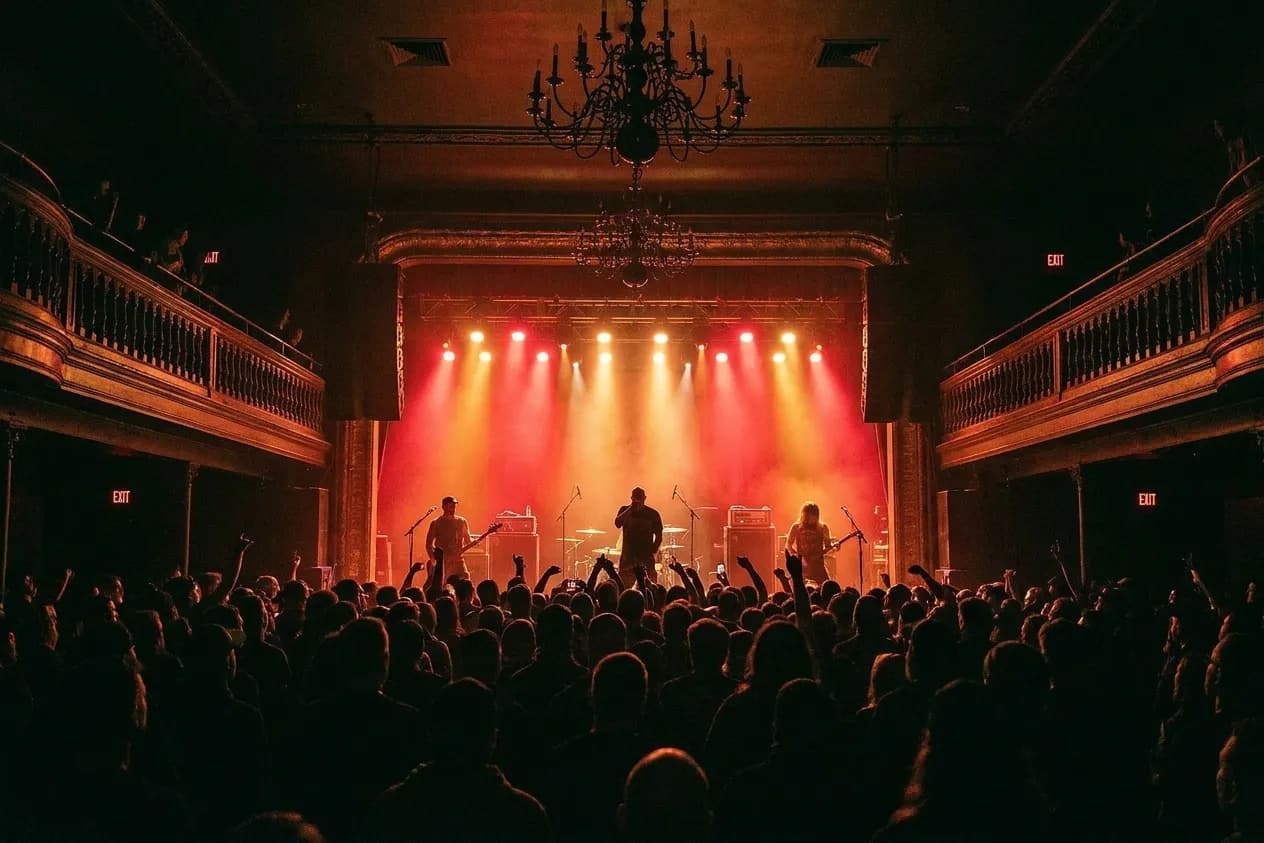
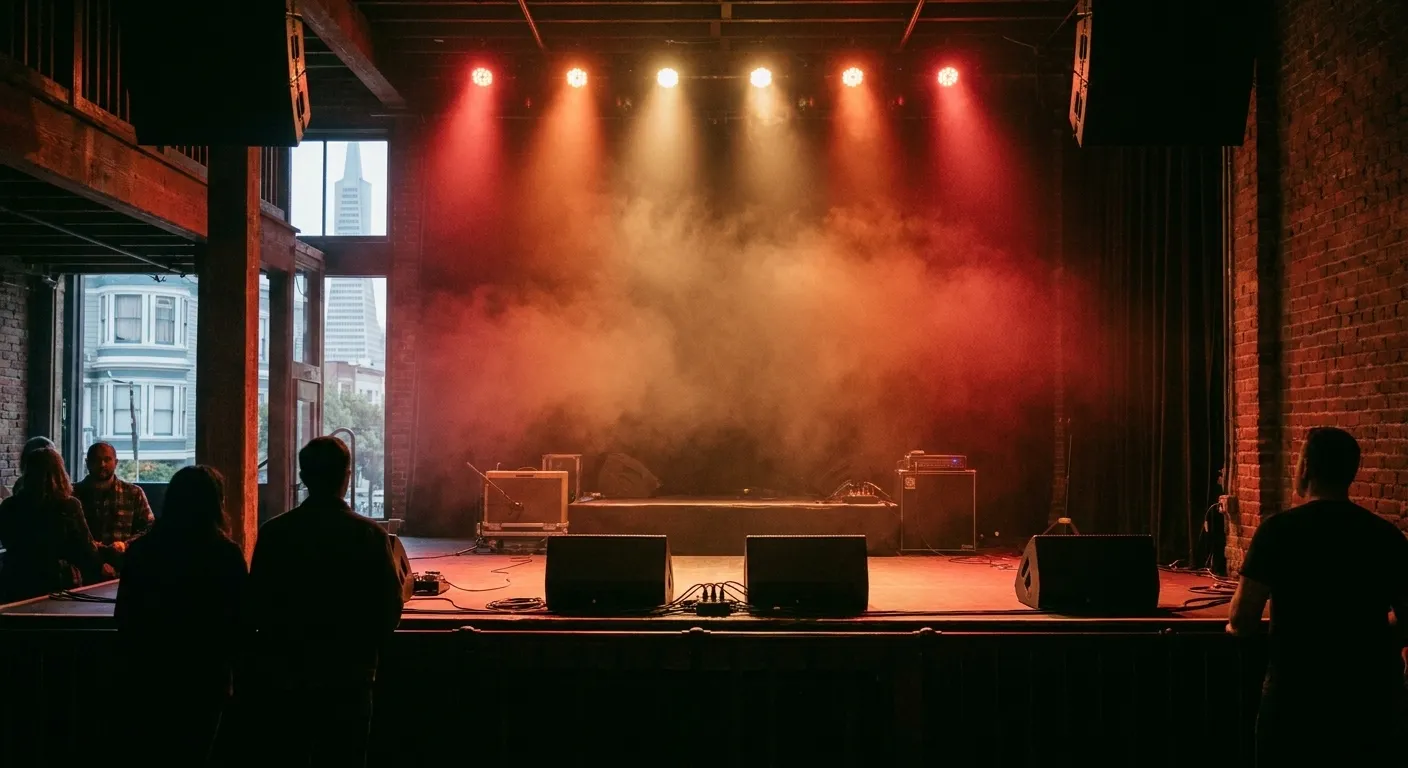
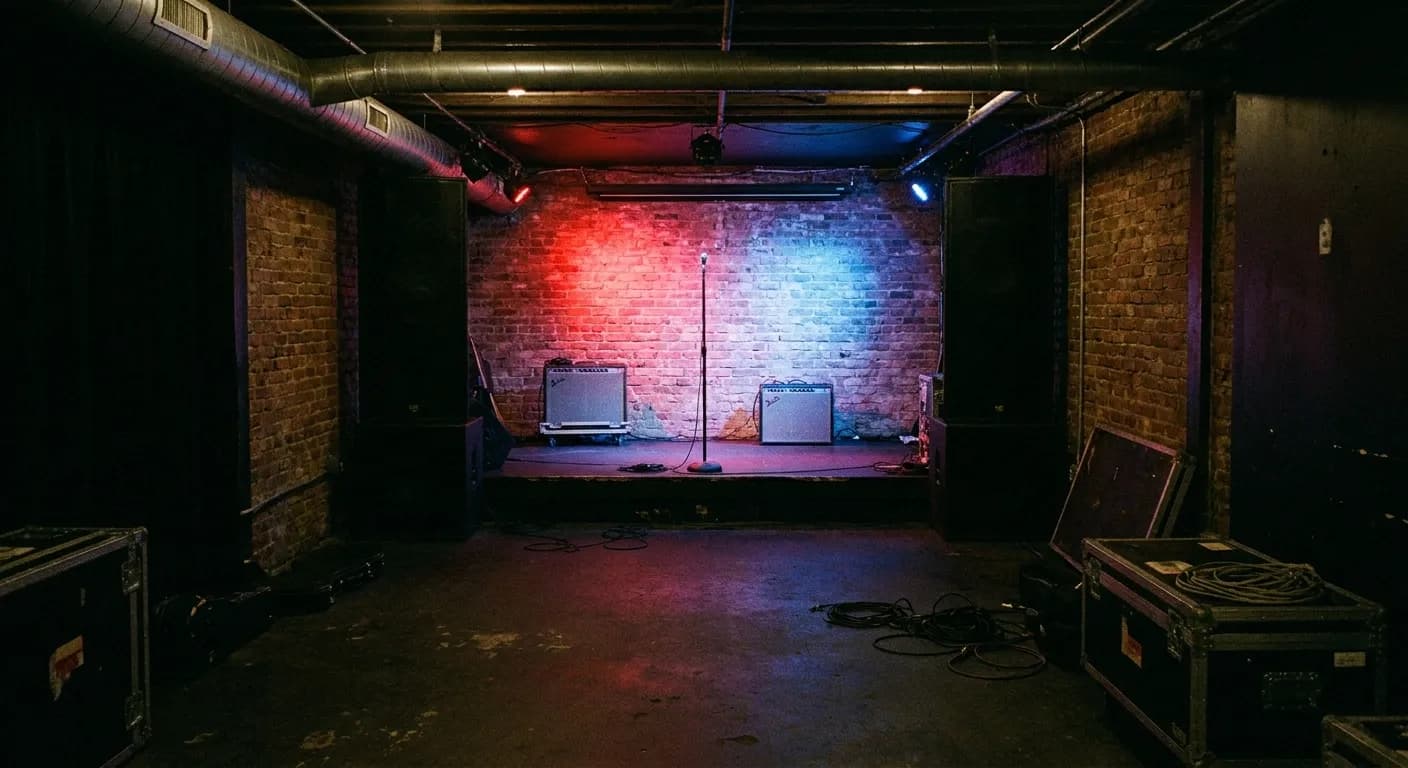
Three formats dominate. First, the genuinely tiny — basements and back rooms holding fifty to a hundred and fifty people, where the stage is a step and the sound comes off the amplifiers as much as the system. Second, the community and association halls, which host everything from Cantonese opera to touring experimental acts depending on the week. Third, the bar rooms on the neighbourhood's edges, where music is free and starts late.
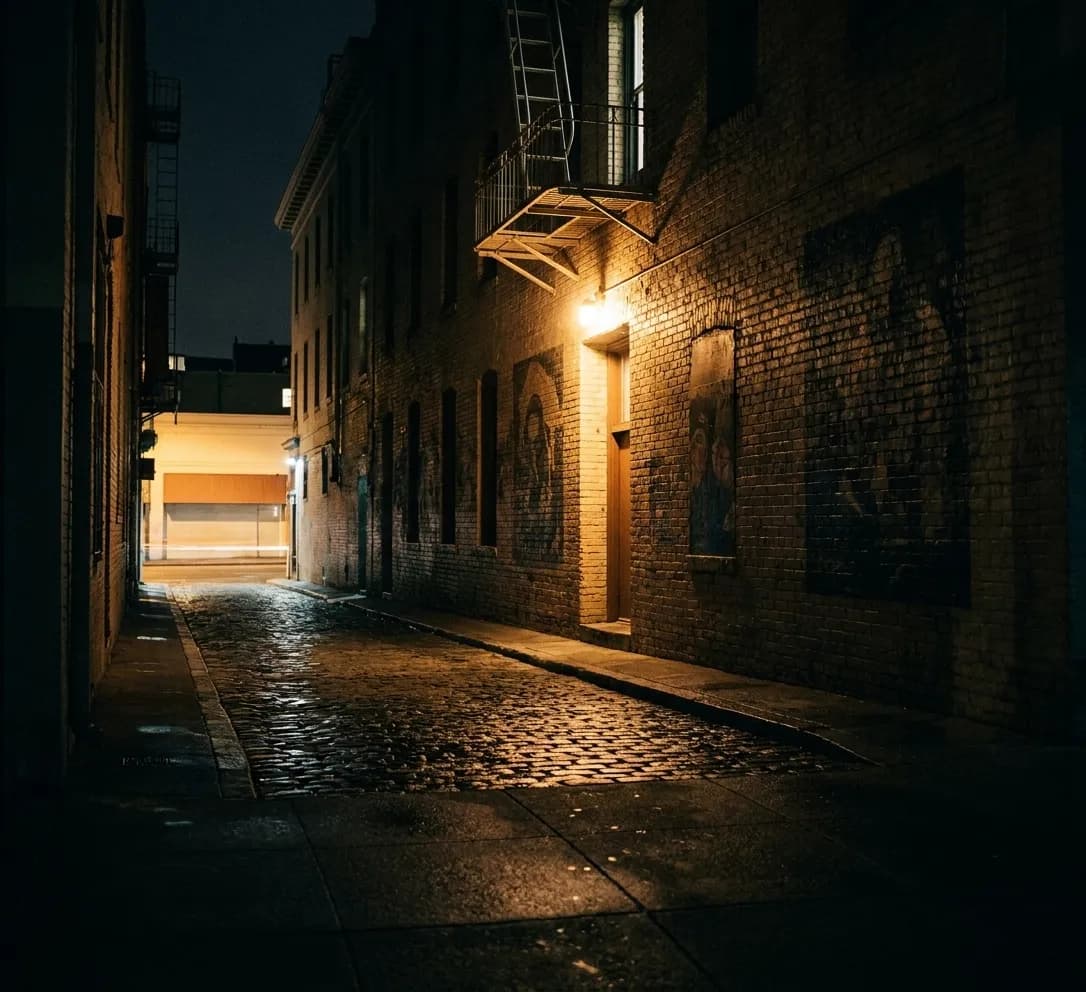
The alleys are their own category. Chinatown's alleyways have a long history as cultural space, and they periodically host performances, festivals and installations that are announced days rather than months ahead. Those are frequently the best nights and the hardest to find out about in advance.
Cantonese opera and the traditional programme
The neighbourhood's oldest performance tradition is Cantonese opera, which has been staged in San Francisco since the nineteenth century and still runs in association halls and theatres here. It is genuinely unlike anything else on offer in the city: long, loud, formal, percussive, and completely unconcerned with whether a newcomer understands what is happening.
If you go, go with the expectation of an event rather than a concert. Performances run long, the audience treats it socially, and arriving and leaving mid-scene is normal. It is one of the few things you can do in San Francisco that has been happening in the same neighbourhood, in more or less the same form, for over a century.
How to actually find out what is on
Small-venue listings in this part of the city are fragmented by design. The reliable sources are the venues' own pages and mailing lists, the physical flyers on poles around Columbus and Grant, community boards inside the association buildings, and the local event listing sites. The large ticketing platforms carry almost none of it, because these rooms sell tickets at the door or through their own systems.
The practical routine is to pick two or three venues you like and follow them directly, rather than searching by date. In rooms this size the booking is personal and the programming is coherent — if you liked one night at a place, you will probably like the next one.
Doors, cover and cash
Expect a cover charge at the door rather than an advance ticket, expect it to be modest, and bring cash because a meaningful number of these rooms still prefer it. Doors and stage times in small venues run late relative to what is posted — a nine o'clock door frequently means a ten-thirty first act — and turning up exactly on time usually means standing in an empty room.
Capacity is the other thing to plan around. A room that holds a hundred people sells out invisibly, without any of the signals a larger venue gives you. If a bill looks genuinely good, arriving early is the only real strategy.
Making a night of it
The geography here is the neighbourhood's biggest advantage. Chinatown sits within a ten-minute walk of North Beach's bars, the Financial District's after-work rooms and the Broadway strip, which means a small show can be the middle of an evening rather than the whole of it. Eat in Chinatown early — the kitchens close well before the music starts — then walk over.
Getting home is easy in a way it is not from most San Francisco venues. Several bus lines run through and past the neighbourhood, the Central Subway station puts it on the rail network, and it is walkable to downtown. Check the last departure before the encore rather than after it.
What a small room asks of you
Rooms at this scale run on a different social contract than a large venue. There is no barrier, the band is standing three metres away and can hear you, and the person taking money at the door is frequently in the second act. Arriving for the opener rather than the headliner is normal and appreciated, and it is where you find things you would never have chosen.
The practical corollary is that these rooms are quiet about capacity and generous about everything else. If you like what you heard, buying something from the merch table is the most direct support there is — it goes straight to the band rather than through a promoter, and at this scale it is frequently the difference between a tour breaking even and not.
Tags: #SanFrancisco #Chinatown #Concerts #LiveMusicSF #SmallVenues #NorthBeach #SFNightlife #CantoneseOpera #SFThingsToDo #GigGuide #BayArea #SFCulture #AlleyShows #SFLocal
Sources consulted: sfstation.com · sftravel.com · sfmta.com
Please drink responsibly. Must be of legal drinking age.
All trademarks are the property of their respective owners.
Ask Karpo first
Small rooms announce late, sell out quietly and change their door times without telling anyone. Ask Karpo what is playing near you tonight, what the cover is, and whether the room takes cards — it answers in iMessage, which is faster than checking six venue pages.