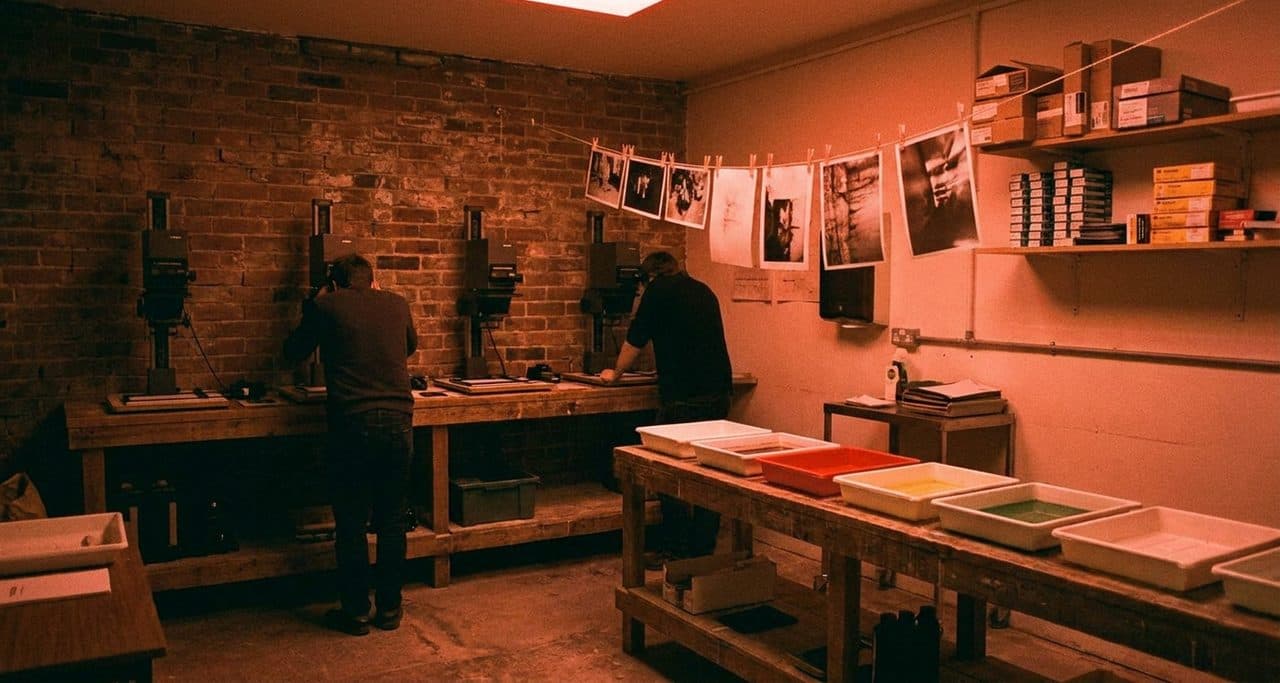
The darkroom sits on a quiet block in Red Hook, tucked inside a former warehouse space that still smells faintly of machine oil beneath the sharper tang of stop bath. Red safelights cast everything in a dim, warm glow. Enlarger stations line one wall, each with its own timer and negative carrier, while three deep sinks run the length of the opposite side—developer, stop, fixer, wash—in the eternal sequence that hasn't changed since the medium's invention.
The Rhythm of Shared Chemistry
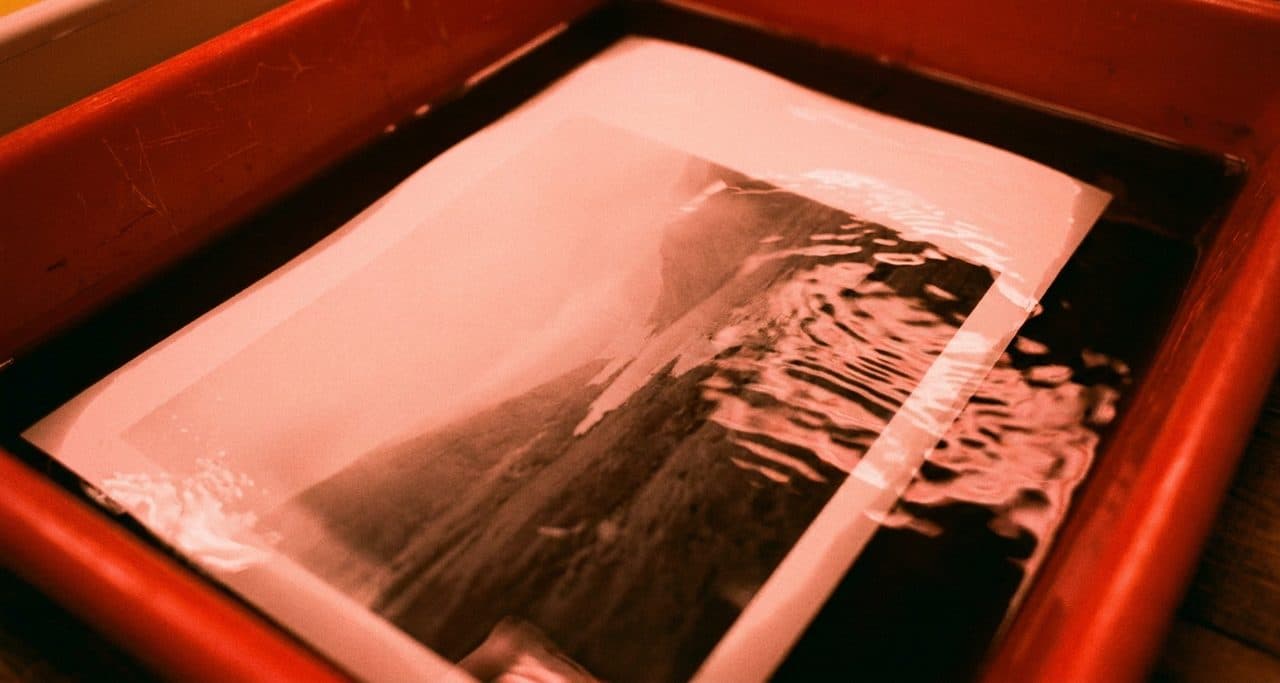
Printers work in a loose rotation, negotiating time at the enlargers with the kind of quiet courtesy that develops among people who understand the stakes of a good exposure. Someone might be burning in a corner of sky while another waits at the timer, test strip in hand. The chemistry gets refreshed every few hours, a collective responsibility that regulars handle without discussion. Newcomers learn quickly that the fixer tray is the one that really announces itself—that acrid, almost sweet smell that clings to clothes and fingernails long after the session ends. The temperature matters. A thermometer floats in each tray, and whoever arrives first checks the readings, adjusting the water bath beneath the developer until it holds steady at sixty-eight degrees.
Enlargers and the Wall of Negatives
The enlargers themselves are a mix of decades—a couple of Omega D2s, a Beseler 23C, one ancient Durst that requires a specific touch to keep the lamp housing from drifting during long exposures. Each station has a focusing loupe and a packet of multigrade filters in a worn envelope. Along the back wall, cubbies hold negative sleeves and contact sheets, organized by a system that makes sense only to those who've been coming here long enough. The light from the safelights doesn't quite reach the corners, so printers use small red LEDs clipped to their shirts when threading film into carriers. The click of the negative carrier locking into place, the hum of the enlarger fan, the soft tick of the timer—these sounds layer into a kind of industrial lullaby.
The Hanging Line and the Wait
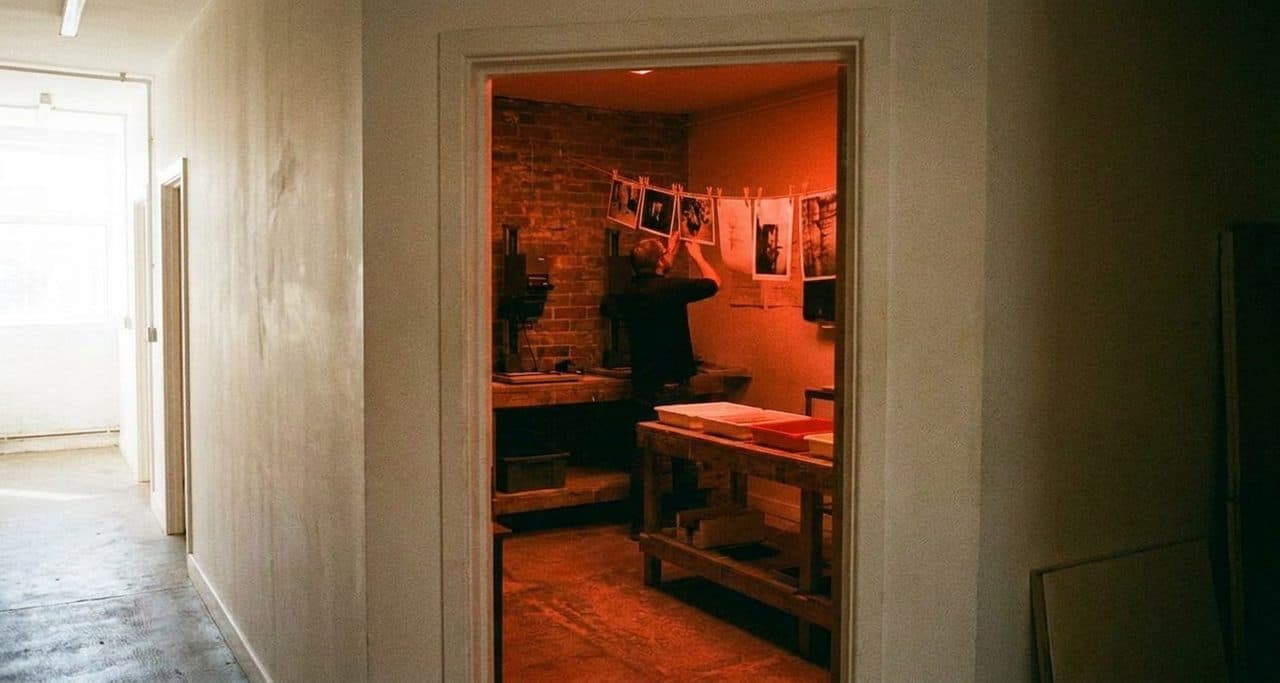
Prints go onto a clothesline strung across the width of the room, pinned with wooden clips that have gone soft from years of moisture. The line sags slightly in the middle under the weight of wet fiber paper. Some printers stay to watch their images dry, others leave them overnight and return the next day to find their work stiff and curled at the edges. The drying rack in the corner holds flattened prints between blotters, weighted down with a sheet of glass salvaged from an old storefront. There's a particular satisfaction in peeling a print from the line, feeling the texture of the paper, seeing how the tones have settled in the hours since it came out of the wash. The room stays humid, windows cracked just enough to keep air moving without letting in too much light.
The Crowd That Finds It
The printers range from art students working on thesis projects to older photographers who never stopped shooting film, who regard digital capture with the polite skepticism of people who've committed to a slower process. Some come weekly, others sporadically, whenever a few rolls have piled up and the itch to see negatives transformed into tangible objects becomes too strong to ignore. Conversations happen in low voices, mostly about paper stock and developer dilution ratios, occasionally about the subjects in the images themselves. A regular in his seventies prints nothing but street scenes from the eighties, negatives he's been working through for years. Another printer, younger, focuses obsessively on a single intersection in Bed-Stuy, returning to the same frame under different light.
The Chemistry Talk and the Logbook
A logbook sits on the counter near the sinks, spiral-bound and water-stained, where printers note when they've mixed fresh chemistry or topped off the fixer. The entries are terse—dates, initials, sometimes a note about a particular batch of paper behaving strangely. The developer of choice is usually Dektol, mixed one-to-two, though some printers bring their own bottles of Liquidol or Selectol Soft for specific tonal effects. The stop bath is just acetic acid and water, nothing fancy. The fixer gets tested with a strip of film every few days—if it clears in under two minutes, it's still good. The wash sink runs constantly, a gentle flow that carries away the residual chemistry and fills the room with a sound like distant rain.
The Light Leaks and the Learning Curve
New printers make the expected mistakes. They fog paper by opening boxes under insufficient safelight distance. They misjudge exposure times and pull prints too early from the developer, leaving them thin and disappointing. They forget to agitate the fixer and end up with stains that won't wash out. The learning happens through repetition and the occasional quiet suggestion from someone working at the next station. There's no formal instruction, just the accumulated knowledge that circulates through the room like the smell of fixer. The red glow softens failures, makes them less harsh. A bad print goes into the scrap bin, and the printer slides another sheet of paper into the easel and tries again.
Practical Notes
The darkroom operates on a membership basis with evening and weekend access most common. Red Hook is reachable via the B61 bus from downtown Brooklyn or the NYC Ferry to Red Hook terminal. Street parking exists but fills quickly on weekends. Memberships typically run month-to-month. The space provides chemistry and basic equipment; printers bring their own paper and negatives. Sessions often run three to four hours—long enough to work through a contact sheet and pull a handful of final prints. Booking ahead ensures enlarger availability during busy periods. The nearest subway stop is Smith-9th Streets on the F/G, about a twenty-minute walk.
Tags: #RedHook #Brooklyn #NYC #FilmPhotography #Darkroom #AnalogPhotography #BlackAndWhitePhotography #CommunityDarkroom #FilmIsNotDead #ShootFilm #AnalogCommunity #BrooklynArt #PhotographyStudio #FilmDevelopment #NewYorkPhotography
Sources consulted: timeout.com · secretnyc.co · thrillist.com
All trademarks are the property of their respective owners.
Ask Karpo first
Want to know which evening sessions have enlarger availability or how the chemistry rotation works?
Ask Karpo for the darkroom booking system and the beginner-friendly session times before you head out.