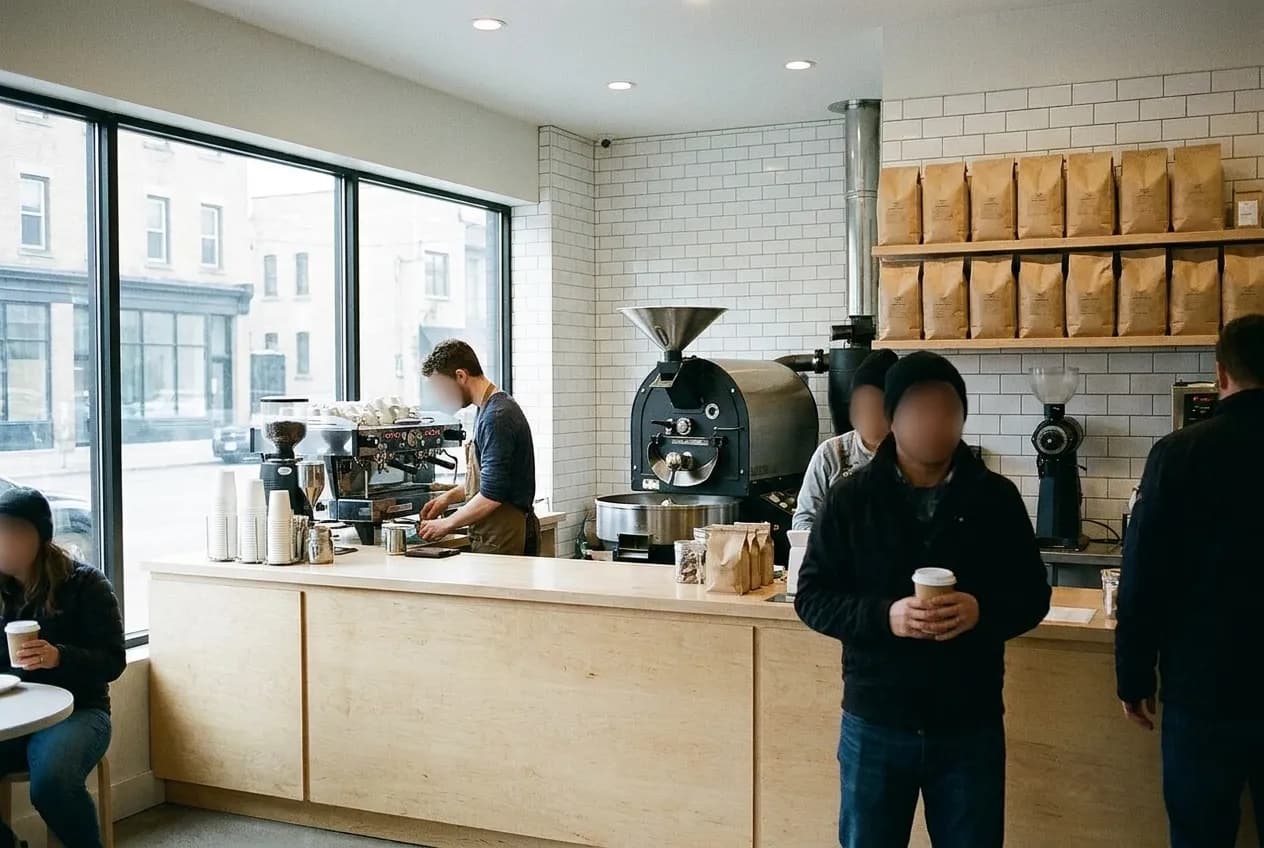
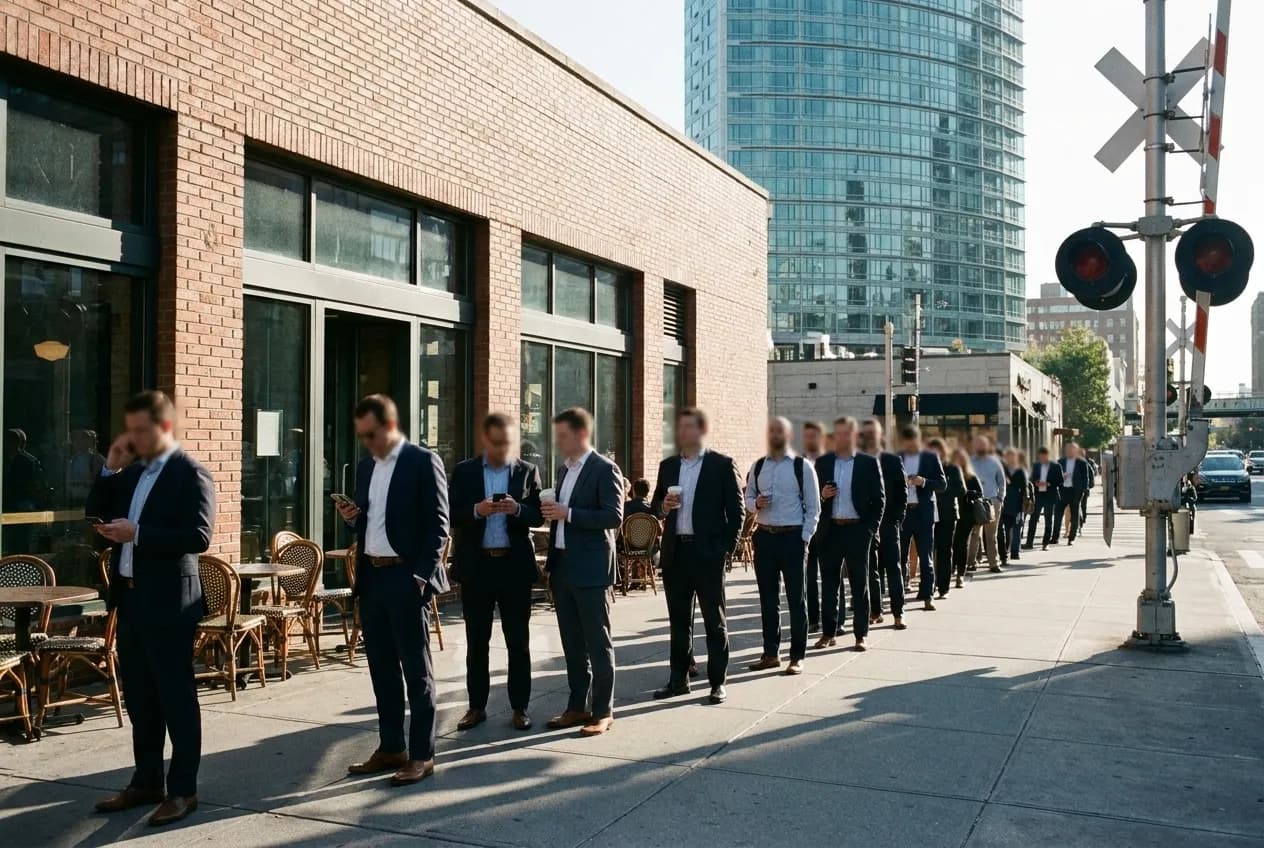
At 8:10 on a Tuesday morning in Midtown, the line out the door of a Third Avenue cafe wraps around the scaffolding. Fifteen people deep, nobody talking, half of them holding phones in one hand and pulling rolling bags with the other. The line moves in surges—four people served in ninety seconds, then a pause, then another burst. This is not a line for coffee. This is a line for caffeine delivery at a known price point on a familiar route between the subway and the office. The queue is measuring operational speed and geographic convenience. It tells you nothing about whether the espresso is dialed in or whether the barista can make a flat white that doesn't taste like hot milk.
Open the Karpo app right now to see which cafes in your neighborhood have short waits, which ones are moving fast despite the line, and where the Saturday crowd hasn't formed yet.
The same fifteen-person line at 11:00 on a Saturday morning in the same neighborhood means something completely different, and if you don't read the difference you will make the wrong choice. Saturday at eleven, the line moves differently—people linger at the counter, ask questions, order food, rearrange bags to find wallets. The queue is not a commuter efficiency test. It is a sign that people are buying the room itself: the tables, the light, the license to sit for an hour. If you join that line expecting to be in and out in three minutes, you have misread the information. If you are trying to grab coffee before a noon meeting, you should walk two blocks and find the weekday place that is nearly empty because the commuters are gone.
The Weekday Morning Line Is Not a Quality Signal
Between 7:30 and 9:00 on weekdays, the longest lines in Manhattan form at cafes that have optimized for volume, not craft. They are on avenues, not side streets. They have wide counters, multiple registers, and menu boards that list sizes and prices in a grid. The line moves because the system is designed to move it. The espresso comes from a superautomatic machine that produces identical shots every time, or from a batch brew that was made at 6:45. The milk is steamed in pitchers that hold enough for three drinks. You are not being served by a barista who is thinking about extraction time. You are being served by someone who is executing a script under time pressure.
This is not a criticism. If you need caffeine and you need it now and you are on your way to a 9:00 meeting, this line is giving you exactly what you need. The mistake is assuming that because fifteen people are willing to wait, the coffee must be worth waiting for. They are not waiting for coffee. They are waiting because this location is between the E train and their office, because they know the line moves, because they have the app on their phone and the order is already placed. The queue is a logistics problem that has been solved, not a verdict on the product.
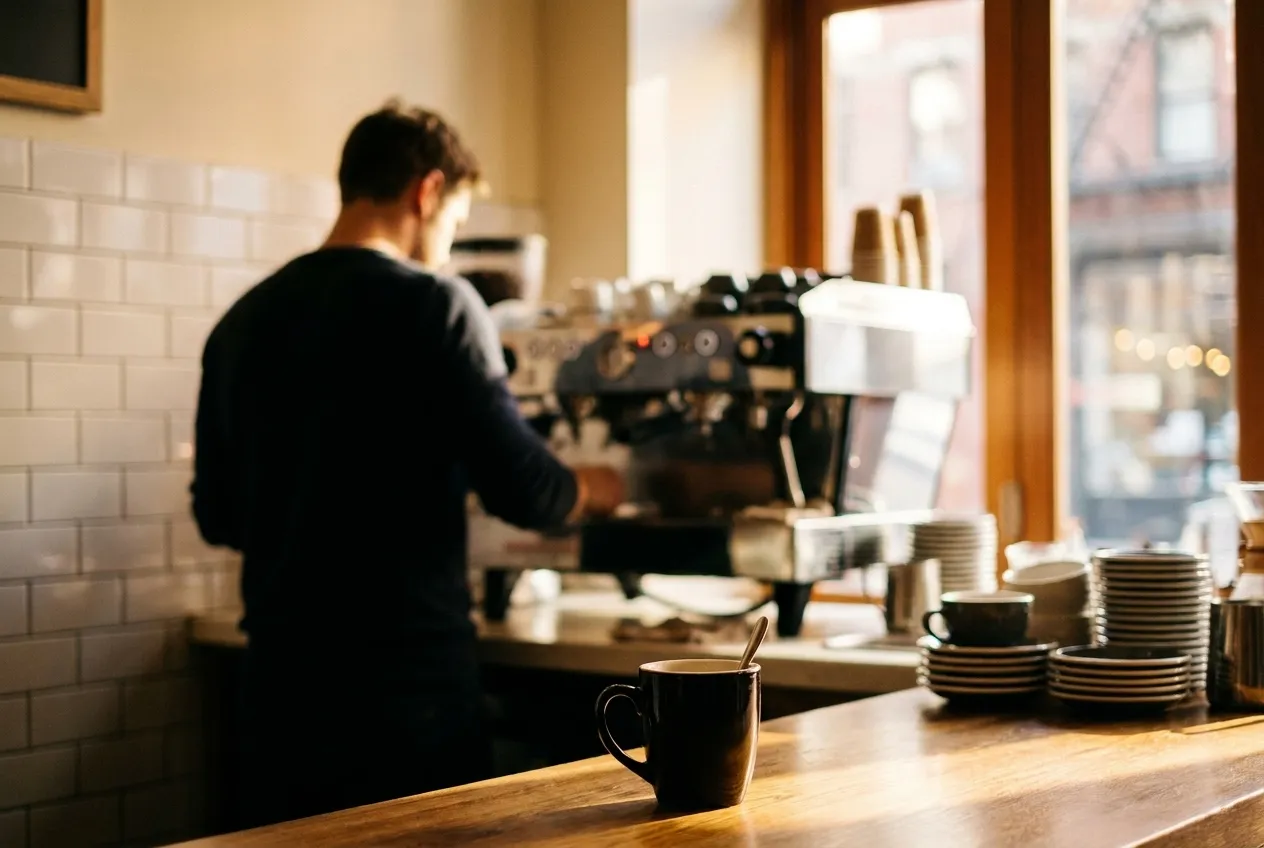
If you want to drink good coffee on a weekday morning, you are looking for the opposite pattern. You want the place on the side street that has four people inside and no line outside at 8:30. You want the place where the person behind the counter looks up when you walk in and asks if you want your usual, even though you have never been there before, because they are trying to learn faces. You want the place where the espresso machine is a La Marzocco or a Slayer and there is one person working it and they are not in a hurry. That place exists two blocks from the line you were considering joining. It is slower. It is better. The commuters do not go there because it does not solve their problem.
The Weekend Line Means You Are Buying a Seat
Saturday and Sunday mornings in brownstone neighborhoods—Fort Greene, Park Slope, the West Village, the Upper West Side between 80th and 96th—the line outside the corner cafe is a different animal. It forms later, between 9:30 and noon. It moves slowly. People are holding tote bags and wearing sweatshirts and sneakers. They are not commuting. They are buying a table and the social license to occupy it for two hours while they read or work or wait for a friend. The coffee is the entry fee.
If you join this line and you do not want a seat, you are paying the wrong price. The ten-minute wait is not for the latte. It is for the corner table by the window that will open up in fifteen minutes when the couple with the stroller leaves. If you just want the latte, you should ask if there is a to-go line or a separate register. Many weekend-busy cafes have learned to split the queue. If they have not, you should walk three blocks in any direction and find the place that has not been written about yet, the place that opened six months ago and is still building a weekend crowd. That place has empty tables and no wait and the same Illy or Stumptown beans as the place you just left.
The weekend line also tells you something about timing. If the line is out the door at 10:00, it will be out the door until 1:00. The weekend cafe crowd does not turn over the way the weekday crowd does. People stay. If you arrive at 10:00 and decide not to wait, coming back at 11:30 will not improve your situation. The better move is to come back at 2:30 or 3:00, after the brunch window closes and before the late afternoon people arrive. Or come at 8:00, before the line forms. Weekend morning cafes in residential neighborhoods are often quiet until 9:00 because the neighborhood itself is quiet until 9:00.
How the Line Moves Tells You What You Will Get
A line that moves in bursts—four people served, then a pause, then four more—means there is a bottleneck somewhere in the system. Usually it is the espresso machine. The cafe has one two-group machine and one person working it and drinks are coming out in waves timed to how long it takes to pull two double shots and steam two pitchers of milk. This line will take longer than it looks. If there are twelve people ahead of you and the line is moving in bursts of four, you are waiting for three full cycles. That is twelve to fifteen minutes, not six.
A line that moves steadily, one person every thirty to forty seconds, means the system is optimized and you are probably getting batch brew or a superautomatic machine. This line will move as fast as it looks. If there are twelve people ahead of you, you are six minutes from the counter. The coffee will be fine. It will not be memorable. If you are meeting someone in ten minutes, this is the correct line.
A line that does not move at all for two or three minutes and then suddenly moves very fast means someone at the front is ordering for an office or a group. Once that order clears, you will be at the counter in under a minute. Do not leave this line. You are closer than you think.
The other thing to watch is whether people are leaving with bags or boxes. If every third person is walking out with a pastry bag or a box of croissants, the line is not just a coffee line. It is a bakery line. Bakery lines move more slowly because people are looking into the case and asking questions and deciding between the almond croissant and the chocolate croissant and then changing their mind. If you only want coffee, ask if you can order at the far end of the counter. Many bakery-cafes will let you skip the pastry decision queue if you are only ordering drinks.
The One Habit That Transfers Everywhere
Before you join any line at any cafe in New York, look at your watch and look at the people in front of you. If it is a weekday before 9:30 and everyone is dressed for work and holding a phone, you are in a logistics line and the coffee is a commodity. If it is a weekend before noon and people are wearing sneakers and carrying tote bags, you are in a line for a table and the wait will be longer than the number of people suggests. If the line is moving in bursts, add five minutes to your estimate. If people are carrying pastry bags, add three.
The line is information. It is not a review. It is not a recommendation. It is a real-time signal about what the cafe is optimized for and what the people in front of you are trying to buy. Read the hour, read the rhythm, and decide whether you are buying what they are selling. Most of the time, the cafe with no line two blocks away is selling the thing you actually want. The line is not hiding the good coffee. The line is often avoiding it.
Tags: #CoffeeNearMe #NYCCoffee #ManhattanCafes #BrooklynCoffee #CoffeeLines #NewYorkCoffee #CoffeeStrategy #MorningCoffee #WeekendBrunch #CoffeeCulture #NYCEats #CoffeeAndDessert #ThirdWaveCoffee #CoffeeQueues #LocalCoffee
Please drink responsibly. Must be of legal drinking age.
All trademarks are the property of their respective owners.
Ask Karpo first
Open the Karpo app to see which cafes near you have seating right now, which ones are moving fast despite the crowd, and whether the place you are walking toward has a line that will take three minutes or fifteen. Karpo checks live patterns and gives you a route to the one that matches what you are actually trying to do this morning.