Most coffee advice in New York is written as though you drink one cup a day and want it to be the best cup available. In practice a working day in this city involves two or three, they happen at different hours, and they are doing different jobs. The seven o'clock cup needs to be fast and on your route. The mid-morning one is usually attached to a conversation. The afternoon one is the only one you actually sit down with. Judging all three by the same standard - how good is the coffee - is why people end up loyal to a cafe that is wrong for two of the three occasions.
The right cafe changes with the hour, and so does which of them is even open. Tell Karpo what the cup is for - out the door, a meeting, or two hours of sitting - and where you are, and it will match the room to the job rather than to a star rating.
The first cup is a logistics problem
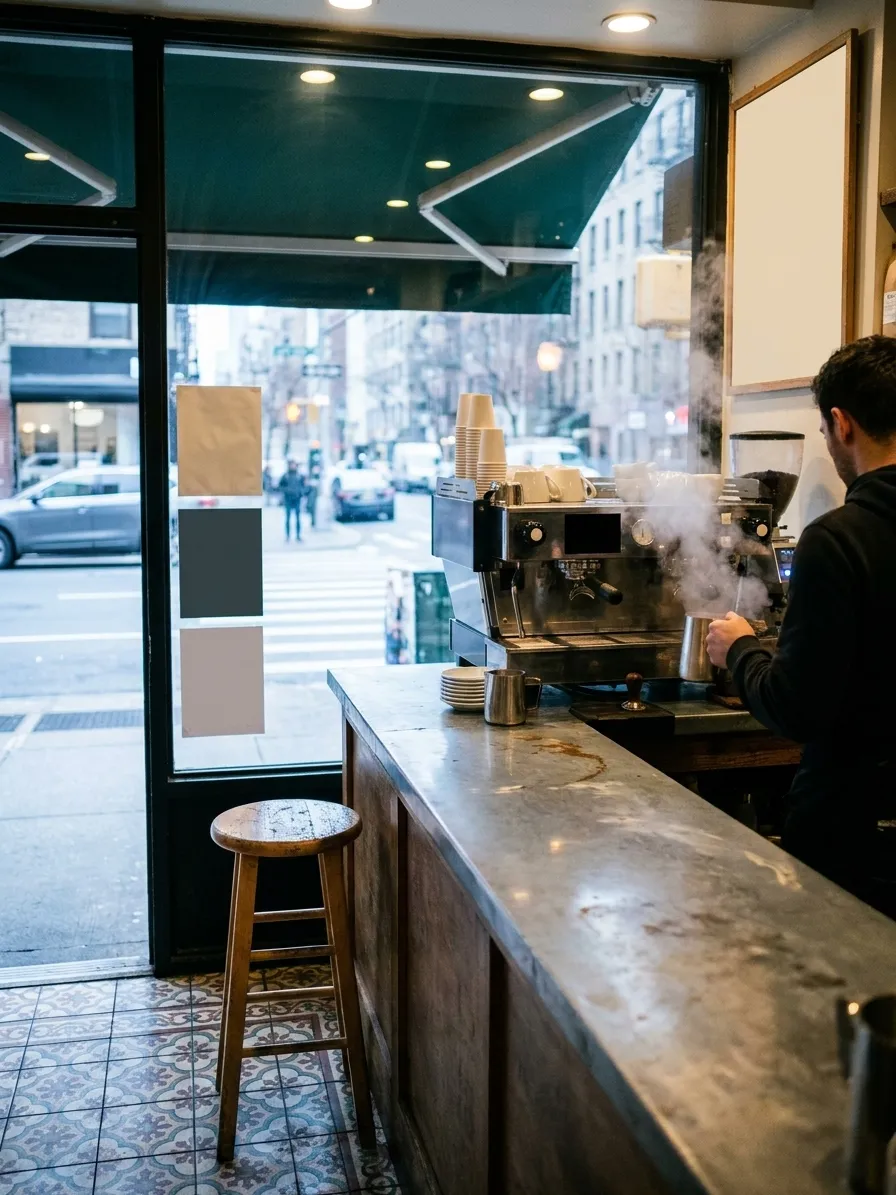
Before eight in the morning the only qualities that matter are open, on the way, and fast. A cafe two blocks off your route costs you six minutes each way, which over a working week is an hour spent on a marginally better espresso. The city has a good supply of counters that open early precisely because they are serving people going somewhere.
The useful distinction at this hour is between places built for a queue and places built for a stay. A narrow shop with an order end and a pickup end will move thirty people in ten minutes. A room with sofas and a single register will not, and at 7:40 that is the difference between catching your train and not.
The meeting cup and the acoustics nobody checks
Mid-morning coffee is usually a conversation, and the variable that decides whether it works is sound rather than seating. Hard surfaces, an open ceiling and a busy grinder produce a room where two people lean across a table and repeat themselves. Carpet, soft furniture, and a machine set back from the floor produce one where you do not.
The other half of it is table geometry. A row of two-tops against a wall is built for exactly this and works well; a communal table means having your conversation in front of four strangers, which is fine for logistics and poor for anything else.
The afternoon cup is the one worth choosing carefully
This is the only cup of the day where the room is the point. It is also the hour when cafe policies diverge most sharply: some places actively want you to stay, with outlets, water, and staff who never look at your table, and others quietly do not, which they signal through counter-height seating and a two-hour rule on a card by the till.
Neither approach is wrong, and reading the signal saves everyone a small unpleasantness. If there are no outlets visible anywhere in the room, that is not an oversight; it is a decision about what the room is for.

What the menu tells you about the roast
A shop with one espresso option is making a choice on your behalf and is usually confident about it. A shop with a rotating single origin next to a house blend is inviting a decision, and the honest answer is that the blend is what the machine is dialled in for most reliably across a day.
If you drink milk drinks, the more informative question is which milk the shop defaults to and whether they charge for alternatives. It is a small thing that indicates how much of the menu is genuinely considered versus assembled.
Price, and what five dollars buys where
The spread across the city is wider than it looks. A cup at a deli counter or a long-standing neighbourhood bakery still lands well under the specialist price, and in a number of cases it is a perfectly good cup made on equipment that has been maintained for twenty years. The specialist shops are charging partly for the bean and partly for the room.
The sensible way to spend is unevenly. Cheap and fast for the commuting cup, whatever is good for the one you sit down with. Paying specialist prices for a coffee you drink walking to the subway is the least efficient version of this.
Decaf, tea and the end of the day
The fourth cup, if it happens, should usually not be coffee, and New York has become genuinely good at the alternatives - proper decaf that is not an afterthought, matcha made by someone who cares, and a growing number of shops doing filter tea seriously.
The signal that a shop takes decaf seriously is whether it has a separate grinder for it. Where it does, the afternoon cup stops being a compromise, which matters more than it sounds if you want to sit in a good room at five and still sleep.
The neighbourhood question
Where you are changes what is realistic. Dense commercial districts have a high supply of fast morning counters and almost nothing that wants you to sit at three in the afternoon. Residential Brooklyn and upper Manhattan are the reverse - plenty of rooms built for lingering, fewer built for a queue at half past seven.
This is worth knowing before you go looking, because it explains a frustration people have without naming it. Trying to find a two-hour working cafe in the middle of a business district at lunchtime is not a search problem; the rooms are not there, and the ones that are have deliberately made themselves uncomfortable.
Tags: #CoffeeNearMe #NYC #NewYorkCoffee #CafesNYC #EspressoNYC #CoffeeAndDessert #WorkFromCafe #NYCGuide #ThirdWave #CoffeeNYC
All trademarks are the property of their respective owners.
Ask Karpo first
One cafe rarely does the whole day well, and the good news is that you do not need it to. Ask Karpo which room near you fits the cup you are about to have.