New York has a reputation for inhospitable coffee shops that chase out laptop users after twenty minutes, but the day-to-day reality is more negotiable than that. Most cafes in Manhattan and Brooklyn never needed to post a policy because they built the answer into the room itself. A twelve-seat shop with bar seating and no visible outlets is not running you out—it simply never invited you in. A place with a back room, long communal tables and power strips mounted every six feet is doing the opposite. The gap between reputation and everyday practice comes down to reading furniture, not signs.
Before you walk three blocks to a cafe that won't let you stay, open the Karpo app and ask what's open now with table space and outlets within ten minutes of where you are.
What the Room Is Telling You
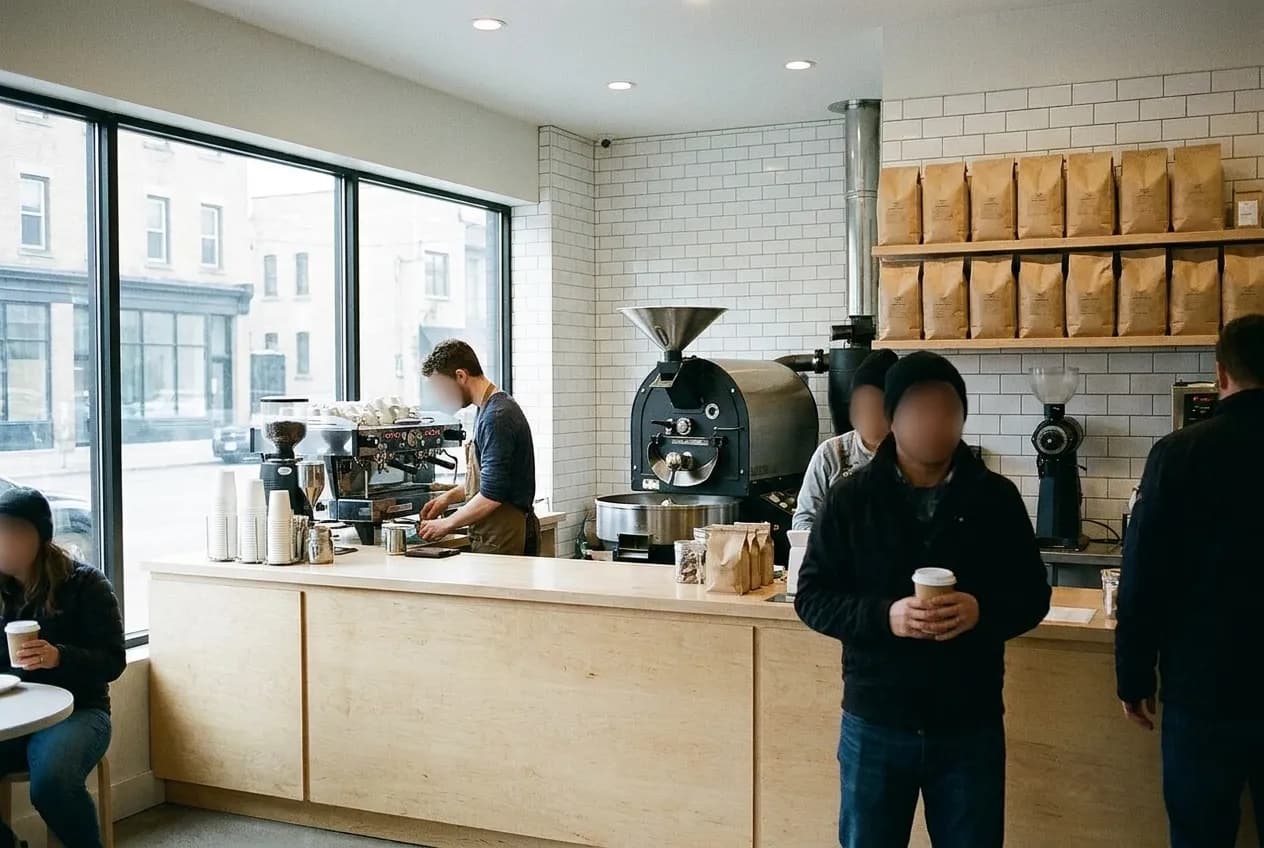
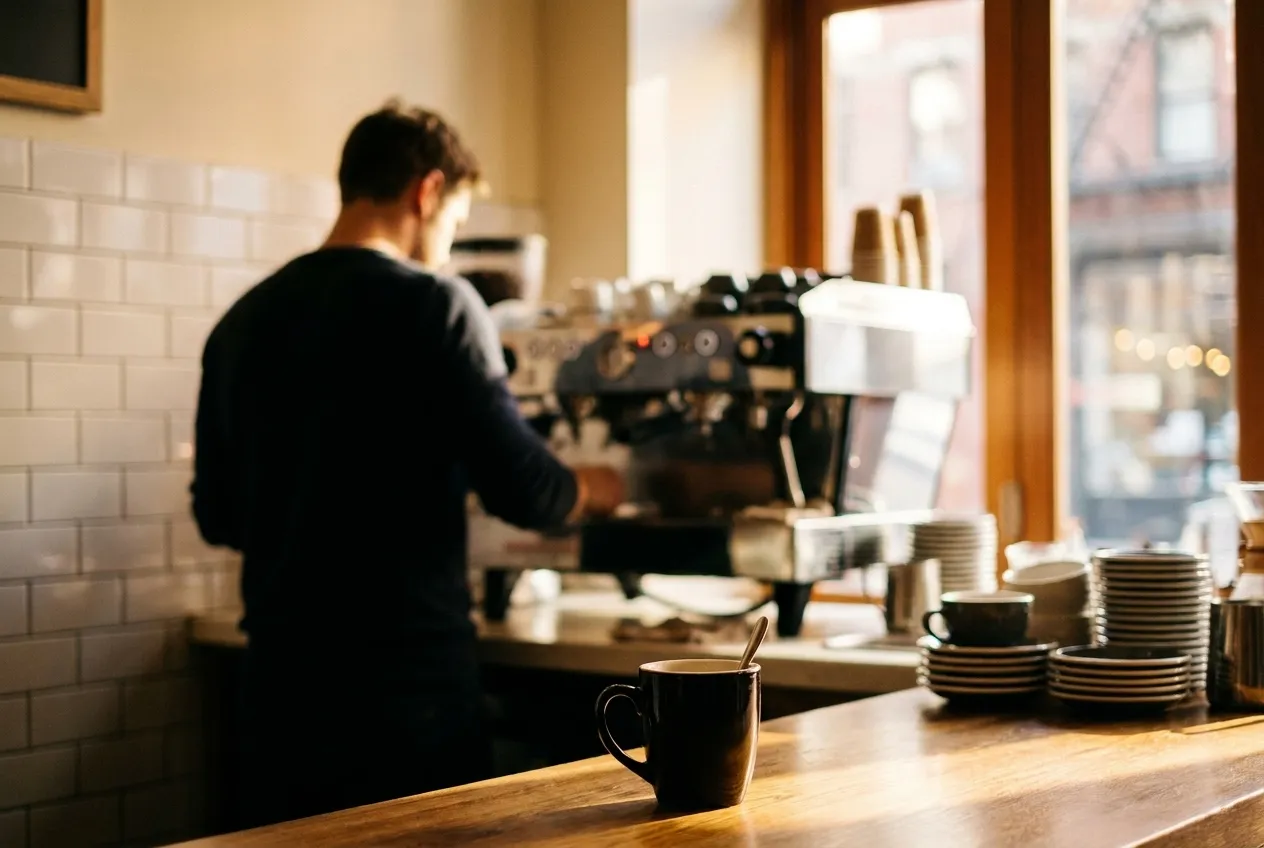
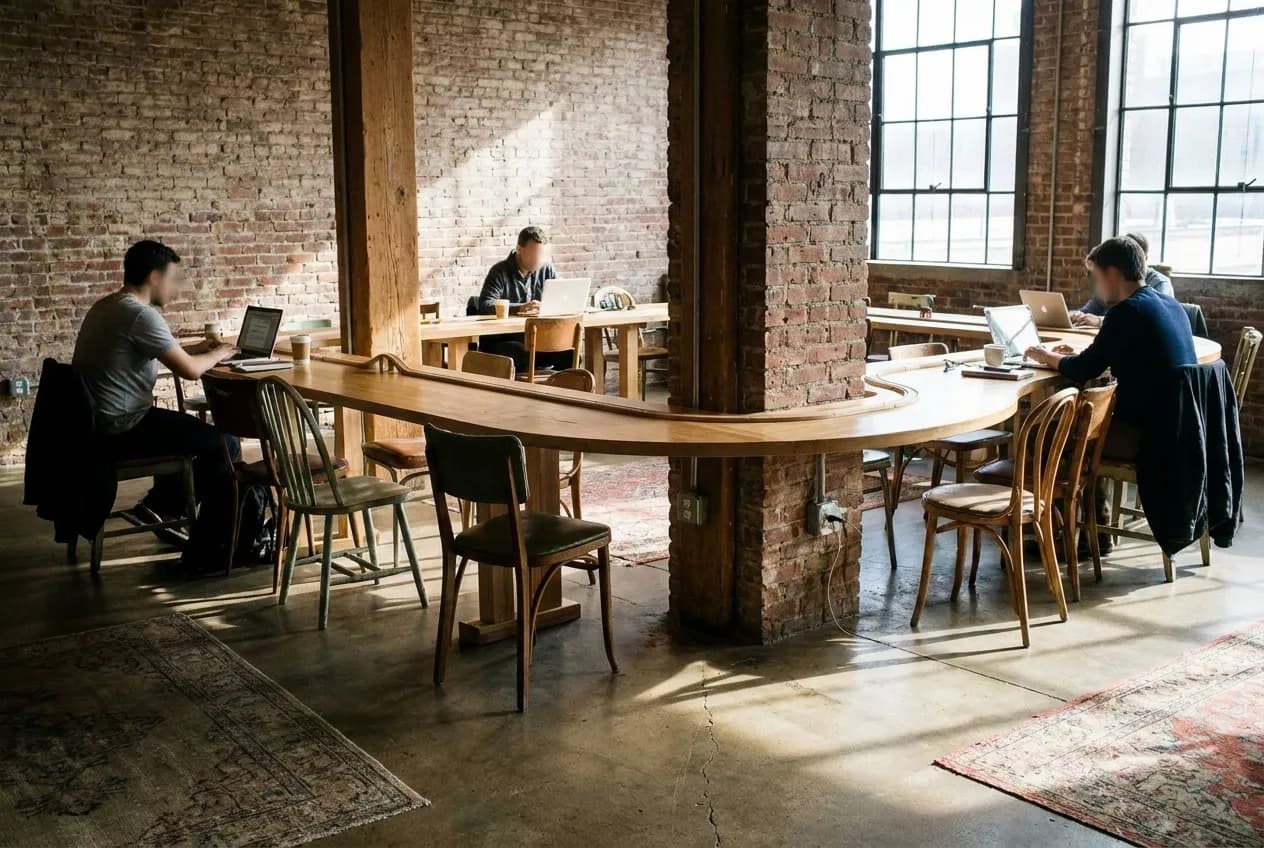
The first signal is the height of the seating. Bar-height counters along the window with backless stools are designed for a fifteen-minute espresso, not a two-hour work session. If most of the seating is at standard table height with real chairs that have backs, the cafe expects longer stays. The second signal is the table size and material. Two-top marble or metal tables with no room for anything beyond a cup and a pastry plate are optimized for turnover. Larger wood tables or any communal seating suggests the business model can absorb people spreading out.
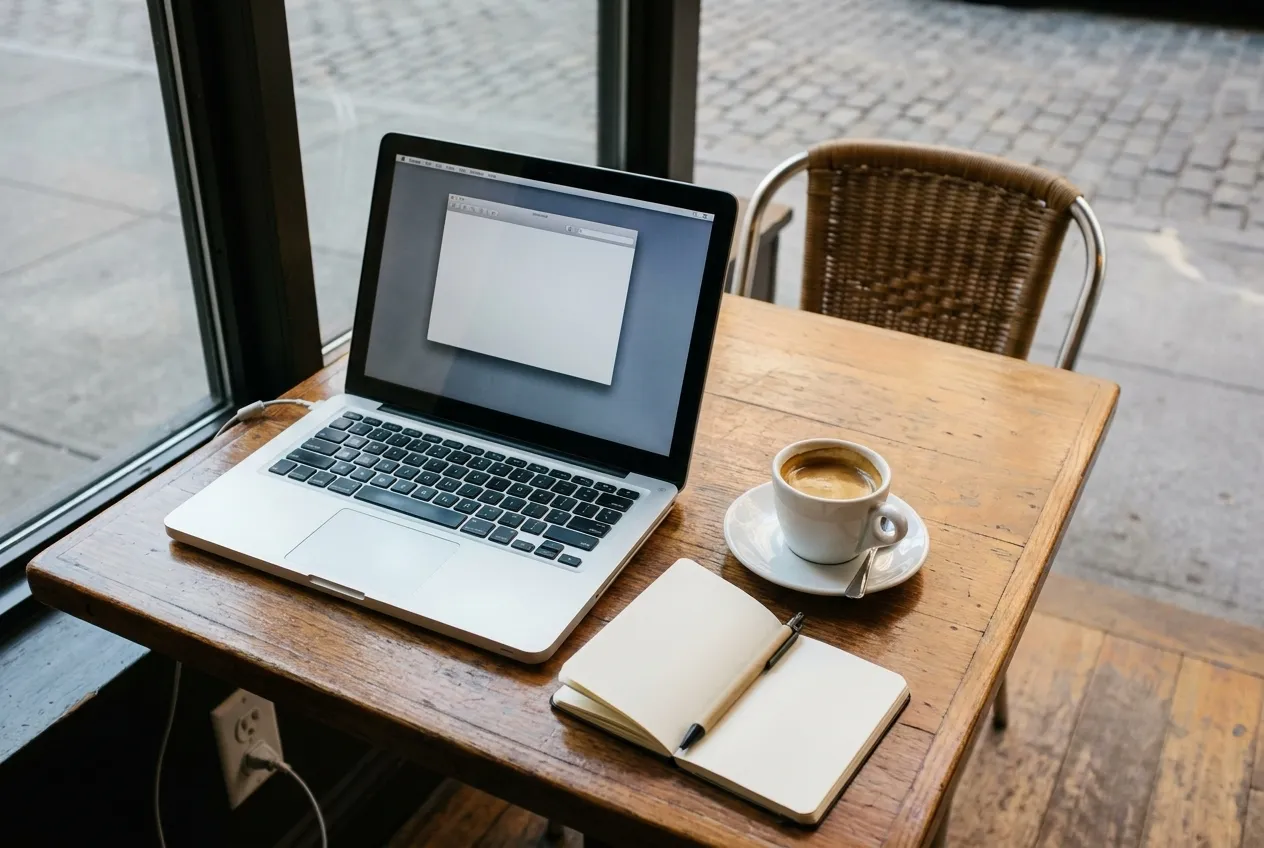
The third signal is outlets and charging infrastructure. If you see power strips mounted visibly on walls or under counters, or if tables have built-in USB ports, the owner planned for laptops. If you have to ask where to plug in, or if the only outlets are behind the espresso machine, you are in a space that tolerates charging but does not encourage camping. The fourth signal is the queue. A line out the door during morning rush does not mean you cannot work there at two in the afternoon, but it does mean the cafe is optimized for volume. You are reading the room at the wrong hour.
These signals combine. A cafe in the East Village with communal tables, visible outlets and no line at ten-thirty on a Tuesday is communicating availability. A cafe in Midtown with two-tops, bar seating and a queue that never ends is communicating something else entirely, even if it has never posted a laptop policy. The etiquette question of how long one order buys is secondary to the design question of whether the room was built to let you stay in the first place.
Where the Laptop-Friendly Clusters Are
The densest concentration of work-friendly cafes runs through the neighborhoods where rents allowed larger footprints and where the customer base includes freelancers, not just commuters. Bushwick, Bed-Stuy and parts of Crown Heights have cafes with back rooms, long tables and all-day tolerance for people working on one coffee and a refill. The same pattern holds in Greenpoint and Williamsburg away from the Bedford Avenue corridor, where the tourist-facing shops are small and the residential blocks have larger spaces.
In Manhattan, the laptop-tolerant clusters are in the East Village below Fourteenth Street and east of Third Avenue, in the West Village away from the Bleecker Street shopping stretch, and scattered through the Upper West Side between Seventy-Second and Ninety-Sixth, where cafes serve a neighborhood clientele that includes writers and grad students. The Lower East Side has pockets of it south of Delancey, particularly along the side streets between Essex and Clinton. These are not neighborhoods where every cafe welcomes laptops, but they are neighborhoods where enough do that you can walk two blocks and find another option.
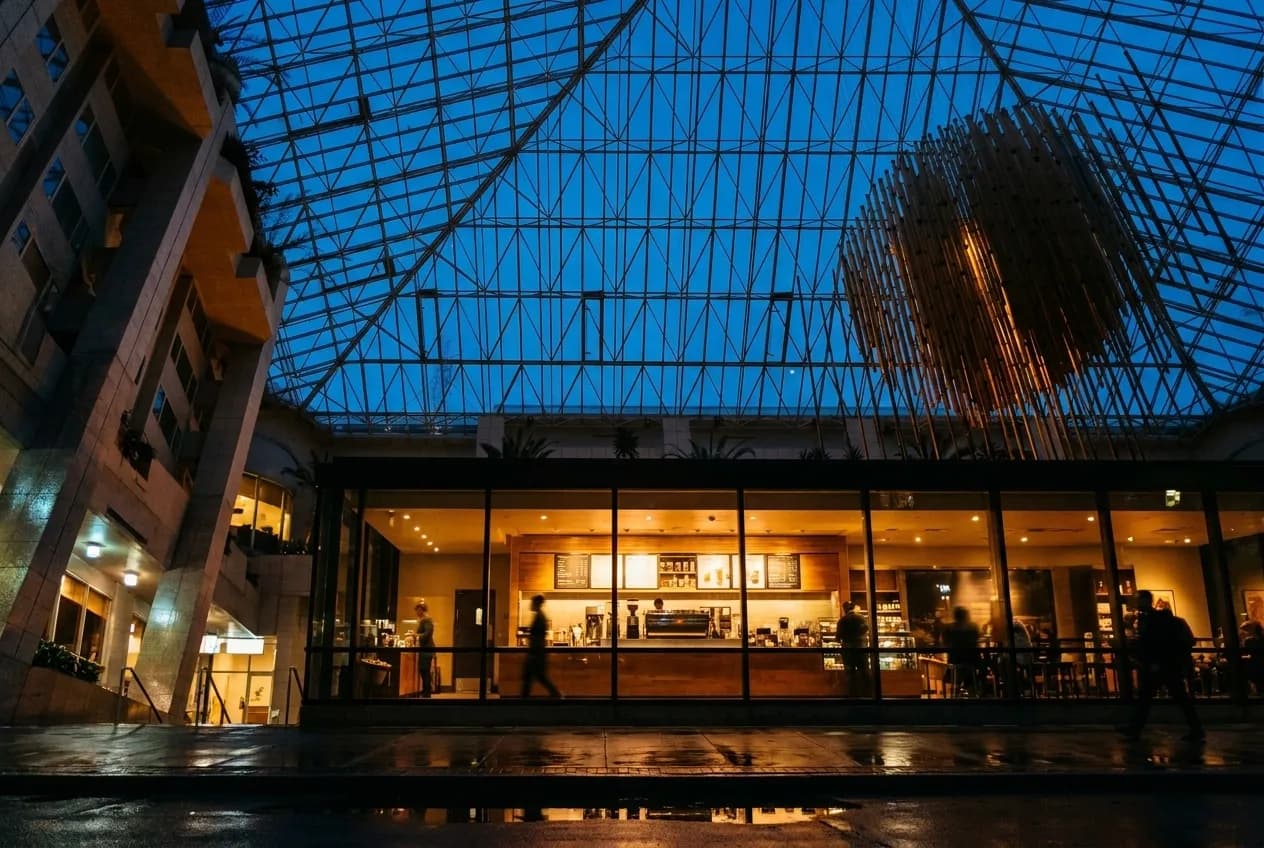
The harder neighborhoods are Midtown, the Financial District and the Bleecker-SoHo-Nolita triangle, where high rent and heavy foot traffic push cafes toward rapid turnover. The shops are smaller, the seating is minimal, and the design is optimized for grab-and-go or a ten-minute sit-down. You will find exceptions—quieter side streets, second-floor spaces, cafes tucked into office lobbies—but the default is not built for staying. If you need to work in these areas, the library branches and hotel lobbies are often better bets than the cafes.
What to Do When You Are in the Wrong Neighborhood
If you are in a part of the city where no cafe is set up for laptop work, the best move is not to fight the room. Ordering a second drink and hoping the barista does not notice you have been there ninety minutes does not work in a shop with eight seats and a line. The alternative is to recognize that New York has other infrastructure for this: public library branches with free WiFi and long tables, hotel lobbies that tolerate non-guests during off-peak hours, and coworking day-pass options that cost less than three lattes.
The New York Public Library system has branches in nearly every neighborhood, most with WiFi, power outlets and tables where sitting for two hours is expected rather than tolerated. The main research branches—Mid-Manhattan on Fifth Avenue, the Jefferson Market branch in the West Village, the Stavros Niarchos Foundation Library on Forty-Second Street—have dedicated work areas and stay open later than neighborhood branches. Hotel lobbies work best in the late morning and early afternoon, after checkout and before check-in, when the seating areas are empty and staff are less likely to ask if you are a guest. The Ace, the Marlton, the Bowery and the William Vale all have lobbies with tables, outlets and enough ambient noise to work through.
Coworking day passes are another option when you are stuck in a laptop-hostile area and need a guaranteed seat. Most coworking spaces in Manhattan and Brooklyn sell single-day access for fifteen to thirty-five dollars, which is comparable to what you would spend buying enough coffee to justify a four-hour stay. The calculation is whether you need the guaranteed infrastructure or whether you would rather take the chance on finding a cafe with space.
How to Decide in Ten Seconds
The room-reading method works because the signals are fast. You can tell from the sidewalk whether a cafe has communal tables or only two-tops. You can tell from the door whether there is a back room or whether the entire space is visible from the counter. Once you are inside, a ten-second scan shows you whether people already have laptops open, whether the outlets are accessible, and whether the vibe is calm or stressed. If you see open laptops, available seating and no queue, you are fine. If you see a line, tense baristas and everyone standing, you are not.
The other fast signal is time of day. The same cafe that is slammed and laptop-hostile at eight-thirty in the morning may be half-empty and completely tolerant at two in the afternoon. Weekday mornings are the worst time to look for work-friendly seating in any neighborhood; midday and late afternoon are better. Weekend mornings are unpredictable—some neighborhoods empty out, others fill with brunch crowds. The timing question is as important as the furniture question, and reading both together is what keeps you from walking into the wrong room.
The final signal is your own order. If you are planning to stay two hours, ordering a single drip coffee signals that you know the deal and are not trying to take advantage. Ordering a more expensive drink—a latte, a cortado, something that requires labor—buys you more goodwill, but it is the second order that actually matters. Buying a pastry or a second coffee after an hour shows you understand the exchange. The cafes that are built for longer stays do not care if you nurse one drink for ninety minutes, but the ones that are not built for it will notice. Reading the room correctly means you avoid the places where that negotiation is going to be uncomfortable in the first place.
Tags: #CoffeeNearMe #NYCCoffee #LaptopFriendlyCoffee #NYCCafes #WorkFromCafe #CoffeeShopsNYC #BrooklynCoffee #ManhattanCoffee #RemoteWorkNYC #CafeWorkspace #EastVillageCoffee #BushwickCoffee #NYCFreelance #CoffeeAndDessert #KarpoNYC
Please drink responsibly. Must be of legal drinking age.
All trademarks are the property of their respective owners.
Ask Karpo first
Before you walk into the wrong cafe, open the Karpo app and ask what is open right now with table space, outlets and a tolerance for staying. Karpo checks current conditions, reads the room for you, and gives you a route to a place where your laptop is actually welcome.