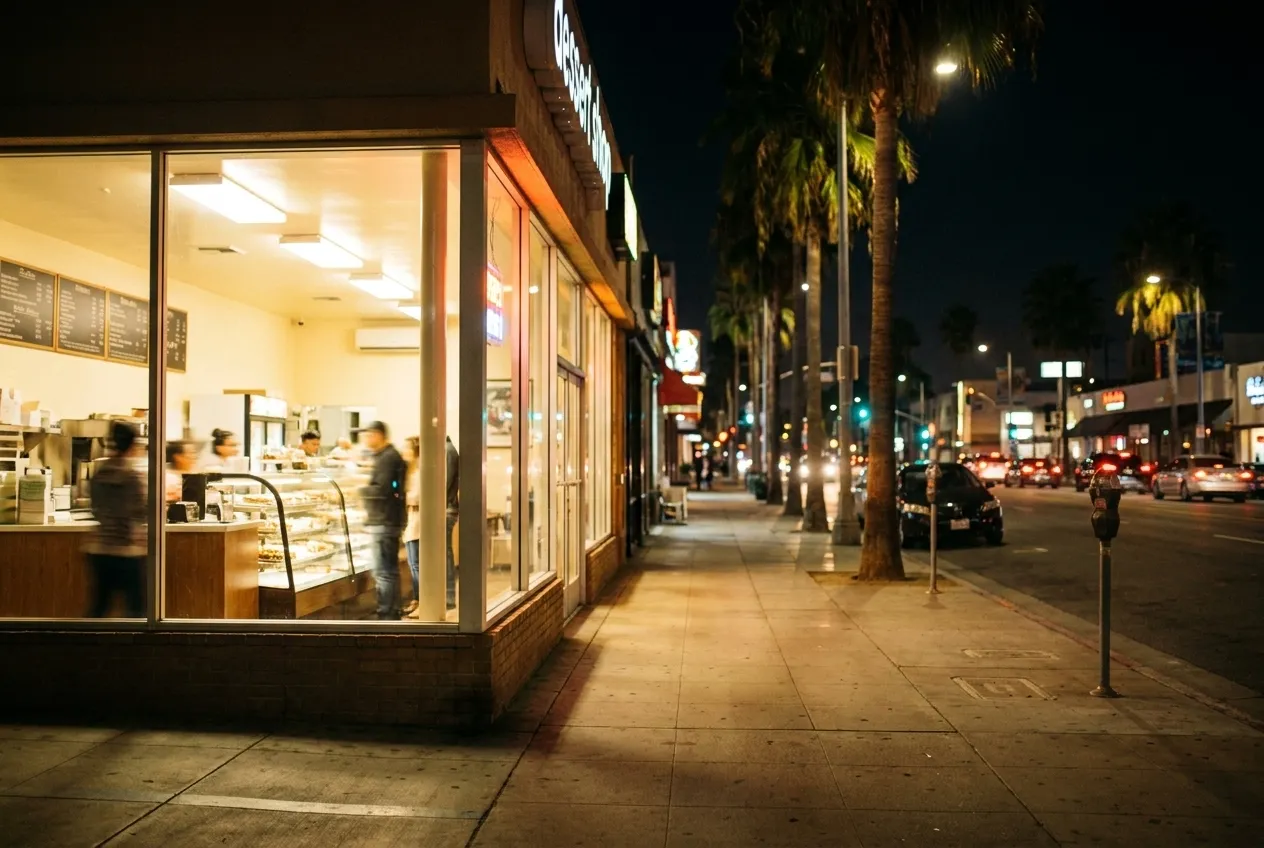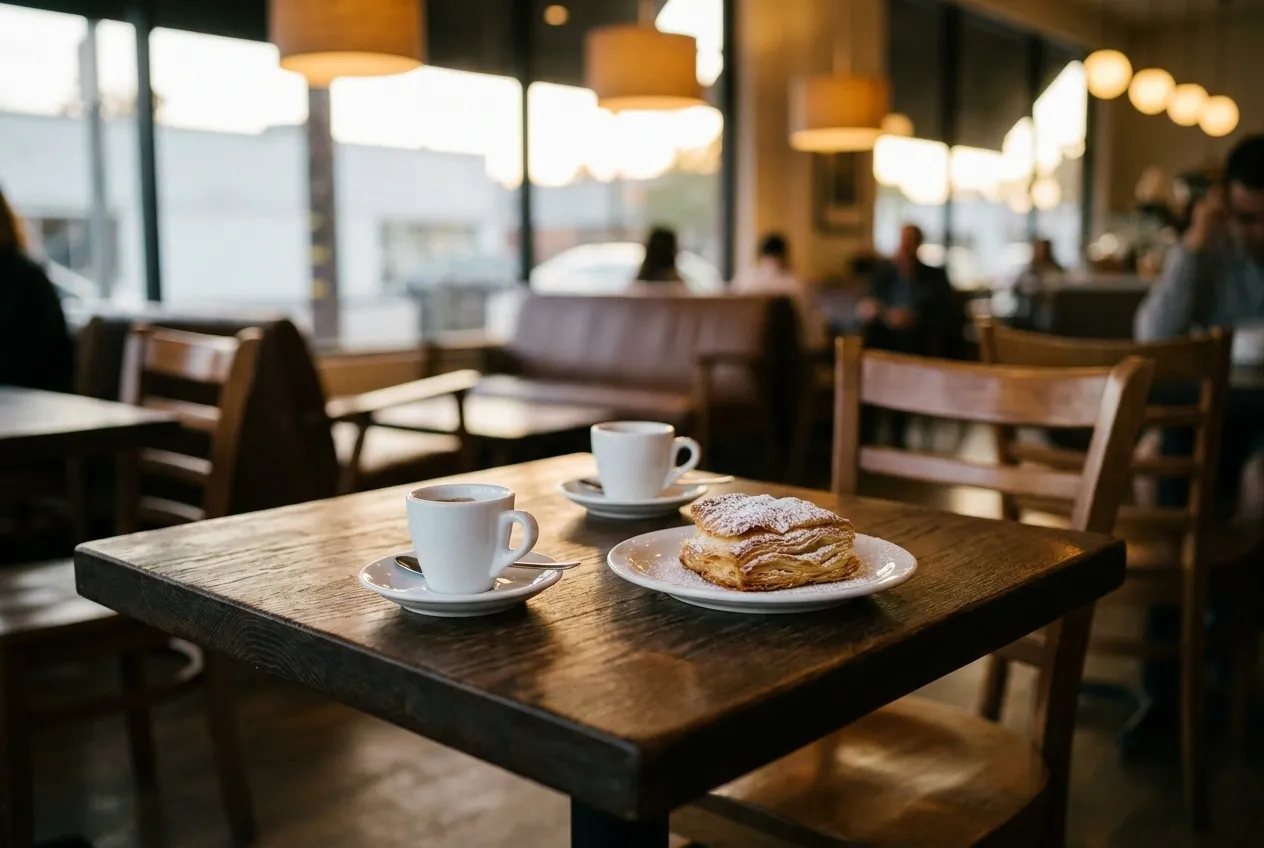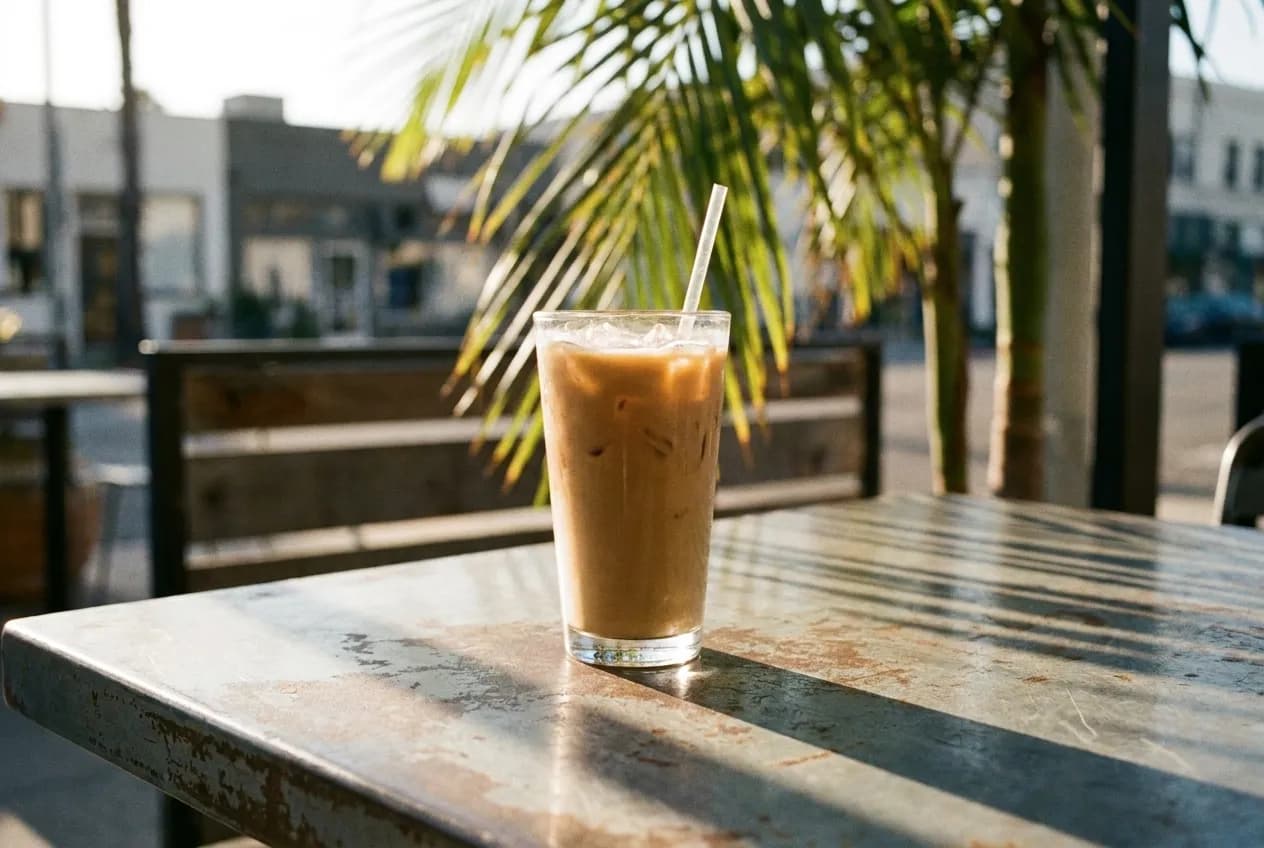
Los Angeles has a coffee reputation built on third-wave roasters and poolside Instagram moments, but the daily reality splits into two incompatible systems. One is built for drivers: a window facing the street, a transaction under ninety seconds, a cup you finish before you merge onto the freeway. The other is built for staying: a patio with real shade, tables you can claim for two hours, and coffee that costs enough to justify the occupation. Searching for both at once gets you neither. The window places have no seating. The patio places have lines that assume you have already parked and committed to staying.
Ask Karpo which coffee setup is actually open on your route right now and whether the patio seating is in sun or shade at this hour.
Window Service: Built for the Commute
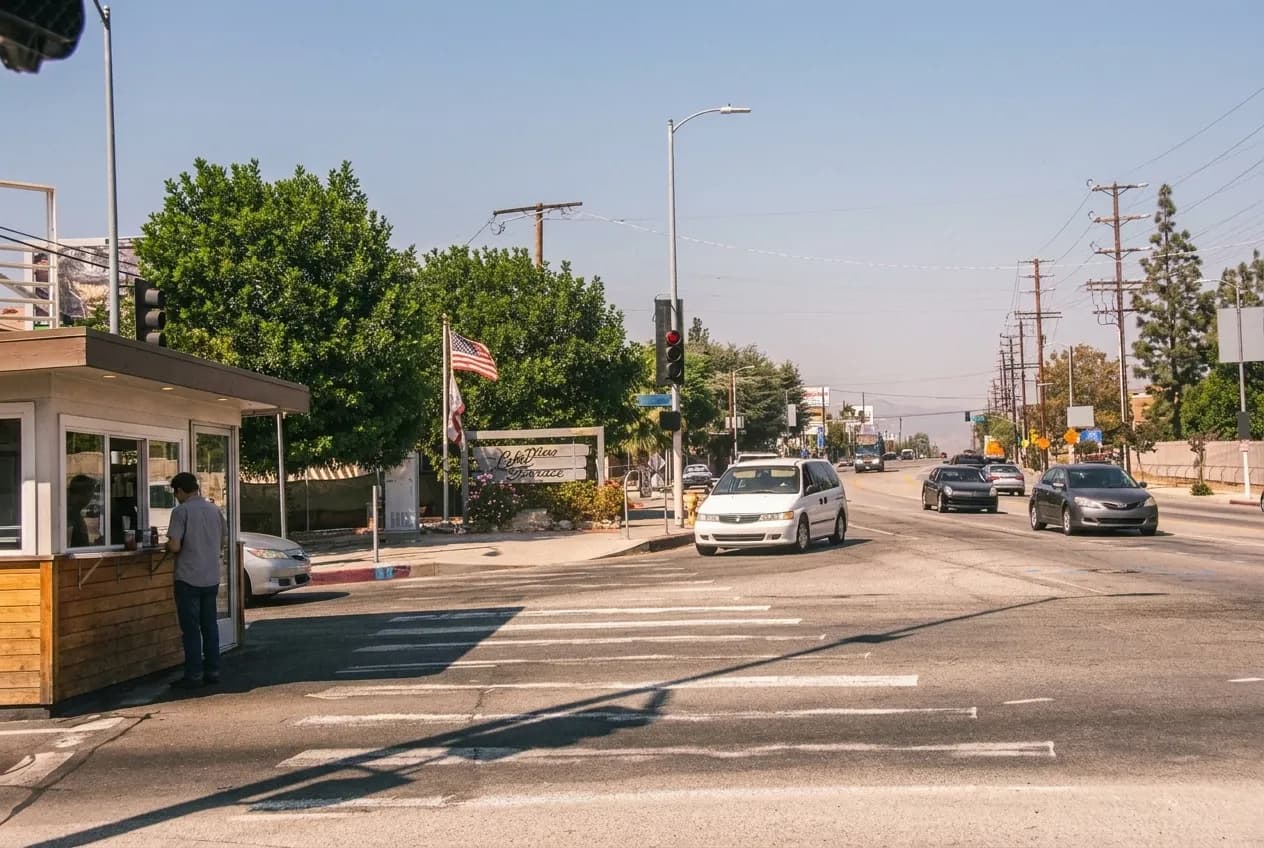
The window model clusters along commercial strips where parking lots meet through-streets. You will find the highest concentration in Silver Lake along Sunset Boulevard between Hyperion and Alvarado, in Los Feliz on Vermont south of Franklin, and throughout Culver City on Washington Boulevard west of Overland. These blocks developed around mid-century car traffic and never reformed. The buildings sit fifteen feet back from the sidewalk with room for three queued cars and an exit lane.
Peak hours run from seven to nine thirty in the morning and again from two to three thirty in the afternoon. The morning window is commuters leaving the Eastside for Westside jobs. The afternoon window is the same route in reverse plus parents collecting children. Outside those brackets the wait drops to under three minutes. The menu is calibrated for speed: drip coffee, one size of latte, cold brew in cans. Pastries come pre-bagged. Customisation slows the line and the format discourages it.
The value proposition is reliability and speed, not discovery. You will not find single-origin pour-overs or house-made almond milk. The coffee is good enough to finish and strong enough to work. What you pay for is the elimination of the parking problem and the guarantee that you will be back in your car in under five minutes even if four people arrived before you. This system works when your day is structured around windshield time and your next obligation starts in thirty minutes.
Patio Seating: The Two-Hour Minimum
The patio model clusters in neighborhoods where parking is already a committed act. The densest concentrations are in Highland Park along York Boulevard and Figueroa Street, in Echo Park on Sunset east of Alvarado, throughout Los Feliz Village between Hillhurst and Vermont, and in West Hollywood along Melrose between La Brea and Fairfax. These blocks assume you have parked once and are staying in the neighborhood for multiple stops. The coffee shop is an anchor, not a drive-by.
Patio seating means tables under umbrellas or awnings, sometimes extending onto a closed sidewalk section, often sharing a courtyard with adjacent retail. The tables are the product. The coffee is the entry fee. A twelve-ounce latte runs between five and seven dollars and buys you occupancy rights for up to two hours during off-peak periods. Peak periods run from nine to noon on weekends and from eight to ten on weekday mornings. During peak hours the implicit time limit drops to forty-five minutes if people are waiting, though enforcement is social rather than posted.
The menu reflects the longer transaction. You will find five milk options, three roast profiles, pour-overs made to order, and pastries from named bakeries displayed on the counter rather than pre-wrapped. Ordering takes longer because the question set is larger and because the person in front of you is asking about oat milk provenance. The coffee itself is often better, sometimes significantly better, than the window model, but better is not the same as faster or more convenient.
What you are buying is the table and the time, not the beverage. This system works when you have already parked, when you have two hours before your next obligation, when you need to work on a laptop or meet someone face-to-face, or when the goal is to be in a neighborhood rather than to pass through it. The patio model assumes you are already stationary and that the coffee is part of a larger block of neighborhood time.
Which System to Pick
The decision comes down to whether you have parked. If you are still in the car and your next stop is more than two miles away, the window model is faster and often cheaper. If you are heading east-to-west or west-to-east during morning commute hours, the window clusters on Sunset in Silver Lake or on Washington in Culver City will save you fifteen minutes over trying to park near a patio place. If your route involves surface streets rather than freeways, the window option eliminates the variables. You know the transaction time and you know you will not be hunting for parking.
If you have already parked, or if parking is not a constraint because you live in the neighborhood or arrived by bike or bus, the patio model delivers better coffee and a place to sit. The clusters in Highland Park and Los Feliz Village work well if you are combining coffee with a bookstore visit, a lunch spot, or errands that keep you on the same three-block radius for ninety minutes or more. The patio makes sense when the coffee stop is part of a longer visit rather than a standalone errand.
Timing matters more than geography. A patio place at seven in the morning on a weekday will be nearly empty and you can get in and out in under ten minutes if you skip the table. The same place at ten on a Saturday will have a fifteen-minute wait just to order. A window place at two in the afternoon will be dead quiet. The same window at eight fifteen in the morning will have six cars queued. Knowing which system peaks when lets you cross over occasionally, but in general the two formats serve different trip structures and trying to force one into the other's time slot creates friction.
The Trade-Off Worth Accepting
Neither system is better. They are optimised for different problems. The window model sacrifices coffee quality and menu variety to solve the parking and time problem. The patio model sacrifices speed and convenience to solve the seating and quality problem. Los Angeles has enough of both that you can pick the format that matches the rest of your day rather than trying to compromise.
The mistake is searching for a hybrid that does not exist. A place with great coffee, fast service, easy parking, and a table where you can sit for an hour does not cluster anywhere in useful numbers. The few examples that approach it are in low-density areas like Atwater Village or Eagle Rock where the parking lot is large enough and the foot traffic is low enough that the tension between speed and occupancy never materialises. But those neighborhoods are not on most commute routes and they do not solve the problem if you are already in Silver Lake or Culver City.
The trade-off worth accepting is this: if you want speed and no parking drama, you drink slightly worse coffee and you drink it in the car. If you want a table and better beans, you commit to parking once and staying in that neighborhood for an hour or more. Los Angeles has built two separate coffee infrastructures and they do not converge. Knowing which one your day requires saves more time than trying to find the exception.
Tags: #CoffeeNearMe #LosAngelesCoffee #LACoffeeShops #SilverLakeCoffee #HighlandParkLA #LosFelizCoffee #CulverCityCoffee #DriveThruCoffee #CoffeePatio #LACommute #CoffeeAndDessert #LosAngelesEats #LAFoodScene #CoffeeStrategy #LACoffeeCulture
Please drink responsibly. Must be of legal drinking age.
All trademarks are the property of their respective owners.
Ask Karpo first
Ask Karpo which coffee format is open on your current route and whether the morning queue has cleared yet. The Karpo APP knows which window places are running at normal speed right now and which patio clusters have shade at this hour. Open the APP and ask before you commit to parking or join a line.