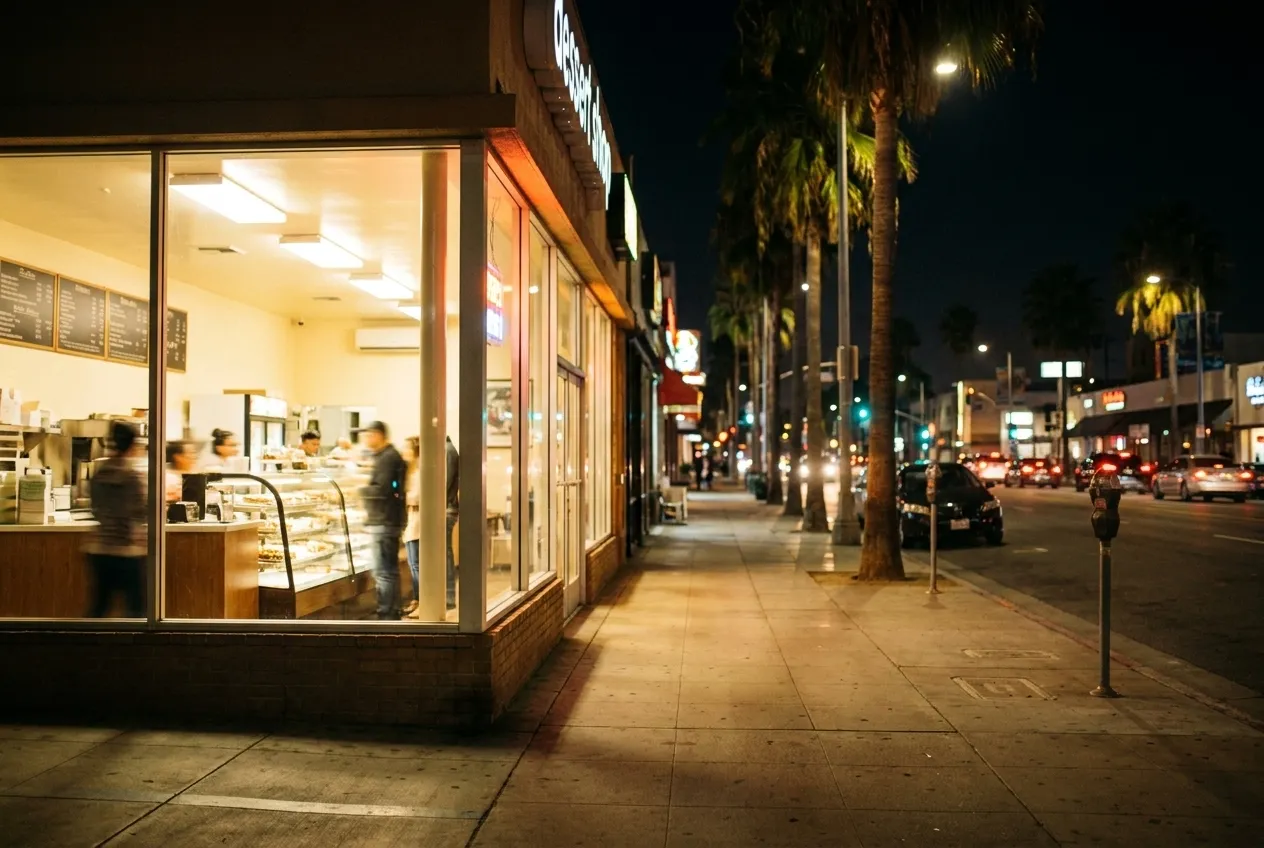
You are standing in front of a cafe at three in the afternoon in Los Angeles, deciding whether to order for here or to go. The decision is not really about the coffee. It is about whether you are willing to spend forty minutes sitting still while the 405 clears, or whether you would rather take your chances and merge onto a freeway that will not move for an hour. The calculus changes depending on where you are, what kind of cafe you are standing in, and how many parking tickets you are willing to risk.
Open the Karpo app right now to see which cafes near you have seating available in the next twenty minutes and whether the parking situation on their block makes a forty-minute stay realistic.
The Corridor Geography of Afternoon Coffee
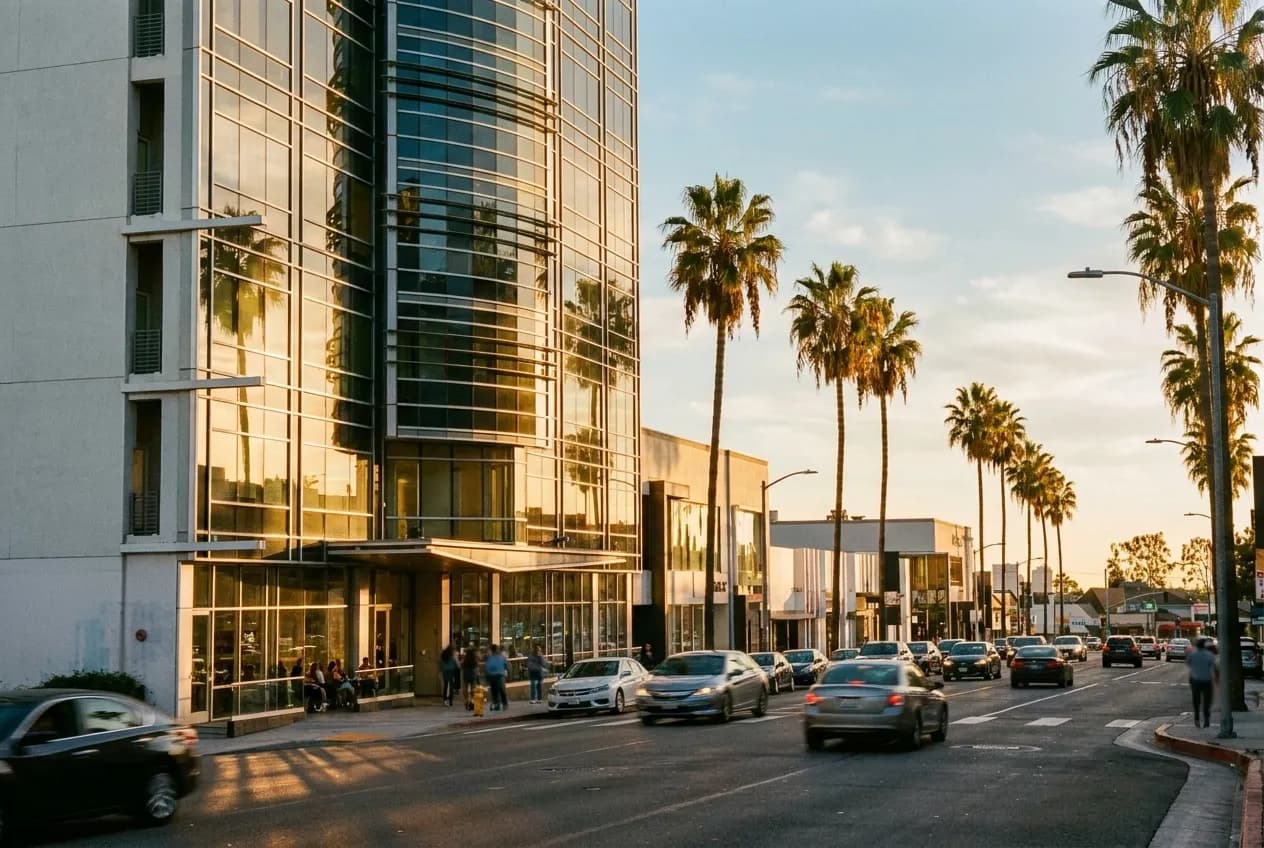
Los Angeles afternoon coffee clusters sit on or just off the major commute corridors, which means the decision to stay is also a decision about when you rejoin traffic. The densest cafe concentrations run along Sunset between Echo Park and Silver Lake, along Melrose from Fairfax to La Brea, through the Arts District east of Alameda, and in the beach neighborhoods from Venice to Santa Monica. Each of these areas has a different relationship to rush hour.
The Eastside clusters—Silver Lake, Echo Park, Highland Park—serve people heading downtown or to Pasadena. If you stop at three, you are betting that sitting until three forty-five will let you skip the worst of the 110 southbound or the 101 interchange. The cafes here tend to have larger interiors and more table turnover because they are serving a neighborhood that walks as much as it drives. Parking is metered and enforced until six, which means you are either feeding the meter twice or accepting a ticket as the cost of waiting out traffic.
The Westside clusters—Melrose, Beverly Grove, Culver City—are positioned for people trying to avoid the 10 between four and six. These cafes skew smaller and fill faster because the surrounding blocks are denser and the customer base is more transient. Parking here is a negotiation: some blocks have two-hour limits that reset at four, others have fifteen-minute loading zones that are only enforced sporadically. The trade-off is whether you are willing to circle for ten minutes to find a legal spot that will let you stay long enough to matter.
The beach clusters—Abbot Kinney, Main Street in Santa Monica, Rose Avenue—are less about avoiding traffic and more about extending the afternoon before you drive back inland. These cafes expect you to stay. They have larger footprints, more outdoor seating, and parking structures within a block or two. The calculus here is different: you are not waiting for traffic to clear, you are deciding whether to stay through the golden hour and drive home at seven when the roads are actually empty.
The Seating Situation Between Three and Five
Not all cafes are built to be sat in during the afternoon lull. The difference is not about quality or reputation, it is about whether the business model assumes turnover or encourages lingering. Cafes with counter service, bar seating, and no table numbers are optimized for speed. You can sit there, but the chairs are uncomfortable and the wifi password changes daily. Cafes with table service, power outlets, and bathroom codes written on the receipt are designed for people who stay.
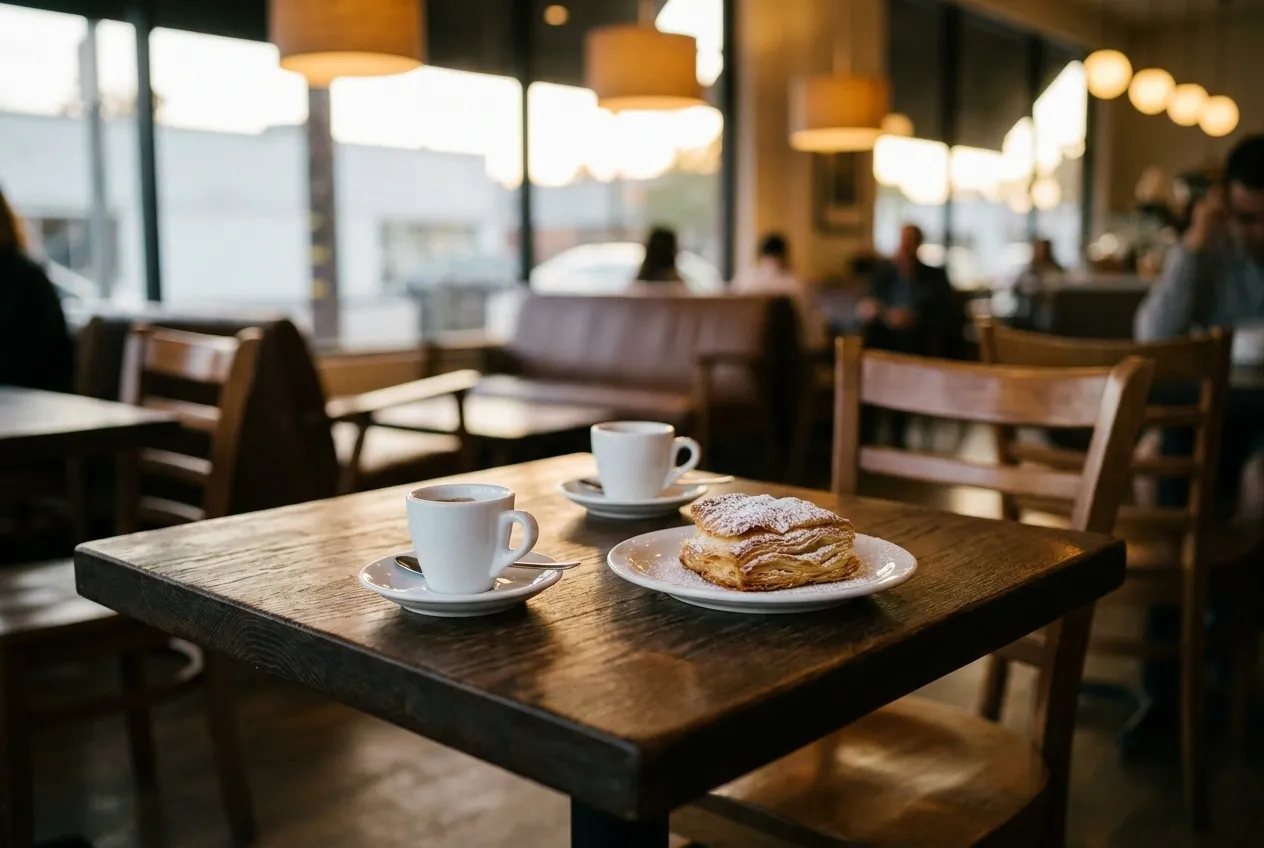
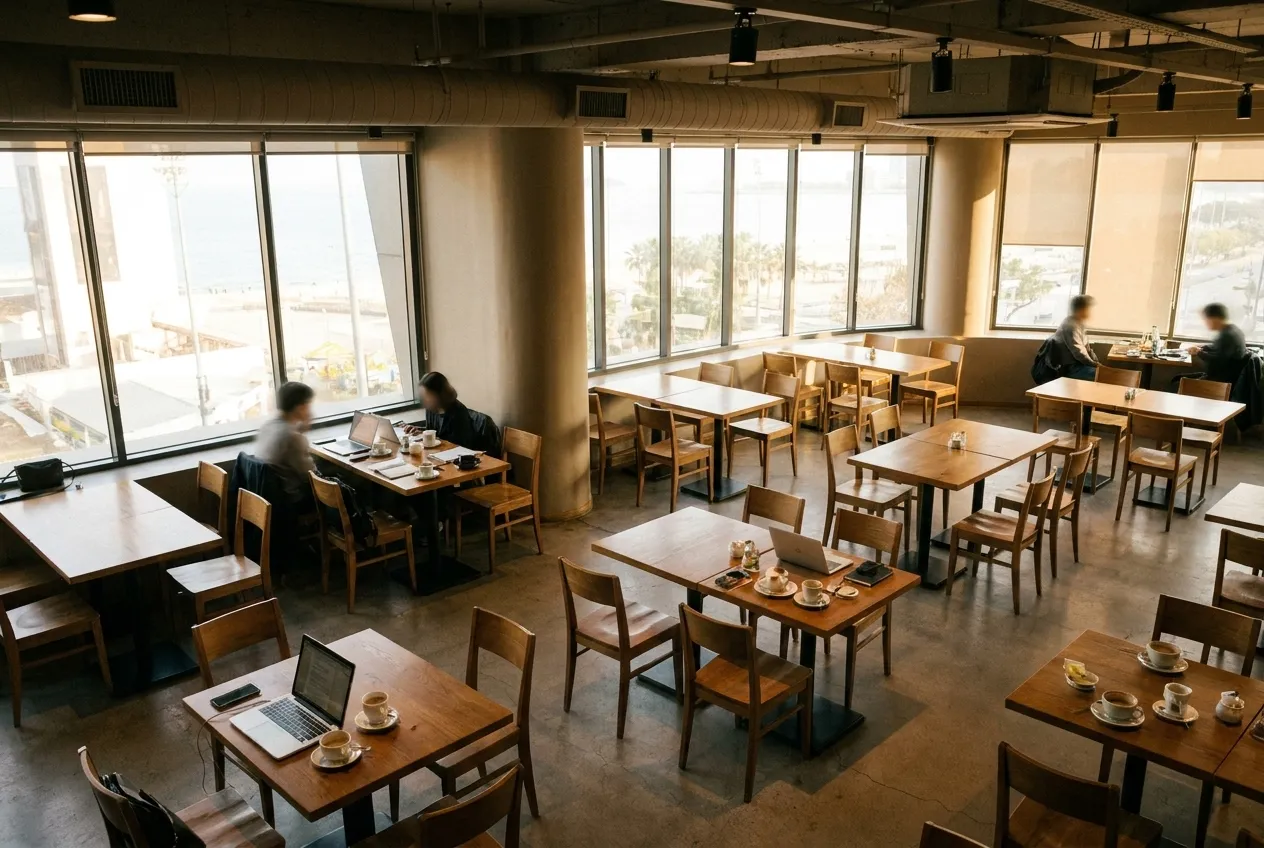
The afternoon shift—roughly three to five—is when the morning rush has cleared but the evening crowd has not yet arrived. Tables are available, the baristas are restocking rather than slammed, and the noise level drops. This is the window when sitting makes sense. The cafes that handle this window well have enough seating that you do not feel like you are taking up space, and enough ambient activity that sitting alone does not feel conspicuous.
The Arts District has the highest concentration of cafes built for afternoon sitting. The buildings are larger, the ceilings are higher, and the expectation is that people are working or meeting rather than grabbing and going. Silver Lake and Echo Park have a similar setup, though the spaces are older and the furniture is more worn. The Westside cafes are smaller and fill faster, which means the afternoon window is shorter—you have maybe thirty minutes of guaranteed seating before the post-work crowd starts filtering in.
The Parking Trade-Off and the Cutoff Hour
Parking enforcement in Los Angeles does not stop at three. Metered spots are enforced until six in most neighborhoods, and the two-hour limits do not reset just because you bought a coffee. The decision to stay for forty minutes means either feeding the meter, moving your car halfway through, or accepting that the ticket is cheaper than the gas you would burn sitting on the freeway. The math depends on where you are.
In Silver Lake and Echo Park, metered parking is abundant but competitive. You can usually find a spot within two blocks of the cafe, but the meters max out at two hours and the enforcement is consistent. If you arrive at three and plan to stay until four, you are fine. If you arrive at three-thirty and want to stay until five, you are either moving your car or paying twenty-five dollars for the convenience of not moving it.
In the Arts District and Downtown adjacent areas, parking is a mix of metered street spots and pay lots. The lots are cheaper than a ticket and let you stay as long as you want, but they add ten minutes of walking to the errand. The street spots are closer but capped at ninety minutes. The trade-off is whether you value proximity or flexibility. Most people choose proximity and set a timer.
On the Westside, parking is scarce enough that the decision to stay is also a decision to defend your spot. The cafes here are surrounded by residential permit zones, red curbs, and fifteen-minute loading zones that are only enforced between two and four. If you arrive at three and find a legal two-hour spot, you stay. If you arrive at three-thirty and the only available spot is a loading zone, you take your coffee to go.
The cutoff hour—the point after which you should just stay put rather than trying to beat traffic—is four-fifteen. If you are still sitting in a cafe at four-fifteen, you have already missed the window when leaving early would have saved you time. The freeways are full, the surface streets are backing up, and the next realistic window for movement is six-thirty. You are better off ordering a second coffee, finding a power outlet, and treating the next two hours as time you were going to lose anyway.
The Trade-Off Worth Accepting
The afternoon coffee stop in Los Angeles is not about finding the best cafe. It is about finding a cafe that is good enough and positioned well enough that staying for forty minutes is a net gain rather than a net loss. The trade-off worth accepting is that you will pay for parking, either in coins or in a ticket, and that you will spend more time sitting than you planned. The alternative is spending that time inching forward on the 10 or the 405, burning gas and arriving home in the same mental state you left in.
The cafes that make this trade-off worth it are the ones with enough space that you do not feel like you are lingering past your welcome, enough power outlets that your phone does not die, and enough distance from the freeway on-ramp that you are not tempted to check Waze every ten minutes. They are not necessarily the cafes with the best espresso or the most Instagram-friendly interiors. They are the cafes where sitting for an extra twenty minutes feels like a decision you made rather than a mistake you are stuck with.
Tags: #CoffeeNearMe #LosAngelesCoffee #LACoffeeShops #AfternoonCoffeeLA #RushHourLA #CoffeeAndCommute #SilverLakeCoffee #ArtsDistrictLA #WestsideCoffee #LATraffic #CoffeeBreakLA #DowntownLACoffee #VeniceCoffee #EchoParkCoffee #LACafes
Please drink responsibly. Must be of legal drinking age.
All trademarks are the property of their respective owners.
Ask Karpo first
Open the Karpo app to see which cafes near you have seating available right now, how the parking enforcement works on their block, and whether staying until four-thirty will actually save you time. Karpo shows you what is open, when to arrive, and the fastest route from where you are standing.