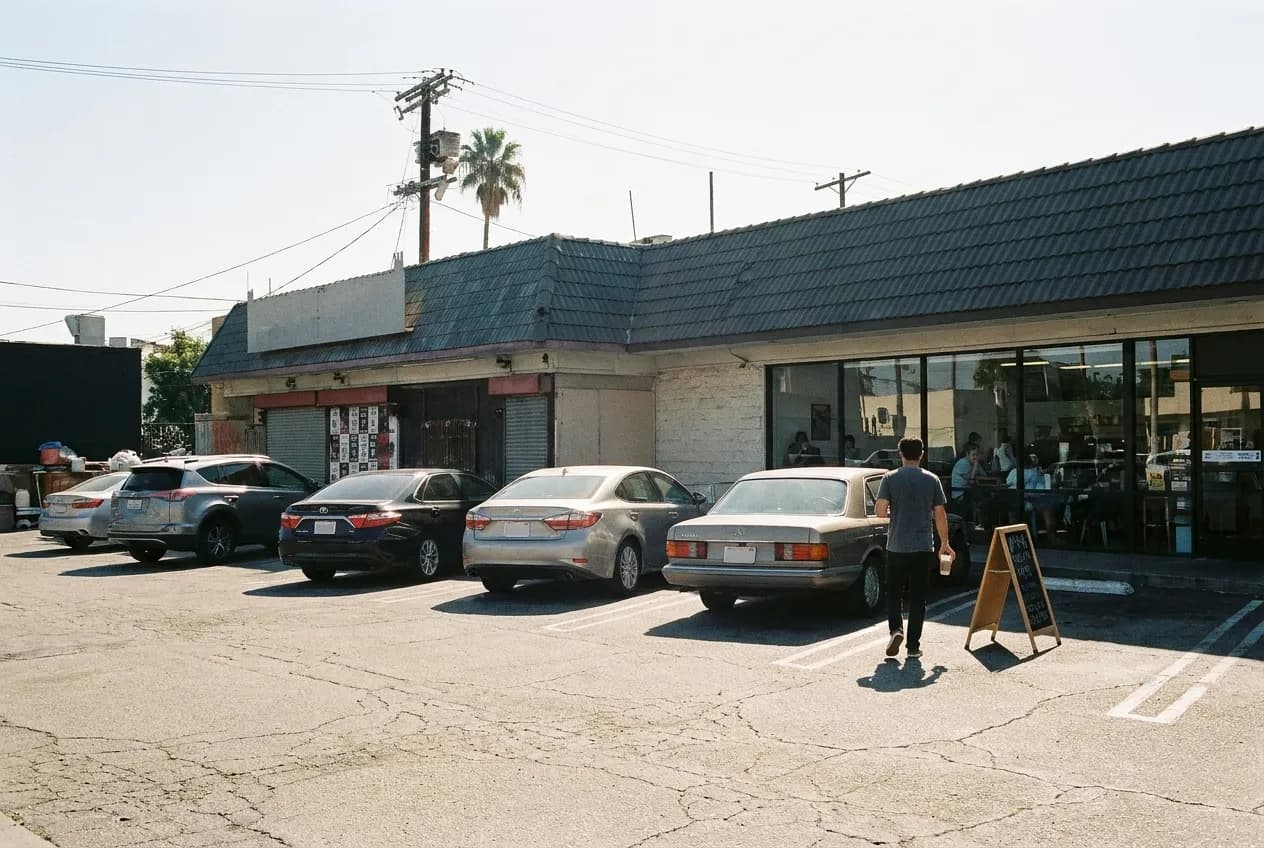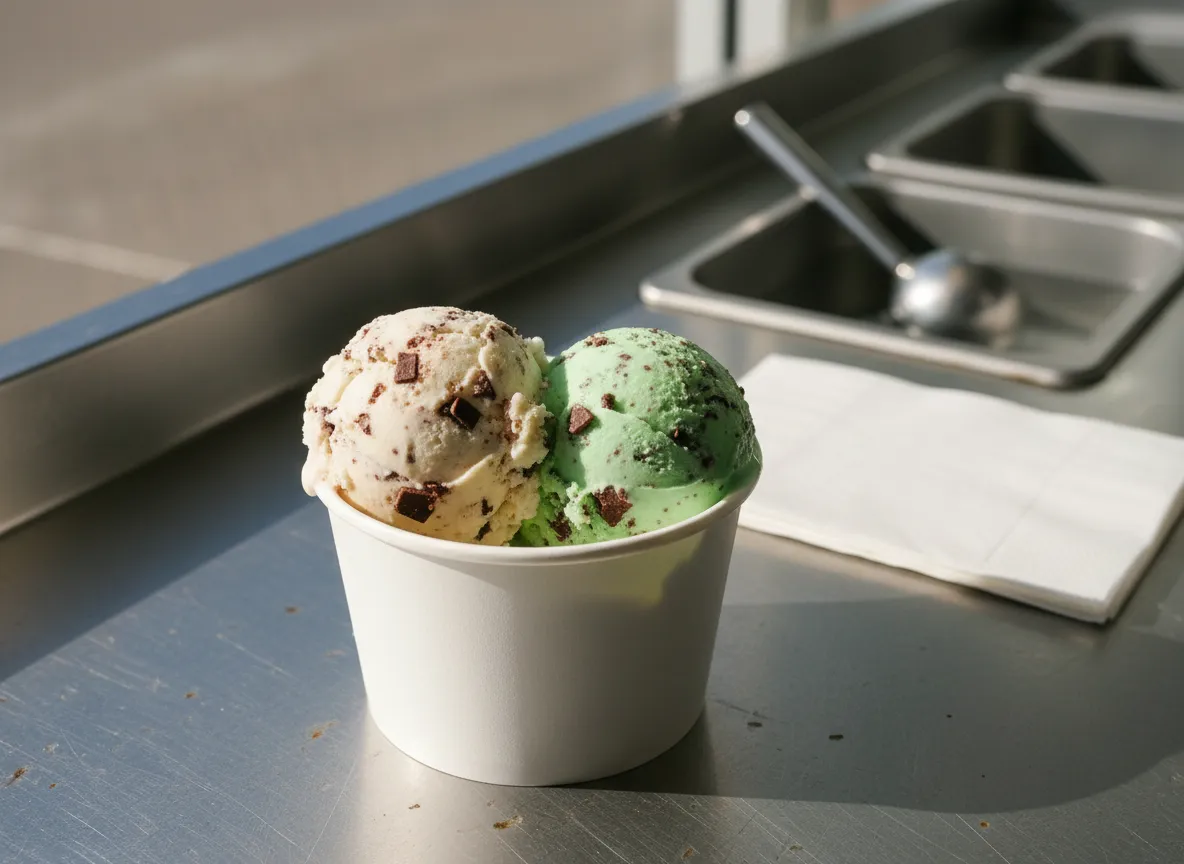
Coffee on the Eastside of Los Angeles is two traditions running in parallel, sometimes on the same block and increasingly at the same counter. One is café de olla, brewed with cinnamon and piloncillo in a clay pot and served in the neighborhood's bakeries and family restaurants for generations. The other is the pour-over-and-single-origin tradition that arrived with the last decade. If you only know one of them, you are missing the more interesting half of the story.
The best version of this is two stops: coffee at one counter, pan dulce from the panadería three doors down. Ask Karpo which of them are open right now, which bakery still has conchas at this hour, and how far apart they actually are.
What café de olla actually is
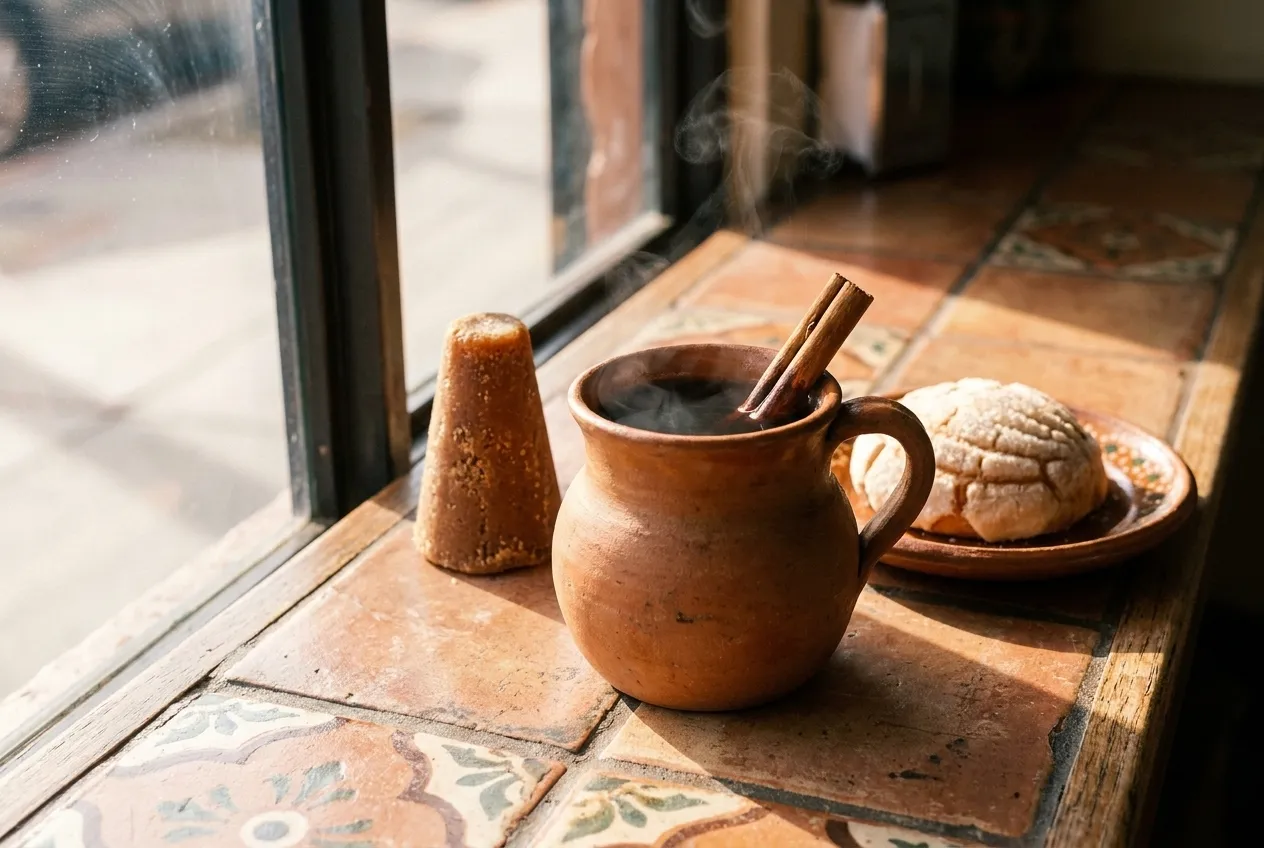
It is coffee brewed rather than extracted: ground coffee simmered in water with a stick of canela and a cone of piloncillo, the unrefined cane sugar that gives it the molasses note, traditionally in an unglazed clay olla that adds its own earthiness. Sometimes orange peel or clove goes in. It is served sweet by default — that is the point of it, not a flaw — and it is designed to be drunk with bread rather than analysed on its own.
The reason it matters here is that it is the coffee tradition with the deepest roots in this part of the city. Long before anyone in Los Angeles was talking about extraction yields, this is what was being poured in Boyle Heights, Lincoln Heights and El Sereno every morning.
Where to find it
Panaderías first. The bakeries along Cesar Chavez Avenue and First Street in Boyle Heights, along North Broadway in Lincoln Heights and through El Sereno and East Los Angeles serve it alongside the pan dulce counter, and the whole transaction runs a couple of dollars. La Mascota and El Gallo in Boyle Heights are the long-standing names, and El Gallo has been on that corner since the 1940s.
Then the cafés that bridge the two traditions. Primera Taza by Mariachi Plaza has been Boyle Heights' neighborhood coffee bar for years. Antigua on the Cypress Park and Boyle Heights side does Guatemalan coffee properly. Cafe de Leche in Highland Park built its identity on the crossover — horchata lattes, Latin American beans, a room that works equally for a laptop and a conversation. These are the places where you can get an excellent flat white and a café de olla from the same counter, which is a fair summary of the neighborhood in 2026.
El Sereno and Lincoln Heights are the quieter middle of this map and the best place to see both traditions without a queue. The counters there serve a neighborhood rather than a weekend crowd: café de olla in a foam cup for two dollars, a bakery case that empties by mid-morning, and a couple of newer rooms with an espresso machine and a handful of tables. Nobody writes about these blocks, which is precisely the recommendation.
The third-wave corridor
Figueroa Street through Highland Park and York Boulevard alongside it are where the speciality end concentrates: Civil Coffee, Kindness & Mischief, the roasteries and the single-origin counters, most of them within a mile of each other. Northeast into Glassell Park and Eagle Rock, and west into Echo Park and Silver Lake, the pattern continues — Woodcat, Dinosaur, Maru and the Los Feliz rooms are a short drive apart.
The honest note about this corridor is that it arrived with the same wave that pushed rents up in these neighborhoods, which is a live conversation on those blocks and not one a coffee guide should pretend does not exist. The rooms that have earned the most goodwill are the ones owned by people from the neighborhood, hiring from it, and serving both traditions rather than replacing one with the other.
Worth knowing as well: the chains that grew out of this neighborhood rather than into it. Several Latino-owned roasters and bakery groups started with one Eastside or South East LA storefront and now run a dozen, keeping café de olla and horchata on the menu alongside the espresso drinks. They are the most reliable place to find both traditions under one roof, and many of their locations have drive-thrus, which is not something the independent corridor offers.
What to order it with
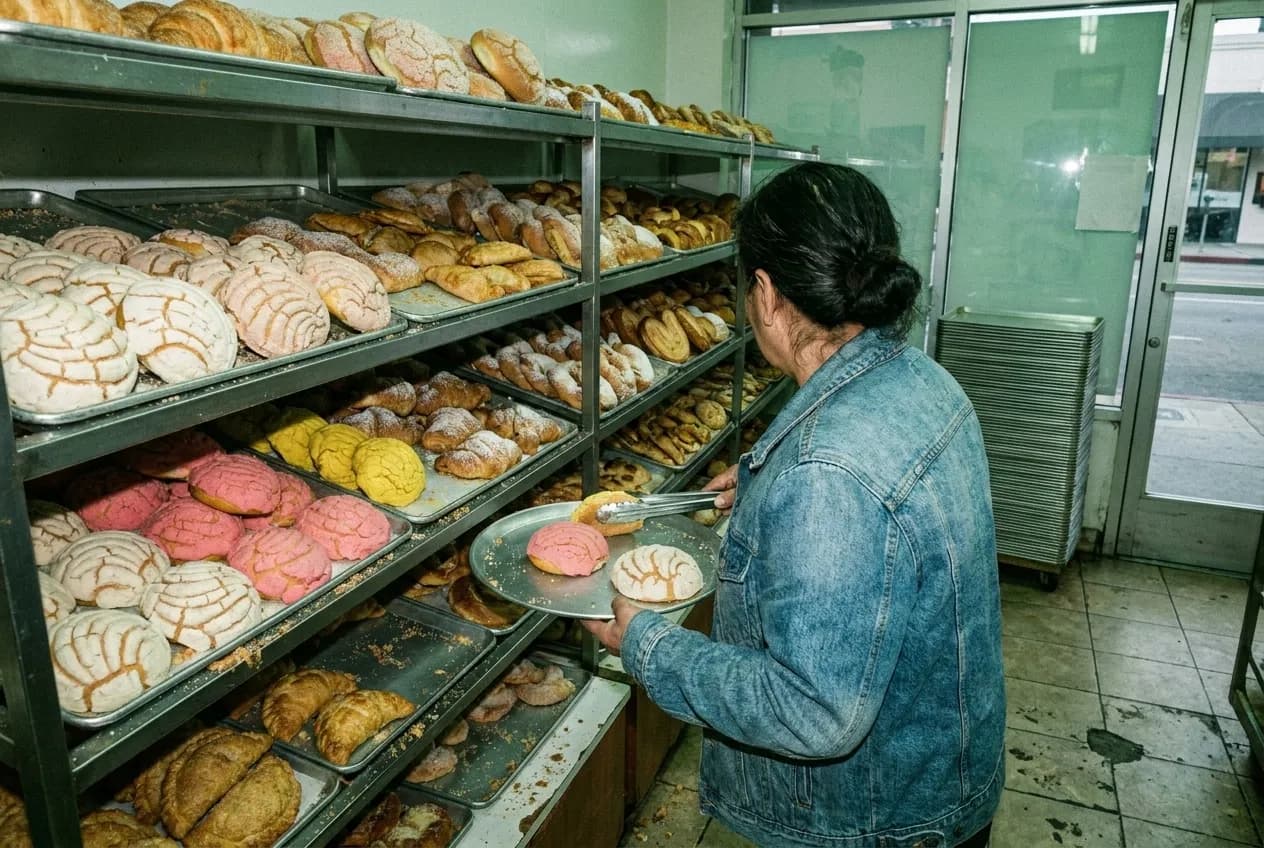
Pan dulce is the pairing and the vocabulary is worth ten minutes of your life. A concha is the shell-topped sweet roll everyone starts with. An oreja is the flat, caramelised palmier. A marranito or puerquito is the soft gingerbread pig. A cuernito is the crescent. The system at a panadería is the same everywhere: take a metal tray and a pair of tongs at the door, load it yourself, and pay by the piece at the till, where the total will be lower than you expect.
Practical notes
Panaderías bake in the early morning and again in the afternoon; the best selection is before 9am and around 4pm, and the shelves genuinely empty out in between. Bring cash — several of the older bakeries have a card minimum. Parking is free almost everywhere on this list, which is not true of the Westside equivalents. Café de olla is sweet by construction, so if you do not want sugar, order something else rather than asking them to change it. And if you are on a Highland Park coffee crawl, do it on foot: the York and Figueroa cluster is walkable, and finding a second parking space on a Saturday afternoon is the hard part of the day.
Tags: #LosAngeles #CoffeeNearMe #CafeDeOlla #EastsideLA #BoyleHeights #HighlandPark #LincolnHeights #ElSereno #PanDulce #Panaderia #LatinoOwned #LACoffee #ThirdWaveCoffee #CoffeeAndDessert #EatLocal
All trademarks are the property of their respective owners.
Ask Karpo first
Want to know which of these counters is open right now, which panadería still has conchas at this hour, and how far apart they are on foot? Ask Karpo for live hours, the walk and a pairing that fits the time you have.