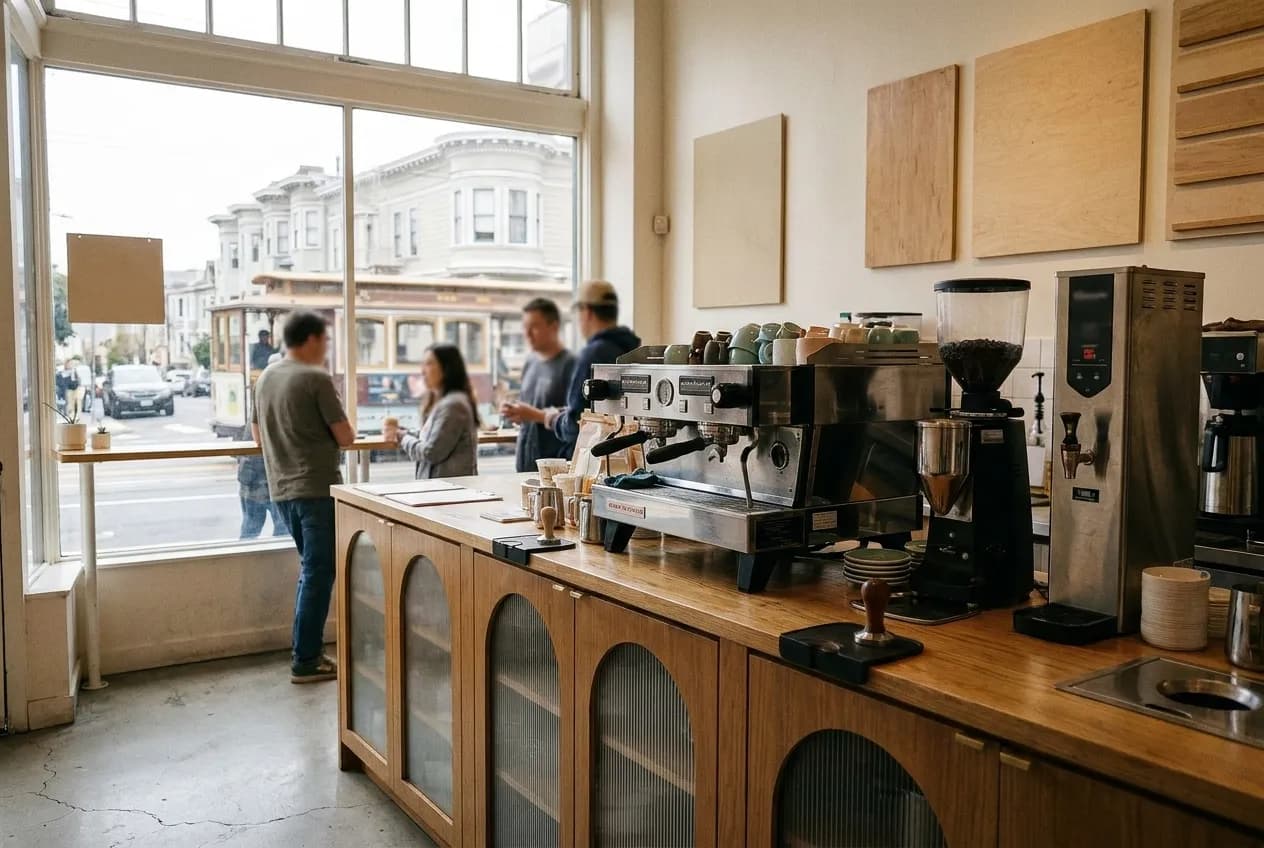
Two separate revolutions in American coffee started within a few miles of this city and both are still visible on the ground. The first, in the 1960s, was the arrival of properly roasted whole-bean coffee at all - dark, oily, intense, sold by weight to people who had grown up on tinned pre-ground - and it came out of Berkeley. The second, in the 2000s, went the other way entirely: light roasts, single origins, weighed doses, brewing as a measured process. San Francisco has an unusual density of both, and telling them apart tells you what will be in the cup before you order.
The roasters and the cafes keep different hours and most speciality places here close in the afternoon rather than the evening. Tell Karpo the time and where you are.
The first wave, and what dark roast is for
The Bay Area's first coffee revolution built a style around darker roasting - beans taken well past first crack, developing bittersweet, smoky, chocolate and roast flavours that are largely produced by the roasting rather than by the bean's origin. It was a huge improvement on what came before and it defined what most of the world thinks coffee tastes like, because the chains that scaled globally scaled that style.
It has fallen out of fashion among speciality roasters and it is not wrong. Dark roast is more forgiving of variable brewing, it stands up to milk far better, and if what you want is a strong flat white it is arguably the better choice. Several long-running Bay Area roasters still work in this register and their cafes are all over the city. If a menu says nothing about origin and the espresso is dark and bittersweet, that is the tradition you are in.
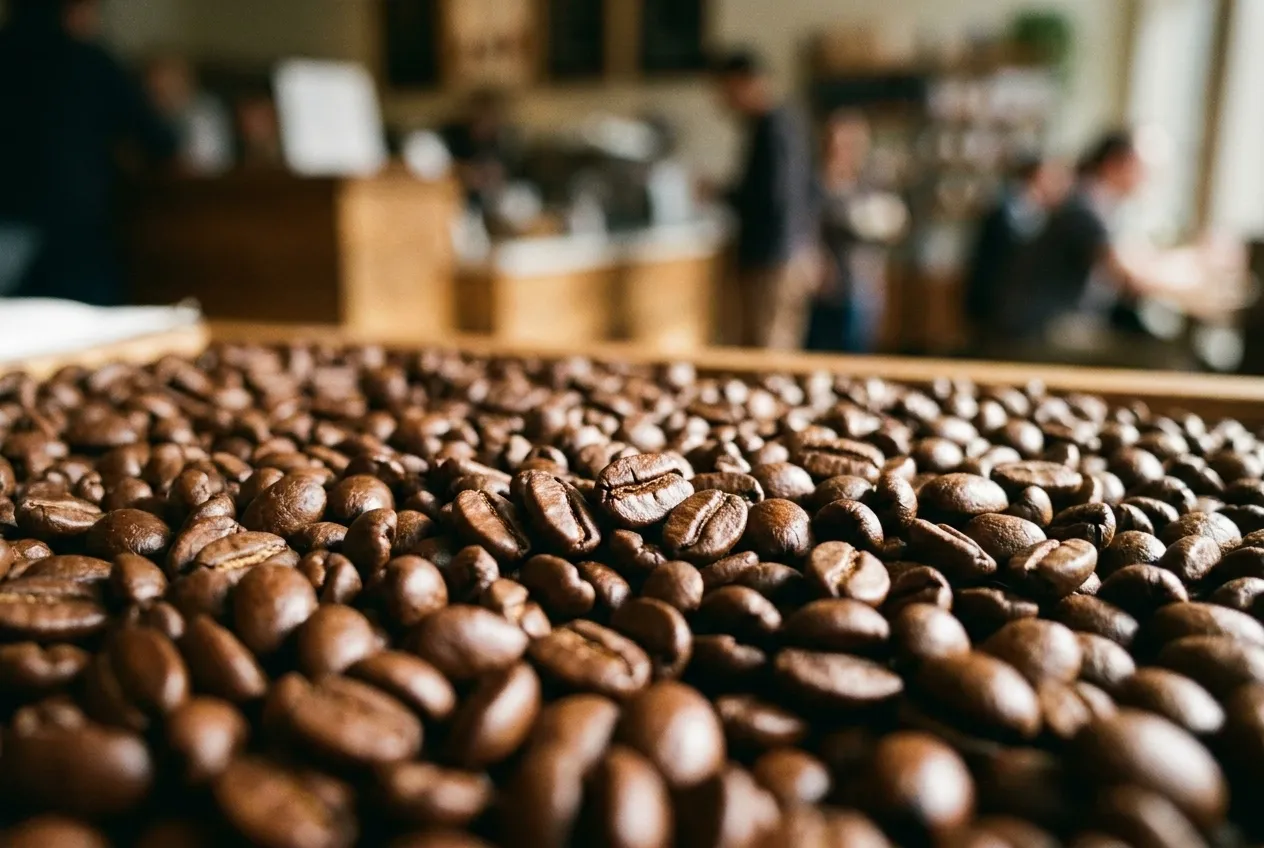
The third wave, and what light roast is for
The second revolution treated coffee as an agricultural product with a place of origin, like wine. Beans are roasted lighter, so the flavours come from the bean and the farm rather than from the roast - which is why a light-roast Ethiopian tastes of blueberry and bergamot and a light-roast Colombian tastes of caramel and red fruit. Doses are weighed, water is filtered, extraction is timed, and the menu names the farm.
The trade is fragility. A light roast is much less forgiving: brewed badly it is sour and thin, and it is easily lost in a lot of milk. That is why third-wave cafes push filter coffee and shorter milk drinks, and why a twelve-ounce latte made with a delicate Ethiopian is a waste of both. Order filter or a cortado in these rooms; save the big milk drinks for the darker roasters.
What to order to judge a cafe
Ask what the filter coffee is today and order it black. That single order tells you almost everything: whether they have more than one option, whether the person serving can describe it, whether it arrives at a drinkable temperature rather than scalding, and whether it tastes of anything beyond bitterness. A cafe that only offers one filter, cannot say where it is from and serves it too hot is not a speciality cafe regardless of its fittings.
The second test is a cortado or macchiato - espresso with a small amount of milk. There is nowhere to hide: too little milk to mask a sour or harsh shot, and small enough that the espresso has to be good on its own. If both of those are right, everything else on the menu will be fine. And if a cafe has a pour-over bar with scales and timers, ordering from it is the point of being there.
Where the rooms are
The Mission has the highest density and the most range, from long-established roasters with their own cafes to small single-site operations, concentrated around Valencia and the streets off it. Hayes Valley has a strong cluster serving a district full of people who work in cafes rather than offices. The Outer Sunset's Judah Street corridor has a surf-town coffee culture that opens very early, which is unusual and welcome.
North Beach is the outlier and worth knowing about: the old Italian caffès there operate on a completely different model from either wave. An espresso at the bar for a couple of dollars, no origin information, no scales, and an expectation that you might sit for an hour with one cup. Caffè Trieste on Vallejo has been doing exactly that since 1956. It is not speciality coffee and it is one of the best coffee experiences in the city.
The practical culture
A few local norms. Most speciality cafes here close much earlier than people expect - four or five in the afternoon is common, and finding good coffee at seven in the evening is genuinely difficult. Many are cash-free. Wifi and laptop policies vary sharply and are usually posted; some rooms are explicitly not workspaces at weekends, and ignoring a sign is the fastest way to be unwelcome.
Queues at the well-known places are real, particularly at weekends, and they move faster than they look. Ordering filter rather than a milk drink cuts the wait substantially at almost every cafe, because filter is already brewed or takes three minutes on the bar rather than joining the espresso queue. And bringing your own cup usually gets a small discount, which is worth mentioning because almost nobody asks.
Practical notes
Prices: espresso three to five dollars, cortado four to six, filter four to seven, pour-over from about six. Hours: many speciality cafes close between four and six in the afternoon; the North Beach caffès and the Sunset's early openers are the exceptions at either end. A lot of places are card-only. Check laptop policies before settling in. Order filter black to judge a room, or a cortado. Light roasts want filter or short milk drinks; darker roasts handle a large latte far better. Bring your own cup for a discount. And if you want the older tradition rather than the newer one, North Beach is where it lives and it is a genuinely different pleasure.
Tags: #CoffeeNearMe #SanFrancisco #SpecialtyCoffee #ThirdWave #DarkRoast #LightRoast #MissionDistrict #HayesValley #OuterSunset #NorthBeach #CaffeTrieste #PourOver #SFCoffee #Cortado
All trademarks are the property of their respective owners.
Ask Karpo first
San Francisco's coffee rooms close earlier than almost anything else in the city and their laptop policies vary by day. Ask Karpo which cafes near you are open at the hour you want, which of them will let you sit and work, and which are pouring something interesting on filter today.