New York has more cafes than almost any city in the world and the median cup is fine. Fine is not the problem — the problem is that a search for coffee near me returns forty results sorted by proximity, all of which look identical from the outside, and roughly two of which are actually worth planning around. The signals that separate them are consistent and visible from the door.
Roasters change, baristas move, and a cafe that was excellent last year may not be now. Ask Karpo which cup near you is genuinely worth the walk today.
What a serious cafe looks like
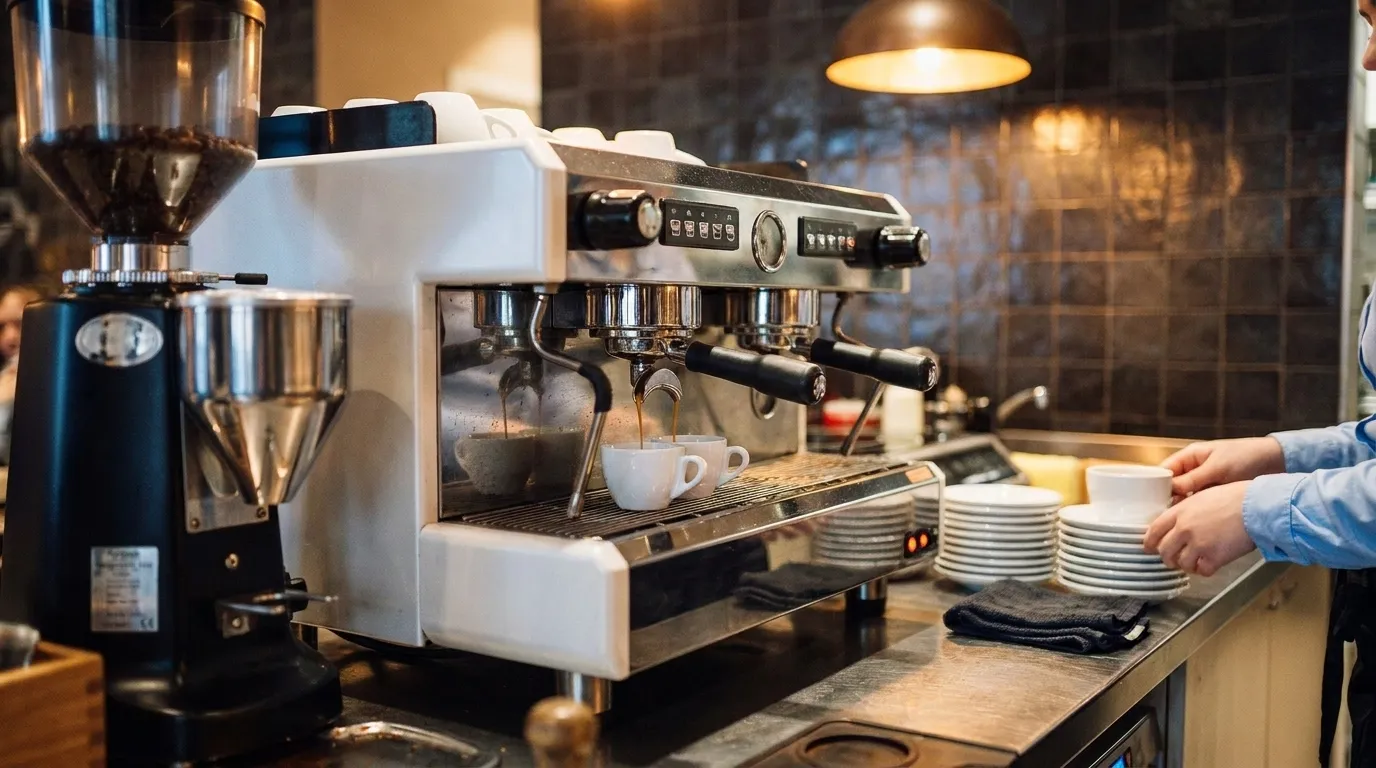
Five things are visible before you order. A grinder dedicated to espresso separate from the one used for filter, which almost every serious room has and almost no ordinary one does. A scale on the counter, used to weigh doses and yields. A menu that names the roaster and usually the origin, which is a claim the room can be held to. A limited food offering, because a kitchen and a good espresso programme compete for the same counter space and attention. And staff who ask what you like rather than what you want.
The counter-signals are just as reliable. A superautomatic machine that grinds, tamps and extracts at the push of a button. Flavoured syrups displayed prominently. A menu with twenty drinks. Pre-ground coffee in a hopper. None of these mean the coffee is undrinkable; they mean the room is optimising for throughput rather than for the cup, which is a legitimate business decision and a reason to look elsewhere if the cup is what you came for.
Where the density is
Six neighbourhoods carry most of the city's serious coffee. In Manhattan: the East Village and Lower East Side, the West Village, and Nolita and Soho. In Brooklyn: Williamsburg and Greenpoint, Fort Greene and Clinton Hill, and the corridor through Park Slope and Gowanus. Queens adds Long Island City and Astoria, both of which have grown a real scene in the past decade.
The pattern is that good coffee follows residential density with a walking population and moderately priced commercial space, which is why it clusters where it does and why Midtown — despite having the highest daytime population in the country — has relatively little of it. Midtown's coffee is a commuter product, and the exceptions are worth knowing precisely because they are exceptions.
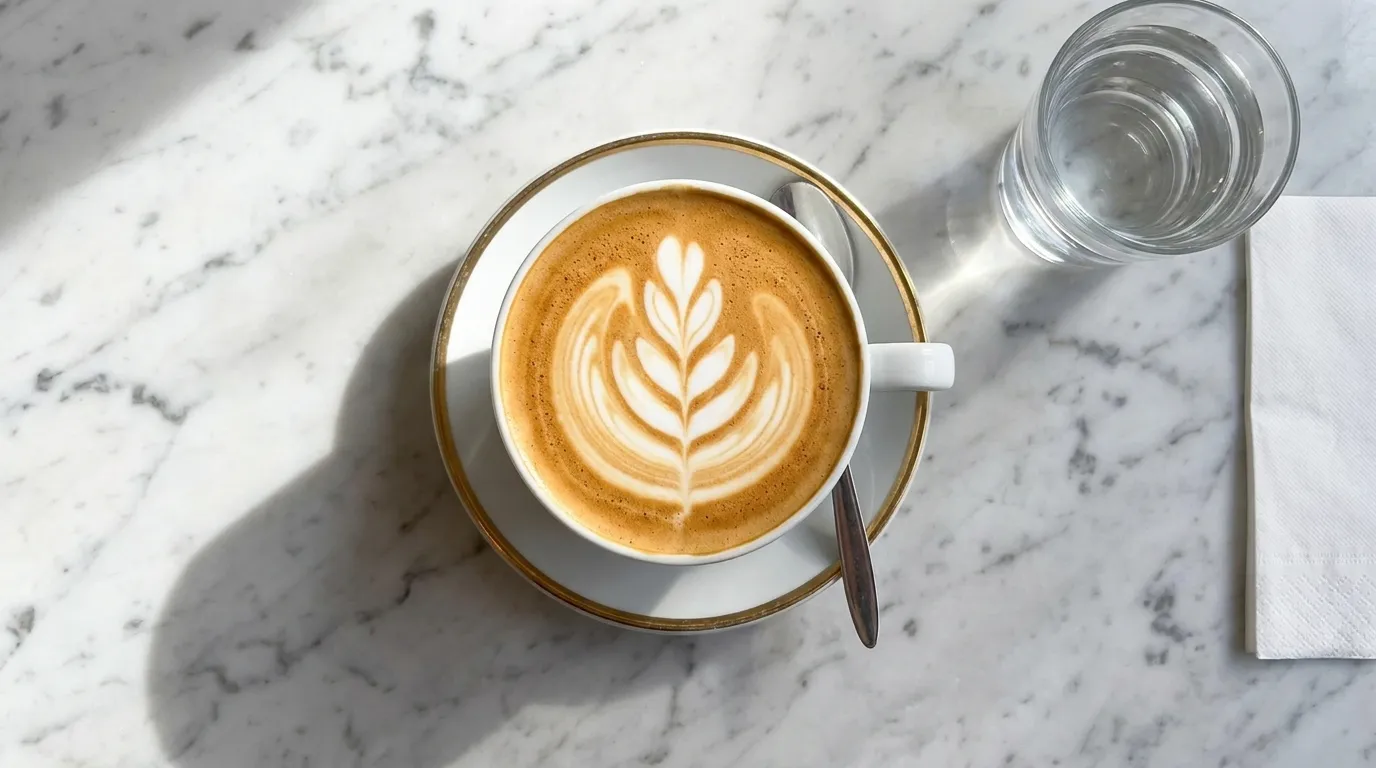
The roasters, which are the real story
New York's coffee culture is built on a small number of roasters, some local and some shipping in from Portland, Chicago, Oslo and elsewhere, and knowing which roaster a cafe uses tells you more about the cup than anything about the room. A cafe naming a roaster on the menu has made a choice and is inviting you to judge it. A cafe that does not name one has usually made a price decision.
Several of the city's most respected roasters operate their own cafes, and those are the most reliable destinations because the coffee is being served by the people who roasted it. The trade-off is that a roaster's own room is calibrated to show off its own coffee, which is a narrower experience than a multi-roaster cafe that changes what it pours every few weeks.
What to order to judge a room
Order an espresso or a cortado. Both are small, both are mostly coffee, and neither hides anything behind milk or sugar. A well-made espresso in a good room will be sweet rather than bitter, with a clear identifiable flavour rather than a generic roast character. If it is harsh or hollow, the coffee is either stale or the machine is not dialled in, and either way that is the answer.
If milk is what you drink, order a cortado or a flat white rather than a large latte. The smaller the drink, the more the coffee has to carry it, and a room that makes a good cortado will make a good anything. And if a cafe offers filter coffee brewed to order rather than from a batch urn, that is the single strongest signal in the room — it costs staff time that a cafe optimising for volume will not spend.
The other coffee traditions
New York's specialty scene is only one of several coffee cultures operating in the city, and the others are worth using. Greek and Italian coffee in Astoria and Bensonhurst, served short and strong at counters that have been doing it for fifty years. Dominican coffee in Washington Heights and Inwood, sweet and served small. Turkish and Yemeni coffee houses, of which the city has a growing number, several of them open very late and serving coffee alongside pastries in rooms designed for sitting for hours. And the Chinese and Vietnamese cafes in Sunset Park, Flushing and the Lower East Side, where iced coffee with condensed milk is the order. None of these appear in conversations about the city's best coffee and all of them are better than most of what does.
Timing and etiquette
Cafes are busiest between eight and ten in the morning and again around one. A serious room is at its best mid-morning, when the machine is warm and the queue has thinned. Many of the best rooms in the city are small and have limited seating; several have a no-laptop policy at weekends or during peak hours, which is posted and which is worth respecting rather than testing.
Tipping at a counter is customary in New York and a dollar or the round-up is normal. If you sit, the same applies. And if you want to know what the room is proud of, asking what they would drink is a question every good barista in the city enjoys and answers honestly.
Practical notes
The best cups are frequently in small rooms with four seats, so plan to stand or take it away. Many of the serious cafes close earlier than you expect — four or five in the afternoon rather than late evening — because the customer base is a morning one. Weekend queues in the East Village, Williamsburg and Greenpoint are substantial between ten and one, and the same room is empty at eight. Prices at a specialist room run above chain prices and the difference is real rather than positional. And if you are travelling for a specific cafe, check the day; several close one weekday.
Tags: #NYC #NewYorkCity #Coffee #CoffeeNearMe #NYCCoffee #Espresso #EastVillage #WestVillage #Williamsburg #Greenpoint #FortGreene #Astoria #SpecialtyCoffee #NYCEats
All trademarks are the property of their respective owners.
Ask Karpo first
Want to know which cafes near you are pouring something worth the trip today, which are quiet right now, and which close early? Ask Karpo before you get on the train.