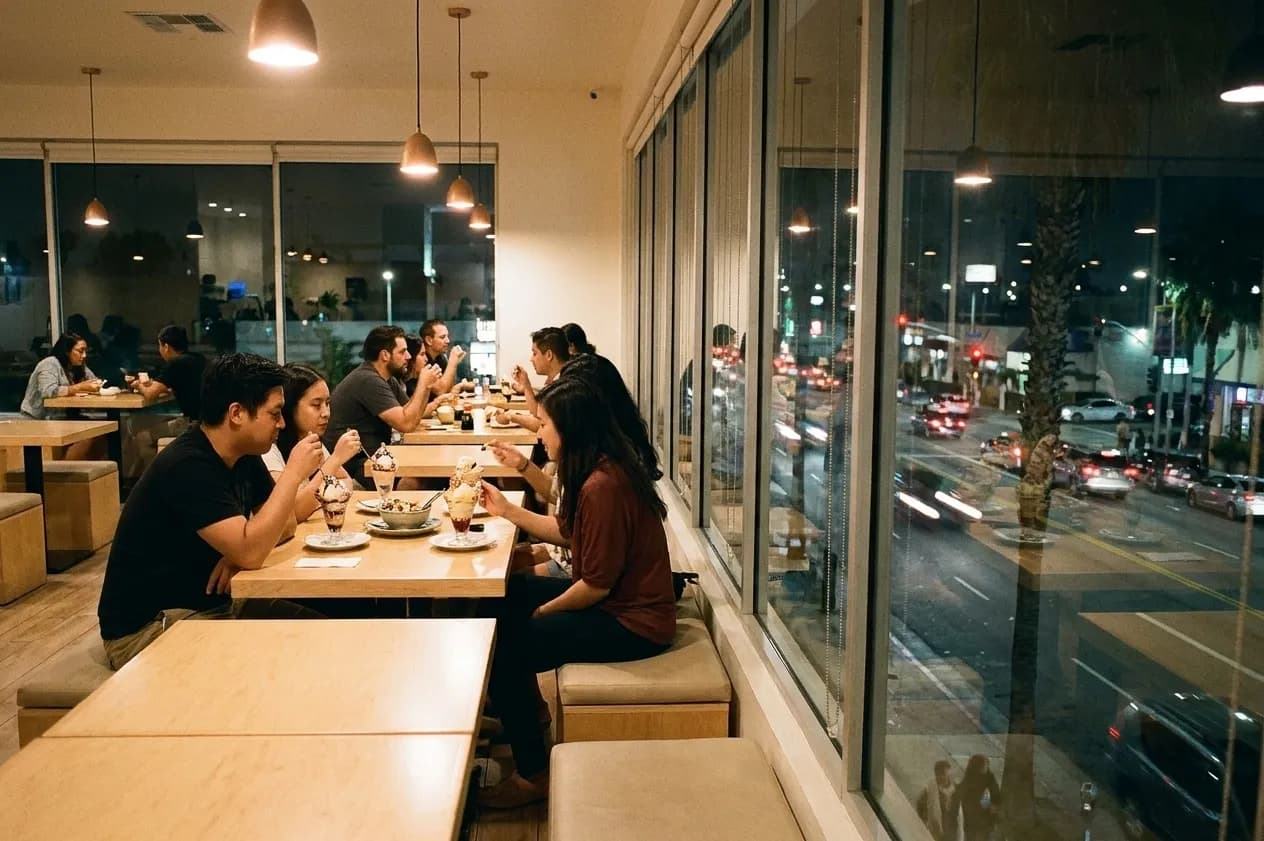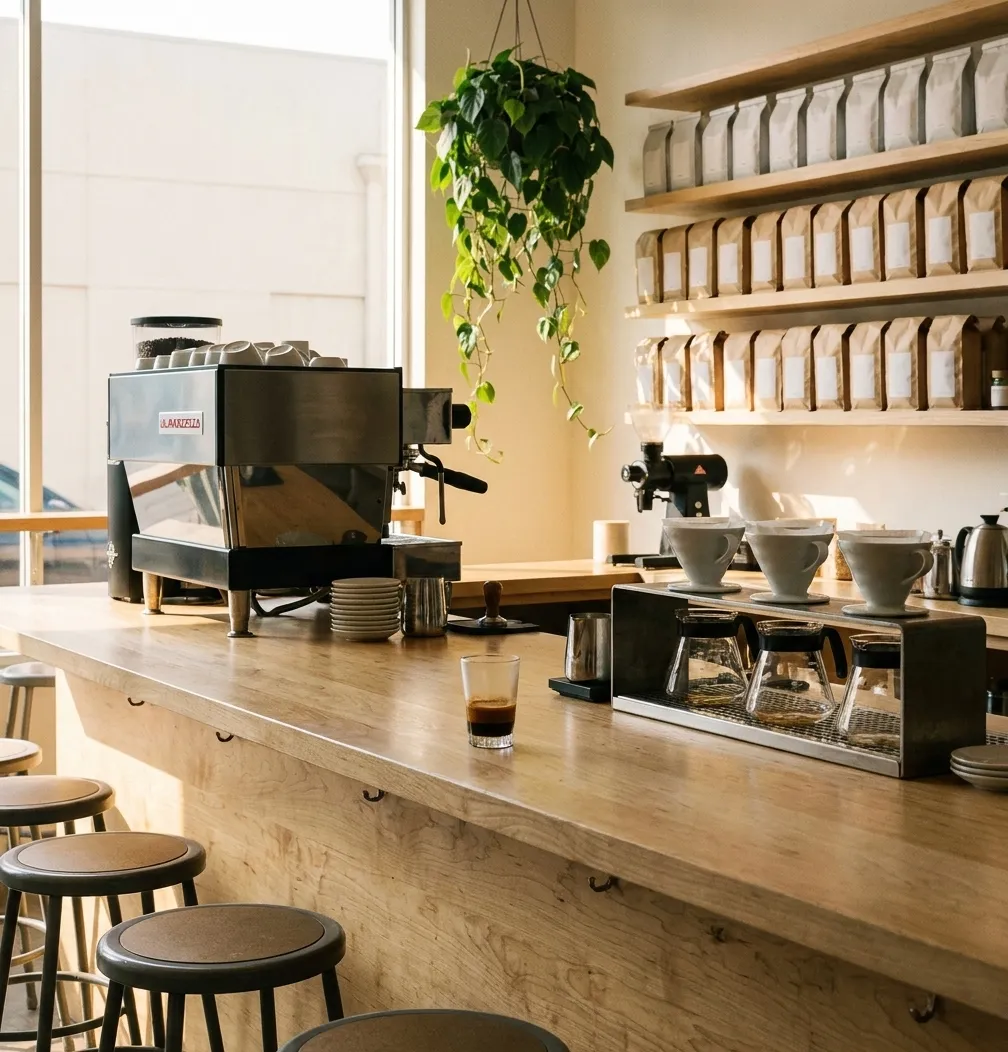
Los Angeles was late to specialty coffee and has ended up with one of the strongest scenes in the country, partly because the city's sprawl produced dozens of small roasters serving their own neighbourhoods rather than two or three large ones serving everybody. Searching coffee near me here returns whatever is closest. The more useful question is which roaster is behind the counter, because that decides what your cup will taste like far more than the café does.
The difference between two flat whites four blocks apart is almost always the roast rather than the barista. Tell Karpo what you usually order and where you are, and it will point you at the roasters near you whose style matches.
Light, medium, dark: the only classification that matters
Roasters in this city sort roughly into three camps. The light-roast, single-origin-focused houses aim for acidity and clarity — fruit, tea, florals — and their coffee tastes thin and sour to anyone expecting a traditional cup. The middle camp roasts for balance and milk drinks, which is where most people are happiest. The traditional darker roasters, including the Italian-American and Latin American shops that predate the whole specialty wave, aim for body and sweetness.
None is better. But ordering a light-roast Ethiopian filter when what you wanted was a strong flat white is how people conclude that specialty coffee is not for them, and the fix is to say what you want in plain terms rather than by origin.
Where the roasters actually are
Geography follows industrial space. The Arts District, Frogtown, Glassell Park, Vernon and the industrial edges of Highland Park hold most of the actual roasteries, and several of them run cafés on site — which is worth the drive, because coffee from the roasting room is fresher than anything that has spent a week in transit.
The retail scene is spread further: Silver Lake, Echo Park, Highland Park, Culver City, the South Bay and Downtown all have depth. The Westside is well covered but leans toward the bigger names. If you want to taste the range in one day, the Eastside corridor from Highland Park through Glassell Park to Frogtown is the most efficient route in the city.
What lining up actually gets you
A queue is not a quality signal in this city — it is usually a signal about parking and Instagram. What is worth waiting for is a specific thing: a roaster's own café on a morning they are cupping, a shop that does a proper filter programme rather than only espresso, or a place with a genuinely good pastry programme attached.
The pastry question matters more than people admit. Several of the best coffee experiences in Los Angeles are actually bakery experiences with good coffee attached, and the reverse — excellent coffee with an indifferent croissant — is a much worse morning. If you are queueing, queue where both sides are taken seriously.
The other coffee traditions in this city
Specialty is one thread among several. Los Angeles has Mexican panaderías serving café de olla, Salvadoran and Guatemalan bakeries, Persian cafés in Westwood, Ethiopian coffee ceremonies in the Fairfax district, Vietnamese cà phê sữa đá across the San Gabriel Valley and Chinatown, and Korean café culture in Koreatown that treats the café as a late-night social space rather than a morning one.
Those are not lesser versions of the same thing — they are different drinks with different purposes, and several of them are considerably better suited to how people actually use cafés in this city. Vietnamese iced coffee in August is a more sensible order than a hot filter, and Koreatown's cafés at eleven at night have no equivalent in the specialty world.
Buying beans, and drinking better at home
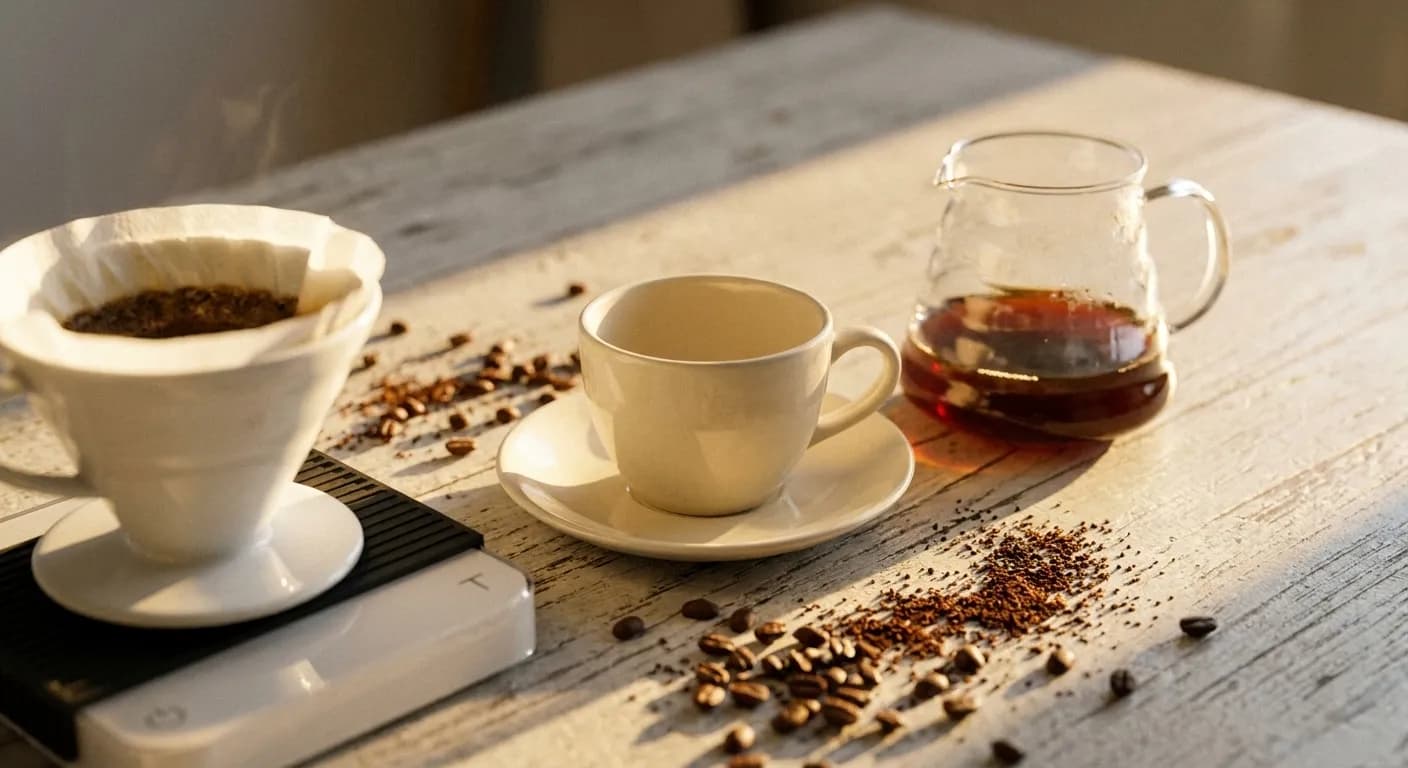
If you like a cup, buy the bag. Roasters here date their bags, and coffee is at its best in roughly the first two to four weeks after roasting — the date on the bag is the single most useful piece of information on it, more than the tasting notes. Buy smaller amounts more often rather than a large bag that goes stale.
The two upgrades that actually change your coffee at home are a burr grinder and weighing the dose. Both cost less than a month of café visits and make a larger difference than switching roasters. Most shops in this city will grind for your specific brewer if you ask, which is the free version of the first upgrade.
Drive-through coffee, and the LA reality
A city where most people drive produces a specific coffee problem: the best cup is frequently somewhere you cannot easily stop. That has pushed a lot of Los Angeles specialty coffee toward mobile ordering and kerbside pickup, and it has kept the older drive-through and window formats alive alongside the sit-down cafés.
It is worth being honest about the trade. Coffee ordered ahead and collected has usually been sitting for a few minutes, which matters more for espresso than for filter and more for milk drinks than for either. If you want the cup at its best, the five minutes spent parking and ordering at the counter is the difference.
Tags: #LosAngeles #CoffeeNearMe #LACoffee #SpecialtyCoffee #Roasters #HighlandPark #ArtsDistrict #SilverLake #Koreatown #LACafes #CoffeeCulture #WhereToDrinkLA #MorningRoutine #LAFoodie
Sources consulted: discoverlosangeles.com · sca.coffee · cafarmersmkts.com
All trademarks are the property of their respective owners.
Ask Karpo first
Roastery cafés keep short hours, several open only on weekdays, and the good bakery pairings sell out by mid-morning. Ask Karpo which shops near you are open now, which roaster they pour, and where the queue is worth it — it answers in iMessage before you drive across town.