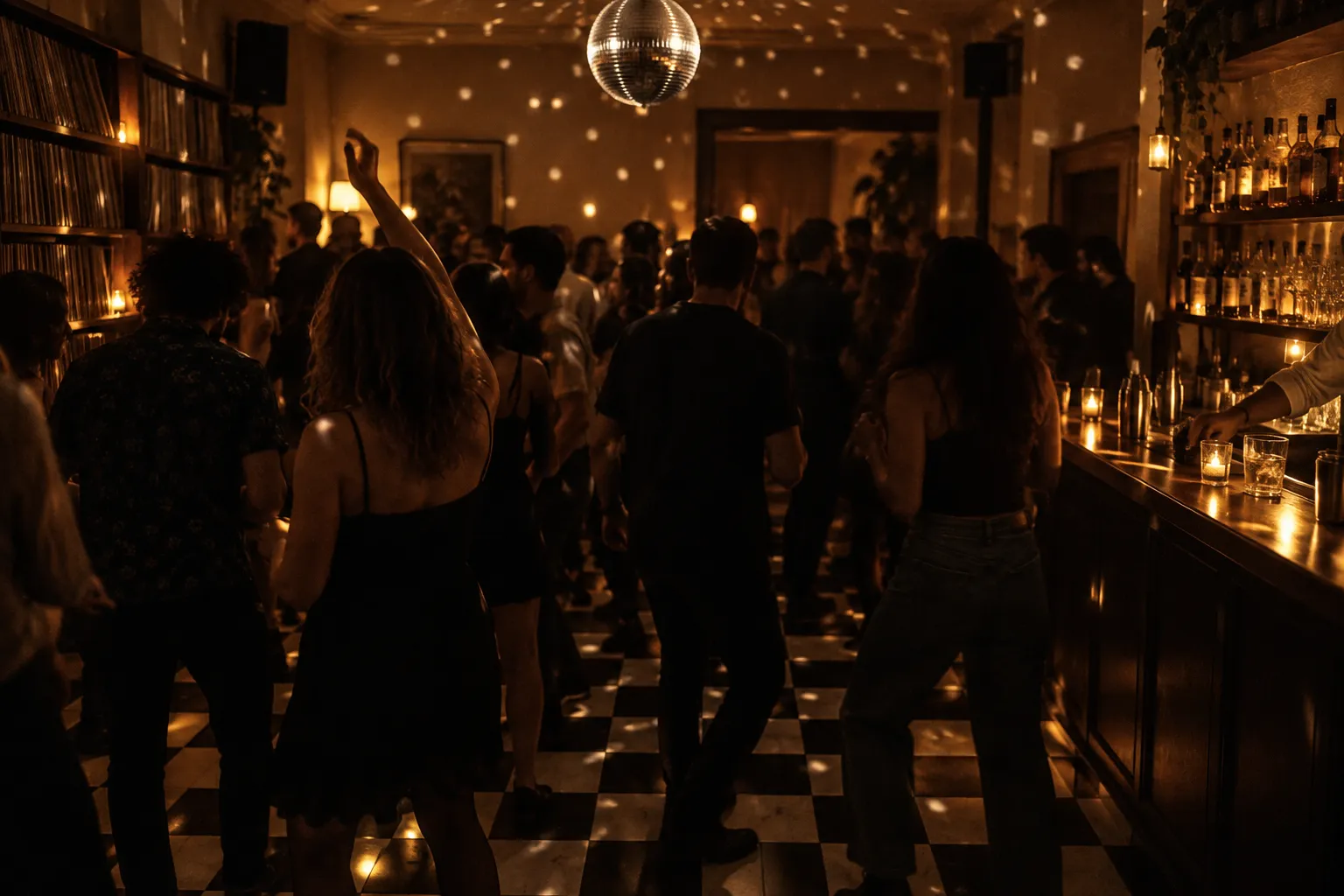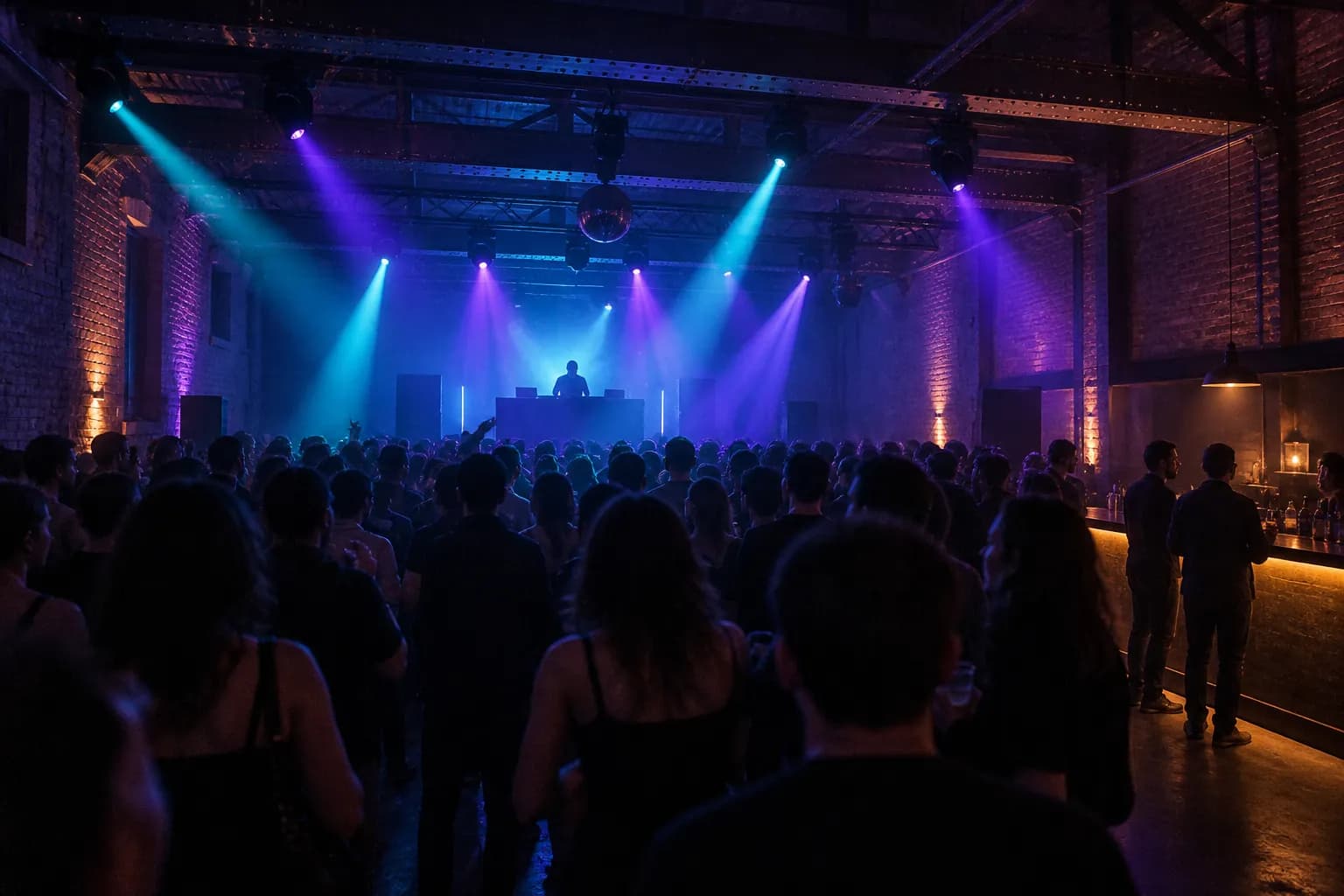
Halcyon holds four hundred people, which in club terms is small — small enough that the booking matters more than the room does, and small enough that a mediocre night feels empty rather than merely quiet. It occupies an early-1900s brick and steel-beamed warehouse at 314 11th Street, two doors from Audio, and the whole proposition rests on being the intimate option on a street full of bigger ones.
On a block with four clubs inside two minutes' walk, the right question is never which venue but which booking. Ask Karpo who is playing on 11th Street tonight and which door is worth your cover.
Four hundred is the whole argument
A four-hundred-capacity room changes the experience in ways that are easy to describe and hard to appreciate until you have stood in one. You are never more than fifteen metres from the booth. The crowd reads as a single group rather than several unrelated ones. And a DJ can take the room somewhere strange at two in the morning because the room is small enough to follow.
The trade-off is unforgiving. A big club half full still feels like a club; a small club half full feels like a private party you were not invited to. Halcyon on a well-booked night is one of the best rooms in San Francisco and on a badly-booked one it is a brick box with a good sound system, and the difference is entirely the lineup.
What gets played
The programming is electronic and fairly specific about it — progressive, techno, nu disco, deep house. This is not a room that pivots to hip-hop at midnight or runs a Top 40 night on Thursdays. If you are not interested in four-to-the-floor music for three consecutive hours, the booking will not rescue you and you should walk two doors down instead.
Within that remit the curation is unusually good, and the regulars who argue Halcyon books the best underground lineups in the city have a case. The bookings skew toward DJs with reputations among people who follow dance music rather than toward names that sell on recognition alone, which is exactly what a four-hundred-cap room should be doing.
The warehouse bones
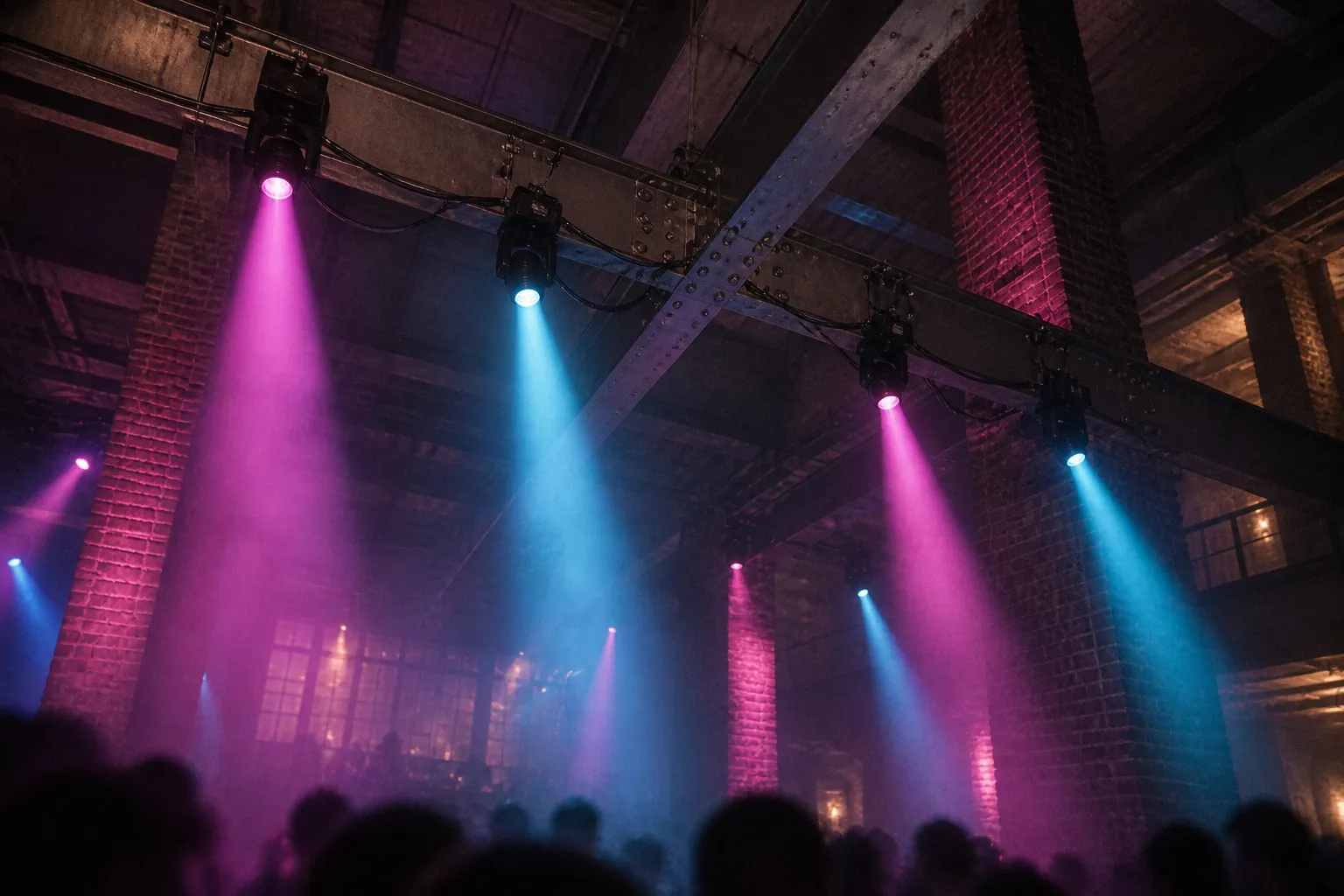
The building is over a century old and the conversion left the structure visible — brick walls, exposed steel beams overhead, the proportions of a light-industrial space rather than a purpose-built venue. That does two useful things. It gives the room a texture that a black-box club does not have, and it gives the lighting rig hard surfaces to work against.
Regulars describe the interior as spaceship-like, which sounds like a contradiction with the brickwork and is not: the lighting design is modern and enveloping, and it sits inside a nineteenth-century shell. The combination is the single most distinctive thing about the place visually.
How to time the night
San Francisco stops serving at two, so the usable night is roughly ten until two and the peak is between midnight and half past one. In a small room that peak is sharper than in a big one, because there is no overflow space for the crowd to thin into — when it is full, it is full, and when it empties it empties fast.
Arrive by half eleven. That gets you in before the door starts turning people away, gives you the last of the warm-up, and means you are inside and settled when the headliner starts rather than queueing through the first twenty minutes of the set you paid for.
Tickets in advance are worth it here more than at a larger venue, precisely because four hundred is not many. A well-publicised booking sells out, and the door on a sold-out night is not a negotiation.
Using the block properly
Audio is at 316, immediately next door. The Eagle is around the corner. Several other rooms sit within the same two blocks. The correct way to use 11th Street is to treat the whole strip as one venue with four doors — check what is on at each, pick on the night, and accept that the right answer changes weekly.
That also makes Halcyon a good second stop rather than only a destination. If the bigger room's headliner finishes early or turns out to be wrong, a four-hundred-cap room two doors away that is still going is a genuinely useful thing to have on the same street.
One more reason the block matters: cover prices on 11th Street are not uniform, and the cheapest door is frequently the one with the lineup you actually want. Checking all four before committing takes two minutes on the pavement and regularly saves both money and a wasted hour.
The practical annoyances
The bar gets tight when the room is full, which is a direct consequence of the capacity and the layout — there is simply less counter per person than in a purpose-built club. Ordering two drinks at once is the standard adaptation and nobody will judge you for it.
Leaving at two puts you on 11th Street at the same moment as everyone else on the block, several hundred people competing for the same cars. Walking up to Folsom or down toward Harrison before you order is worth the three minutes and will save you fifteen.
Practical notes
Halcyon is at 314 11th Street in SOMA, San Francisco, a converted early-1900s brick and steel-beam warehouse with a capacity of four hundred. The music is progressive, techno, nu disco and deep house, and the curation is the draw. Last call is two, the peak runs from midnight to half past one, and arriving by half eleven is the move. Buy tickets in advance for anything well publicised. Audio is next door at 316 and The Eagle is around the corner, so treat the block as one venue with several doors.
Please drink responsibly. Must be of legal drinking age.
Dress is not policed the way it is at the larger Hollywood-style rooms, which is a consequence of the programming rather than a stated policy. People turn up dressed for dancing for three hours rather than for being photographed.
Tags: #SanFrancisco #Halcyon #SOMA #ClubsNearMe #BarsAndNightsOut #DeepHouse #Techno #NuDisco #SFNightlife #SFClubs #11thStreet #UndergroundMusic #SFAfterDark #WarehouseVenue
All trademarks are the property of their respective owners.
Ask Karpo first
Want to know tonight's lineup, whether it has sold out and which of the four doors on this block is the right one? Ask Karpo for a read before you pay a cover.