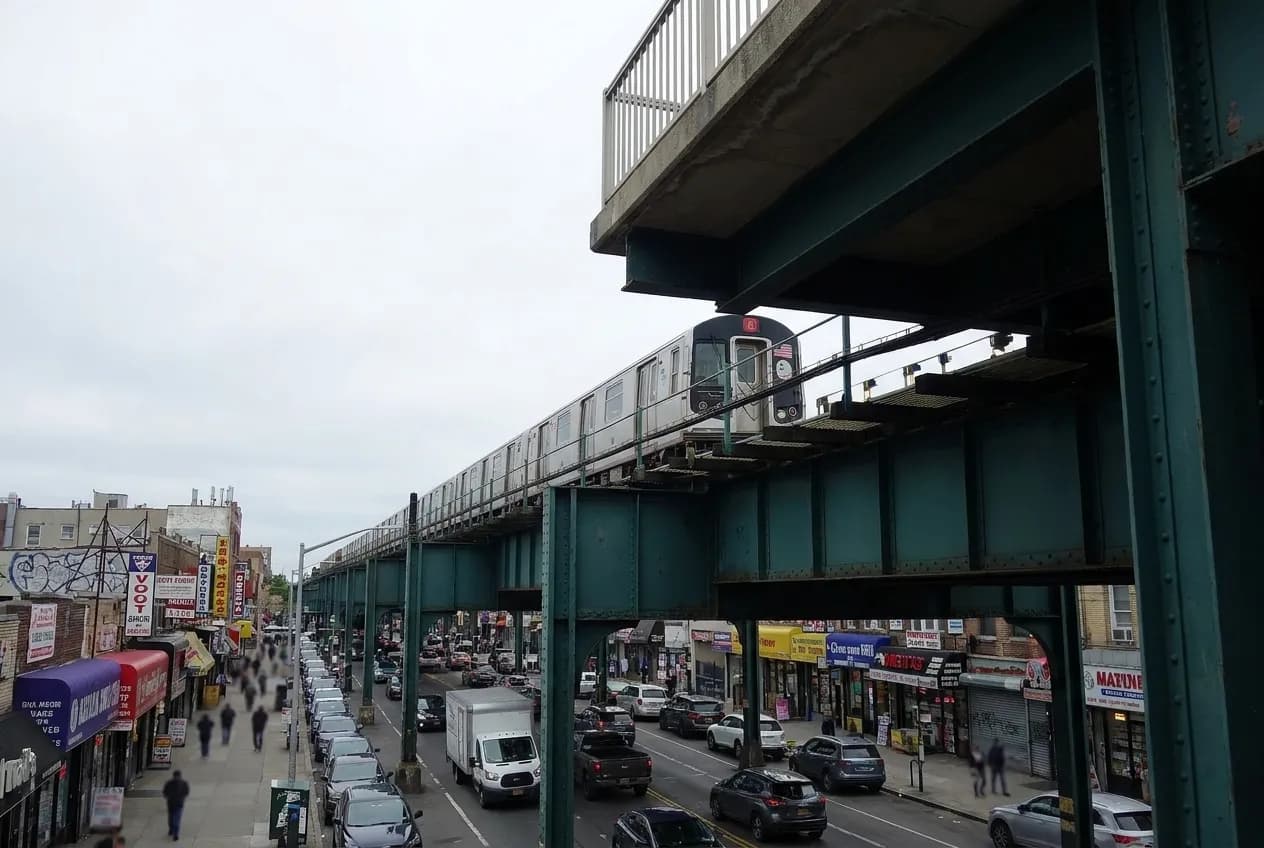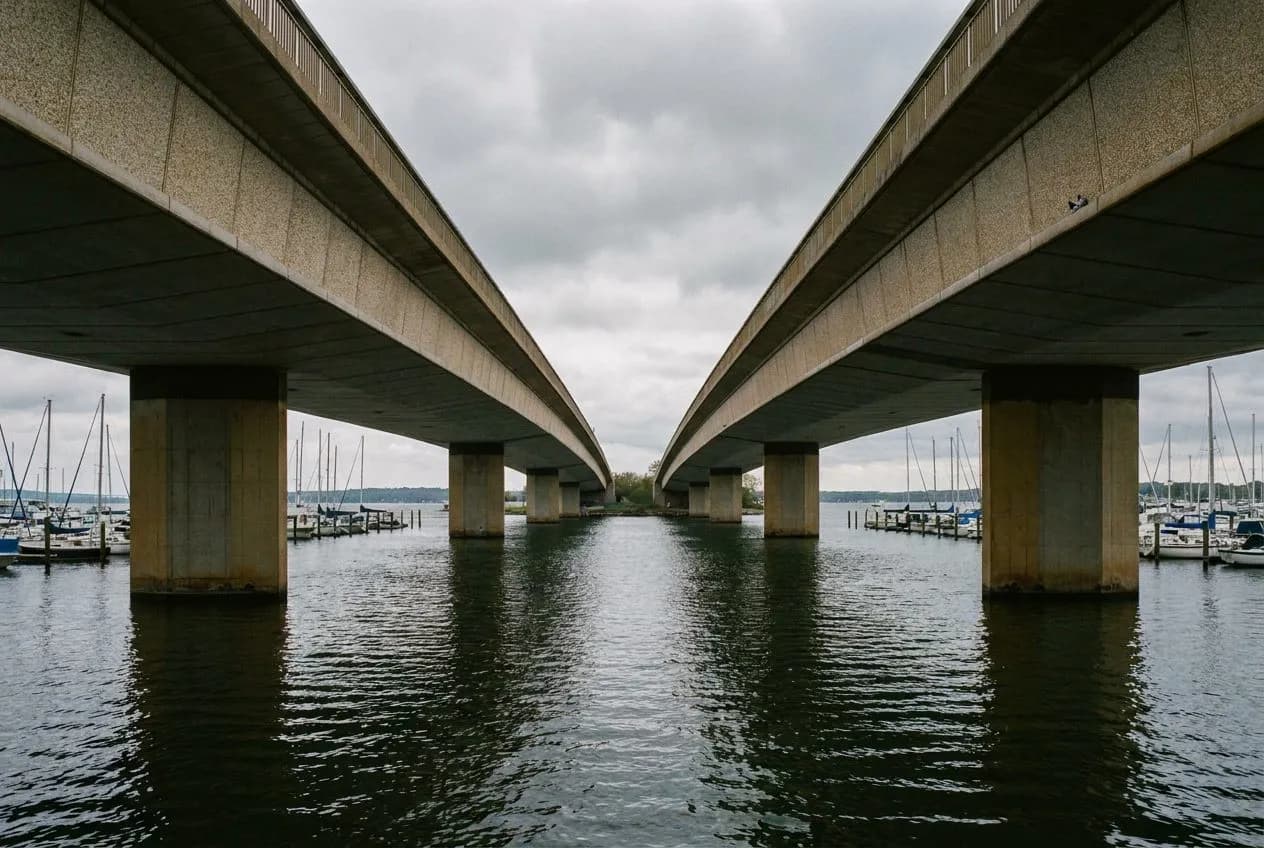
The City Island Bridge is a movable bridge with a sidewalk along one side that's been ferrying cars and pedestrians since 1908. The crossing takes six minutes at a steady pace, longer if you pause to watch a sailboat tack through the channel or a heron stalk the shallows. It's one of the city's quieter free things to do, which is to say it costs nothing and delivers exactly what it promises: a threshold between the Bronx mainland and a tidal island, suspended over Eastchester Bay with nothing but air and water below.
The Only Way On or Off
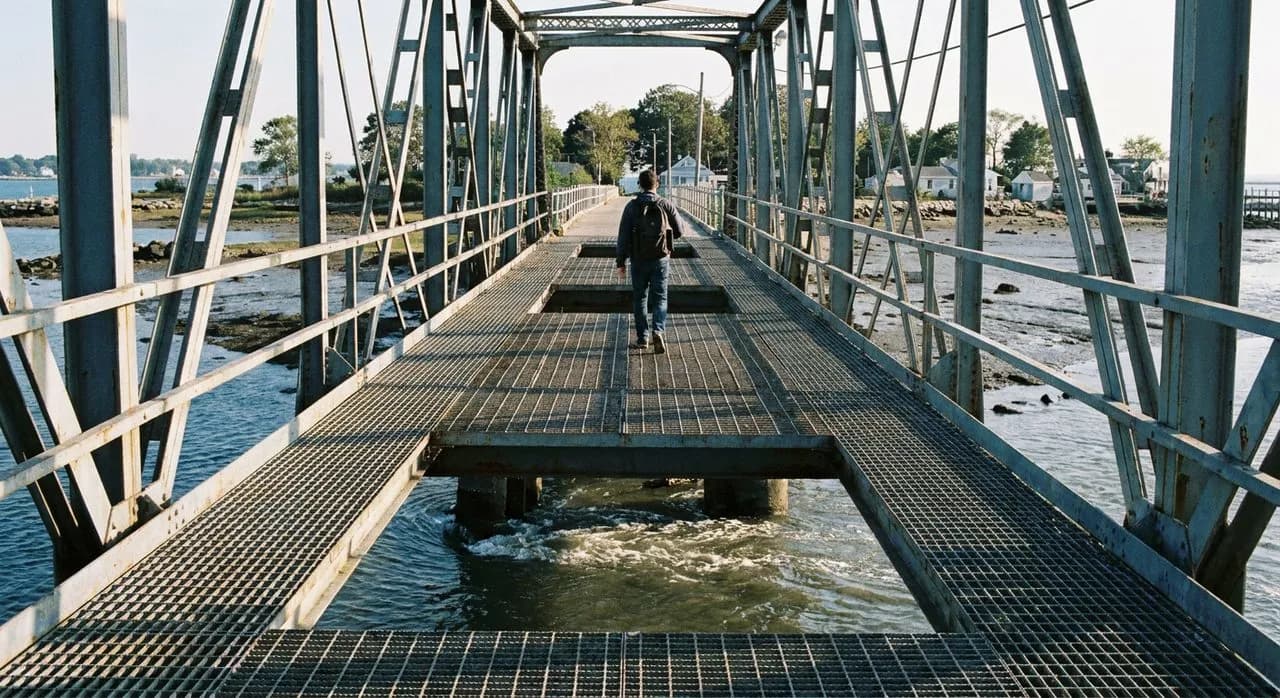
City Island is a true island, which makes this bridge its sole land connection to the rest of New York. No tunnel, no secondary span, no backup route. That singularity gives the walk a particular weight. You're not cutting through; you're crossing over. The bridge hums under the weight of traffic—delivery trucks, weekend day-trippers, locals making the run to the mainland for groceries—but it tolerates pedestrians on a sidewalk barely wide enough for two people to pass without turning sideways.
The walkway runs along the south side only. Northbound pedestrians need to cross at either end, which adds an extra two minutes to the return trip if you're keeping track. Most people don't, but the regulars do. They know the rhythm, the small inefficiencies, the places where the railing catches the afternoon light.
What Locals Call It
Ask someone on City Island how to get to the Bronx and they'll tell you to take 'the crossing.' The name is plain, functional, almost biblical in its simplicity. It's also tied to a kind of pedestrian choreography that's invisible to visitors. Locals time their walks to avoid the Bx29 bus schedule, which creates brief pedestrian bottlenecks when passengers spill onto the narrow walkway at either end. The bus runs roughly every half hour during midday, more frequently during rush periods, and for a minute or two the bridge walkway becomes a slow-moving queue.
This isn't a complaint, just a fact of infrastructure. The bridge was built for a different century, a different volume of use. It adapts. So do the people who cross it daily.
The View From the Western Approach
The bridge sits low over the water, close enough that you can see the tidal current pulling through the channel, the way it drags kelp and bits of driftwood in long trailing lines. At low tide, the pilings are exposed—barnacled columns of timber and steel sunk deep into the mudflat, surrounded by marsh grass that bends in the wind. The best time to see this is from the western approach, ideally between eleven in the morning and one in the afternoon on spring days when the light is high and unfiltered.
The marsh grass shifts color depending on the season and the water level. In spring it's a fresh green, almost neon against the gray-blue of the bay. By late summer it fades to straw. The herons don't care. They wade through regardless, long-legged and patient, waiting for something to move beneath the surface.
The Sound of Steel and Water
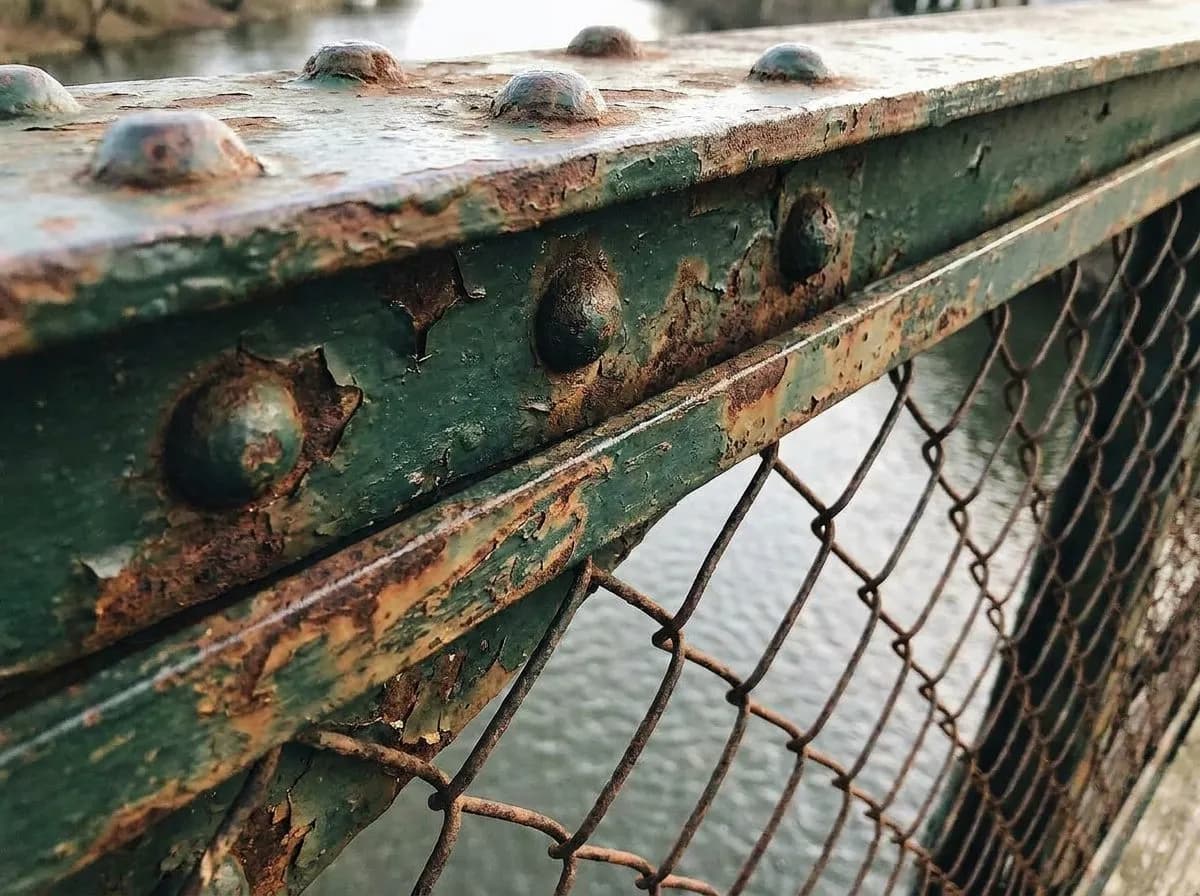
The bridge sings, if that's the right word. The steel trusses vibrate under the weight of passing cars, a low metallic hum that you feel as much as hear. Beneath that is the slap of water against the pilings, the occasional scrape of a boat hull, the distant cry of gulls circling the marina on the island side. In spring, when the wind picks up off the bay, the railing whistles softly.
There's no railing on the traffic side, just a low concrete curb and open air. The sidewalk itself is weathered asphalt patched with concrete, uneven in places, cracked where tree roots once pushed through before someone cut them back. It's narrow enough that you instinctively slow down when another pedestrian approaches. Most people nod. Some don't. The rhythm is unhurried either way.
What the Crossing Is Not
This is not a destination bridge. No one travels across the city to walk it for the architecture or the views, though both have their moments. The steel trusses are plain industrial work, functional and unadorned. The bay is pretty in the way that all tidal water is pretty—shifting, reflective, alive with birds and boats—but it's not dramatic. No skyline, no famous landmarks framing the shot. Just water, marsh, and the low line of the Bronx shore in the distance.
What the bridge offers is the experience of crossing itself. The six minutes suspended above the channel, the sense of leaving one place and arriving in another, the small threshold ritual that City Island residents perform every time they need milk or a prescription or a ride to the subway. It's a walk that matters because it's the only walk that gets you there.
When to Walk It
Spring 2026 will bring the usual tidal rhythms and migratory birds, the sailboats shaking off winter storage, the weekend foot traffic picking up as the weather warms. The bridge doesn't change much season to season, but the marsh does, and the quality of light over the water does, and the number of people willing to spend six minutes in open air certainly does. Late afternoon in spring is reliable—soft light, moderate wind, fewer buses. Early morning is quieter still, though you'll share the walkway with joggers and fishermen heading to the island docks.
Practical Notes
The City Island Bridge connects City Island Avenue on City Island to the mainland Bronx. The nearest subway is the 6 train to Pelham Bay Park, then the Bx29 bus to City Island Street parking is available on both sides; the island side fills quickly on weekends. The bridge walkway is open at all times but unlit at night. The sidewalk is narrow and uneven; not wheelchair accessible. Bring wind protection in cooler months and sun protection in summer. No facilities on the bridge itself. Verify conditions before walking in severe weather.
Tags: #CityIslandBridge #TheLongWayHome #NYC #EastchesterBay #Bronx #CityIsland #PedestrianWalkway #TidalWalk #FreeThingsToDo #NYCBridges #SpringWalks #UrbanThresholds #SlowTravel #HiddenNYC #2026
Sources consulted: City Island, Bronx - Wikipedia · City Island Bridge - Wikipedia · Pelham Bay Park - NYC Parks · NYC Department of Transportation · New York - The New York Times
All trademarks are the property of their respective owners.