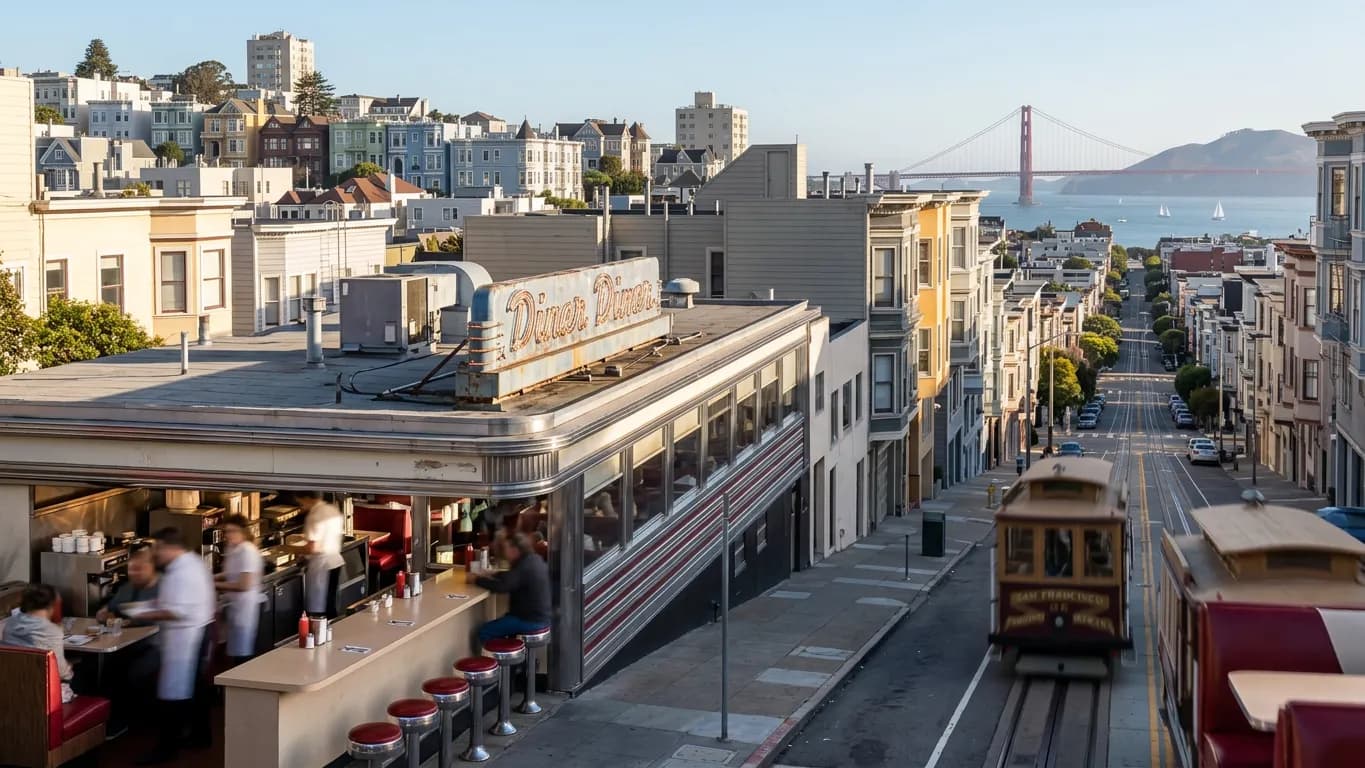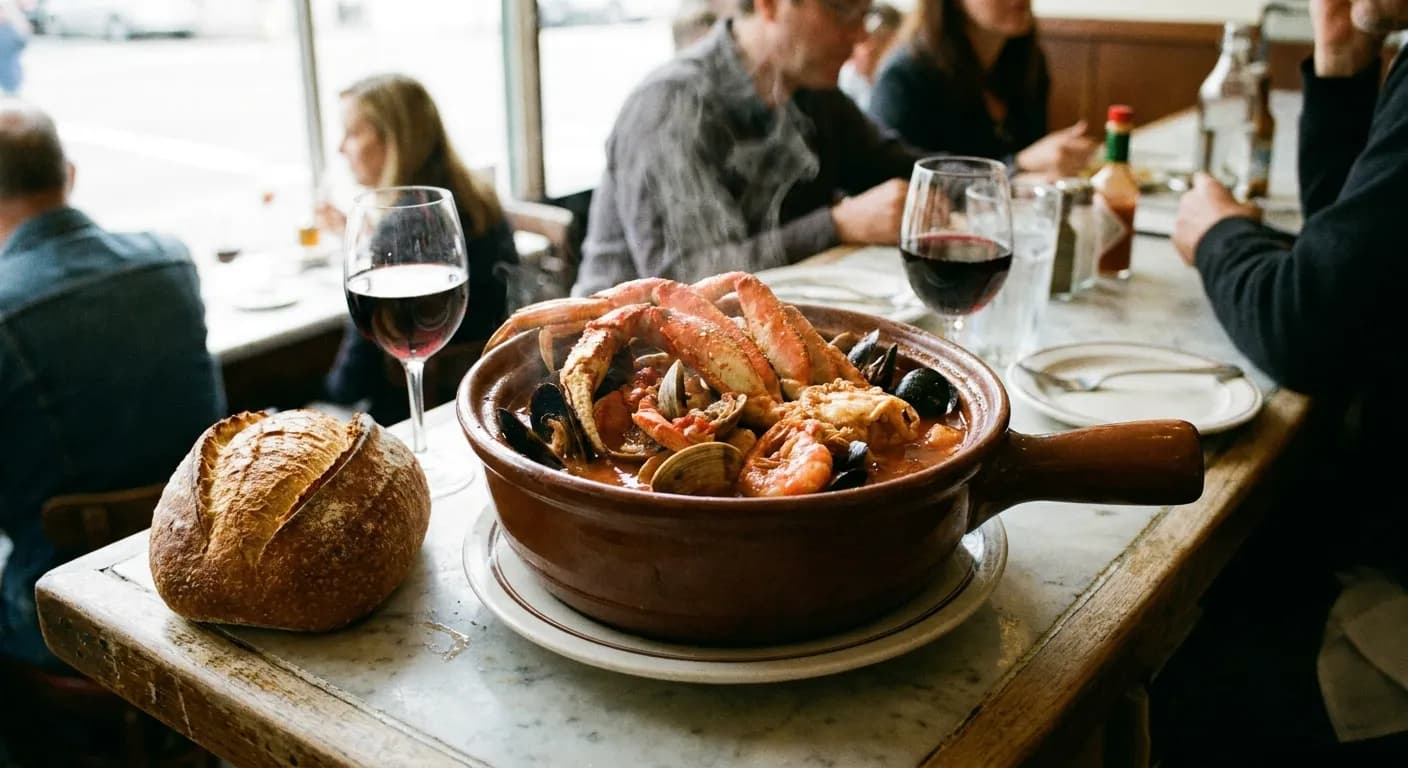
Most cities borrow their signature dishes. San Francisco built one from scratch. Cioppino — a tomato-and-wine broth crowded with Dungeness crab, clams, mussels, shrimp, and whatever fish came off the boat — was invented here, by Italian fishermen working the waters off North Beach in the late 1800s. Which means eating it anywhere else is a cover version. Eating it here, in the right room, is the original recording.
The catch is that 'cioppino near Fisherman's Wharf' is a search result full of traps. Plenty of places ladle out a thin red broth with a sad shrimp or two and call it heritage. This guide is the shortlist: the rooms where the stew is still built properly, plus the history, the anatomy of a correct bowl, and the etiquette of the bib.
Born on the Wharf: A Quick History
In the late nineteenth century, Italian immigrants — many from Genoa — fished the bay from small boats and sold their catch near what was then Meiggs' Wharf, now Fisherman's Wharf. At the end of the day, whatever didn't sell went into a communal pot with tomatoes, garlic, onions, olive oil, and wine. The likeliest origin of the name is the Genoese ciuppin, meaning 'little soup.' The more charming story — that empty-handed fishermen walked the docks asking others to 'chip in' — is probably folklore, but nobody in North Beach is rushing to correct it.
The point is that cioppino was never a chef's invention. It was a working meal, built from scraps and abundance in equal measure, and the best versions in the city still taste like that: generous, unfussy, and unapologetically messy.
What Belongs in the Pot
There's no single canonical recipe, but there is a consensus. A proper San Francisco cioppino gets you most or all of the following, and the broth should taste like the sea and the tomato had an argument and both won:
- Dungeness crab — the non-negotiable star, ideally local when the season is open.
- Clams and mussels in the shell, plus shrimp or prawns.
- A firm white fish, and often scallops or calamari depending on the kitchen.
- A tomato broth with garlic, wine, and enough body to justify the bread.
- Sourdough on the side. This is not optional. The broth demands it.
North Beach: Sotto Mare's Best Damn Bowl
If cioppino has a home address, it's Sotto Mare on Green Street, a family-run North Beach seafood room with a tin ceiling, hexagon-tiled floors, and walls covered in old photos and model ships. The menu is refreshingly direct about its signature: it's listed as the Best Damn Crab Cioppino, and the kitchen argues the case with an enormous bowl teeming with Dungeness crab, clams, shrimp, scallops, calamari, mussels, and fish. It's built to serve two, and — a Sotto Mare signature move — there's penne hiding in the garlicky broth, which turns the end of the bowl into a second meal.
The room is small, the restaurant doesn't take reservations for small parties, and waits can stretch long in crab season. Go early, go on a weekday, or embrace the line as part of the ritual.
The Castro: Anchor Oyster Bar's Cult Classic
Anchor Oyster Bar has been working out of a tiny storefront on Castro Street since 1977, and its cioppino has quietly become one of the most praised in the city — the San Francisco Chronicle's restaurant critic named it among the top bowls in town. The setup is a long white marble counter, a handful of tables, a daily specials board, and a kitchen that treats sustainably sourced shellfish with real care. Even the small cioppino is a serious commitment; the regular size is an event. The room fills fast, so arrive early and be ready to wait for a stool.
Fisherman's Wharf: Scoma's and the Lazy Man's Move
Scoma's has been sitting on its own pier off the Wharf since 1965, and it solved cioppino's central logistical problem decades ago: the Lazy Man's Cioppino, with all the Dungeness crab already picked out of the shell. Same rich tomato broth — the recipe traces to Mama Scoma and has barely changed in sixty years — none of the forensic shell work. The restaurant celebrated its 60th anniversary in 2025 and landed on the Chronicle's Top 100 Restaurants list the same year.
A few piers over, Fog Harbor Fish House on Pier 39 makes the case for cioppino with a view. The seafood program is fully sustainable, the sourdough is baked in-house throughout the day, and the bowl arrives with the bay doing its thing outside the window. It's the one to order when you're showing out-of-towners the postcard.
Downtown: The Old Guard Still Ladles
Tadich Grill on California Street traces its lineage to 1849, which makes it California's oldest continuously running restaurant — and cioppino is its most famous dish. Eating it at the long counter, served by career waiters in white jackets, is as close as dinner gets to time travel in this city. A few blocks away, Sam's Grill on Bush Street has been at it since 1867, and its cioppino comes with crusty sourdough and the same private curtained booths that have hosted deal-making for over 150 years. Note that Sam's runs a weekday-only schedule, so save it for a long lunch.
Bib Etiquette and Other Survival Tips
Cioppino with shell-on crab is a contact sport, and the city has developed rules of engagement. A few things locals know:
- Wear the bib. Nobody looks cool in it, which is exactly why everybody wears it. Tomato broth does not negotiate with white shirts.
- Use the crab cracker and the little fork, and don't rush. The shell work is the meditative part.
- Order the Lazy Man's style if you're in date clothes or on a schedule.
- Save the bread for the bottom third of the bowl, when the broth has collected everything the shellfish left behind.
- The big crab-loaded bowls at the classic spots are priced like the centerpiece they are — many run well past fifty dollars — so bring an appetite or a partner in crime.
Cioppino FAQs
When is the best time of year for cioppino in SF?
Cioppino is on menus year-round, but it hits hardest when local Dungeness crab season is open — typically the colder months, though exact opening dates shift each year with state regulators. If eating local crab matters to you, ask the restaurant what's in the pot that week; the honest ones will tell you.
Do I need a reservation for the famous cioppino spots?
It depends on the room. Sotto Mare and Anchor Oyster Bar are small, beloved, and largely walk-in, so lines form early. Scoma's, Fog Harbor, and Tadich are bigger operations where booking or a shorter wait is more realistic. If your heart is set on one bowl on one night, check the restaurant's own site before you head out.
What's the difference between cioppino and other seafood stews?
Cioppino is San Francisco's answer to a global family that includes French bouillabaisse and Italian brodetto. The distinguishing marks are the tomato-and-wine broth, the Dungeness crab, and the kitchen-sink generosity — it was built from whatever the day's catch left over, and the best versions keep that spirit. Ask Karpo before you go, and it'll point you to whichever bowl is closest to wherever you're standing.