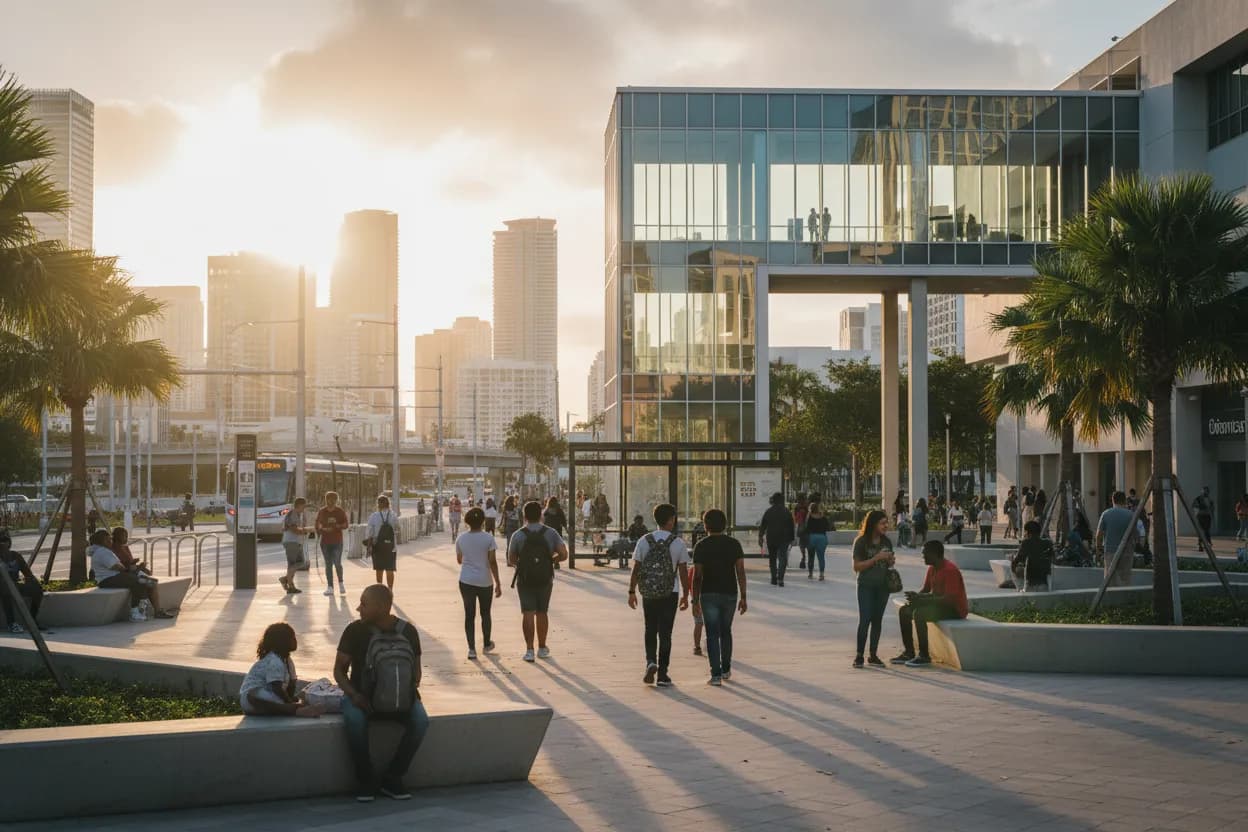
Miami students, parents, and teachers are entering back-to-school mode at the same time that national search curiosity around chris hansen is pulling people into clips, reposts, and commentary. Treat that as a signal to slow down, not as proof of anything local. This route is built for a Miami errand day: verify what you are reading, use public library tools, check transit alerts before moving, and keep a backup plan if a branch, elevator, escalator, bus, train, or Metromover connection changes. It does not assume a Miami appearance, event, endorsement, private access, or affiliation. The goal is simpler and more useful: leave home with a question, compare primary sources, pick a study stop, and avoid avoidable friction.
Want a quick reality check before you forward a post, choose a branch, or ride across town after school? Text Karpo with the claim, destination, and time window.

Turn curiosity into a research question
Start by naming what you actually need to know. If the phrase chris hansen brought you to a video, headline, or social post, write the claim as a question: Is this current? Is it about Miami? Is there an official event page? Is the post quoting a primary source, or just reacting to another reaction? That one-minute step keeps a national attention spike from becoming a local rumor.
For a back-to-school household, the question should also be practical. A student may need a credible source for a media-literacy assignment. A parent may need to know whether a supposed local appearance will affect traffic, crowds, or a school-night plan. A teacher may want a clean example of how to separate a public record from commentary. In all three cases, do not begin with the loudest clip. Begin with what can be checked.
Use a simple three-column note on your phone: claim, source, action. Under action, write either “verify,” “ignore,” or “save for later.” If a post does not connect to an official page, a public agency notice, or original reporting, it should not drive your afternoon plan in Miami.
Start with a reliable public resource
For a citywide research stop, the Miami-Dade Public Library System is the cleanest public starting point in the supplied official sources. Its homepage points users to branch locations, account login, library cards, the catalog, learning and training, eBooks, audiobooks and more, online newspapers and magazines, and eContent. It also says digital books, audiobooks, movies, music and more can be downloaded and streamed anytime, anywhere, free with a library card.
Before you choose a branch, check the library’s own site rather than a map snippet. The MDPLS homepage includes an “Open Now” tool and a “Find a Branch” link, and those are the places to verify current hours and access. The same official page lists a patron notice: the Miami Lakes Branch and South Dade Regional Libraries are closed for construction, renovations and improvements. If either is your usual study stop, choose a backup before leaving.
A useful Miami school-week move is to pair a physical library visit with digital access. If a branch is crowded, closed, or inconvenient, the library’s online newspapers, magazines, catalog, and eContent can still support a source-checking assignment from home or another quiet place, as long as you have the required library access.
Compare primary reporting before opinions
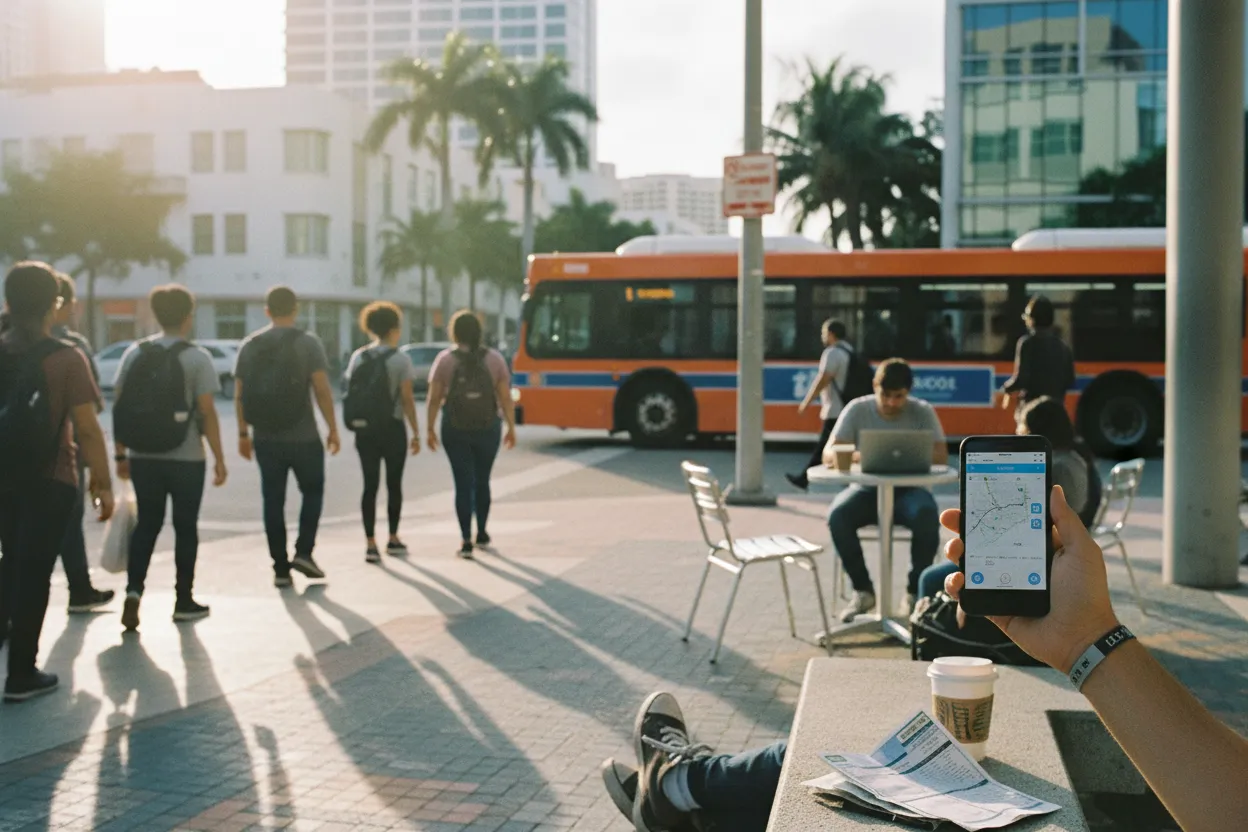
Once you have a library resource open, separate source types. Primary reporting and official notices should come before reaction videos, stitched clips, and personality-driven summaries. If a post about chris hansen makes a local claim, ask whether it links to an official venue, public agency, broadcaster, court record, school notice, or direct statement. If it only links to another social account, treat it as unverified.
Miami readers should be especially careful with location language. “In Miami,” “near Miami,” “South Florida,” and “Florida” are not interchangeable when you are deciding whether to change a commute, bring a student somewhere, or expect crowds. Unless an official source confirms a local appearance or public event, do not build a plan around one.
For student work, make the comparison visible. Save the original claim, one official or library-accessible source, and one piece of commentary. Then write two sentences: what is confirmed, and what is not confirmed. That habit is more valuable than memorizing the details of a trending topic because it works for school alerts, transit updates, sports events, weather claims, and viral celebrity posts.
Choose a study stop that fits the task
Pick the stop by task, not by habit. If the assignment requires databases, newspapers, catalog searching, or quiet drafting, begin with the MDPLS site and choose an open branch that fits your route. If the task is only to review an article, listen to an audiobook, or scan digital media, the library’s eContent and online newspapers and magazines may be enough without adding a trip.
Transit can make the plan easier, but only if you check it like a live system. Miami-Dade County’s Department of Transportation and Public Works page directs riders to service updates, rider alerts, real-time bus and train tracking, and a trip planner. It also identifies Metrobus, Metrorail, Metromover, MetroConnect microtransit, BRT Metro Express, and Special Transportation Service as part of the county mass transit system.
For back-to-school budgets, note the official student fare message without assuming eligibility for every rider: Miami-Dade Transit says full-time students ride Metrobus and Metrorail for half the price. Verify the current terms on the official transit page before counting on a discount, especially for a first week of school commute or a new student pass routine.
Add one low-cost reset nearby
The reset does not have to be a separate attraction. Build in a low-cost pause that still supports the task: download an audiobook, open an online magazine, save a newspaper article, or use the catalog to find a second source before moving on. The library’s official description of eContent makes this a practical option for students who need a break without losing the thread of the assignment.
If your route uses transit, make the reset a timing buffer. Check the Transit Tracker, Trip Planner, service updates, and rider alerts before you leave the study stop. Miami-Dade Transit also provides elevator and escalator status, which matters if anyone in your group needs step-free access or extra transfer time. A short verification pause can prevent a long platform problem.
Crowd risk is not only about big events. Back-to-school afternoons bring students, caregivers, commuters, and after-school activities into the same windows. Avoid planning to arrive at the exact last workable minute. If a branch is busy, a bus is delayed, or an access feature is out of service, your backup should already be chosen.
Verify hours and access before leaving
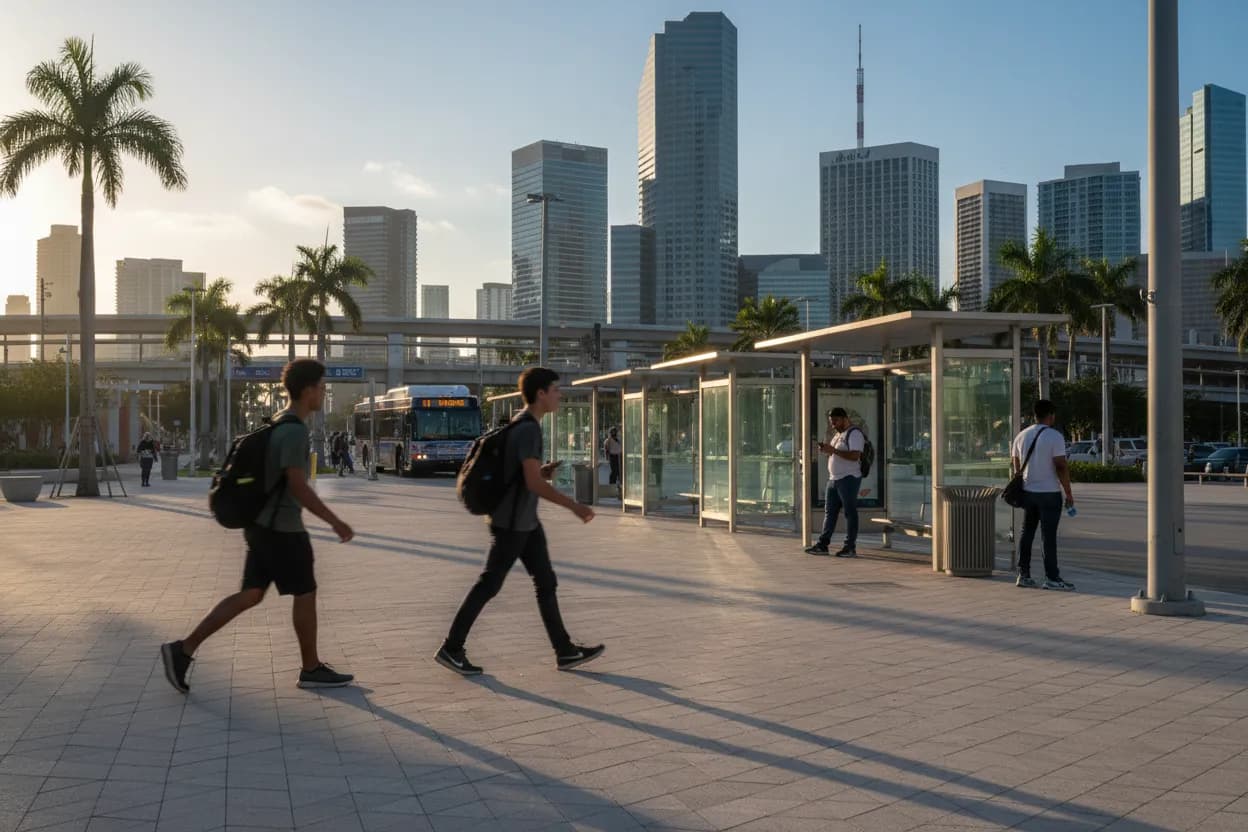
Run a final five-point check before the door closes: the claim you are researching, the branch or digital resource you plan to use, the transit route, the access details, and the backup. For library access, use the MDPLS site’s current branch tools and notices. Remember that the official patron notice says Miami Lakes Branch and South Dade Regional Libraries are closed for construction, renovations and improvements.
For transit, verify the day’s alerts on Miami-Dade County’s official transportation page. One dated notice in the supplied official extract is especially relevant this week: on Saturday, Aug. 15, Metromover service will begin operating at 2 p.m. while work continues on upgrading the Metromover system. If your plan depends on Metromover that day, check the official page again before traveling.
Make the backup specific. Instead of “we’ll figure it out,” write “use library digital content from home,” “switch to another open branch found through MDPLS,” or “reroute using the official trip planner.” That is the difference between being interested in a trending phrase and running a Miami school-week plan that survives real-world changes.
Tags: #chrisHansen #Miami #BackToSchool #back_to_school #MiamiDade #MDPLS #MiamiDadeTransit #SourceChecking #MediaLiteracy #StudentLife #TransitAlerts #LibraryCard #AskKarpo #BeforeYouGo
Sources consulted: mdpls.org · miamidade.gov · miamidade.gov
All trademarks are the property of their respective owners.
Ask Karpo first
Ask Karpo first when a viral post starts shaping your Miami plans. Send the claim, where you are starting, where you need to go, and when you plan to leave. Karpo can help you slow the rumor down and turn it into a checkable route.