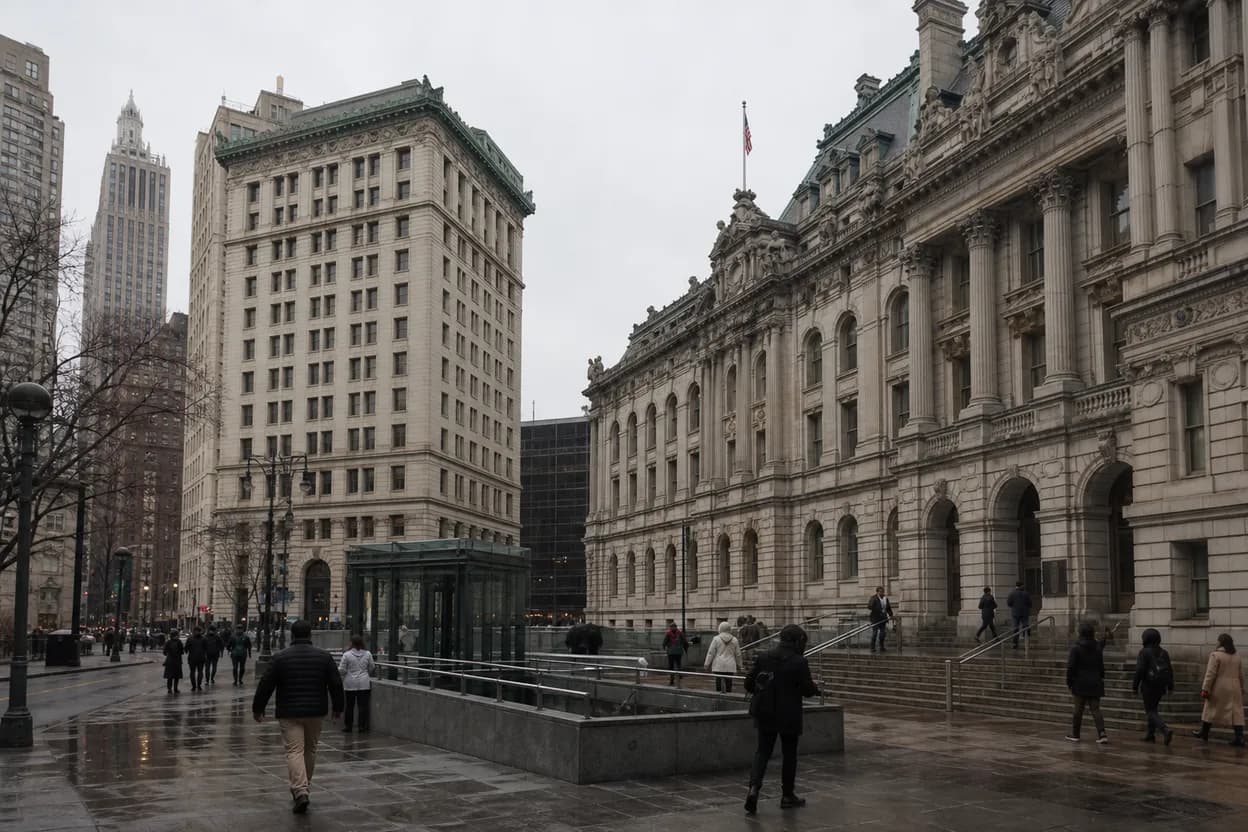
A spike in searches for chris hansen can mean many things, but in New York City it points to a useful, less sensational question: how do ordinary people learn from records, oversight, and documented history without becoming reckless amateur investigators? The practical answer is a focused downtown route around 31 Chambers Street, where the NYC Department of Records and Information Services keeps public research rooms, exhibits, and government-records tools. This is best for a humid Friday when you want a civic errand with texture: part archive visit, part City Hall context, part reminder that evidence has rules, limits, and staff workflows.
Want the route, source links, and same-day backup checks in one place? Text Karpo before heading to Chambers Street so your NYC archive stop matches current access rules.

31 Chambers Street Research Rooms
Start at 31 Chambers Street, the Surrogate's Court building that houses DORIS public research spaces. The agency lists the Leonora Gidlund Reference Room in Suite 103, the Rebecca Rankin Reading Room in Suite 111, and a first-floor gallery in Suite 109. Current DORIS guidance says the Municipal Library and Archives research rooms are open Monday to Friday, with morning and afternoon blocks, and that appointments are strongly encouraged so staff can make requested material available.
Treat the archive as a managed research setting, not a drop-in attraction where every record appears instantly. Create or use a research account, submit the relevant request, and wait for confirmation if you need specific library or archival material. The strongest Friday plan is to request ahead, arrive with a narrow question, and accept that some material may be stored at the Industry City facility in Brooklyn rather than on Chambers Street that day.
Rebecca Rankin Reading Room Appointment
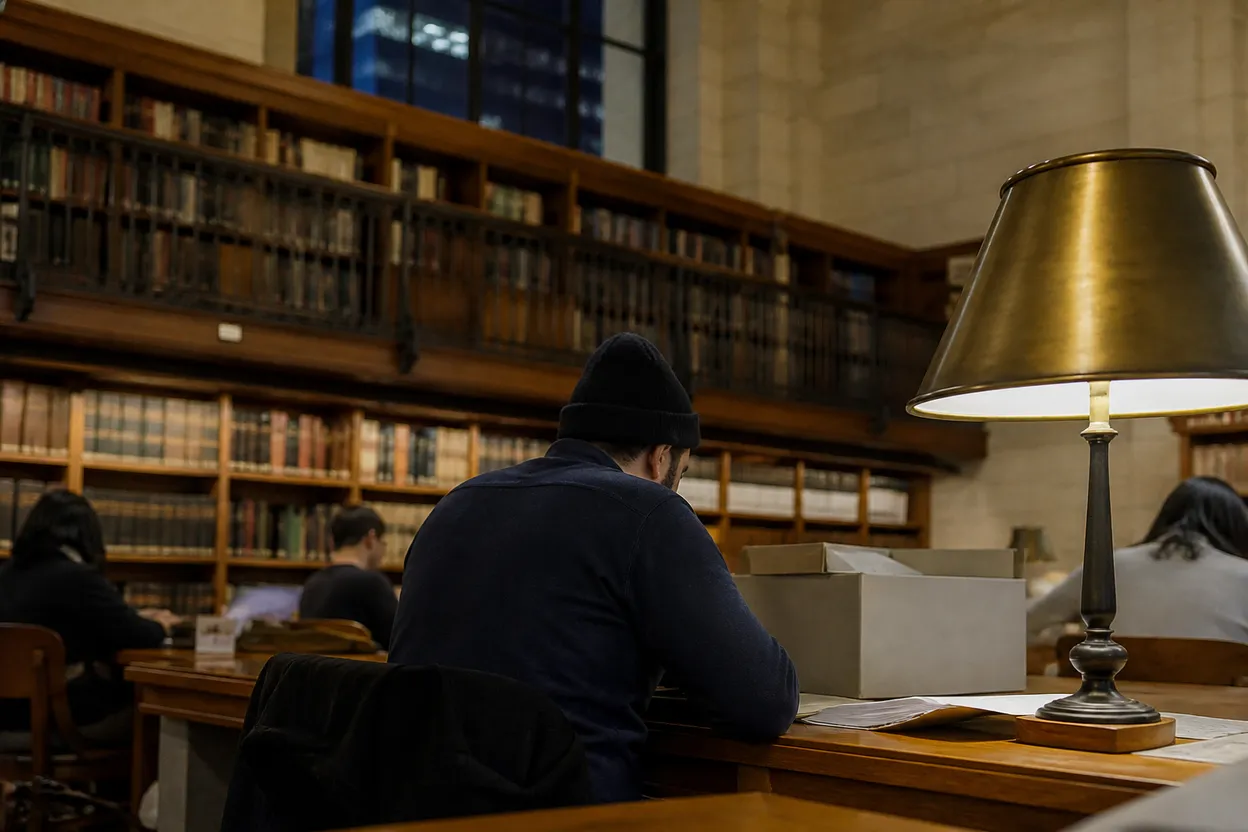
For a news-and-utility outing, the Rebecca Rankin Reading Room is where curiosity becomes procedure. DORIS says records are available for public inspection and copying in Room 111 during regular business hours, and the FAQ explains that staff review requests before confirming appointments. Bring a laptop, phone, pencil, and paper. Leave bags and coats in designated lockers, keep your phone silent, and skip pens, markers, highlighters, food, and drinks.
The tradeoff is pace. If you arrive expecting a television-style reveal, the reading room will feel slow; if you arrive with one document trail, it becomes manageable. Flash-free photography is generally allowed, but staff permission is required before using personal scanners, and some material may be restricted by legal, privacy, or preservation rules. Your best evidence practice is to photograph citations, titles, dates, and box or folder details before trying to interpret anything.
Municipal Library Catalog Search
Use the Municipal Library catalog before or during the visit to turn broad accountability interest into a search plan. DORIS describes the catalog as a way to find city publications from the 17th century to the present, with title, author, date, and related details. The catch is important: the catalog does not mean the material is available online. It usually tells you what to request for viewing in the 31 Chambers reference space.
This step is especially useful for solo visitors because it reduces social friction at the desk. Search by agency, neighborhood, report title, incident category, or date range rather than a personality-driven query. If a record is not where you expected, ask staff which agency created it, whether it belongs in the Publications Portal, Municipal Archives, Web Archives, or a FOIL channel, and whether a narrower date range would make the request more realistic.
First Floor Gallery at Suite 109
Build in the first-floor gallery as your low-pressure opening or backup. DORIS lists onsite exhibits at 31 Chambers Street on weekdays, including 'NYC's Story: The City on Record,' 'Windows on the Archives,' and a 1964-65 World's Fair display listed as on view through September 25, 2026. The gallery gives you real collection context even if your research appointment is delayed, shortened, or moved to another date.
The gallery also helps keep the outing grounded. Public records are not only scandal files or crime-adjacent documents; they include maps, photos, municipal publications, interviews, plans, and everyday traces of government action. In muggy weather, use this stop to cool down, reset your question, and decide whether your next move is a reading-room request, a City Hall tour reservation, or an online records session from somewhere nearby.
Brooklyn Bridge-City Hall Subway Choice
The cleanest subway target is Brooklyn Bridge-City Hall on the 4, 5, or 6, with Chambers Street, City Hall, Park Place, and nearby A, C, J, Z, R, 1, 2, and 3 options depending on your starting point. DORIS lists several of those lines for 31 Chambers Street. On a humid summer Friday, choose the route with the fewest outdoor transfers, even if it adds a few minutes underground.
Accessibility and reliability need a same-day check. Do not assume every nearby station entrance, elevator, or escalator is working just because the line serves the area. If stairs, heat, or walking distance matter, verify MTA status before leaving and keep a fallback ride-hail, bus, or one-stop reroute in mind. The area around City Hall is dense with security zones and government buildings, so leave margin instead of planning a minute-by-minute sprint.
City Hall Plaza Tour Reservation
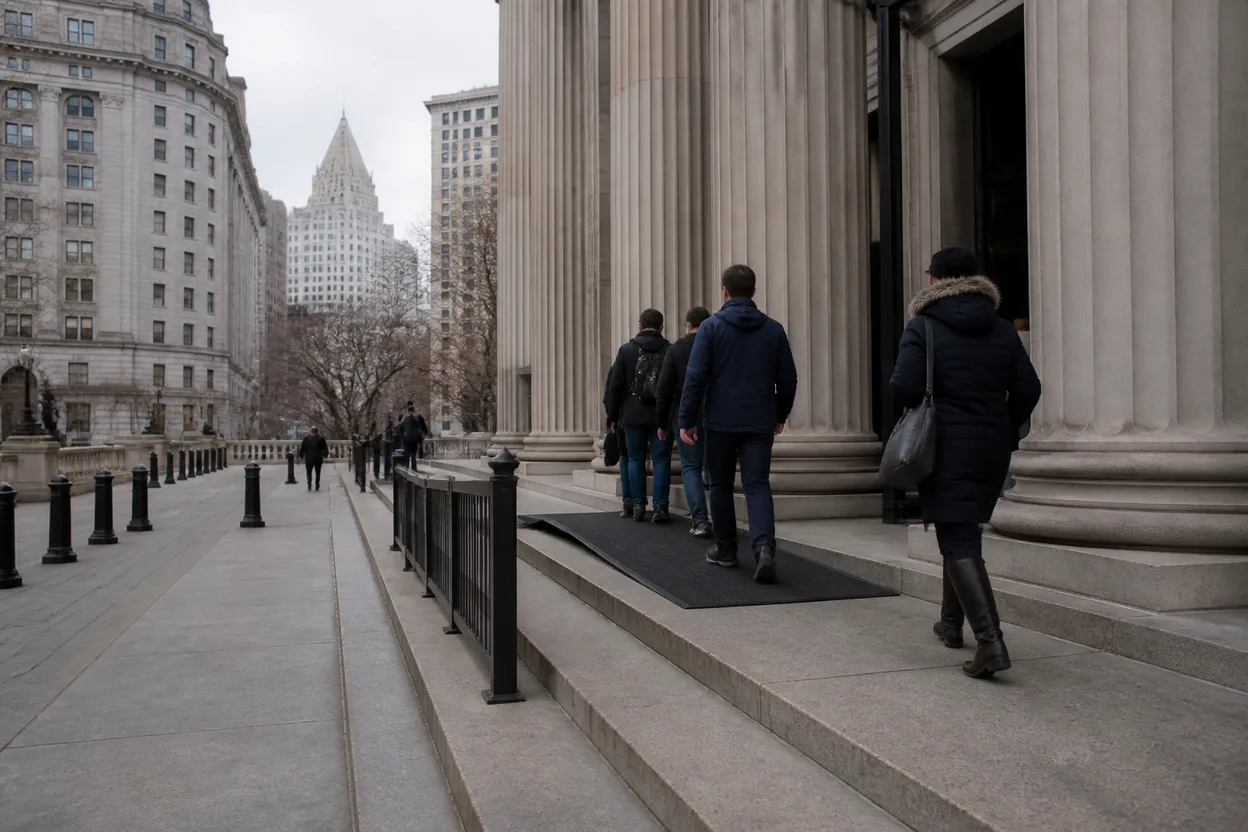
If you want civic context after the archive, look at the Public Design Commission's City Hall tour pages rather than trying to wander into City Hall. The official tour program is free, weekday-based, and reservation-driven, with limited capacity. The directions page says visitors meet near City Hall Plaza by the Nathan Hale statue and must pass through security, with photo ID required for adults.
This is the route's main failure point because tour availability changes and late arrivals can shorten or cancel the visit. If the next individual tour is reserved, do not force it into the day; treat it as a second trip and use City Hall Park, the DORIS exhibits, or City Council public-hearing information as context instead. City Hall tours are listed as wheelchair accessible through NYC311, but reservation details should still be confirmed before committing.
Friday Final Verification Action
Before you leave on Friday, August 7, 2026, do three checks in order: confirm your DORIS appointment or email thread, re-open the DORIS hours page for any notice, and check the City Hall tour page if you plan to add that stop. For research material, verify whether the item is at 31 Chambers Street or the Industry City storage and research facility, which DORIS describes as appointment-only.
The safest final decision is simple: go only if the record access you need is confirmed, or if you would still be satisfied with the gallery, catalog work, and downtown civic context. Bring ID for any City Hall security interaction, keep requests respectful, and avoid treating names in records as leads for personal contact. Public archives reward patience, citations, and restraint; your last action should be saving the source URLs and appointment details.
Tags: #AskKarpo #BeforeYouGo #NYC #NewYorkCity #MunicipalArchives #PublicRecords #CityHall #ChambersStreet #CivicResearch #HiddenGems #OddFinds #SoloNYC #DowntownManhattan #ArchiveRoute
Sources consulted: Source 1: nyc.gov · Source 2: nyc.gov · Source 3: nyc.gov · Source 4: nyc.gov · Source 5: nyc.gov · Source 6: nyc.gov
All trademarks are the property of their respective owners.
Ask Karpo first
Tell Karpo your date, group size, budget, and starting point. We’ll check current access, timing, transit, and the cleanest New York City plan for NYC Department of Records and Information Services cluster: Municipal Archives, Municipal Library, and nearby City Hall public tour resources around 31 Chambers Street before you head out.


