Where the Bloody Angle Meets the Stage
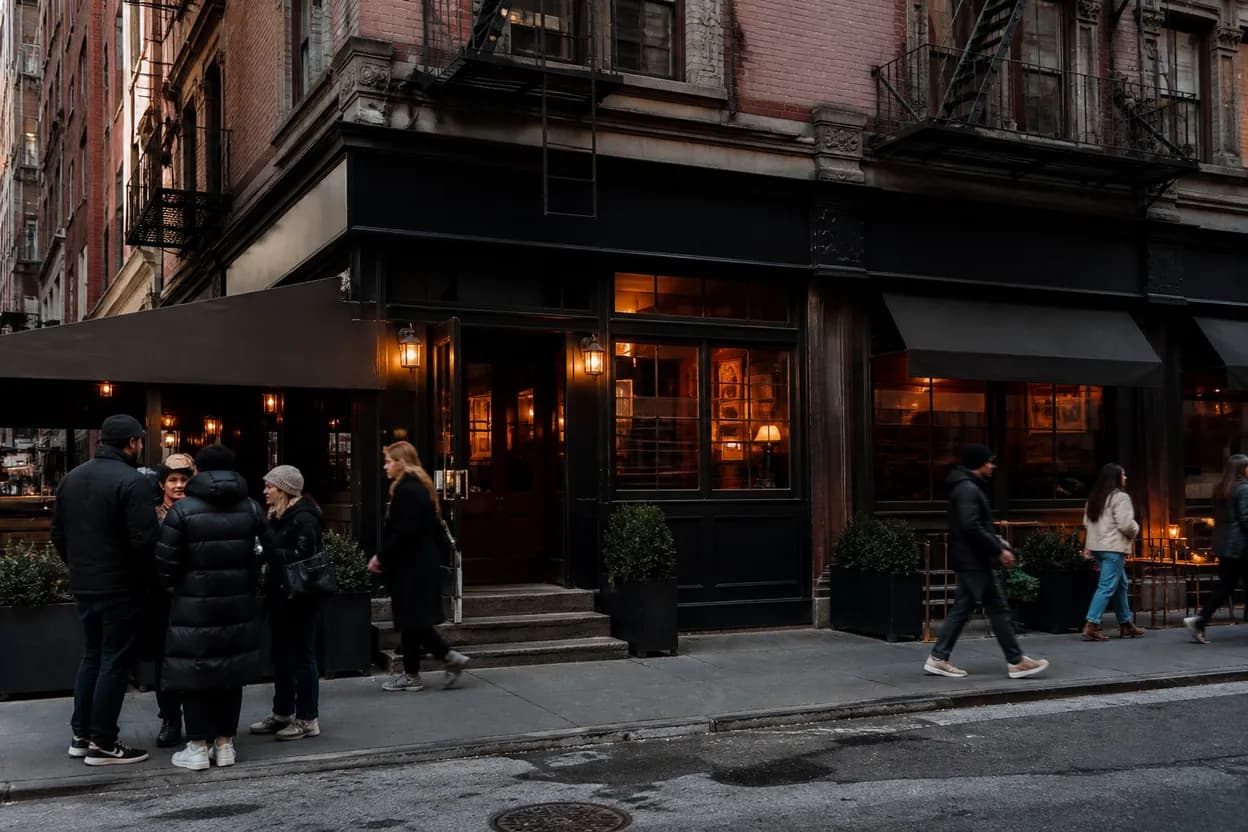
Doyers Street bends at a forty-five-degree angle that once made it the deadliest block in Manhattan. Tong wars claimed more lives on this crooked lane than anywhere else in the city, and the sharp turn—nicknamed the Bloody Angle—meant victims never saw what was coming. What most visitors walking past the dumpling shops don't realize is that this same stretch housed New York's first Chinese theater in the early 1900s, a performance hall where Cantonese opera rang out to packed immigrant audiences.
That theatrical history now lives underground. Opera House occupies the basement beneath Chinese Tuxedo at 5 Doyers Street, a space that feels less like a bar and more like a recovered artifact from a city that forgot it existed. The entrance requires a small act of faith—a descent down a narrow staircase, past the bustling restaurant above, into something that announces itself only after the last step.
The Room That Glows Like a Lantern
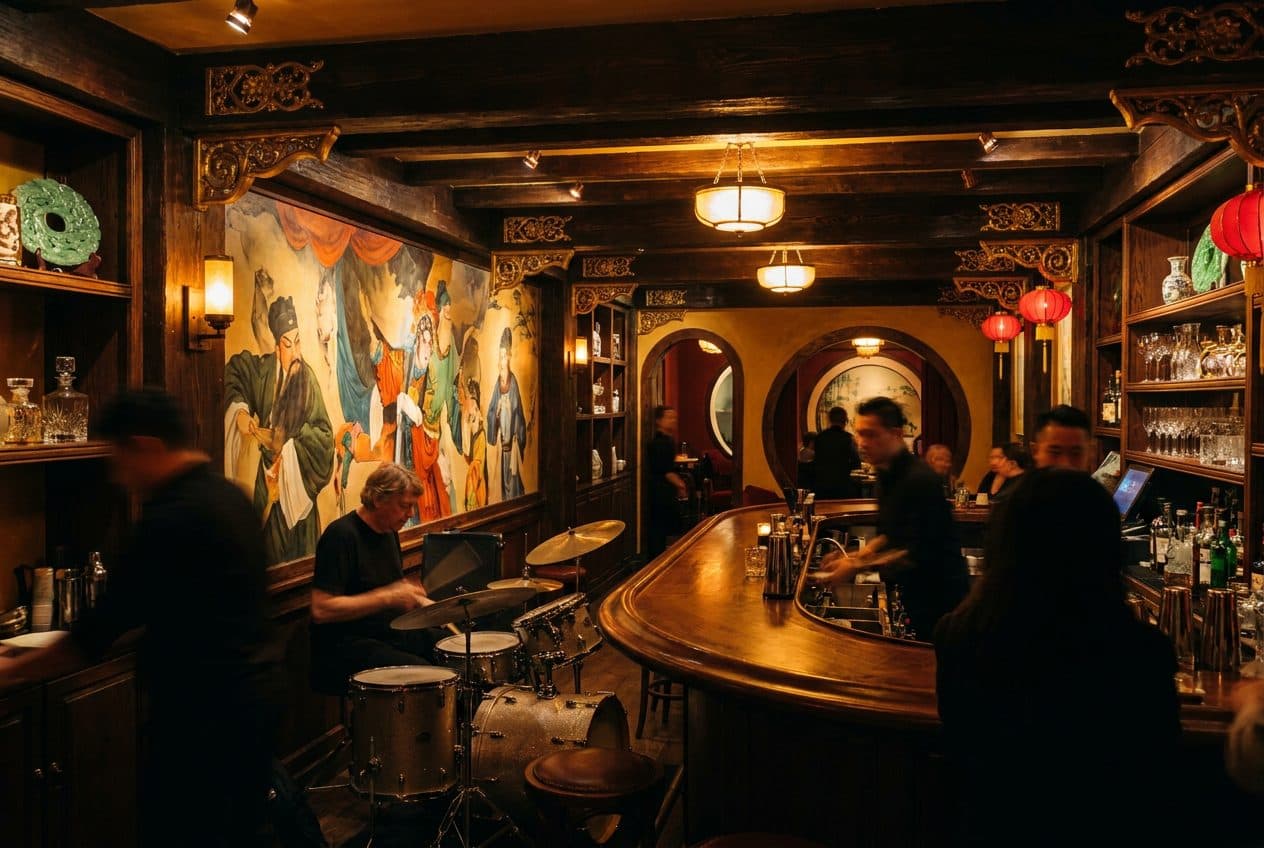
Eighty seats fill a space that shouldn't feel as expansive as it does. Amber lighting washes the room in the color of aged honey, casting everything in a warmth that photographs poorly but feels exactly right. A hand-painted opera mural stretches across the main wall, its figures frozen mid-gesture in scenes from classical Chinese tales, the kind of detail that rewards a second and third look.
Moon-shaped sliding doors punctuate the space, their curves echoing the circular motifs of traditional Chinese architecture. Gold accents catch the low light—on trim, on hardware, on the exposed beams that remind visitors they're beneath street level. The bar area, called The Stage, positions guests in front of the mural and the bartenders' full working view. Solo visitors and two-tops do well here; the seats offer both spectacle and proximity, the feeling of watching a performance without being asked to participate.
Twelve Cocktails, Twelve Stories
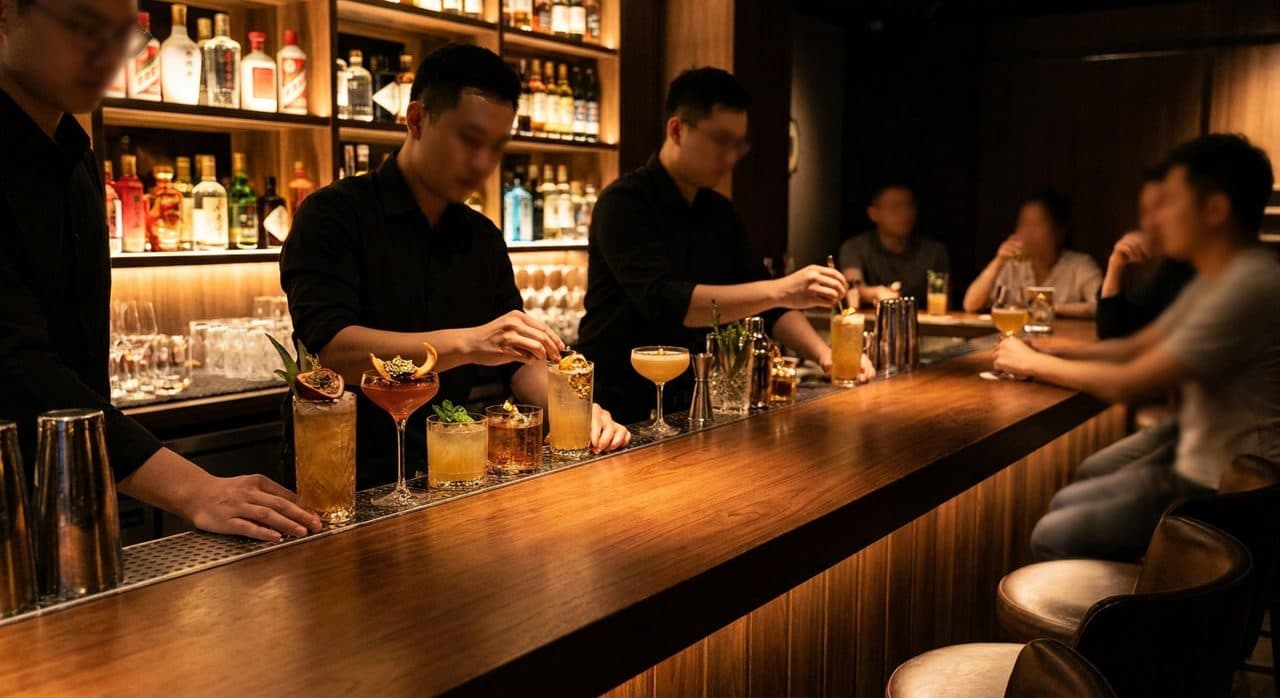
Beverage Director Beau Bradley built the menu around a single organizing principle: every drink tells a story already written. The twelve cocktails take their names from Chinese operas and classical tales, each $24, each constructed with the kind of ingredient lists that demand a moment of consideration. This isn't a menu to skim.
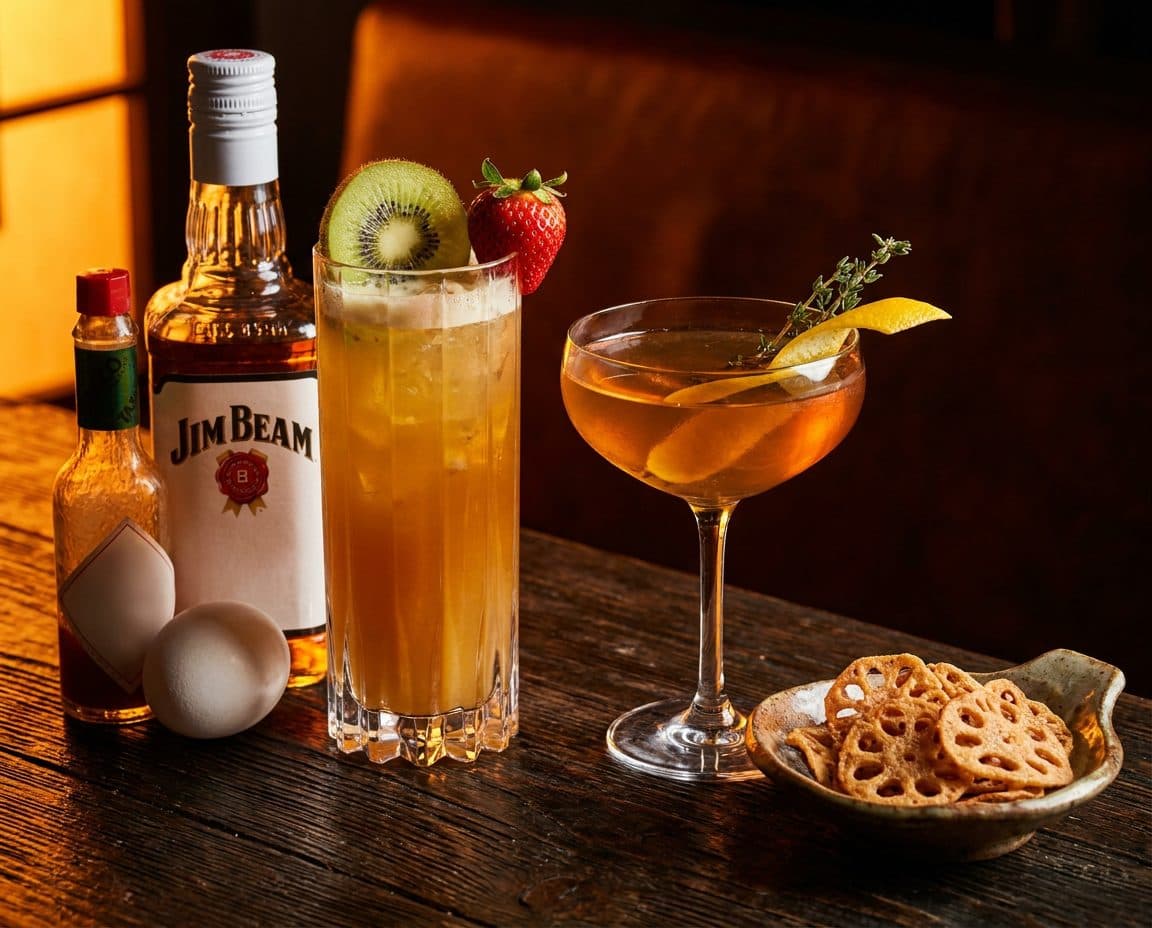
Two drinks introduce baijiu—the Chinese grain spirit that scares off the uninitiated—with the most accessible entry points on the list. The Butterfly Lovers softens Ming River Baijiu's characteristic heat with pineapple, strawberry, kiwi, lemon, red bean, and miso, building a drink that tastes like tropical fruit with a savory undertow. The Flower Drum takes a different route: Niu Lan Shan Baijiu meets Ten To One White Rum, Meyer Lemon Cordial, yuzu, black bean, and calamansi, the citrus and umami working in tandem to make the spirit approachable rather than confrontational. Both function as invitations rather than tests.
Reading the Menu Like a Program
The names require context, and the bartenders provide it without condescension. Asking about the story behind a cocktail yields more than a flavor description—there's a tale of star-crossed lovers, a legend of a woman warrior, a myth about a princess and a cowherd. The staff treats the menu as theater should be treated: with knowledge available to anyone who asks for it.
First-timers do well to name their spirit comfort zone and let the bartender navigate from there. The baijiu-curious should start with Butterfly Lovers; its fruit-forward profile builds a bridge before the Flower Drum's more assertive botanical structure. Complimentary snacks arrive without ordering—mala-spiced chickpeas and lotus root chips—a small gesture that signals the room's hospitality before the first drink lands.
The Late-Night Arc
Opera House opens daily at 6pm, but the room changes after 11pm. Walk-in availability increases as early reservations clear out, and the crowd shifts toward those who treat the space as a destination rather than a stop. The kitchen upstairs at Chinese Tuxedo sends down smaller plates not listed on the regular menu—the kind of late-night provisions that reward patience and timing.
During regular hours, guests can order from the dim sum menu above: teacup scallop and shrimp wontons, braised black pepper oxtail buns, dishes that travel well down a staircase and pair deliberately with the cocktail program. The late plates are smaller, more improvisational, the kitchen's answer to what bartenders and regulars want at midnight. Asking what's available after 11pm often yields something worth staying for.
The Chinatown Equation
Doyers Street sits at the heart of Manhattan's Chinatown, a neighborhood that resists the homogenization overtaking other downtown blocks. The crooked lane still hosts noodle shops, barbershops, and dumpling counters that have operated for decades. Opera House exists in conversation with this context—a high-design cocktail bar that acknowledges its location's history rather than erasing it.
The room works for occasions that require atmosphere without pretension: a birthday that deserves more than a standard bar, a date that benefits from conversation starters built into the menu, a solo evening that rewards observation. The Stage bar seats fill first for a reason; regulars know the view matters as much as the drink.
Practical Notes
Opera House is located at 5 Doyers Street in Chinatown, Manhattan, beneath Chinese Tuxedo restaurant. The bar seats 80 guests and opens daily from 6pm to 2am. Reservations are available through Resy; walk-ins are welcome and more available after 11pm. All cocktails are $24. Complimentary mala-spiced chickpeas and lotus root chips accompany every table. Dim sum can be ordered from the upstairs kitchen, with off-menu late-night plates available after 11pm. Phone: (646) 355-8693. The Stage bar area offers the best view for solo visitors. Nearest subway: Canal Street (J/Z/N/Q/R/W/6) and Chatham Square.
Tags: #chinatown #cocktailbar #nyc #nycnightlife #baijiu #chineseopera #hiddenbar #doyers #dumplingstreet #latenightdrinks #manhattanbar #cocktails #speakeasy #theatricbar #undergroundbar
Sources consulted: operahouse.nyc · timeout.com · eater.com
Please drink responsibly. Must be of legal drinking age.
All trademarks are the property of their respective owners.
Ask Karpo first
Want to know which of the twelve cocktails is right for a baijiu first-timer, whether The Stage has walk-in seats on a Friday, and what the upstairs kitchen sends down after 11pm? Ask Karpo for a real-time seat check on Doyers Street, the cocktail to start with, and a Chinatown evening that earns its way past midnight.