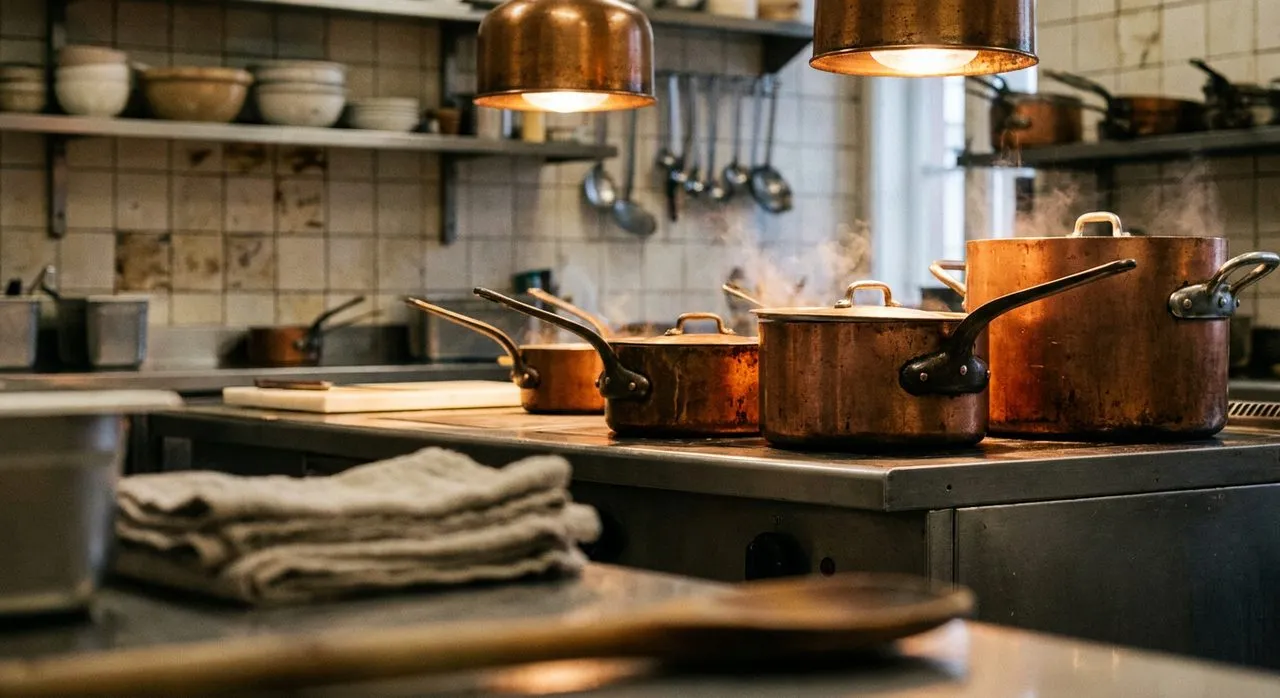
The West Loop thrives on restaurants that feed other restaurants. After the dining rooms empty and the kitchens close, cooks and servers scatter toward the handful of places still serving real food past eleven. One counter-only ramen bar on a mezzanine corner stays open until midnight Thursday through Saturday, pulling noodles to order and ladling broth from copper pots while the neighborhood finally exhales. The specialty here is tsukemen—chilled wheat noodles served alongside a separate bowl of concentrated hot broth for dipping—though traditional ramen bowls hold their own. It's a narrow, efficient operation built for diners who know what they want and eat without lingering.
The counter and the kitchen
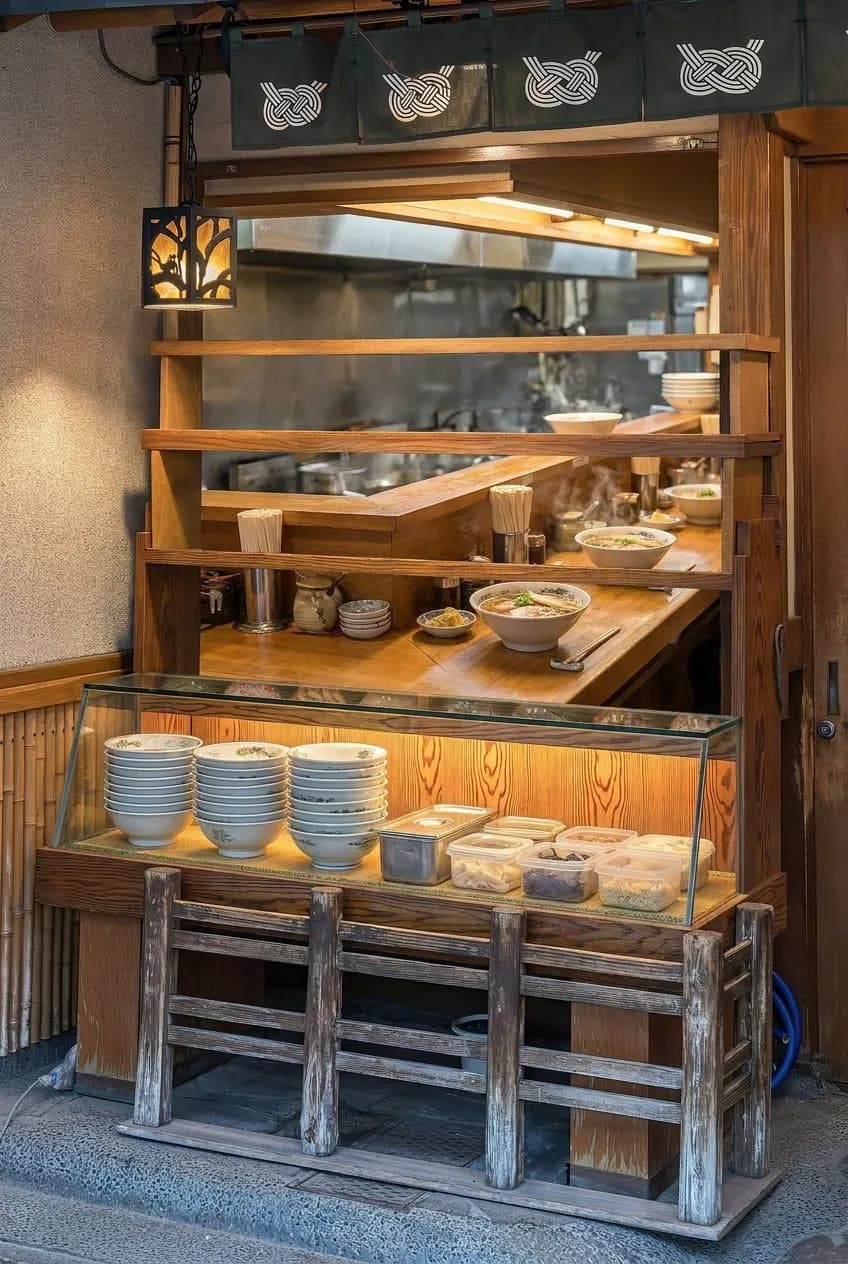
Sixteen stools wrap an L-shaped counter made from pale blond wood, each seat facing the open kitchen where two cooks work a tight choreography of timers, ladles, and spider skimmers. The setup leaves no room for mystery: you watch noodles plunged into roiling water, broth reduced in wide copper pots, soft-boiled eggs halved with a single confident cut. Steam rises in visible curtains under the halogen work lights. The kitchen exhaust hums steadily, a white-noise backdrop that somehow makes conversation easier rather than harder.
There's no host stand. You seat yourself, claim a laminated menu from the stack near the water pitchers, and mark your choices with a stubby pencil. Orders go into a wooden box that slides along a rail toward the kitchen. By late May, when the evening air finally holds some warmth, the roll-up windows along the mezzanine stay open, letting in the occasional siren and the smell of the loading docks two blocks west. The whole room smells like pork fat, kelp, and toasted sesame oil.
Tsukemen and its adherents
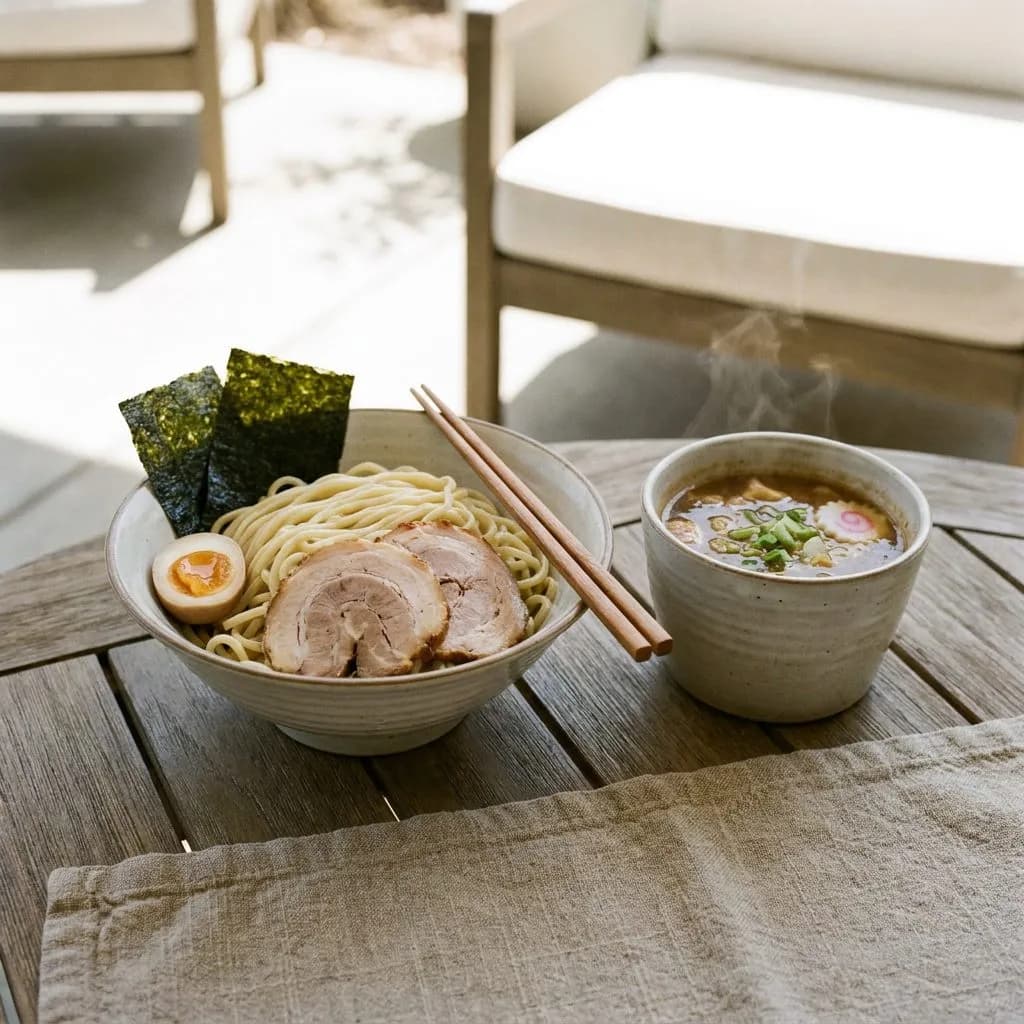
Tsukemen remains less common than standard ramen in Chicago, which gives this bar a minor cult following among the subset of diners who prefer the format. The noodles arrive cold or room temperature, thicker and chewier than typical ramen noodles, coiled in a shallow bowl. The broth comes separately in a smaller, deeper vessel, concentrated and intensely flavored—pork-and-bonito, miso-tonkotsu, shoyu, or a rotating seasonal style. You dip each tangle of noodles into the broth, slurp, repeat. At the end, the server brings a small carafe of hot dashi to dilute what's left, turning the concentrate into a drinkable soup.
The ritual appeals to a certain kind of eater: methodical, attentive, willing to trade the comfort of a unified bowl for sharper contrasts in temperature and texture. It's also faster. Most tsukemen diners finish in under twenty-five minutes, which suits the late-night crowd that drifts in after ten—line cooks still wearing their checks, bartenders in rumpled oxfords, the occasional pair of insomniacs who wandered over from a Fulton Market gallery opening. Conversation stays low. People eat, pay, leave. The turnover is brisk but never feels rushed.
Four broths and the add-ons
The menu offers four broth bases, each available for tsukemen or traditional ramen. The tonkotsu is milky and rich, built from pork bones simmered long enough to release their marrow and collagen. The shoyu leans cleaner, soy-forward with a whisper of citrus peel. Miso-tonkotsu splits the difference, adding fermented soybean paste to round out the pork. The fourth option rotates: in spring it might be a chicken-and-ginger broth; by summer, something lighter with tomato and shellfish. None of it reinvents the wheel. The appeal is consistency, competence, and the fact that it's available when most kitchens have gone dark.
Add-ons arrive on small plates: slices of chashu pork belly with caramelized edges, bamboo shoots that still have some snap, sheets of nori, pickled mustard greens, a soft-boiled egg that wobbles when you cut it. You can build your bowl incrementally or order everything at once. Pricing is straightforward, posted on a chalkboard above the kitchen pass. The portions are calibrated for one person eating alone, though pairs occasionally share a second bowl of noodles to stretch the meal.
The late-night window
Midnight closings are rare enough in this part of the West Loop to make the place a minor landmark among the hospitality crowd. By eleven-thirty on a Friday in late May, the counter fills with people who've just clocked out from dinner shifts across the neighborhood. They nod at each other with the weary recognition of a shared schedule. The kitchen never seems flustered. Orders keep moving. The rhythm holds.
There's something quietly generous about a restaurant that stays open for the people who spend their evenings feeding strangers. No one lingers over their phone. The turnover keeps the energy from sagging into the loneliness that sometimes haunts late-night diners. You eat, you pay, you step back into the empty streets with the warm, settled feeling of having consumed something both humble and exactly right.
Who sits down here
The counter attracts a self-selecting crowd: solo diners comfortable eating in silence, off-shift workers too tired for small talk, couples who've already spent the evening together and don't need to perform conversation. There's an unspoken understanding that you're here for the noodles, not the ambiance. The lighting is flat and functional. The playlist is minimal—mostly instrumental hip-hop and lo-fi beats that fade into the background. No one mistakes this for a destination dinner. It's fuel, delivered with care.
That said, the occasional food blogger or neighborhood regular will claim a corner stool and work through the menu over several visits, cataloging the differences between broths, testing whether the tsukemen noodles really do benefit from an extra thirty seconds in the ice bath. The staff tolerates the note-taking with patient indifference. They've seen it before. The kitchen keeps moving.
Practical notes
The ramen bar is located in the West Loop; verify the exact address and transit access directly with the restaurant before visiting. Street parking is tight but possible after nine, or look for lots along Fulton Market if you're driving in. Hours vary by day; verify directly with the restaurant before planning a late visit. The space is small—sixteen counter seats, no tables, no reservations. Verify accessibility directly with the restaurant before visiting. Expect to spend twenty to thirty-five minutes from order to exit. Cash and cards both accepted. Bring patience for the occasional wait during peak evening hours, but turnover is quick.
Tags: #ChicagoRamen #WestLoopEats #PullUpAChair #LateNightDining #TsukemenChicago #RamenCounter #ChicagoFoodie #MidnightEats #KarposFinds #SpringInChicago #ChicagoNightlife #CounterSeating #RamenBar #ChicagoEats #May2026
Sources consulted: Tsukemen · Ramen · West Loop neighborhood · Chicago restaurants
All trademarks are the property of their respective owners.