The corner spot sits where Milwaukee Avenue bends through Logan Square, a neighborhood where Polish delis share blocks with taquerias and the flags in apartment windows rotate depending on who's playing that week. During the 2026 FIFA World Cup, the owner pushed the pool table against the back wall to fit three more high-tops facing the screens. The pool table never moved back.
The Room That Learned to Watch Differently
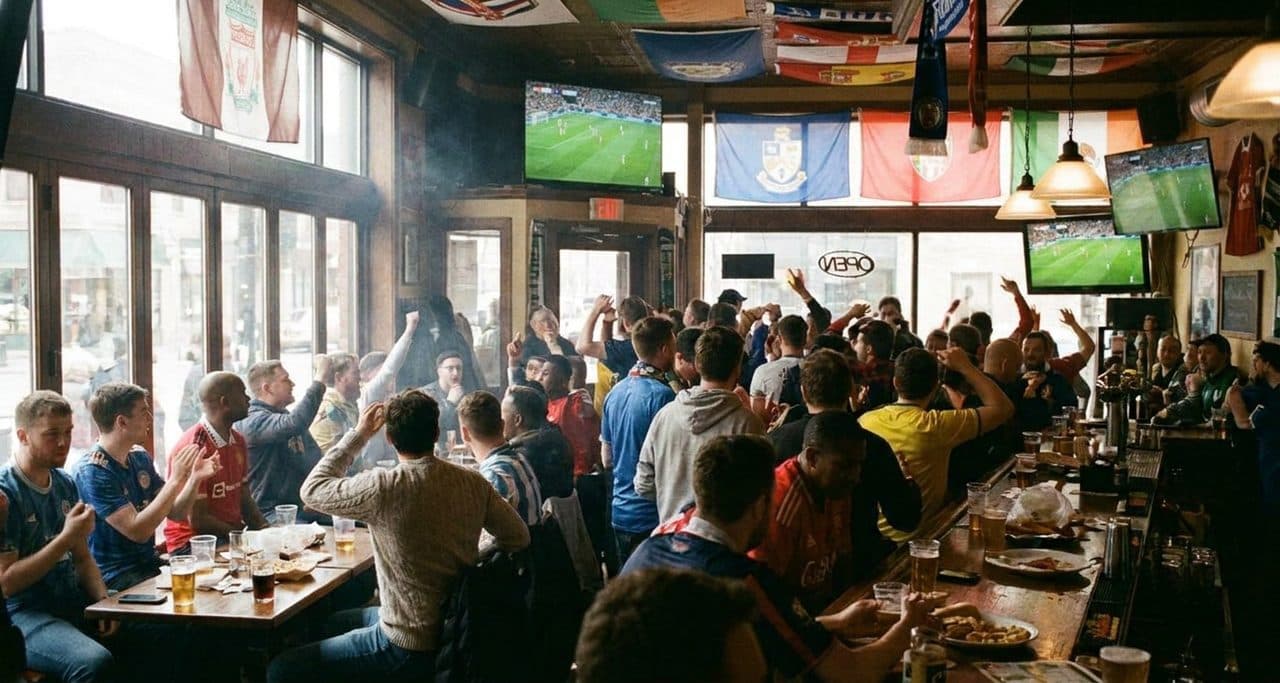
What started as a temporary tournament configuration became permanent architecture. The main room now operates as a tiered viewing theater, with the bar along the left wall and seating arranged in loose rows that angle toward the mounted screens. Six televisions total, three large enough to matter, positioned so sightlines work from nearly every seat. The pool table lives in exile near the restrooms, occasionally used during slow Tuesday afternoons but mostly serving as a surface for jackets and bags during matches. Regulars understand the layout shift as a kind of admission — the owner recognized what the room wanted to be. The world cup standing updates that once required neck-craning toward a single screen now unfold across multiple angles. First-timers often pause at the entrance, recalibrating expectations when the sports-bar geometry reveals itself as more intentional than the weathered exterior suggests.
A Bracket in Chalk and Conviction
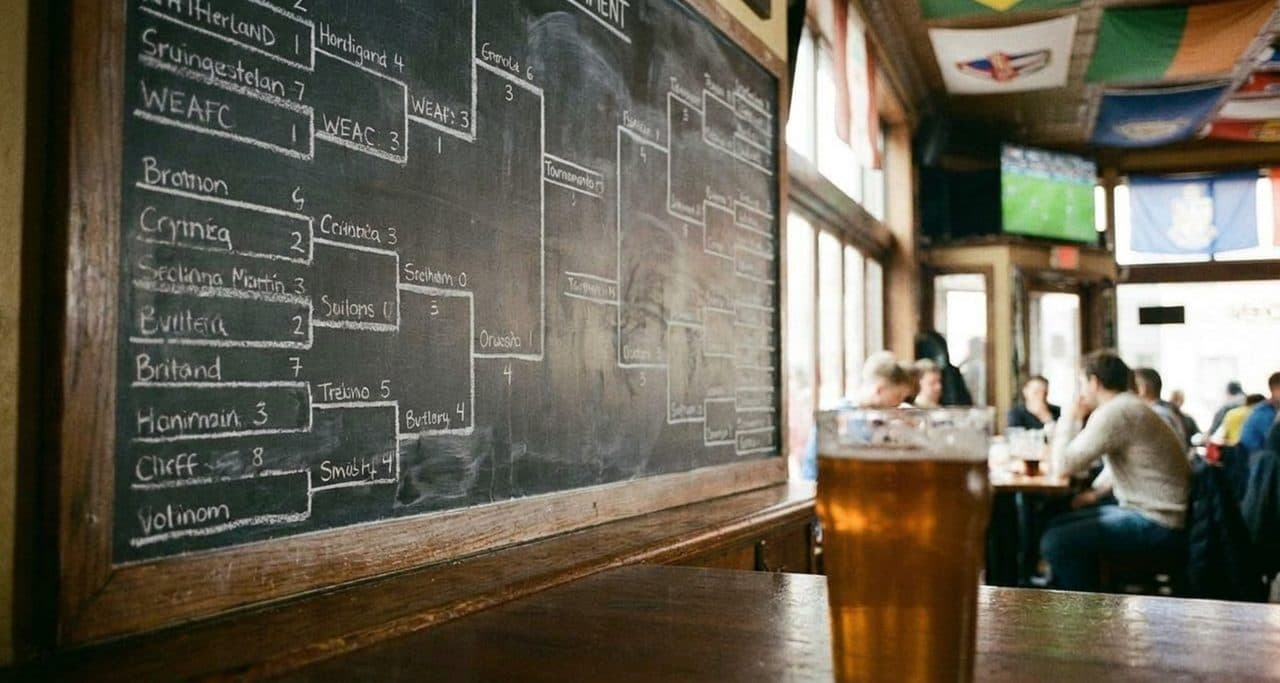
Behind the bar, mounted on a chalkboard that once listed daily specials, the bartender maintains a hand-drawn world cup bracket that has become something of a neighborhood institution. The lines are ruled with a carpenter's precision, team names written in block letters, scores filled in within hours of each result. The ritual happens the same way every time: the bartender waits until the post-match crowd thins, wipes the relevant box clean with a damp rag, and updates the bracket while the remaining patrons watch in silence. Someone usually buys a round. The board stays covered with a cloth between match days, partly to preserve the chalk, partly because the bartender believes in ceremony. Photographs are encouraged but touching is not. By the knockout rounds, the bracket had become a pilgrimage object for regulars who'd track their predictions against the official record, arguments settling into the kind of friendly grievances that outlast tournaments.
Flags and the Families Who Bring Them
Logan Square's particular demographic blend — Mexican families who've been here for generations, Guatemalan and Salvadoran communities that arrived more recently, Polish and Ukrainian holdouts from earlier immigration waves — transforms the bar into contested territory during group-stage matches. The flag situation is fluid. Someone brings a Mexican tricolor one night; the following evening, a Guatemalan family claims the same corner with their own banner. A Polish couple who live upstairs appear whenever their national team plays, speaking to no one but each other, ordering the same pilsner, leaving immediately after the final whistle. The crowd self-segregates by allegiance during matches, then mingles during halftime, then separates again. The bartender has learned to stock specific beers before specific games. Żywiec appears when Poland plays. Gallo materializes for Guatemala fixtures. The anticipation is part of the service.
When the Kitchen Picks Sides
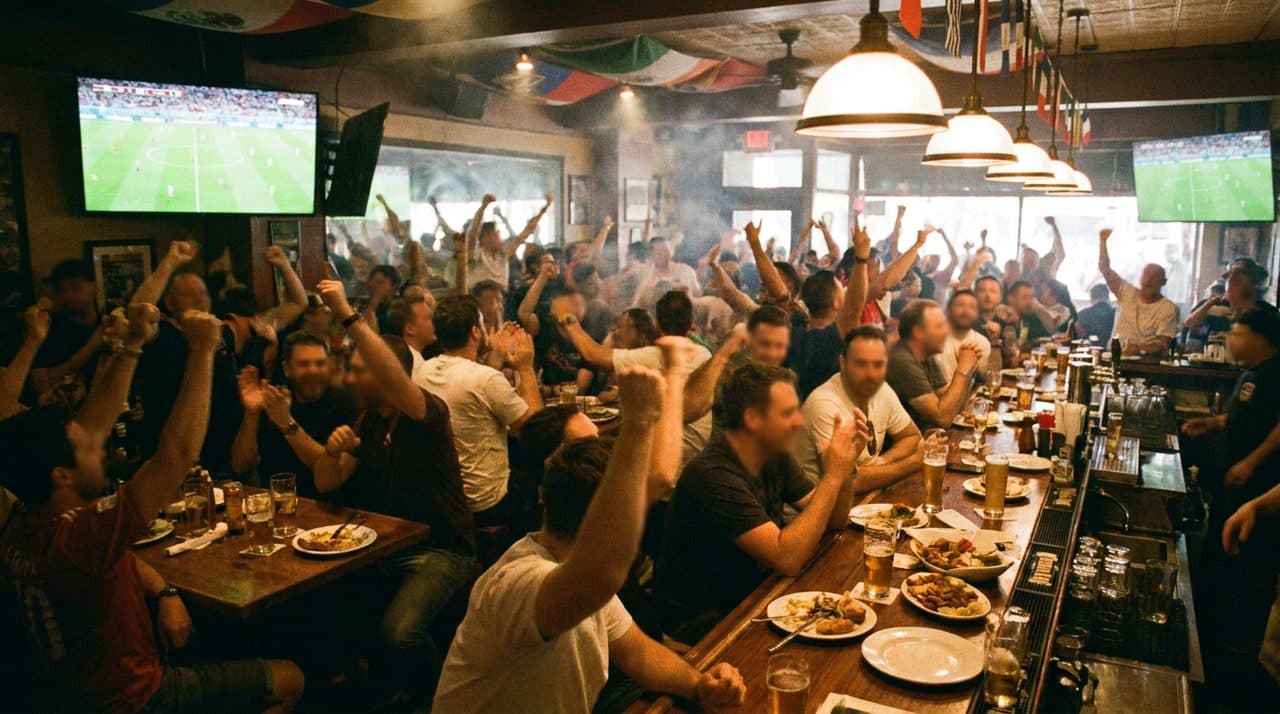
Match nights with clear national stakes trigger a food special tied to the competing nations, a tradition that started accidentally and became expected. The kitchen — really just a small prep area with a flattop and a fryer — produces one dish per side. Mexico versus Argentina meant tacos al pastor against choripán. A Germany match brought currywurst to a menu that otherwise tops out at nachos and wings. The specials aren't announced in advance; they appear on a whiteboard by the door around an hour before kickoff. Whoever arrives early enough to see both options often orders both, hedging culinary bets. The kitchen runs out frequently. The cook, who works alone, has been known to close the window entirely by halftime if demand overwhelms. Latecomers learn to eat beforehand or accept defeat.
The Back Patio and Its Quieter Frequency
Through a door past the restrooms, a back patio operates as the overflow screen area, equipped with a single weatherproof television and a dozen mismatched chairs. The sound out here runs lower than the main room, which makes it the preferred spot for those who want to watch without shouting. Parents with sleeping children in strollers have been spotted here during afternoon matches. Smokers migrate back and forth. The patio catches afternoon sun until around five, then falls into the shadow of the neighboring building, cooling rapidly. A space heater appeared during the later tournament rounds, inadequate but appreciated. The vibe is closer to a living room than a sports bar — quieter conversations, less performative fandom, the occasional person clearly working on a laptop while glancing up for key moments. The main room roars; the patio hums.
Logan Square Beyond the Whistle
The bar exists within a broader Logan Square scene that has shifted considerably over the past decade. The immediate blocks include a mezcal-focused cocktail bar, two taquerias with competing loyalties, and a coffee shop that doubles as a venue for acoustic sets. The World Cup configuration drew new faces from surrounding neighborhoods — Humboldt Park, Avondale, even Wicker Park residents willing to travel for the atmosphere. Some have stayed, becoming regulars even during the off-season. The pool table remains against the wall. The bracket board, now erased, awaits the next tournament. The flags have come down but the hooks remain in the ceiling tiles, ready. The owner has mentioned, to no one in particular, that the room works better this way.
Practical Notes
The bar sits along Milwaukee Avenue in the Logan Square neighborhood, reachable via the Blue Line's Logan Square station with a short walk northwest. Street parking is competitive during evening hours but manageable on weekday afternoons. The space operates from late afternoon through late night most days, opening earlier on weekends and during major sporting events. No reservations; seating is first-come on match days, with the back patio offering overflow when the main room fills. Expect a casual price range — beers run a few dollars, cocktails slightly more, food specials priced modestly when available. Cash is accepted but cards are easier. The crowd skews neighborhood-loyal, and the dress code is whatever someone wore to work or woke up in.
Tags: #LoganSquare #ChicagoBars #WorldCup2026 #SoccerBar #ChicagoSports #NeighborhoodBar #MilwaukeeAvenue #FutbolCulture #ChicagoDiaspora #BackPatioBars #SportsBarChicago #WorldCupBracket #ChicagoNightlife #HiddenChicago #BarCulture
Sources consulted: timeout.com · espn.com · chicagomag.com
All trademarks are the property of their respective owners.
Ask Karpo first
Want to know which upcoming World Cup matches Logan Square bars are setting up screens for, whether the bracket board bar has the right game on tonight, and what else is worth doing in Logan Square on a match night? Ask Karpo for a live Chicago World Cup guide and a Logan Square evening plan.