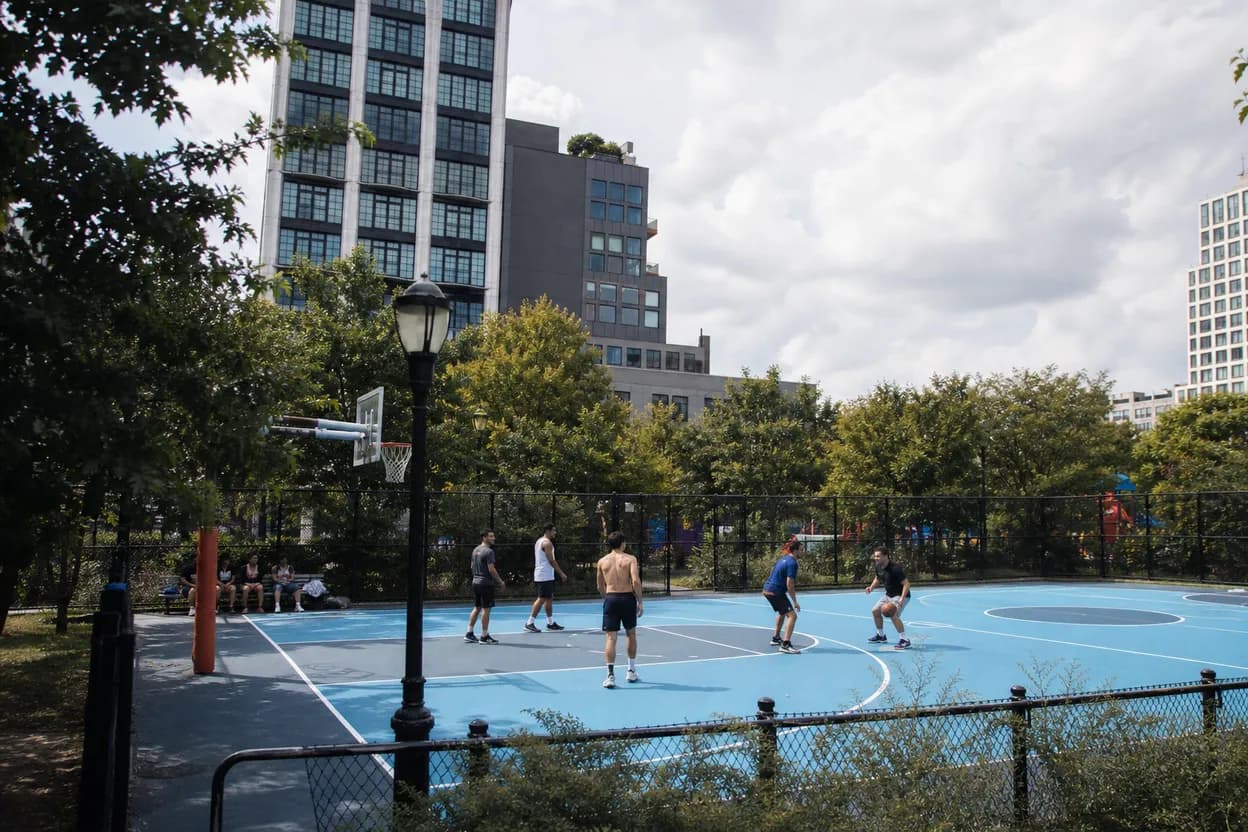
Chelsea Waterside Park basketball is a practical pick when the plan is social movement, not a locked-in league run. The court sits in Hudson River Park’s Chelsea section around West 23rd Street between 11th and 12th Avenues, with the riverfront, Chelsea Piers edge, playground, turf field, dog run, lawn, and paths close enough to support people who do not want the same level of play. On July 16, 2026, the smartest version is accessibility-aware and weather-aware: verify live air quality, heat, transit, and park alerts before treating an exposed outdoor court as the centerpiece. It works best as a half-court hang with built-in permission to shorten, slow down, or pivot.
Want a court plan that accounts for heat, access, and backup stops? Text Karpo before leaving if elevators, crowding, or air quality could change the call.
Pick It For Flexible Play
Chelsea Waterside makes sense for shooting around, two-on-two, casual half-court games, or a mixed group where some people may play while others watch, walk, or rest nearby. Hudson River Park materials and indexed official park references place the court within a broader Chelsea Waterside Park setting, not an isolated blacktop. That matters because the outing can still work if the basketball portion becomes shorter than expected or if only part of the group wants to play.
The limitation is certainty. Public outdoor courts can be empty, crowded, wet, or already organized around a run when you arrive. Do not promise a full game unless your group is comfortable adapting on site. Spend the first few minutes reading the surface, the crowd, and the rhythm of play. If joining would crowd children, interrupt an existing game, or create a contact level your group did not choose, switch to lighter shooting or a riverfront pause.
Build The Route Around Access
For step-free planning, surface transit is often the first route to check. MTA-related route information places the M23 SBS on the 23rd Street crosstown corridor with a Chelsea Piers end near 12th Avenue, while the M12 serves the far West Side along 11th and 12th Avenues. Those routes can reduce the final approach, but live arrivals, stop work, curb conditions, bus crowding, and detours still need same-day verification before departure.
Subway distance can look cleaner on a map than it feels in July heat. A nearby station may add stairs, elevator risk, long exposed blocks, or a tiring westbound approach. If anyone uses a wheelchair, walker, cane, stroller, or simply has low heat tolerance, set the meetup by an exact corner and park edge. Plan for the least flexible person first, then let faster walkers adapt instead of making others wait in sun, smoke, or traffic noise.
Run A Heat And AQI Check
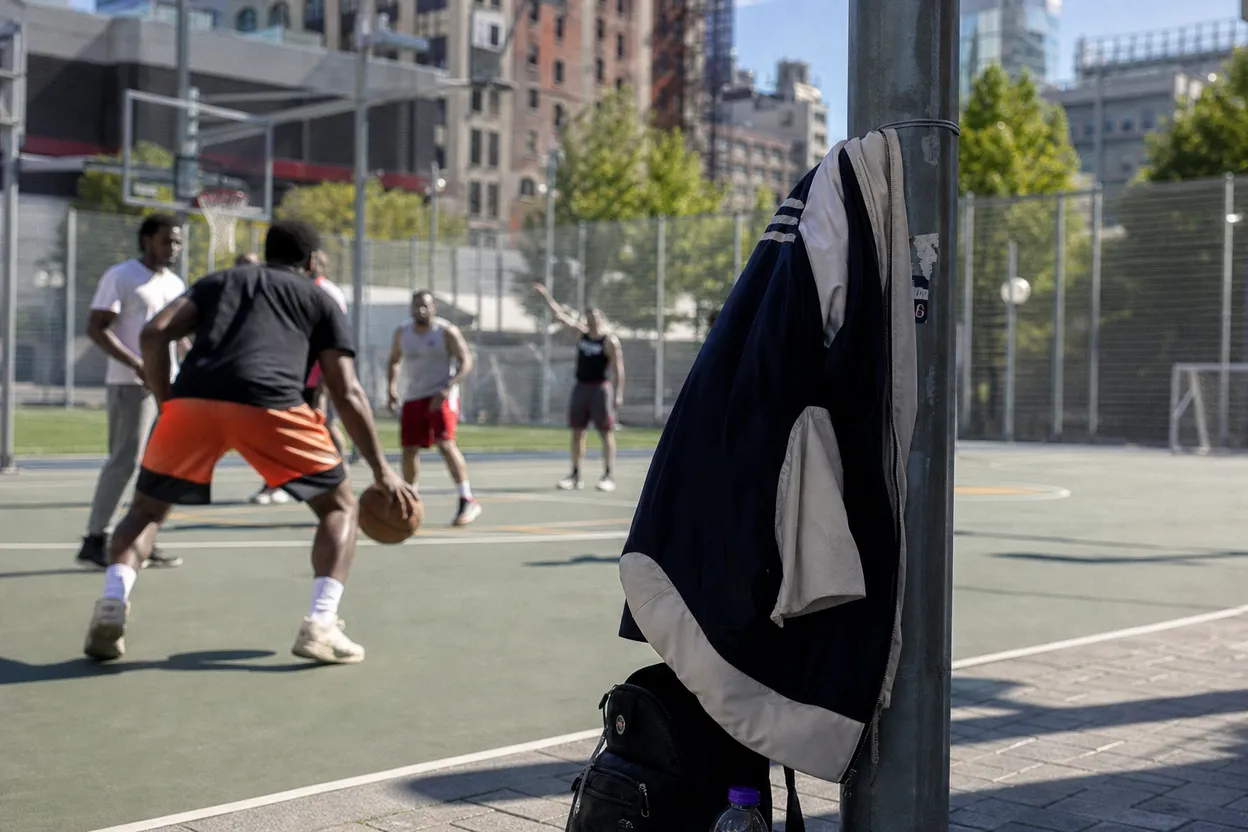
Current reporting on July 16, 2026 described wildfire smoke across the Northeast and Midwest, air-quality alerts in parts of the region, and heat conditions that made strenuous outdoor activity a judgment call. Basketball raises exposure because players sprint, jump, breathe hard, and stand on heat-holding pavement. Clear skies are not enough evidence. Before leaving, check live AQI, heat index, thunderstorm timing, and official advisories for New York City and your route.
Make the safety call before the first competitive possession. Cap games at short scores, rotate often, bring water, and normalize sitting out without debate. If AQI reaches unhealthy levels, thunder is nearby, the surface is slick, or anyone feels dizzy, the backup should be cooling off or leaving, not hunting another exposed court. A different outdoor hoop will not fix bad air, heat stress, or storm risk; it only moves the same problem.
Keep Court Etiquette Simple
The useful question is not only whether there is space, but what kind of play fits the court at that moment. If a winners-stay run is already moving, ask how next works before warming up into active space. If children, caregivers, casual shooters, and stronger players are sharing the surface, keep passes controlled, avoid hard drives through traffic, and use only the area your group is actually playing on.
Mixed-ability etiquette matters as much as public-court etiquette. Agree in advance on half-court only, light contact, clear substitutions, and no arguing over fouls. That keeps the strongest players from turning a social outing into a test others did not choose. If crowding grows, treat basketball as one part of the plan: shoot briefly, hydrate, then move toward the lawn, benches, Chelsea Piers edge, or Hudson River Park path.
Use The Park As Backup
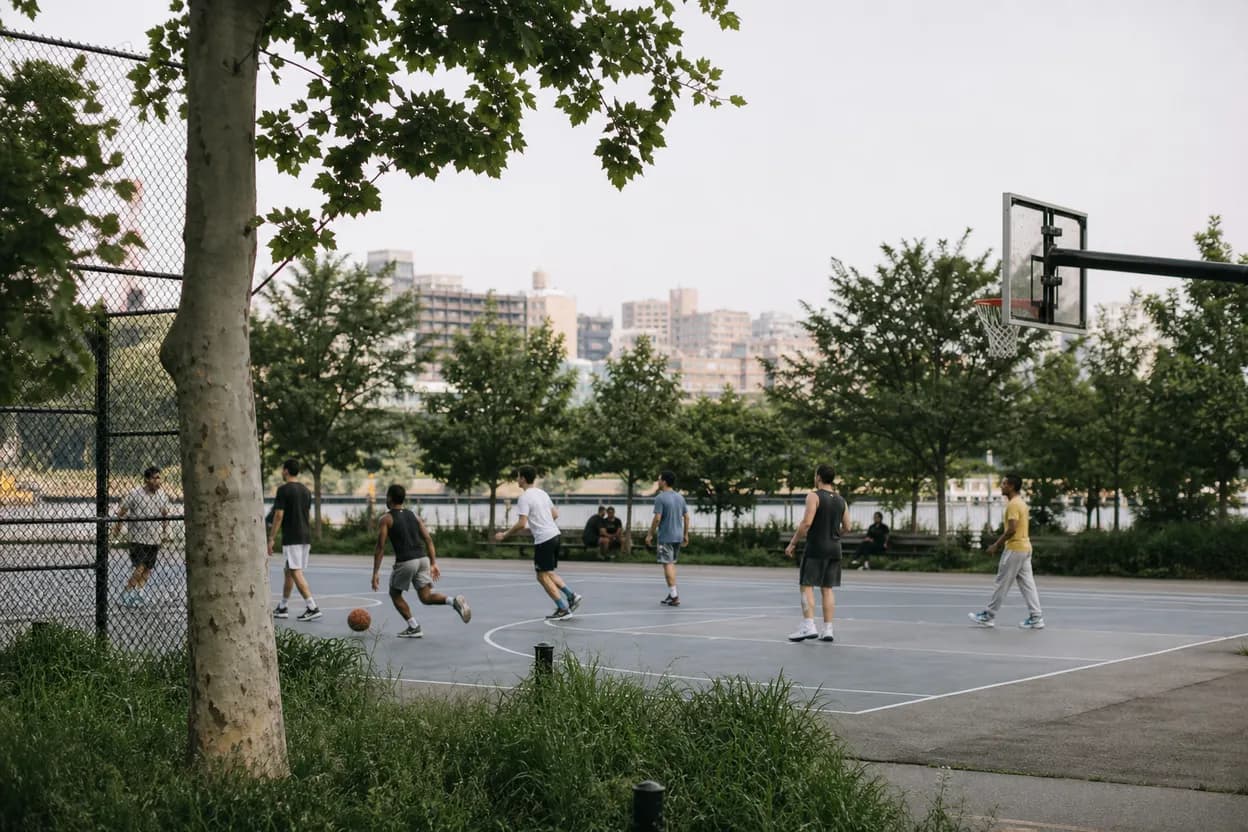
Chelsea Waterside is stronger than a standalone court because the surrounding park gives the group several speeds. The Chelsea section includes court, athletic field, playground, dog run, lawn, paths, and comfort-station context in official and park-related references. Nonplayers can stay nearby without being stranded beside a game they do not want. The same mix also brings strollers, dogs, cyclists, runners, and path crossings, so the court area requires attention beyond the ball.
Plan the outing in chapters. Start with a modest play window, then let the riverfront handle the second half if the court is full or the weather feels heavier than expected. The Hudson River Park path and Chelsea Piers surroundings make slowing down easy without inventing a new destination. Avoid relying on concessions, rentals, drinking fountains, or programs unless you verify them that day. The dependable value is flexible open space and multiple exits.
Know When To Skip
Skip or shorten this plan if the group needs guaranteed seating beside the court, formal adaptive programming, an indoor temperature-controlled surface, or a reserved game. Public parks can bring wet pavement after storms, blocked paths, uneven curb approaches, maintenance closures, and sudden demand spikes. Also skip if heat index, AQI, or storm risk worsens close to arrival. Accessibility-aware planning includes deciding that today’s conditions are not worth forcing.
Choose the backup before anyone starts traveling west. A transit-simple cooling stop, indoor cafe, lobby-friendly cultural option, or direct trip home is better than debating while people are hot, tired, or managing mobility equipment. If the court is open and conditions are reasonable, play thirty to forty-five minutes. If it is crowded, smoky, or too exposed, the outing still works because the decision point was built in, not discovered too late.
Verify Before First Shot
Before departure, verify Hudson River Park alerts, live AQI, heat index, thunderstorm timing, M23 SBS and M12 service, and any subway elevator status your group actually needs. Confirm water, sunscreen, medications, and a route home that does not depend on one fragile transfer. If access matters, send the exact meeting corner and assign one person to arrive first, check crowding, inspect the surface, and confirm the route into the park.
At the court, reassess before hard play. Is the pavement dry? Is there room without crowding children or interrupting an existing run? Is shade or a rest point reachable within a minute or two? Does everyone still want to play after the trip west? If any answer is no, choose the lighter version: shoot around, sit together, walk the river path, or leave for the backup while energy and patience are still intact.
Tags: #KarpoNYC #AskKarpo #BeforeYouGo #ChelseaNYC #HudsonRiverPark #ChelseaWatersidePark #NYCBasketball #AccessibleNYC #StepFreeNYC #M23SBS #OutdoorHoops #NYCParks #HeatSafety #SportsSocial
All trademarks are the property of their respective owners.
Ask Karpo first
Tell Karpo your date, group size, budget, and starting neighborhood. We’ll check current access, timing, transit, and the cleanest plan for Chelsea Waterside Park basketball courts, Chelsea, Manhattan before you head out.


