 Mediterranean Food Near Me in Miami Beach: Byblos Spices It Eastern Mediterranean
Restaurants
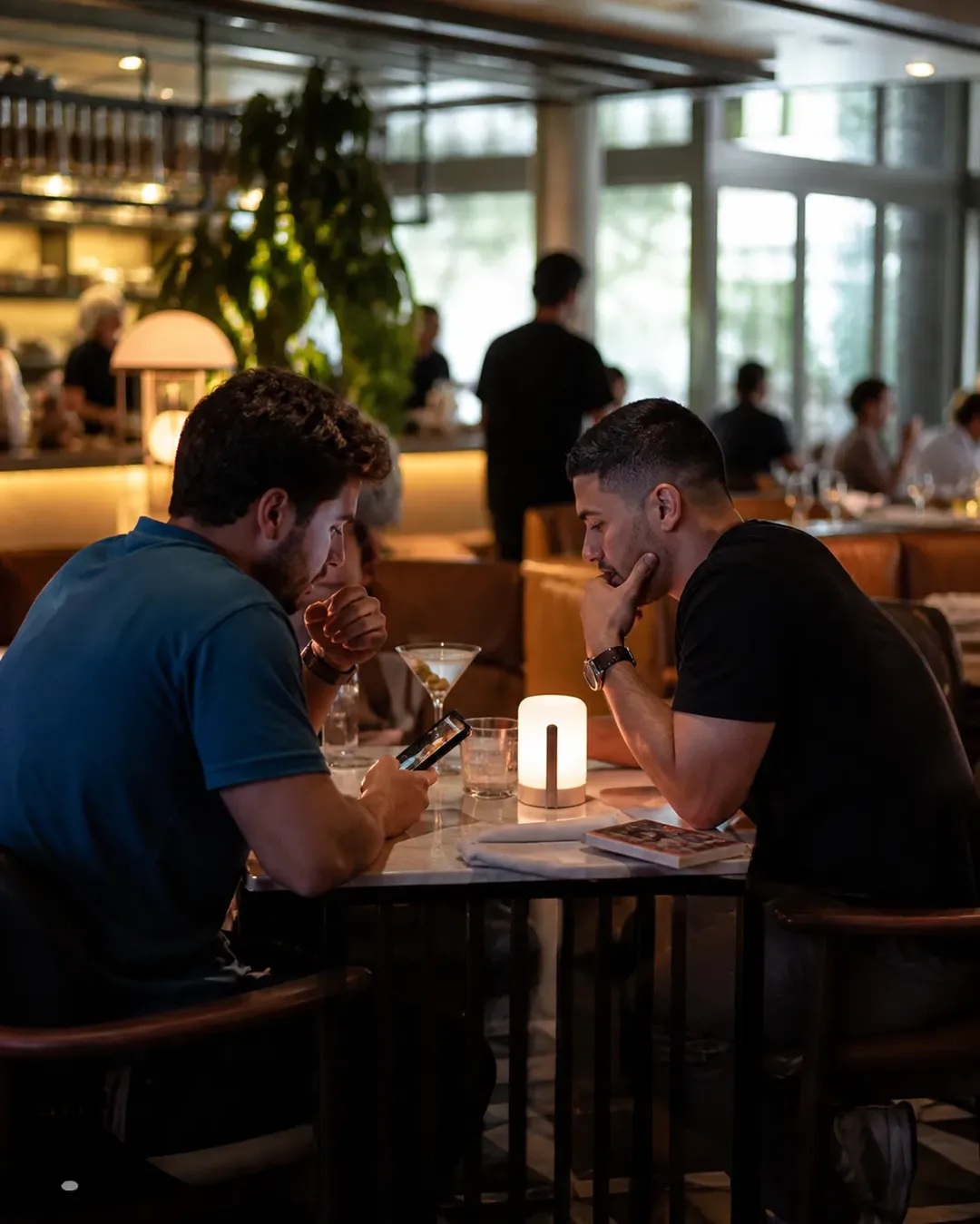
Chelsea vs Juventus Dinner Timing: Miami Restaurant Quiet Hour Reservation Strategy
For Miami soccer fans, the smartest Chelsea vs Juventus dinner plan starts before the room gets loud. A 5-6pm reservation can protect screen sightlines, audio clarity, and meal pacing without turning the night into a sports-bar scramble.
A good chelsea vs juventus dinner plan in Miami is less about finding the loudest room and more about controlling timing before the room controls you. For a weekday European evening kickoff in the 7-9pm range, the practical move is to reserve around 5pm, arrive before peak dining pressure, and ask for a table with a clean view of the screen before regular dinner traffic fills the best zones. This strategy fits date nights and small friend groups who want a real meal, audible match moments, and enough calm to talk before halftime. It works best when you treat the reservation call as part of the plan: confirm whether the restaurant shows soccer, whether audio can be used, whether table time limits apply, and whether the kitchen can support your intended meal pace before the main rush begins.
What neighborhood works best for your group, and do you prefer Italian, American, or Latin cuisine during match viewing? We'll suggest three restaurants with verified 5pm quiet-hour availability and one backup offering private dining rooms with dedicated match audio control.
Reserve Before The Room Changes
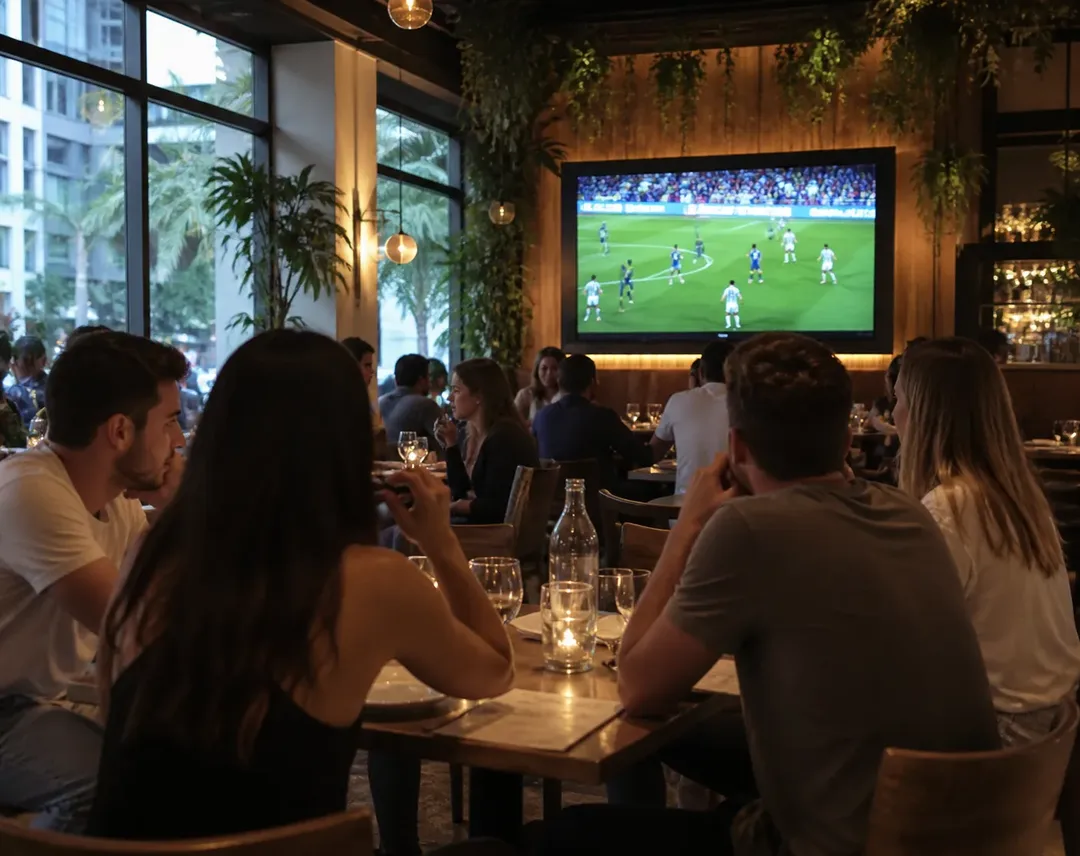
The 5-6pm window matters because restaurant energy changes quickly in Miami once workday diners, happy-hour groups, and late reservations overlap. If you want dinner and match viewing, arriving early gives the host more flexibility before prime tables are assigned. Ask for a table with a direct screen angle rather than a general note like soccer viewing. The difference is practical: a table near a screen but under loud speakers or in a service path can still feel like a compromised setup. For Chelsea vs Juventus, where small tactical moments and crowd reactions matter, your goal is a seat that lets the group eat normally while still tracking the match without constantly turning around.
Early seating also gives you a better chance to establish expectations before the restaurant gets busy. During the reservation call, say that you are planning dinner around a soccer broadcast and ask whether staying through halftime is realistic for that table type. Avoid assuming a restaurant will hold a table through the full match just because it has televisions. A two-top date night, a four-person friend dinner, and a larger group can all trigger different turnover expectations. If the staff says the table is needed back by a certain time, that is useful information, not a failure. You can either shift earlier, choose a bar-height option, or pick a venue with more flexible seating.
Pick The Neighborhood By Tradeoff
Brickell is the most natural starting point when your group values transit access and an after-work feel. Miami-Dade describes Metromover as a free elevated people mover serving downtown Miami, Omni, and Brickell, with service seven days a week and stations from Financial District to School Board. That makes Brickell useful for groups coming from different directions who do not want every decision tied to parking. The tradeoff is density: a restaurant that feels quiet at 5pm may become louder once office traffic and dinner reservations arrive. For Brickell, prioritize early arrival, table placement, and a clear exit plan over chasing the most energetic room.
Coral Gables works better when the dinner itself is the center of the plan and the match is the shared reason to gather. The area can suit a date night or small group that wants a calmer table, but you still need to verify screens and audio because not every sit-down restaurant is built around televised sports. South Beach is the opposite tradeoff: it can offer more nightlife energy, but that energy can make match audio harder to hear as the evening builds. If choosing South Beach, ask specifically whether the restaurant expects music volume to rise during the match window and whether any screen-facing tables are kept for reservations rather than walk-ins.
Make The Call Specific
A useful reservation call has four parts: screen, sound, seating duration, and kitchen timing. Start by asking whether the match can be shown on the screen visible from your requested area. Then ask whether audio is possible, even if only before the restaurant reaches peak volume. Next, ask whether a 5pm or 5:30pm table can reasonably stay through halftime for a dinner order. Finally, confirm whether the full dinner menu, limited menu, or early menu applies at that time. You are not asking the host to guarantee the whole night; you are identifying whether the venue’s normal operating rhythm fits the plan before your group commits.
Use plain language because it reduces confusion. Try: “We are a small group planning dinner around Chelsea vs Juventus. If we reserve around 5pm, is there a table with a clear screen view, and would staying through halftime be acceptable if we order dinner?” This question gives the restaurant enough context to answer honestly. If they hesitate on audio, ask whether captions are normally on or whether sound depends on other guests. If they hesitate on table duration, ask whether bar seating is more flexible. The best venue is not automatically the one that says yes to everything; it is the one that gives specific answers you can plan around.
Control Audio Without Fighting The Room
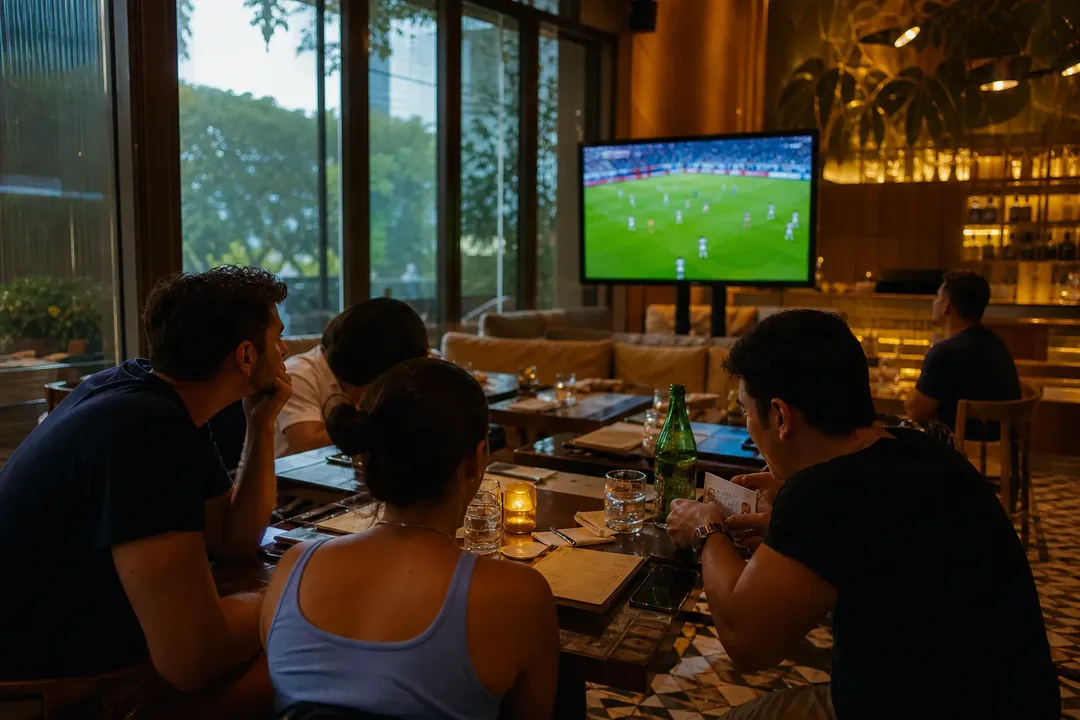
Audio is usually the hardest part of restaurant match viewing because it competes with music, conversation, service noise, and other guests’ expectations. The early reservation strategy gives you leverage because staff can often assess the room before it becomes crowded. Still, treat audio as a request, not an entitlement. Ask whether match sound is ever played in the dining area, whether the bar area has separate control, and whether another event could take priority. If sound cannot be confirmed, decide whether your group can accept captions, phone-based live commentary, or a quieter table where visual tracking is enough. That choice should happen before arrival.
For a date night, audio may be less important than table comfort and the ability to talk. For a friend group with serious soccer interest, audio and sightline should rank higher than menu variety or decor. Set that priority before choosing the neighborhood. A Brickell plan can lean practical: arrive by Metromover where useful, secure a screen angle, and accept some post-work noise. A Coral Gables plan can lean dining-first: better conversation, more deliberate ordering, and confirmed viewing as a condition. A South Beach plan can lean social: stronger atmosphere, but more risk that music or crowd volume takes over later in the evening.
Build A Backup Before Kickoff
Because restaurant policies can change with staffing, private events, or demand, your backup plan should be decided before the day of the match. Keep one alternate restaurant in the same neighborhood and one alternate public-space route if the dinner plan becomes too noisy or too rushed. Miami-Dade’s public information points to a broad recreation network, including more than 200 public parks, beaches, and events and activities across county parks. That does not replace a match venue, but it does help groups think about nearby pre-dinner or post-dinner space when they do not want the whole evening trapped inside one reservation.
For downtown and Brickell movements, factor in Metromover only within its stated service area and hours. Miami-Dade lists service from 5:30am to 10pm, with frequent arrivals during rush and off-peak periods, and notes that riders should check train designations and platform information. That makes it useful for early dinner coordination, but not a reason to ignore timing. For South Beach, check City of Miami Beach event information before assuming traffic or crowd levels will be ordinary. For any neighborhood, reconfirm the reservation 48-72 hours ahead, repeat the screen and audio request, and keep the group size small enough that changing tables remains realistic.
Tags: #Miamirestaurants #ChelseavsJuventus #soccerviewing #Brickelldining #CoralGablesrestaurants #SouthBeachdinner #reservationstrategy
Sources consulted: Source 1: miamidade.gov · Source 2: miamidade.gov · Source 3: mdpls.org · Source 4: miamibeachfl.gov
All trademarks are the property of their respective owners.
Ask Karpo first
Ask Karpo to turn this Miami idea into a current plan for your date, budget, companion, transit preference, and energy level. Karpo can narrow the route and flag what to verify before you go.
Ask Karpo for more information.
Keep reading
- Mediterranean Food Near Me in Miami Beach: Byblos Spices It Eastern Mediterranean
 Dinner Near Me in Downtown Miami: NIU Kitchen Plates Catalan Small Dishes
 Seafood Near Me in South Beach: Joe's Stone Crab Takes No Reservations