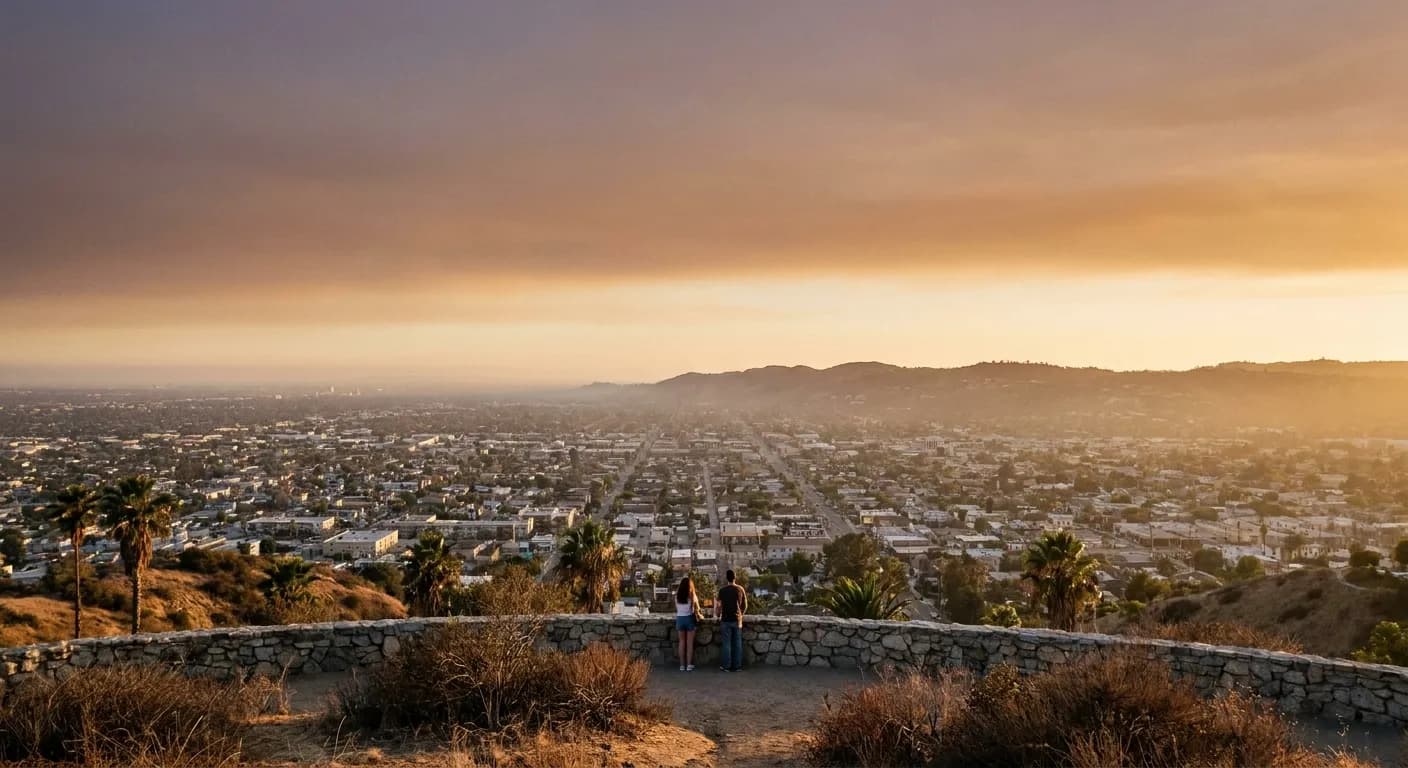
The default assumption about wine tasting in Los Angeles is that it happens somewhere else — a two-hour drive to a valley, a full day committed, a designated driver negotiated. That was true twenty years ago. It is not true now: this city has working urban wineries, a dense wine shop culture that pours regularly, and a happy-hour structure that makes a serious tasting evening cost about the price of two cocktails.
Tasting fees, waivers and happy-hour windows vary by room and by day. Ask Karpo who is pouring near you and what a flight costs.
Urban wineries, the underused option
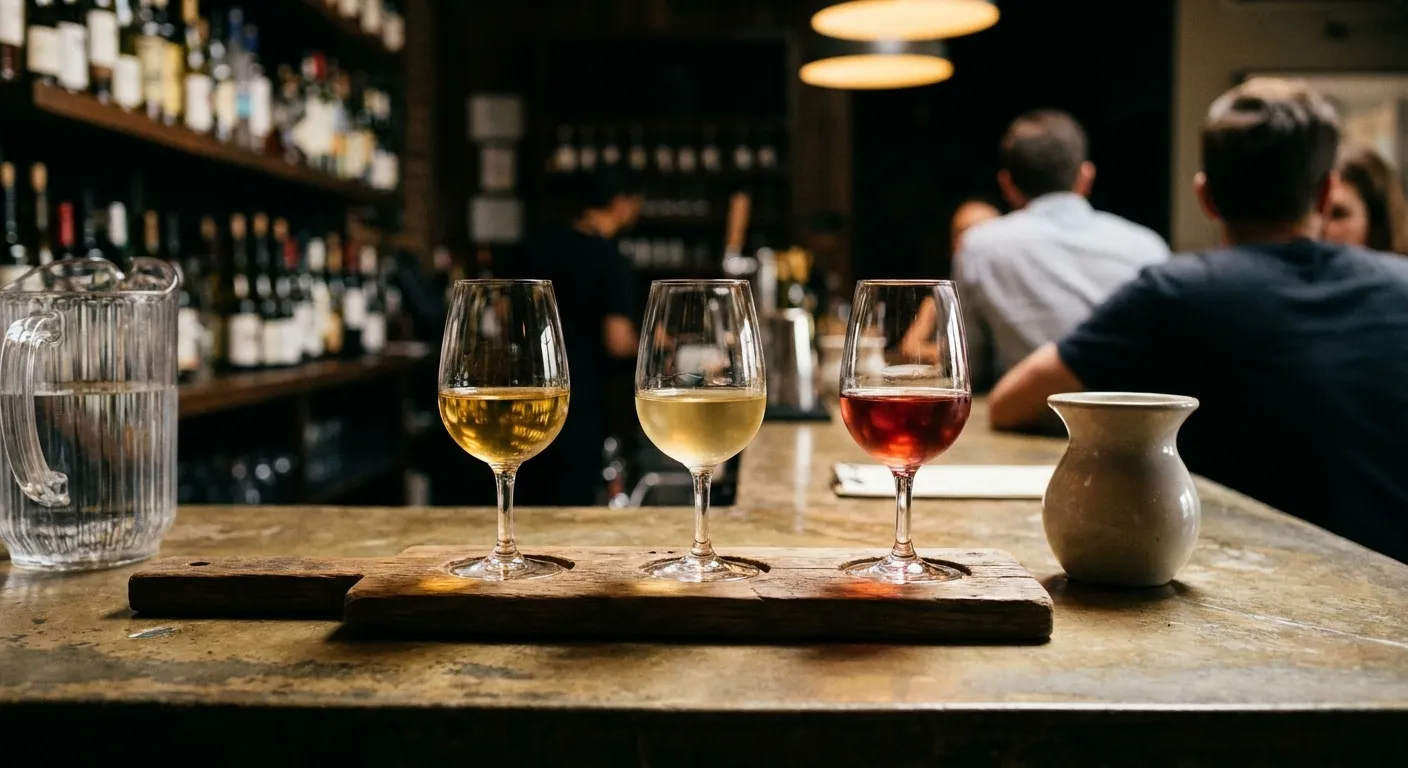
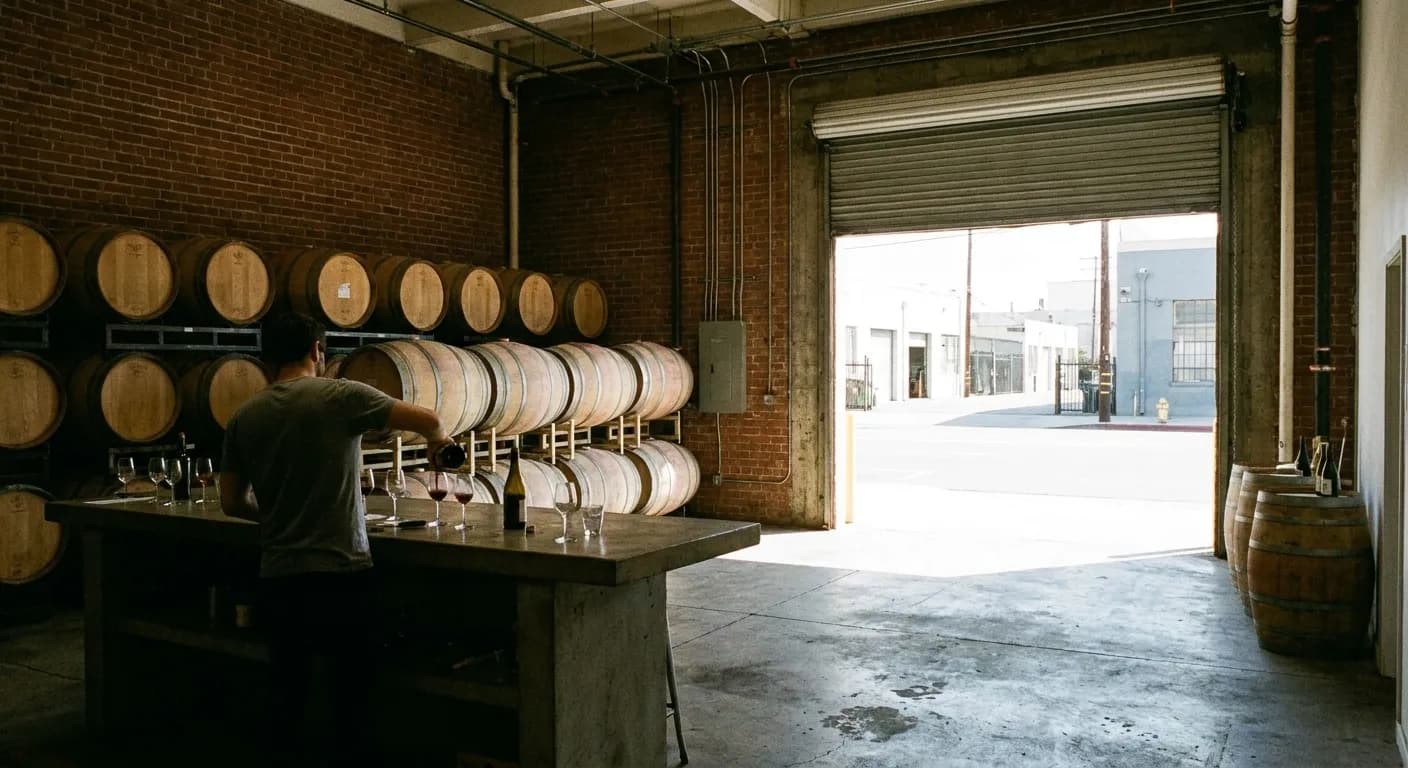
There are wineries operating inside city limits, fermenting fruit trucked in from vineyards across the state in warehouses near the river and in the industrial pockets around downtown. One of them was the first winery to open in downtown Los Angeles since Prohibition, founded in the mid-2010s, and it pours a flight for around twenty dollars — with the fee waived if you buy a couple of bottles, which most people do.
The format is the appeal. You are drinking in the room where the wine was made, usually poured by someone involved in making it, in a space that has made no attempt to look like a chateau. Several allow you to bring your own food or order delivery, which turns a tasting into an evening for very little money.
The fee-waiver arithmetic
This is the mechanism that makes tasting in this city cheap, and it is worth understanding properly. Most tasting rooms charge fifteen to twenty-five dollars for a flight and waive it against a bottle purchase — typically one fee per bottle, sometimes two fees for two bottles. If you were going to buy wine anyway, the tasting is effectively free.
Wine shops run the same structure informally: many pour a small selection on a fixed evening each week, either free or for a nominal fee, on the reasonable assumption that someone who tastes something they like will take a bottle home. That is the cheapest wine education available in this city and almost nobody uses it.
Happy hours that are actually happy
Los Angeles has a genuine happy-hour culture and wine is where it delivers the most value, because the discount on a glass of wine is proportionally larger than on a cocktail. The standard window is four to six on weekdays, which is early, and the standard discount is a third to half off by-the-glass pours.
The neighbourhoods where this works best are the ones with a dense restaurant scene and an early-evening trade: downtown, Culver City, Highland Park, Silver Lake, Santa Monica and the West Adams corridor. The rooms to look for are wine bars attached to a shop, which have the deepest lists and the least incentive to mark up heavily.
What cheap actually buys
A realistic evening: a flight at an urban winery for twenty dollars, or two happy-hour glasses for eighteen, or a shop tasting for nothing followed by a bottle at retail plus a small corkage. All three land between twenty and forty dollars per person and involve drinking genuinely interesting wine, which compares extremely well against a day trip once you count fuel, tasting fees at three wineries and lunch.
What it does not buy is a formal seated tasting with a sommelier walking you through six wines. That exists here and it costs seventy-five dollars and up, which is a fine thing to do occasionally and not what this article is about.
Practical notes
Urban winery hours are limited and weighted to the weekend — several open only Friday through Sunday, which catches people out. Book if the room is small. Check whether food is available or whether you should bring it, since policies differ and several actively encourage you to bring your own.
And think about how you are getting home before you start. This is a driving city and a flight plus two glasses is not a driving evening. Several of the downtown and Arts District tasting rooms are within walking distance of rail, which is the single most useful thing to check when choosing between two of them.
The day trip, for comparison
It is worth being fair to the alternative. There are genuine wine regions within ninety minutes of this city — the hills north-west of the county and the valleys inland — and a day out there is a different and lovely thing. It also costs a full day, fuel, three tasting fees at twenty-five to forty dollars each, and lunch, which puts a couple comfortably past two hundred dollars.
The urban version is not a substitute for that so much as a different frequency. A day trip is something you do twice a year; a flight at a warehouse winery on a Friday evening is something you can do monthly. Both are worth having and only one of them fits into an ordinary week.
How to taste without pretending
Tell whoever is pouring what you drank recently that you liked, and give them a price. That produces a better recommendation than any amount of vocabulary. Ask what is made on site if you are at a winery, and what has just been opened if you are at a bar — the wine that was opened an hour ago is being poured because the room wants to move it, which usually means it is the interesting one.
Use the spit cup if there is one, particularly at an afternoon tasting. Nobody will think less of you and it is the difference between tasting six wines and remembering two of them.
Tags: #LosAngeles #WineTastingLA #UrbanWinery #HappyHour #DTLA #ArtsDistrict #CulverCity #HighlandPark #LADrinks #CheapDrinks #SoCal #WineBar #ThingsToDoLA
All trademarks are the property of their respective owners.
Ask Karpo first
Ask Karpo which wine bars and tasting rooms near you in Los Angeles are open now, what a flight costs, and whether the fee is waived with a bottle.