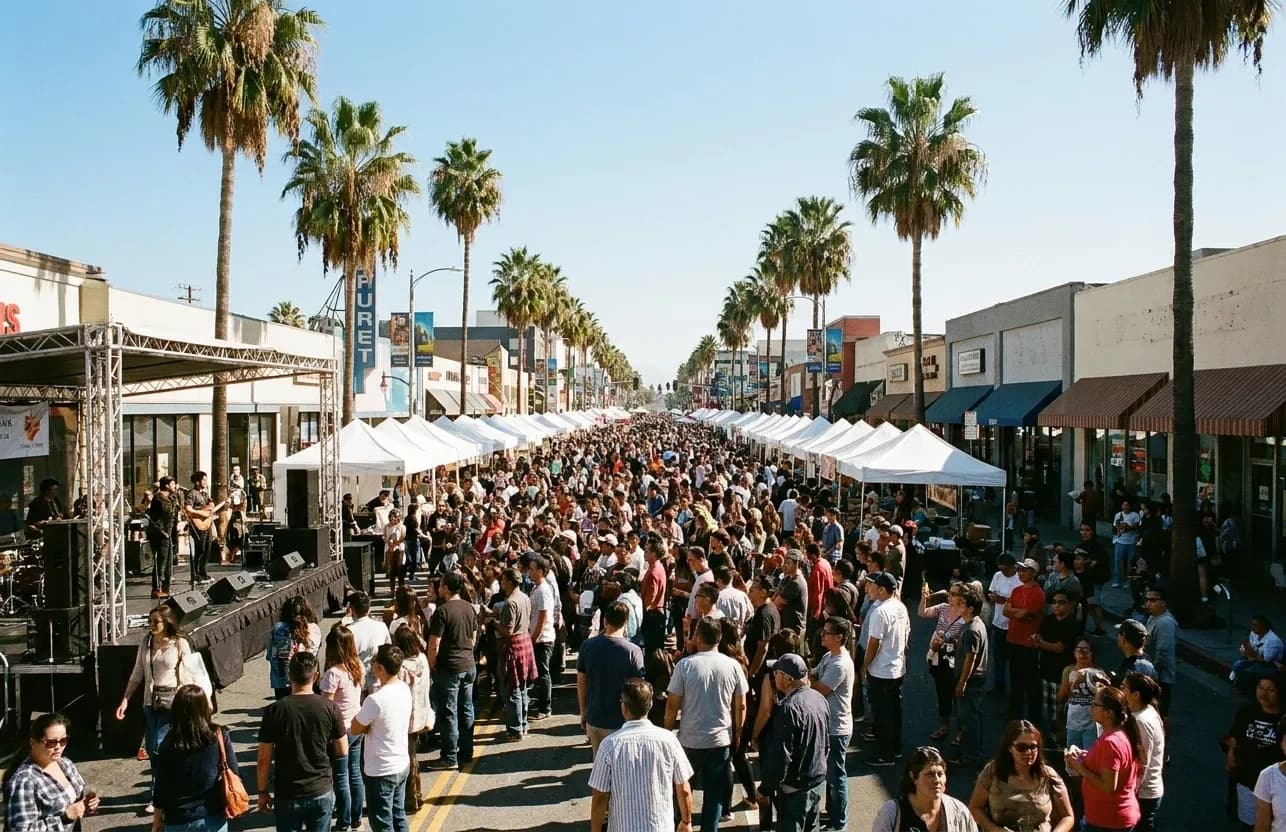
Los Angeles has an unusual advantage when it comes to major events and tickets in Los Angeles being affordable: there is simply too much of everything. Two baseball teams within an hour, two NBA teams, two NFL teams, two MLS clubs, a WNBA franchise, and more large-capacity music venues than any other American city. Oversupply pushes prices down, and it means that on most nights there is something genuinely worth going to that nobody has sold out.
The cheapest seat is rarely the one the app shows first, and prices move hourly. Ask Karpo what is on and where the value actually is.
The Hollywood Bowl, which is the great bargain
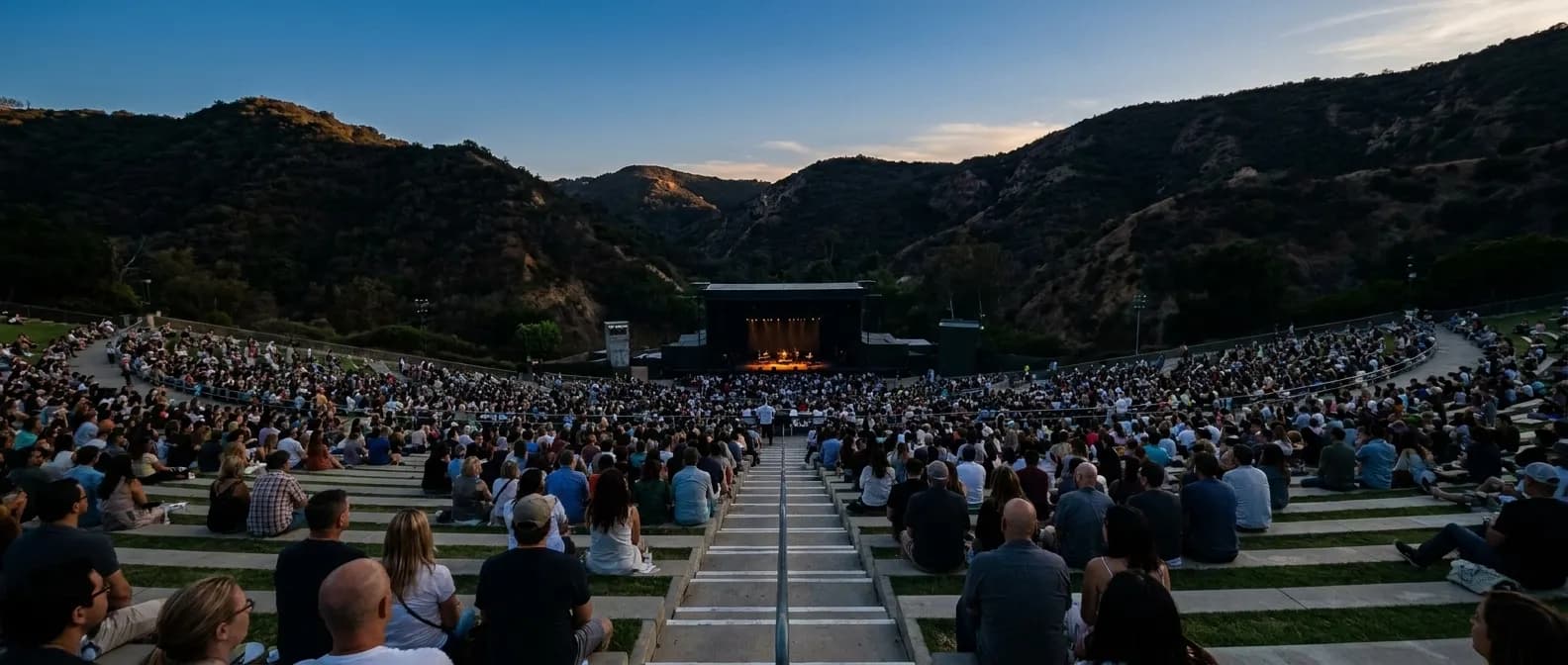
The Bowl deserves its own paragraph because it is the single best value in Los Angeles entertainment and most people do not realise it. The bench seating at the very top — the sections furthest from the stage — is sold at prices that for many summer programmes are genuinely nominal, sometimes a handful of dollars. You are a long way back, the seats are wooden benches, and the sound system is engineered so that it still works. You are also allowed to bring your own food and wine into a world-class venue on a summer evening, which converts a cheap ticket into a cheap night out rather than just a cheap seat.
The same logic applies to the Greek Theatre and the other outdoor venues in the hills. The cheap seats at an outdoor amphitheatre are a fundamentally better product than the cheap seats in an arena, because the setting is doing much of the work.
Sport, where the value is in the less fashionable teams
For baseball, the upper deck at Dodger Stadium is one of the cheapest ways to spend three hours in this city, particularly midweek and particularly early in the season against an unglamorous opponent. The view of the basin and the mountains from up there is, genuinely, part of the appeal.
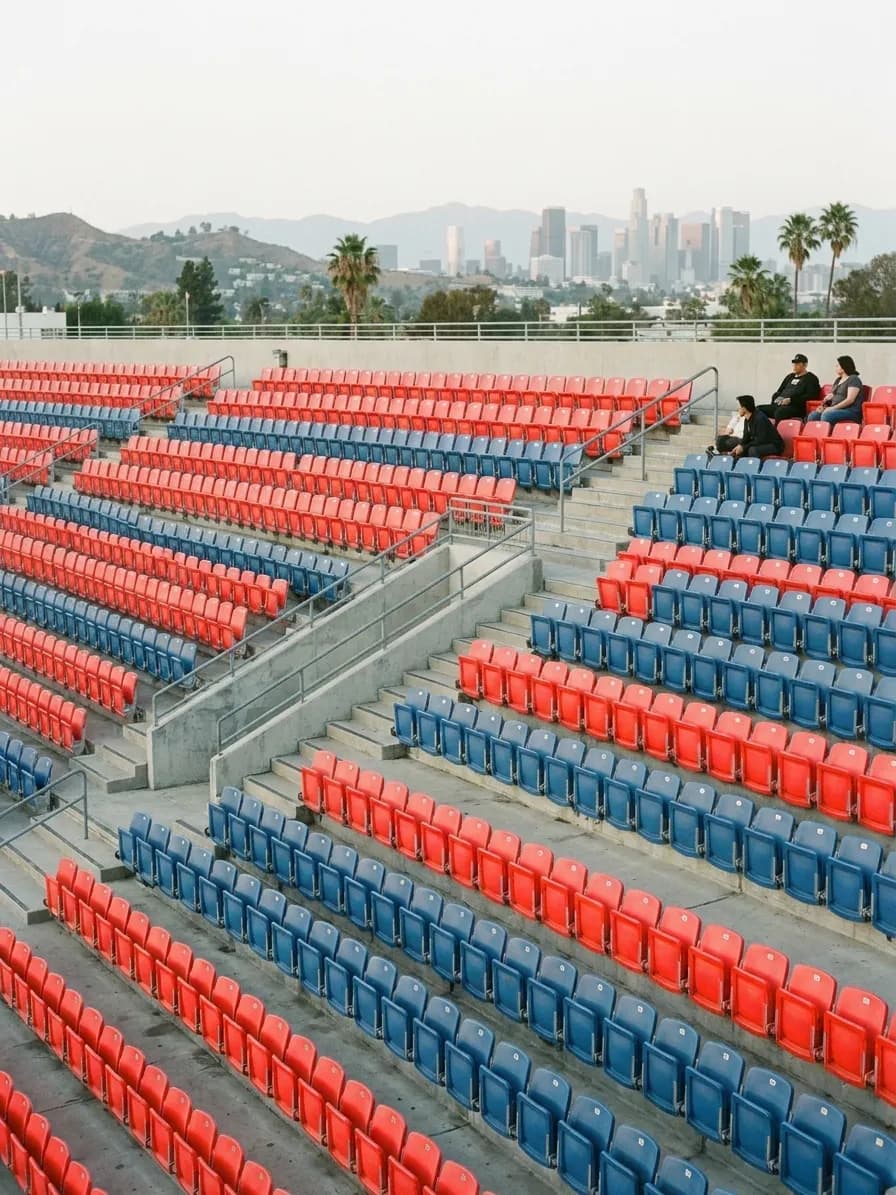
The broader principle is that ticket price tracks fashion rather than quality of spectacle. The women's professional teams, the second team in any given sport, and midweek fixtures are systematically cheaper for an experience that is frequently better — smaller crowds, closer seats, easier parking. If your goal is to watch live sport rather than to be at the event everyone is talking about, this is where the entire value is.
Timing, which cuts two ways
Two opposite strategies, and applying the wrong one is expensive. For anything that will sell out — a stadium tour, a playoff game — buy early, because resale only goes up. For everything else, wait: resale prices for non-sell-outs decline steadily through the final forty-eight hours and can collapse in the last two, because an unsold ticket is worth nothing. In a city with this much supply, most events are in the second category.
The fees, and where they hide
Always compare the final checkout price rather than the listed price. Fee structures vary enormously between platforms for the same seat, and the site with the lowest headline number is frequently not the cheapest at the end. Buying at the box office in person avoids a layer entirely where that is practical. And parking is a real cost in this city that nobody includes in the comparison — twenty-five to forty dollars at the major venues, which can exceed the ticket. Transit or a drop-off changes the economics of a cheap seat considerably, and the venues that are genuinely rail-accessible are worth preferring for that reason alone.
The venues that are cheaper than they look
A few structural discounts are large and permanent rather than promotional, and they are poorly advertised. Student and under-thirty schemes at the major performing arts institutions in this city typically halve the price or better. Day-of rush tickets are standard at the orchestras and theatres, released a couple of hours before curtain, and the seats are frequently excellent because they are unsold premium inventory rather than the worst in the house.
For sport, partial season packages often work out cheaper per game than two individual tickets, which surprises people who assume a package is a bigger commitment financially as well as practically. And where standing room exists, it is almost always the most under-priced product in the building — you are inside, usually with a better sightline than the cheapest seats, for considerably less money.
The free and small-venue alternative
Before buying anything, check what is free. Los Angeles runs a large free summer programme — downtown plaza concert series, park events, museum lates — that competes directly with the paid market. And a ticket to a two-hundred-capacity room in Echo Park or Highland Park costs less than the service fees on an arena seat, with the band fifteen feet away. The highest-value move in this city is frequently not a cheap ticket to a big event but a normal ticket to a small one.
One habit that pays off in a city with this much supply: decide what kind of evening you want before you decide what event you are going to. If the answer is being outside on a summer night with friends and some wine, the cheapest bench at an outdoor amphitheatre beats an expensive seat indoors every time. If the answer is seeing a specific artist properly, buy early and pay. The expensive mistakes in Los Angeles are almost always made by people who did it the other way round — picked the event first, then discovered that the only seats left cost more than the evening was worth to them.
Tags: #LosAngeles #LAEvents #CheapTickets #HollywoodBowl #DodgerStadium #GreekTheatre #LiveMusicLA #SportsLA #BudgetLA #LAGuide #ConcertsLA #TicketTips #ThingsToDoLA #WatchParty #LAWeekend
All trademarks are the property of their respective owners.
Ask Karpo first
Ask Karpo what is on in Los Angeles this week, which seats are the actual value at each venue, and whether parking or transit changes the maths.