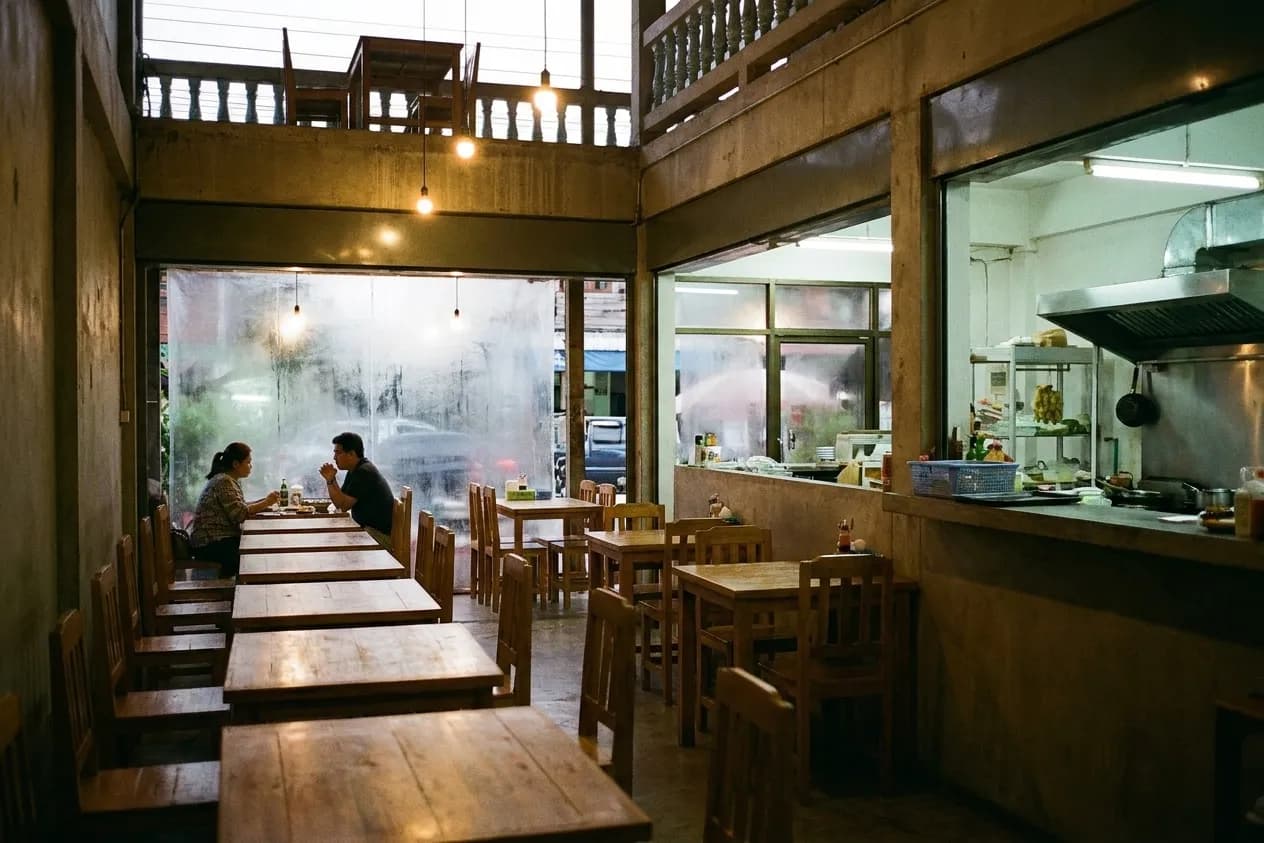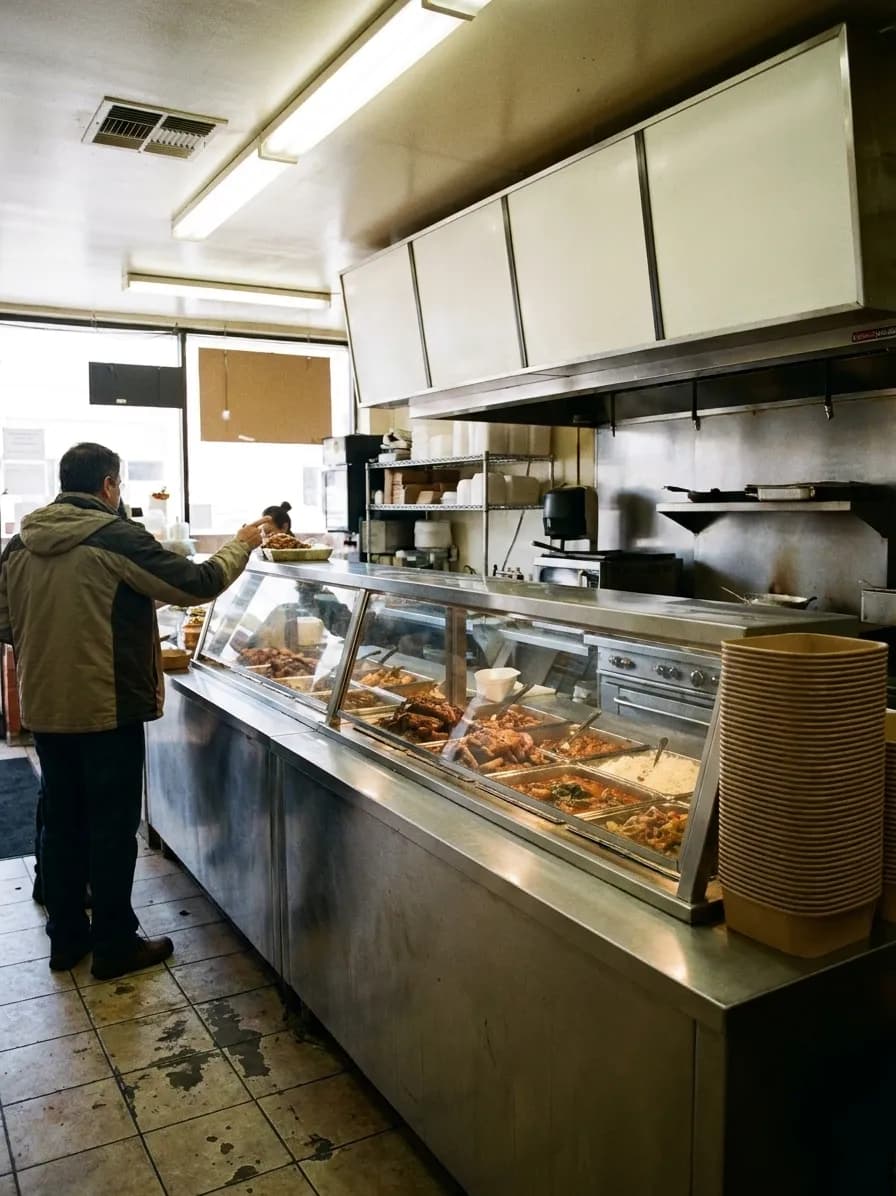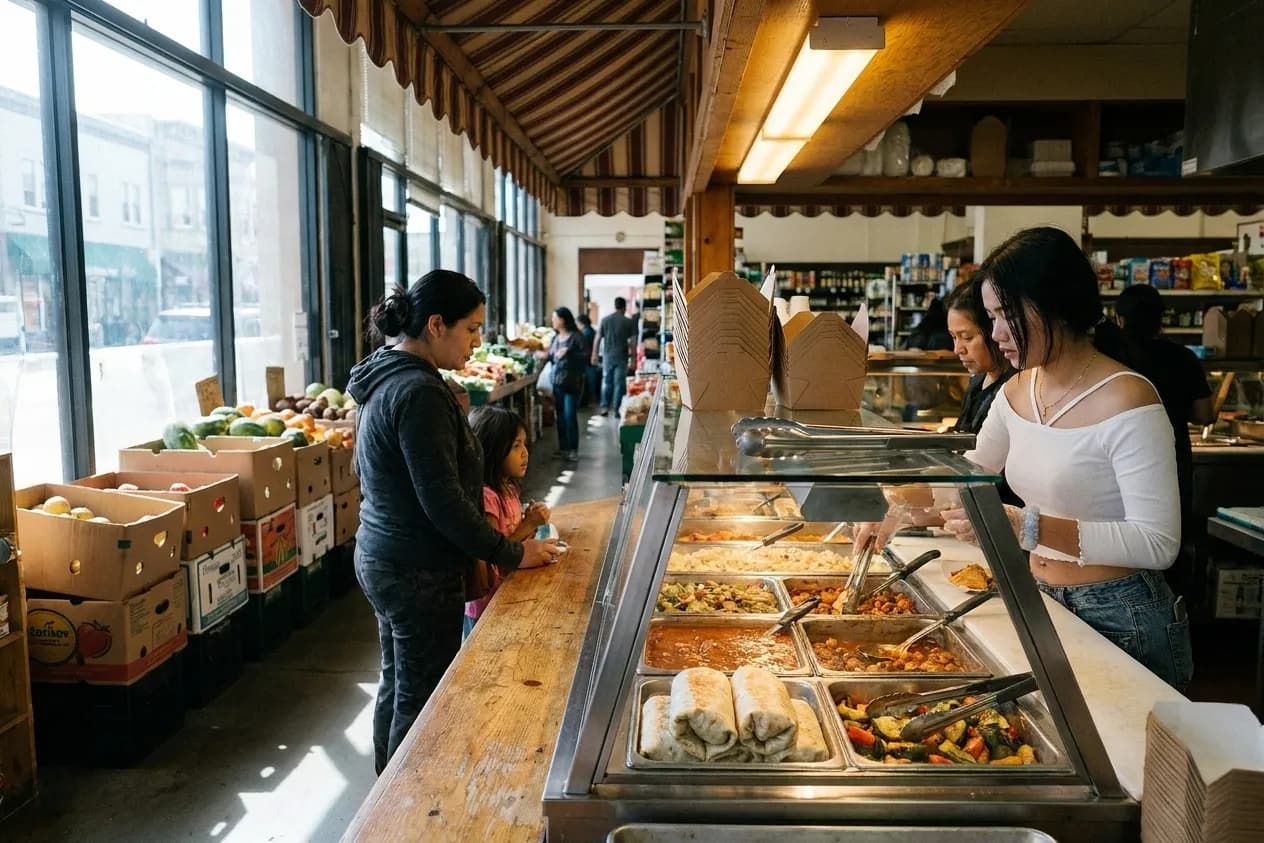
The idea that you cannot eat cheaply in San Francisco survives mostly among people who eat downtown. Move three neighbourhoods west or south and twelve dollars is a complete, hot, satisfying meal — not a snack, not a compromise. The trick is that this is a question about specific dishes rather than about restaurants, because the same room will have one item that comes in under the line and half a dozen that do not.
Under twelve dollars is a dish question rather than a restaurant question in this city — the same room will have one item that works and six that do not. Tell Karpo where you are and it will point at the plates near you that still come in under the line.
The dishes that hold the line
Start with Cantonese roast meat over rice. A plate of roast duck, char siu or soy chicken with rice and a little green vegetable is the most reliably good cheap meal in the city, sold from shops with the birds hanging in the window across Chinatown, the Richmond and the Sunset. Banh mi is the second: a proper Vietnamese sandwich costs a fraction of the ceiling and is a full lunch.
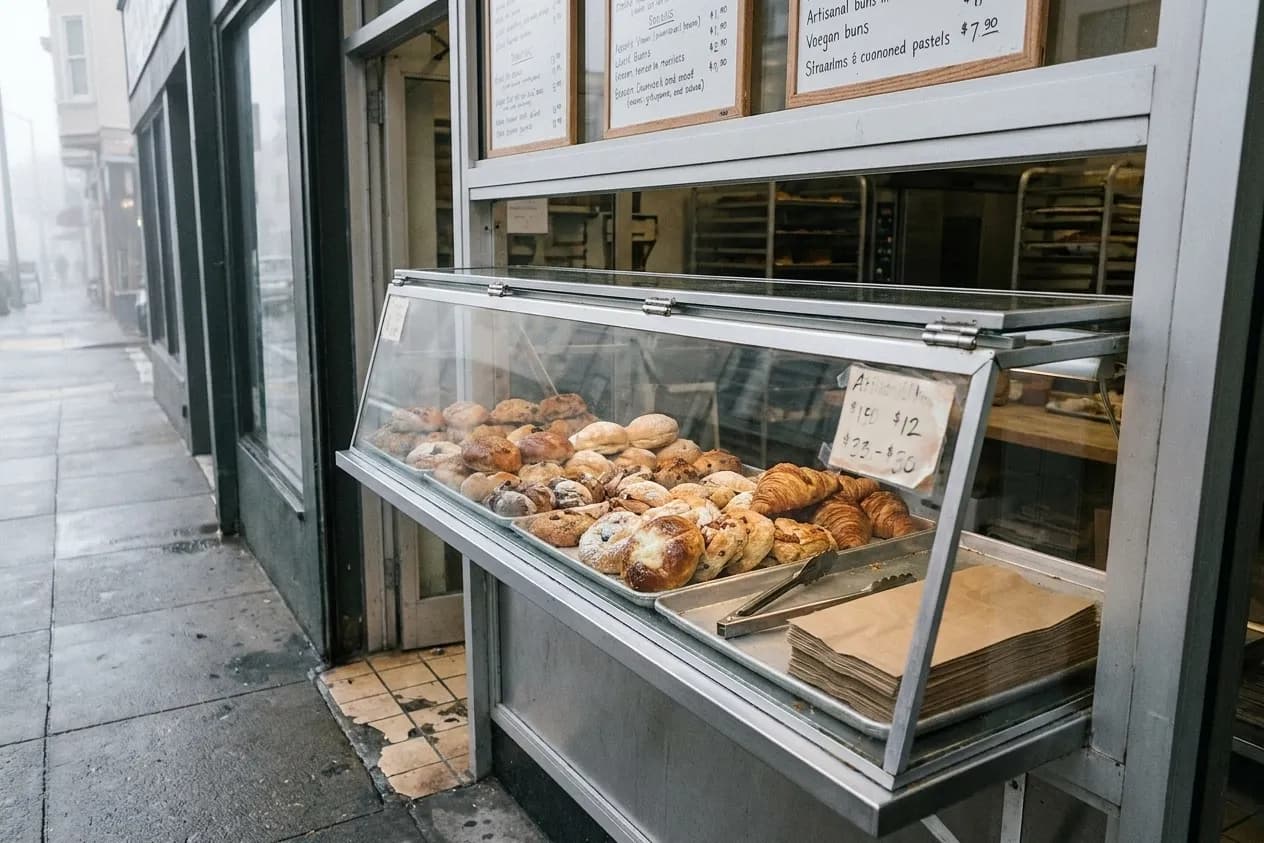
Then: a taqueria super burrito, which for many people is two meals; pupusas, where three plus curtido is dinner; a bowl of pho at a Tenderloin or outer-Richmond counter; dumplings by the order from the western neighbourhoods' dumpling houses; a dosa or a thali at the cheaper Indian counters; and the bakery route — a Chinese bakery buns run, which feeds a person for a handful of dollars and is the cheapest hot food in San Francisco.
Why counter service is the whole strategy
The structural reason these work is that they are counter operations. In a full-service San Francisco restaurant, a twelve-dollar plate becomes fifteen or sixteen after tax, the health-coverage surcharge that most sit-down rooms in the city add, and a tip. At a counter there is usually no surcharge, the tip is genuinely optional, and twelve dollars on the board is close to twelve dollars out of your pocket.
It also means the food is faster and often fresher, because these kitchens turn stock over in a day. The trade you are making is seating and atmosphere. In a city with this many parks, plazas and waterfront benches, that is a much smaller trade than it sounds.
The streets to walk
Cheap eating in San Francisco clusters on a handful of commercial corridors, and walking one of them beats searching for a single address. Clement Street in the inner Richmond and Irving Street in the inner Sunset each carry dozens of options within a few blocks. Stockton and Jackson through Chinatown are dense with bakeries and roast meat shops. The Tenderloin's Larkin Street corridor is the city's centre for Vietnamese food.
Add Mission Street and 24th Street for Latin American food, Ocean Avenue and Mission Street in the Excelsior for a mix of everything, and San Bruno Avenue in Portola, which is the least-known of the group and among the cheapest. Every one of these is on a direct Muni line from the centre of the city, which matters, because the fare is a real part of a cheap meal's cost.
The timing and ordering habits that stretch it
Lunch specials are the biggest single lever. A large number of the city's Chinese, Thai, Indian and Vietnamese restaurants run a weekday lunch combination that is several dollars below the same food at dinner, typically ending at three. Eating your main meal at lunch and something small in the evening is the oldest budget trick in San Francisco and still the most effective.
Beyond that: buy the whole thing rather than the components — a half roast duck to take away feeds two or three people for the price of one restaurant main; shop the bakeries late in the day when the trays are being cleared; and drink water, because a soda or a coffee is frequently a fifth of the entire budget.
What twelve dollars does not buy, and where not to try
It is worth being honest about the edges. Twelve dollars will not get you a sit-down dinner with service in this city, it will not get you a cocktail or most glasses of wine, and it will not get you much at all in the financial district, the areas around the main tourist waterfront, or in the newer developments south of Market where the cheapest counter salad starts above the line.
Those areas are where people conclude the city is unaffordable. The neighbourhoods where actual San Franciscans eat every day tell a completely different story, and the distance between the two is fifteen minutes on a bus.
Tags: #SanFrancisco #CheapEats #SFEats #BudgetEats #WhereToEatSF #Chinatown #TheRichmond #Tenderloin #SFFoodie #BayArea #StreetFood #BanhMi #Dumplings #CheapLunch
Sources consulted: sf.eater.com · sfstandard.com · sfmta.com
All trademarks are the property of their respective owners.
Ask Karpo first
Prices at this end of the market move quietly and lunch specials end earlier than the posted hours suggest. Ask Karpo which specific plates near you are still coming in under your number today, and which counters are open when you get there.