Mediterranean food in San Francisco is a category label doing an enormous amount of work. It covers Levantine, Greek, Turkish, Persian, North African and a broad Israeli-influenced modern style, and those are not variations on a theme — they are separate cuisines with separate price structures. The reason your bill swings between twelve dollars and sixty for what a listings site calls the same category is that you are shopping in different markets and the search filter does not know it.
A twelve-dollar plate and a forty-dollar mezze spread can sit two doors apart. Ask Karpo what a full plate costs at the counters near you.
The counter format is the whole game under twenty
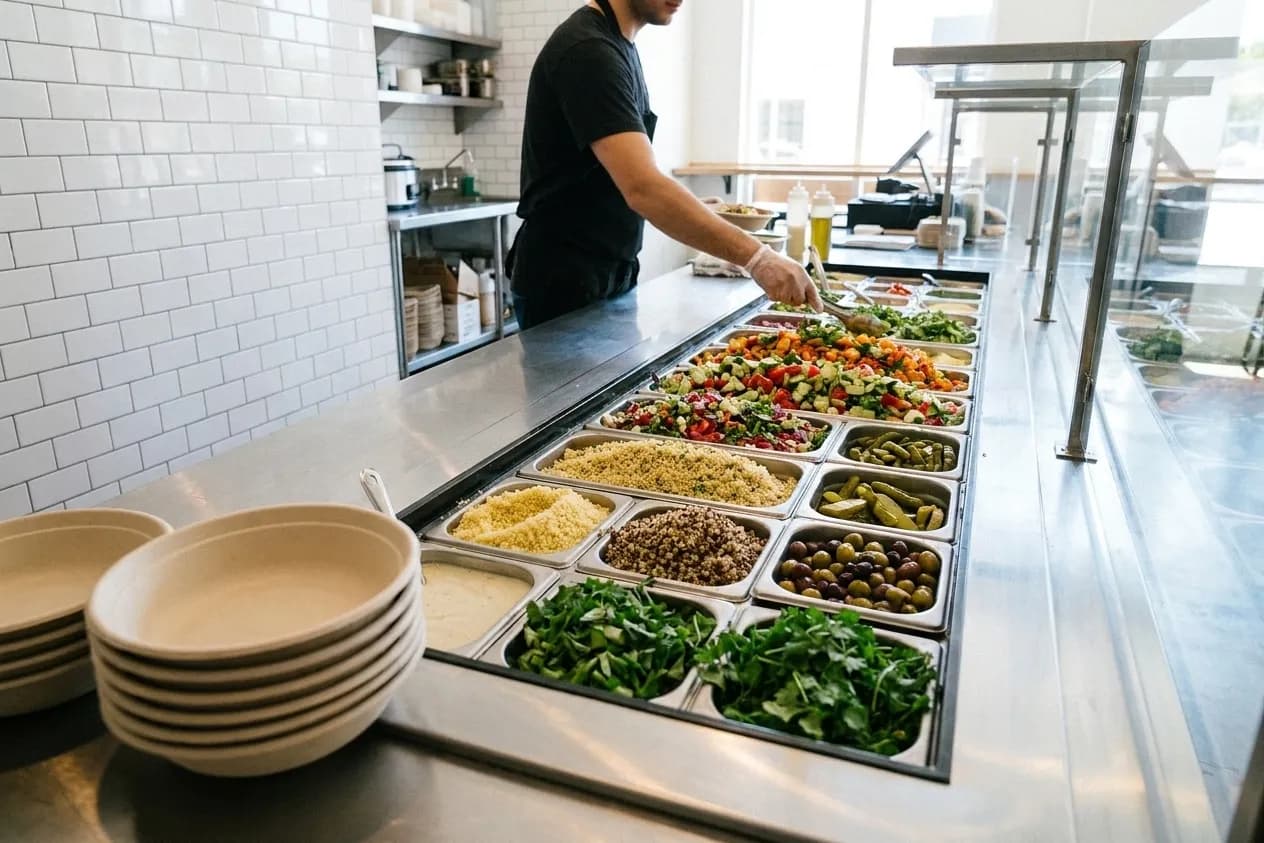
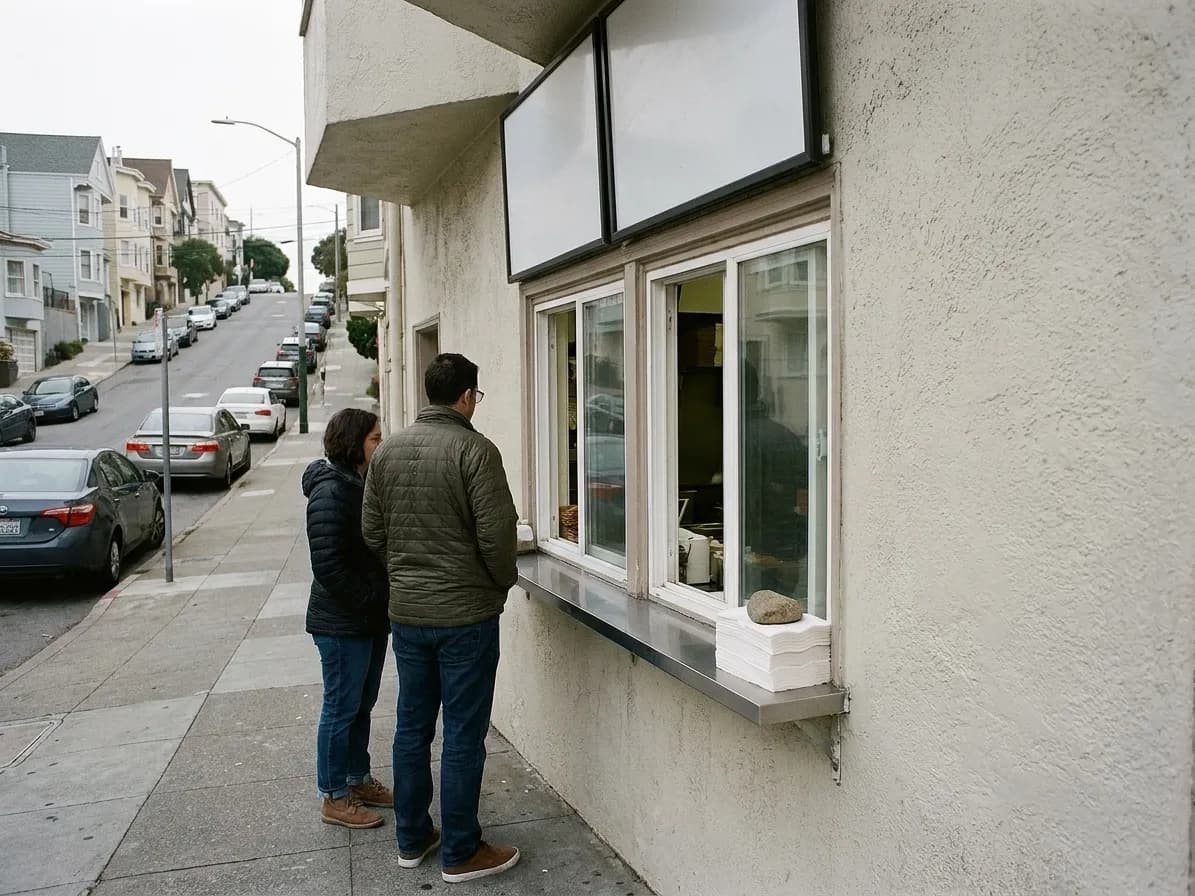
Anywhere with a vertical rotisserie in the window and a queue at lunchtime is going to feed you well under twenty dollars. Shawarma or gyro wrapped, or the same meat over rice with salad and sauce, is the most reliable value proposition in this entire category, and the version served at small halal counters in the Tenderloin and along Market Street is generally better than the version served at anywhere with tablecloths.
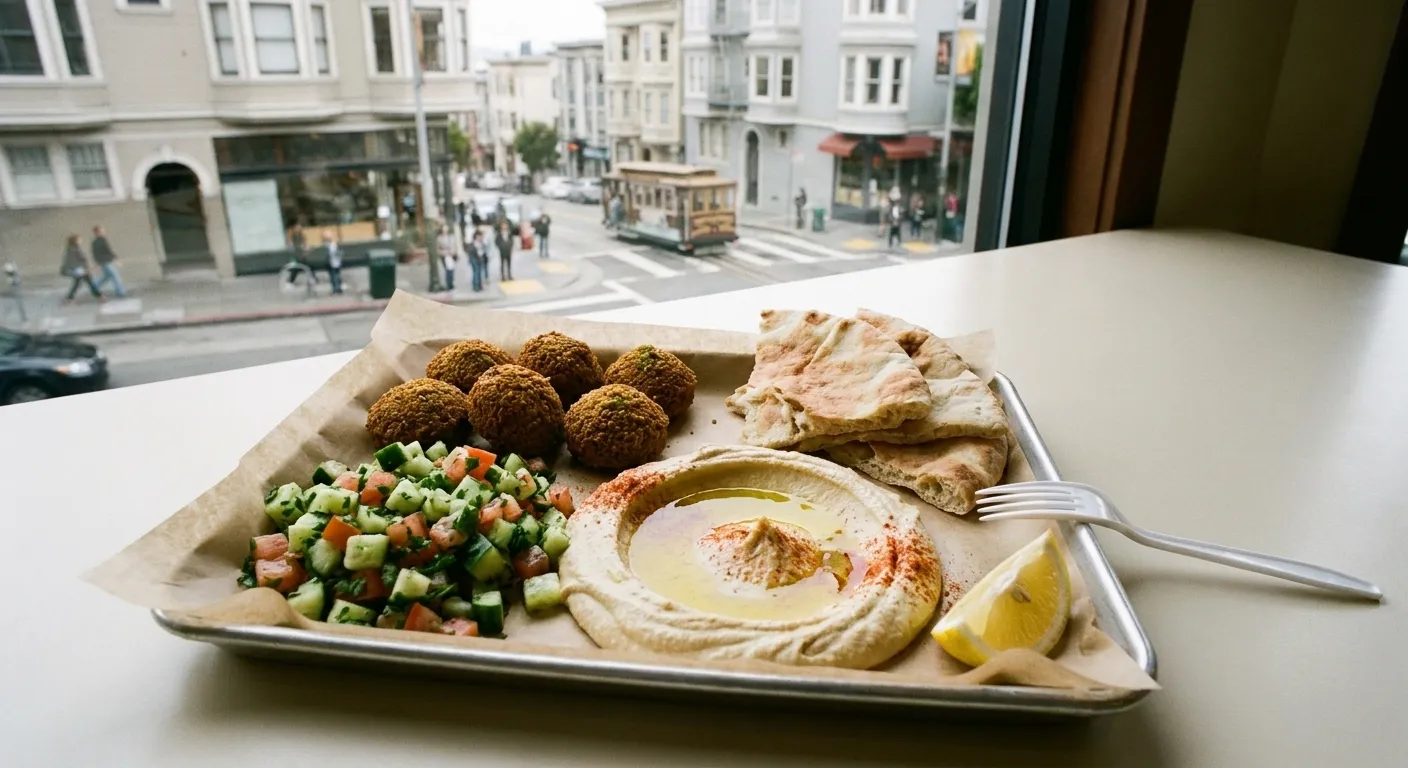
Falafel is the useful quality test. Good falafel is made from soaked dried chickpeas, fried to order, and served within a minute of coming out of the oil; it is crisp, deep green inside and audibly crunchy. Falafel that arrives lukewarm and uniformly beige has been sitting under a lamp. A shop that gets this right is almost always getting everything else right too, and it costs nothing to check.
Where the clusters actually are
The Tenderloin and the blocks around Civic Center have the highest density of cheap Middle Eastern counters in the city, mostly serving a working lunch crowd. The Sunset and the Richmond have a scattering of Persian and Afghan restaurants that are family-run and consistently under the line. The Mission has a handful of long-running falafel and shawarma windows that stay open late and are among the best late-night food in the city.
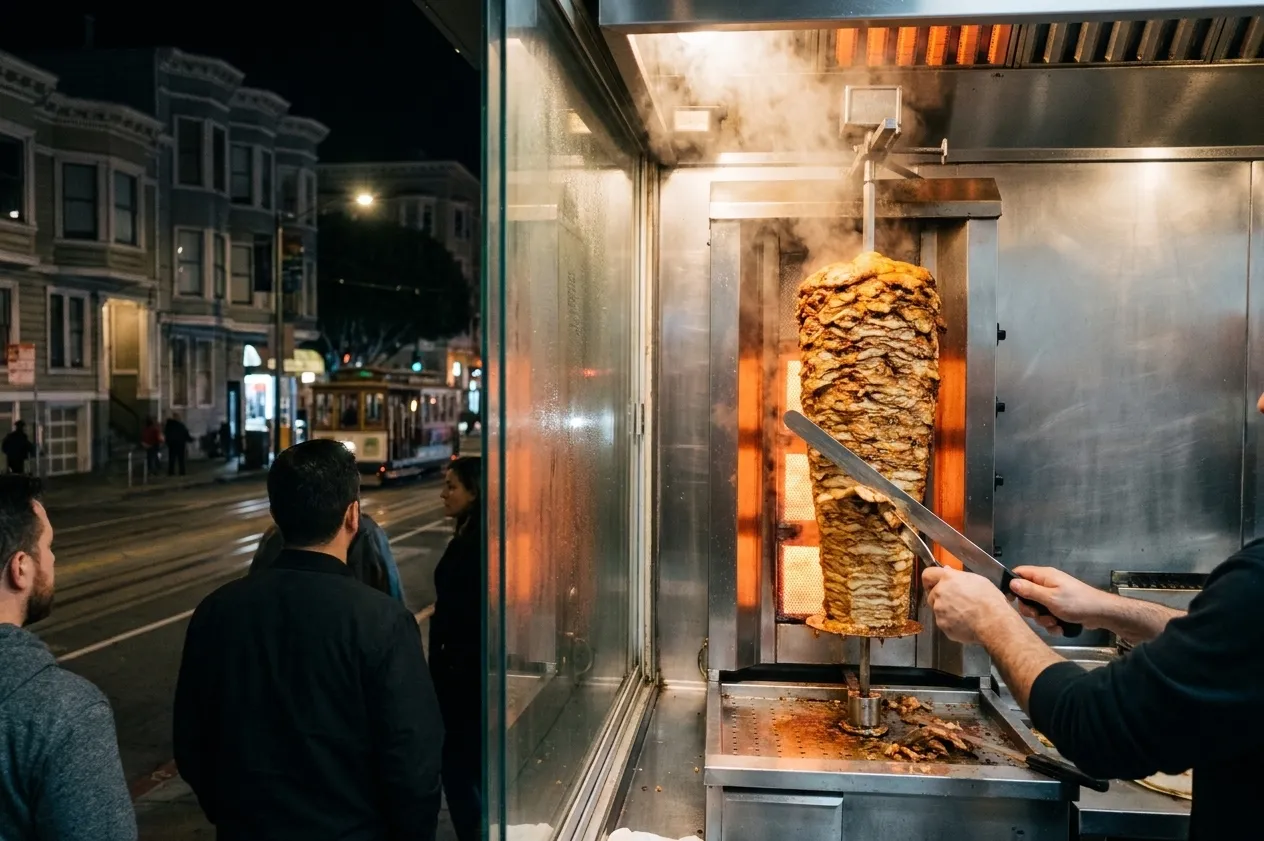
What you will not find much of in San Francisco proper is the dense, cheap Levantine strip that exists in Los Angeles. For that you cross the bay: the stretch of Berkeley and Oakland around Telegraph and University has a much deeper concentration of Palestinian, Lebanese and Yemeni cooking at low prices. If you are willing to take BART, that is where the category is genuinely strongest in the Bay Area.
Persian food is the underpriced one
Persian restaurants in this city are systematically better value than their neighbours and considerably less visited. A plate of kebab with saffron rice, grilled tomato and a side of yoghurt is a large, serious meal and frequently lands right around twenty dollars. The lunch specials are lower still. Persian rice technique — the crisp tahdig layer at the bottom of the pot — is a genuine craft and it is being executed properly in unglamorous strip-mall rooms out in the avenues.
Afghan restaurants sit adjacent and are similar in value, with mantu dumplings and pumpkin borani that have no real equivalent elsewhere on a menu at this price.
Where the twenty-dollar line breaks
Two things push a Mediterranean bill over the line fast. The first is mezze ordering — a table of five small plates will clear twenty a head every time, because the format is designed for sharing across a larger group and the per-person economics only work with four or more people. The second is anything that describes itself as modern Mediterranean or California Mediterranean, which is a different restaurant category entirely and priced accordingly.
Neither is a bad way to eat. But if the constraint is twenty dollars, the move is a single composed plate at a counter rather than an assembled spread at a table, and it is worth being deliberate about that choice rather than discovering it when the bill arrives.
The lunch-special arbitrage
Almost every restaurant in this category runs a lunch menu that is priced thirty to forty per cent below the same food at dinner, and unusually, the portions are frequently identical. This is not a small saving hiding a small plate — it is the same kebab, the same rice, the same salad, served between eleven and three to a different customer base. If your schedule has any flexibility at all, moving a Mediterranean meal from evening to midday is the single largest price lever available.
The other thing lunch buys you is the daily specials, which at family-run Persian and Afghan places are where the home cooking shows up. Stews like ghormeh sabzi or fesenjan take hours and only appear on certain days, and they almost never make it onto the dinner menu because the margin does not work at dinner service.
Ordering well at a counter
Ask what came off the grill most recently rather than what is best. Take the pickles and the hot sauce, which are almost always house-made and are where a lot of the character sits. If there is a daily stew or a rice dish on a hand-written board rather than the printed menu, order that — it is what the kitchen actually wanted to cook that day and it is usually the cheapest thing available.
And take the bread seriously. A shop baking its own flatbread on the premises is signalling something about the rest of the operation, and the difference between fresh bread and a bagged pita is larger than the difference between most of the meats.
Tags: #SanFrancisco #MediterraneanFood #MiddleEasternSF #Falafel #Shawarma #PersianFood #Tenderloin #MissionDistrict #CheapEatsSF #SFEats #Halal #BayArea #UnderTwenty
All trademarks are the property of their respective owners.
Ask Karpo first
Ask Karpo which Mediterranean and Middle Eastern counters near you in San Francisco are open now, what a full plate costs, and whether they make their falafel to order.