Cheap Mediterranean food in New York is not a category, it is a pricing structure. Two structures, really. The old one prices by the sandwich or the plate: a fixed thing, assembled the same way for decades, $7 to $14, no configuration required. The new one prices by the bowl and lets you build it, which sounds better and reliably costs $17 by the time you have added the protein and the two premium toppings. This is a guide to the first structure, and to the handful of places in the second that are still worth it.
Prices on these counters move quietly and the good ones keep short, unpredictable hours. Tell Karpo in iMessage where you are and what you want to spend, and it will find the counters near you that are still open and still under your number.
The Institutions That Never Moved Their Price Much
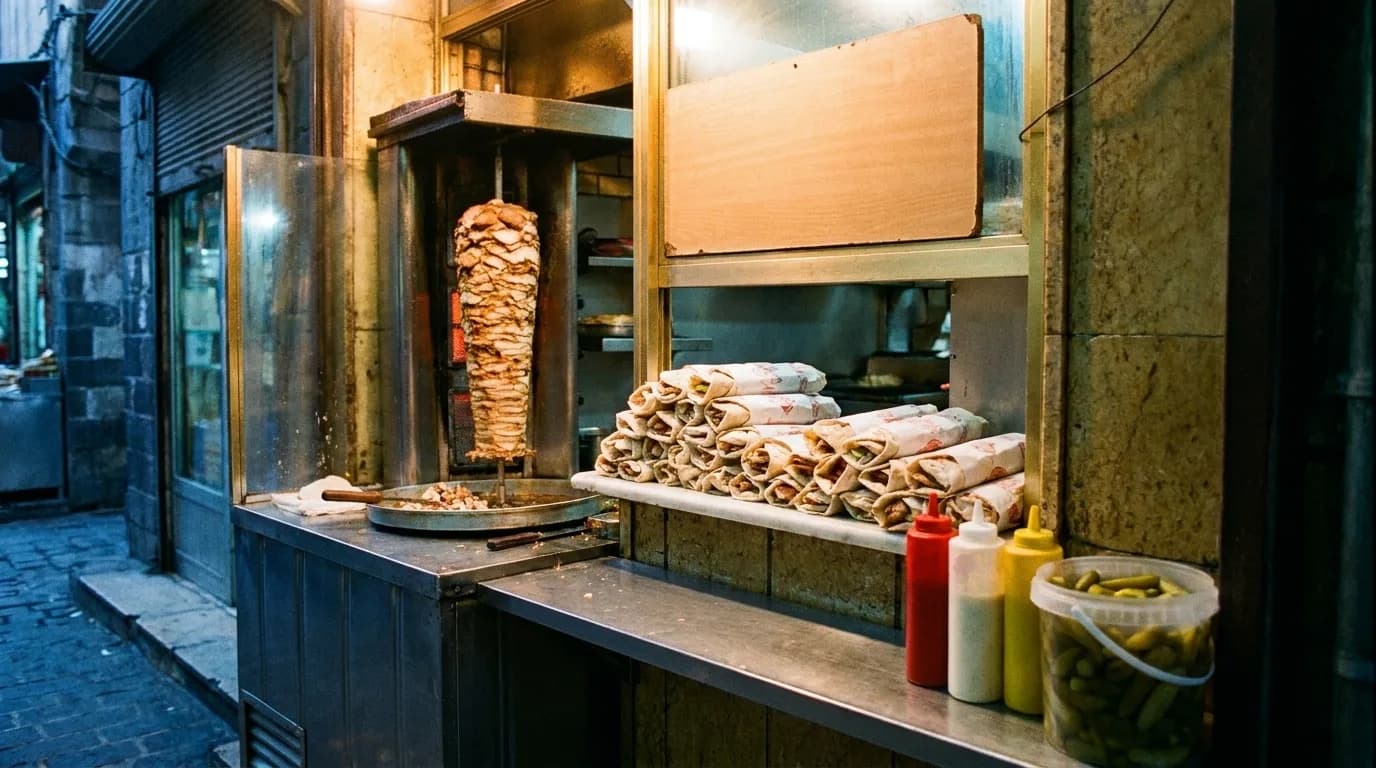
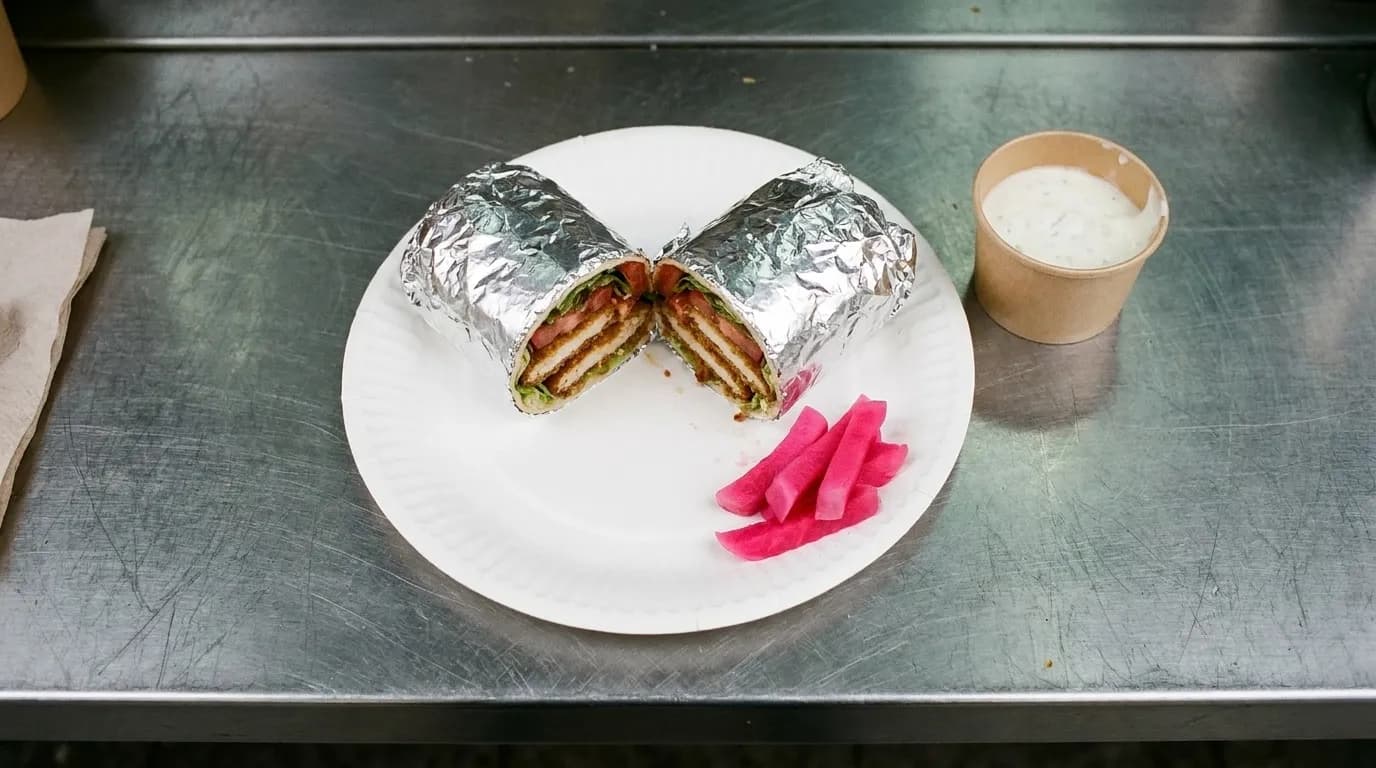
Mamoun's has been selling falafel on MacDougal Street since 1971 and the sandwich is still the cheapest serious thing you can eat in Greenwich Village at 3am. It is small — order two, or add the shawarma — and the hot sauce is genuinely hot rather than decoratively so. Karam in Bay Ridge carves shawarma off the spit into bread with garlic sauce and pickles for a bill that rarely clears $15 for two people. King Souvlaki in Astoria grills to order from a truck on Broadway. The pattern across all three is the same: one thing, made thousands of times, no menu design, no build-your-own step, and a price that reflects the absence of all of that.
The Cart Math
The halal cart platter — chicken or lamb over rice, white sauce, salad — is the most reliable cheap Mediterranean-adjacent meal in the city, and it is also where the widest quality spread lives. The heuristics that actually work: choose the cart with the longest line at the least convenient hour, because turnover means the rice has not been sitting; avoid carts parked where nobody works and nobody lives; and ask for the white sauce on the side if you want to taste the meat. A platter runs roughly $9 to $12 in most of Manhattan now, up from $6 a decade ago but still the best calories-per-dollar on the street. The famous corner at 53rd and Sixth is genuinely good and genuinely a queue; the cart three blocks away is usually 80 per cent as good with no wait.
The Supermarket and Bakery Route
The cheapest way to eat this food well in New York is to stop treating it as restaurant food. On Atlantic Avenue, Sahadi's sells prepared salads, spreads and pickles by weight at a fraction of restaurant pricing, and Damascus Bread & Pastry a few doors down sells the bread and the spinach pies. Twelve dollars of hummus, muhammara, olives and warm pita from those two doors is dinner for two, eaten in a park. The same arrangement exists on Steinway Street in Astoria and along Fifth Avenue in Bay Ridge, where the grocery counters serve the neighbourhood rather than visitors and price accordingly.
Where the Bowl Format Is Still Worth It
Taïm is the honest version of the modern format: falafel that is genuinely good, sauces that are genuinely made, and a sandwich that lands around $11 to $13 depending on the location. It is more than Mamoun's and it is also more food. The rule for every fast-casual Mediterranean chain, this one included: order the sandwich or the plate as listed, not the build-your-own bowl. The listed items are priced as a menu; the bowl is priced as a configuration, and every configuration step has a margin on it. If a place has a lunch special printed on a card near the register, order that — it is almost always the same food at the pre-inflation price, and it usually stops at 4pm.
Five Rules That Save Real Money
Eat the mezze, not the mains: four cold dishes and bread feeds two people for less than one grilled entrée. Go at lunch, when the same kitchens run specials that do not exist at dinner. Ask whether there is a cash price — a number of the older counters still keep one, and a few remain cash-only, so carry some. Skip the drink; almost every place on this list sits within a block of a bodega selling the same can for a third of the price. And when a counter offers a combination plate, take it: at every place where I have compared, the combination is the cheapest way to try three things, and trying three things is the whole point of eating this way.
What the Cheap Version Gives Up, and What It Does Not
It is worth being clear about the trade, because pretending there is none is how people end up disappointed. What you give up at a $9 counter is service, seating, temperature control on a cold night and any kind of atmosphere — several of the best places in this article are two stools and a ledge, and a few are a window with no inside at all. What you do not give up is the cooking. The spit at a good shawarma counter turns all day and is carved to order, which is a fresher process than most restaurant kitchens can manage. The falafel is fried when you ask for it, because pre-fried falafel is visibly wrong and these places sell too much of it to hold stock. The bread arrives from a bakery a few miles away that morning. The reason the price is low is overhead and volume, not ingredients, and once you understand that you stop treating the cheap version as a compromise and start treating it as the default with the restaurant as the occasional upgrade.
Tags: #NYC #CheapEats #MediterraneanFood #Falafel #Shawarma #HalalCart #Astoria #BayRidge #Manhattan #Queens #Brooklyn #BudgetEats #NYCFood #StreetFood
Sources consulted: mamouns.com · taimfalafel.com · thehalalguys.com · nyctourism.com
All trademarks are the property of their respective owners.
Ask Karpo first
Counter hours change with the season and the cheapest places advertise nothing. Ask Karpo in iMessage which of these are open near you right now, which are cash-only, and where the lunch special is still running before you walk over.