Ask about cheap Mediterranean food in Los Angeles and most answers try to fit the expensive version into a smaller budget — order less mezze, skip the kebabs, share. That is the wrong approach, because the under-twenty tier of this cuisine is not a reduced version of the sit-down meal. It is a separate format with its own logic, and on a weekday it is frequently the better lunch.
Counters keep shorter and more variable hours than restaurants and several close in the mid-afternoon. Ask Karpo which are open near you right now.
The format, and why it is cheaper
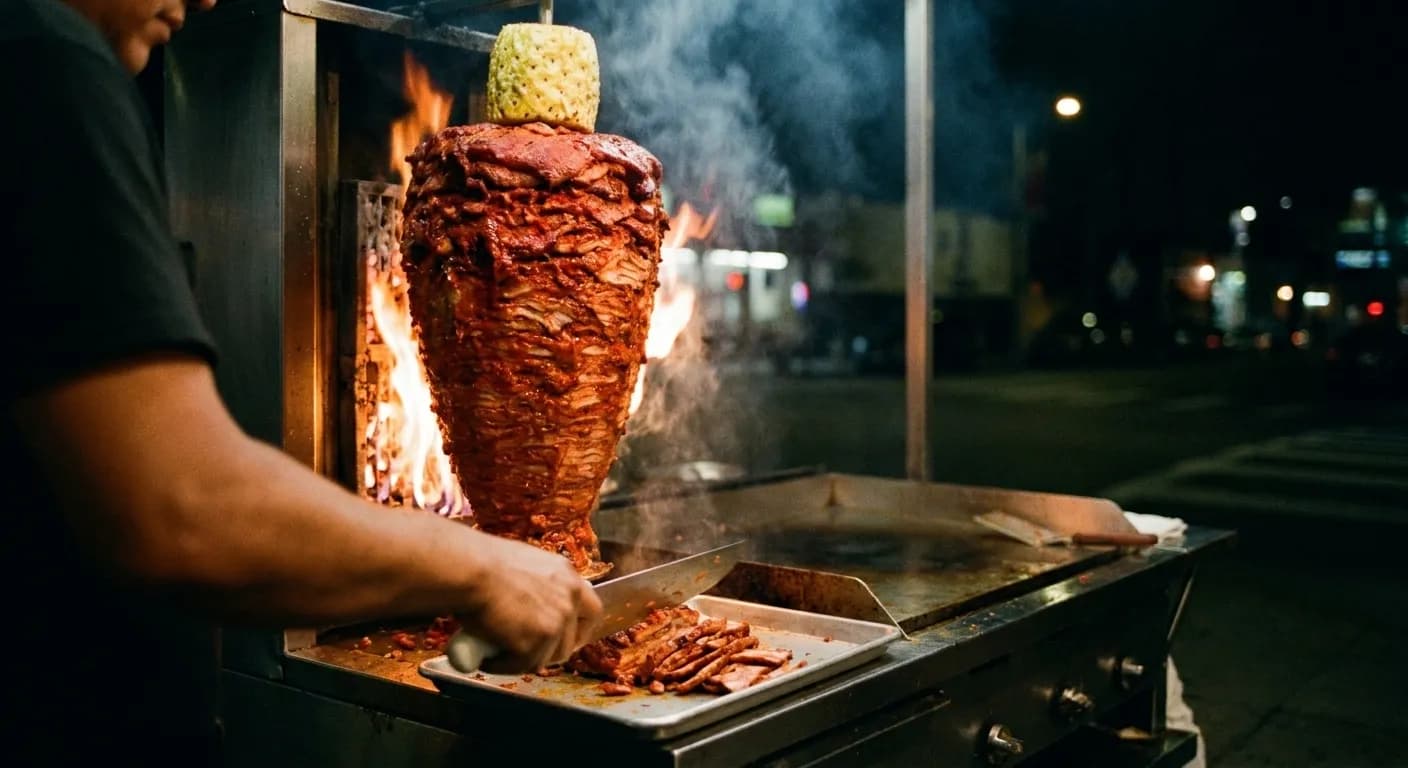
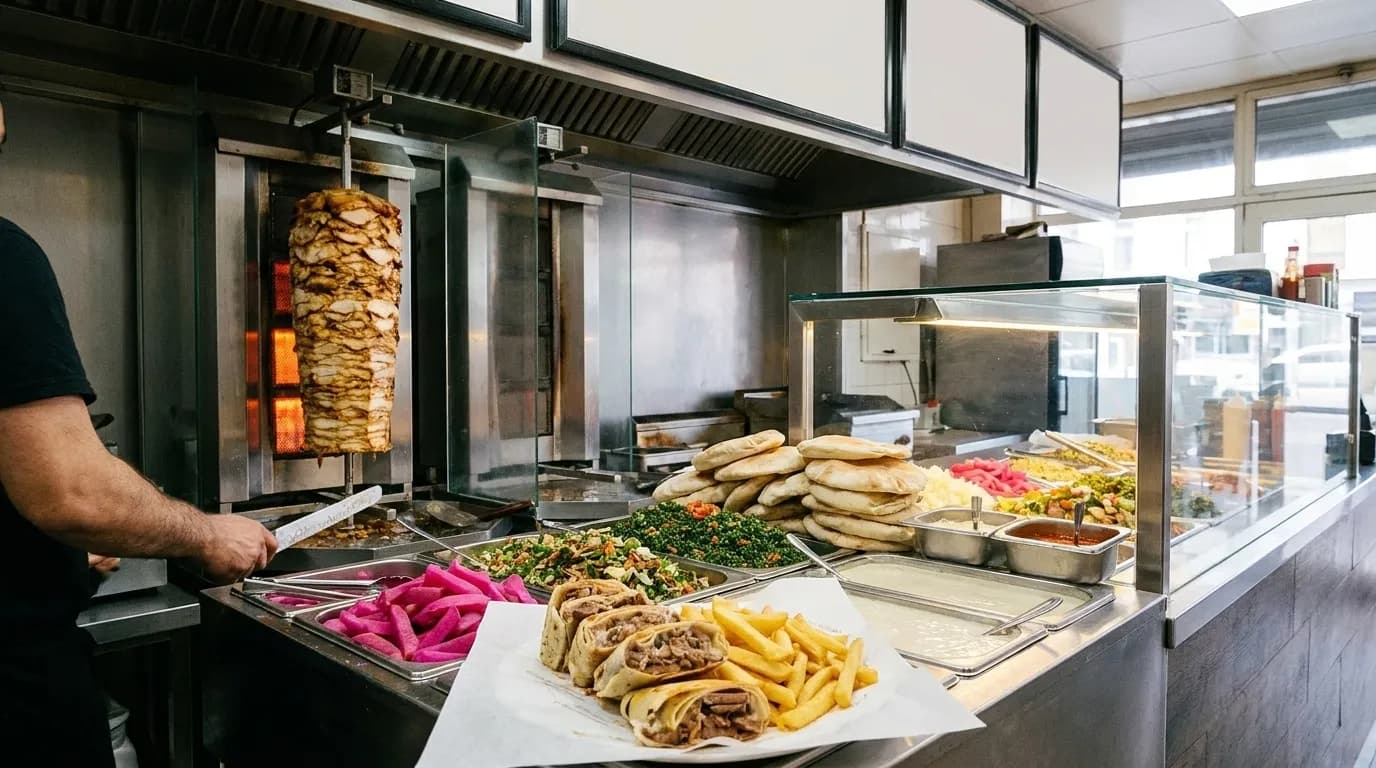
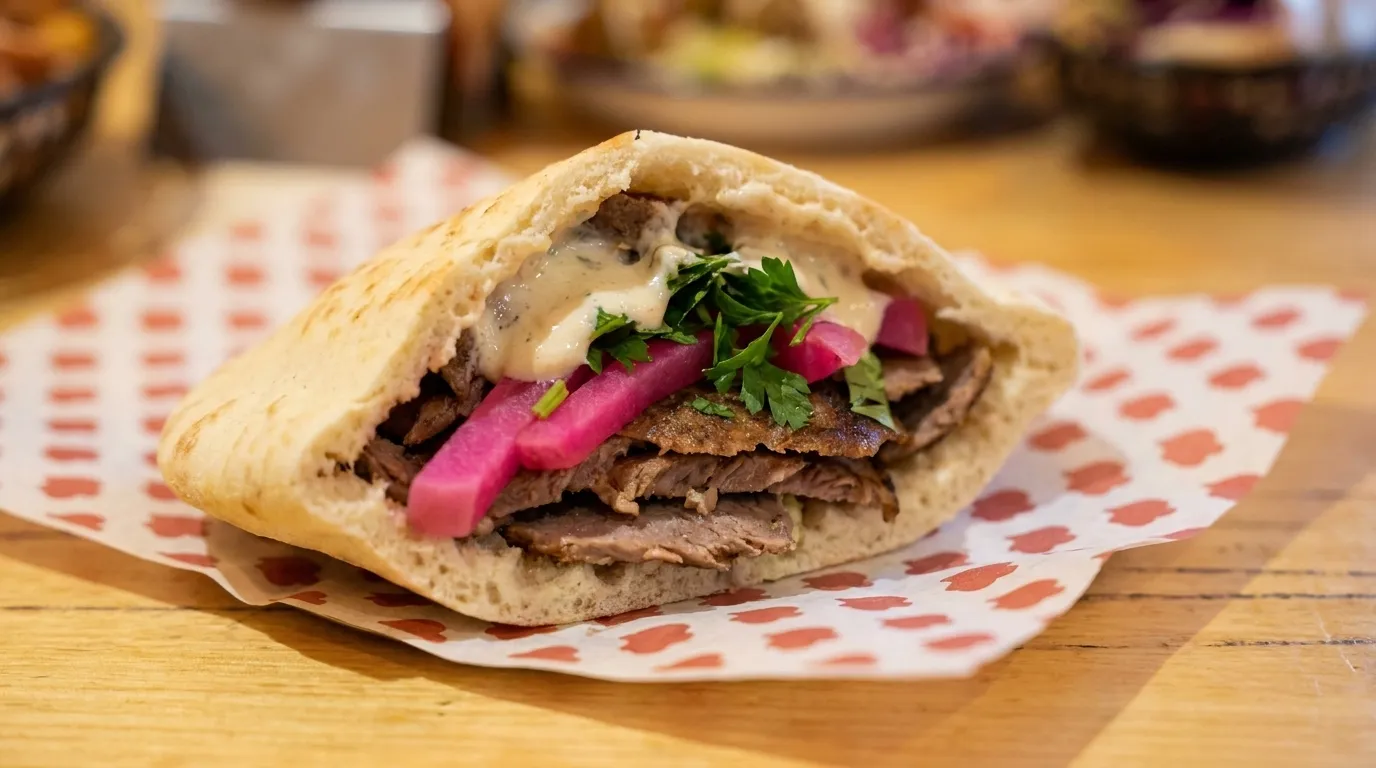
The affordable tier is built around a spit and a griddle rather than a dining room. Shawarma turning on a vertical rotisserie, falafel fried to order, a griddle for kebabs, and a line of prepared salads and pickles behind glass. There is no table service, the menu is short, and the labour is concentrated in one or two people. That is where the price difference comes from — not from worse ingredients.
It also changes what is good. A rotisserie that has been turning since morning produces meat with an edge that a made-to-order kitchen cannot replicate, which is why shawarma from a busy counter is often better than shawarma from a restaurant. Volume is a quality input in this format rather than a compromise, and the busiest counter on a street is usually the right one on those grounds alone.
Order the plate, not the wrap
This is the single most useful ordering rule at any Levantine counter in Los Angeles. A wrap and a plate are usually a few dollars apart, and the plate includes rice, salad, pickles, sauces and bread alongside the same protein. The wrap includes the protein and the bread. On a per-calorie and per-dish basis the plate is comfortably the better deal, and it is a complete meal rather than something you eat standing up.
The wrap is the right order in exactly one circumstance: when you are walking. It is engineered for it — everything integrated, nothing to spill, no cutlery. If you are sitting down anywhere at all, including on a wall outside, the plate wins on every measure.
Where the counters are
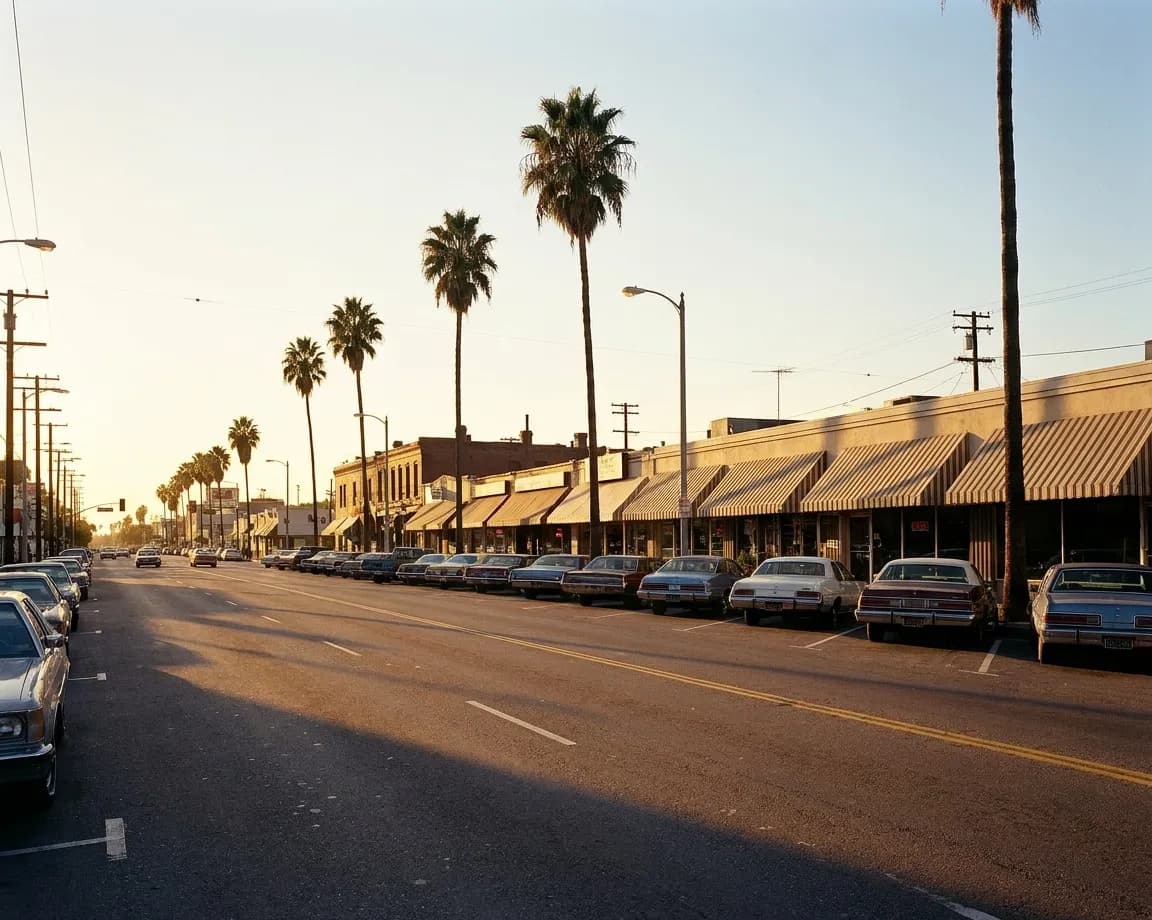
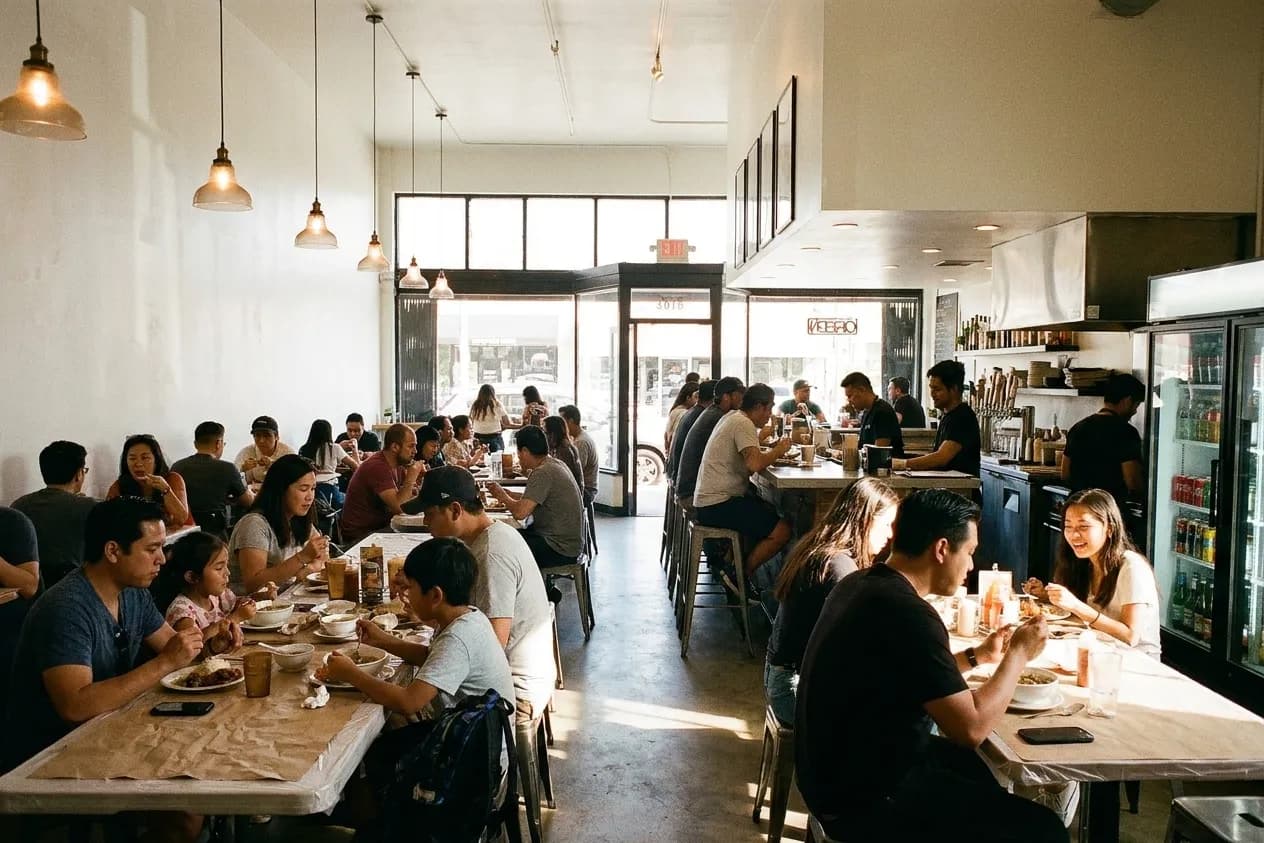
They are in the same corridors as the sit-down restaurants — East Hollywood running north-east towards Glendale, and the Hollywood stretch — usually within a block or two of the more expensive rooms. That proximity is not a coincidence. Both formats exist because a community eats this food regularly, and the cheap counter and the family restaurant are serving the same people on different days of the week.
The practical consequence is that you can plan a single trip that covers both tiers: a counter lunch for under twenty and a bakery or grocer on the same street for things to take home. A bag of fresh flatbread, a tub of hummus and a container of pickles from a grocer costs very little and is the part of the outing people remember.
A note on drinks, because it changes the total. Most counters in this tier do not serve alcohol, which is a large part of how the bill stays under twenty — the same meal in the sit-down room next door arrives with a wine list attached. What they do have is fresh juice, ayran or a mint lemonade, and those are usually made in house and worth ordering rather than defaulting to a bottle of something.
Bread is the other quiet economy. Most counters give you far more than the plate needs, and a stack of warm flatbread turns a mid-teens plate into something two people can genuinely share. If you are eating with someone, one plate and an extra side is often enough, which puts the meal well under twenty for both of you rather than for one.
What to look for, and what to skip
Three signals separate a good counter from an indifferent one. The spit should be visibly turning and visibly being carved, not sitting; a spit that nobody has touched in twenty minutes is dry. The salads behind the glass should look like they were made this morning rather than yesterday. And there should be more than one house sauce — a counter with only garlic sauce is usually a counter that has simplified in other ways too.
What to skip is the section of the menu that does not belong to the format. Most of these counters have a handful of items added to broaden the appeal — a grilled fish, a pasta, a salad bowl — and they are almost never why anyone is there. Order the thing the equipment is built for: whatever is on the spit, whatever is on the griddle, and the falafel if it is being fried rather than held.
It is also worth knowing where the twenty-dollar line actually sits now. A plate at a good counter has drifted up over the past few years and the honest range today is somewhere in the mid-teens rather than under ten. Under twenty still buys a genuinely full meal with leftovers; under ten increasingly buys a wrap and nothing else, which is worth knowing before you build a budget around an old number.
Practical notes
Look for the counter format — rotisserie, griddle, prepared salads — rather than a cheaper sit-down room. Order the plate rather than the wrap unless you are walking. Go where it is busy, because a fast-turning spit is a better spit. The counters sit in the same East Hollywood and Glendale corridors as the restaurants, so pair one with a bakery or grocer stop. Expect a good plate to land in the mid-teens, and skip anything on the menu the equipment was not built for.
Tags: #LosAngeles #CheapEats #MediterraneanFood #Shawarma #Falafel #LevantineFood #EastHollywood #Glendale #LALunch #BudgetLA #LAEats #StreetFood #LAFoodie #Under20
All trademarks are the property of their respective owners.
Ask Karpo first
Want a full Levantine plate in Los Angeles for under twenty dollars? Ask Karpo which counters near you are open and busy right now, what the plate costs, and which grocer on the same street is worth a stop on the way out.