Cheap food open near me in San Francisco after 10pm is a search that quietly gets more expensive the longer it takes. The food itself is rarely the problem — plenty of late kitchens here sell a full meal for well under twenty dollars. The cost arrives around the food: a delivery fee and a service fee and a late surcharge, or a rideshare across town because the cheap place you found is forty minutes' walk away. That is the late tax, and most of it is avoidable.
Late food gets expensive in ways that have nothing to do with the food — delivery fees, surge pricing, a ride you did not plan on. Tell Karpo where you are after 10 and it will find something cheap within walking distance.
Where the late tax actually lands
Very few restaurants in San Francisco raise their menu prices after 10pm. What happens instead is that the cheap options thin out, so the average price of what is still available rises even though nothing changed price. At 7pm you are choosing among hundreds of kitchens across every price point; at 11pm you are choosing among a few dozen, and they are not evenly distributed across the city.
The second and larger component is transport. A ten-dollar meal that requires a fifteen-dollar ride is a twenty-five-dollar meal, and late at night the ride is more likely to be surging. Any late-night food decision that ignores how you are getting there and back is only half a decision.
Delivery is where the tax is worst
Ordering in after 10 is the most expensive way to eat cheaply. Delivery pricing stacks a menu mark-up, a delivery fee, a service fee and a tip onto a meal that was inexpensive to begin with, and the proportional damage is much worse on a twelve-dollar order than a sixty-dollar one. A cheap meal delivered late routinely lands at double its counter price.
Late delivery is also less reliable in this city than the apps suggest. Kitchens that have stopped cooking can stay listed as available for a while, and courier coverage is thinner in the western neighbourhoods after 11. If the plan depends on food actually arriving, ordering before the kitchens' last call rather than after it is the difference between dinner and a refund.
The neighbourhoods that keep cheap food late
Late cheap eating in San Francisco clusters rather than spreads, and the clusters are the ones with a resident population that keeps late hours: the dense blocks around Chinatown, the Tenderloin's tight restaurant grid, and the Mission's main corridors. These areas work not because any one place is exceptional but because there are several within a block, so a closed shutter costs you two minutes instead of the evening.
Choosing a cluster rather than a restaurant is the single most useful habit for late nights here. It converts a research problem into a walking problem, and walking is free. It also means you can eat whatever is genuinely still cooking rather than committing to a craving that turns out to be closed.
The formats that stay cheap and open
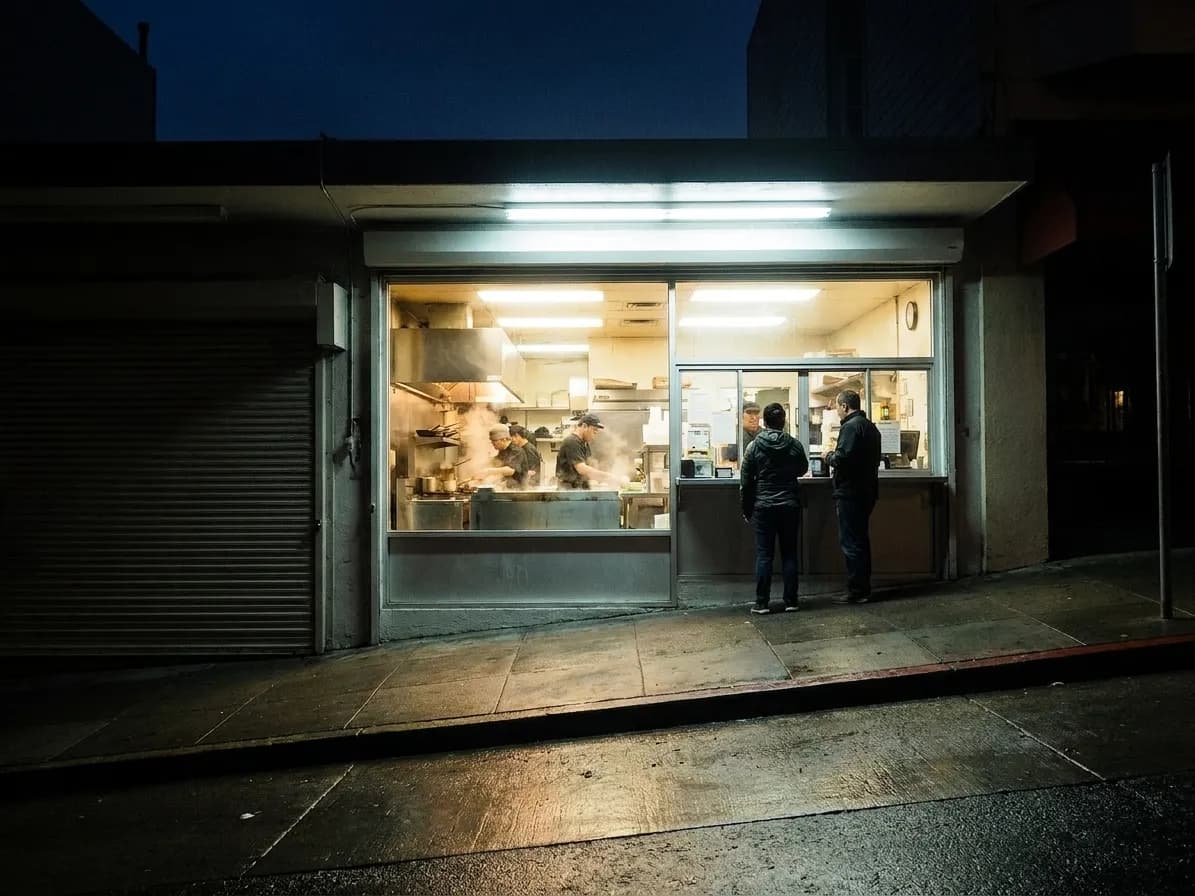
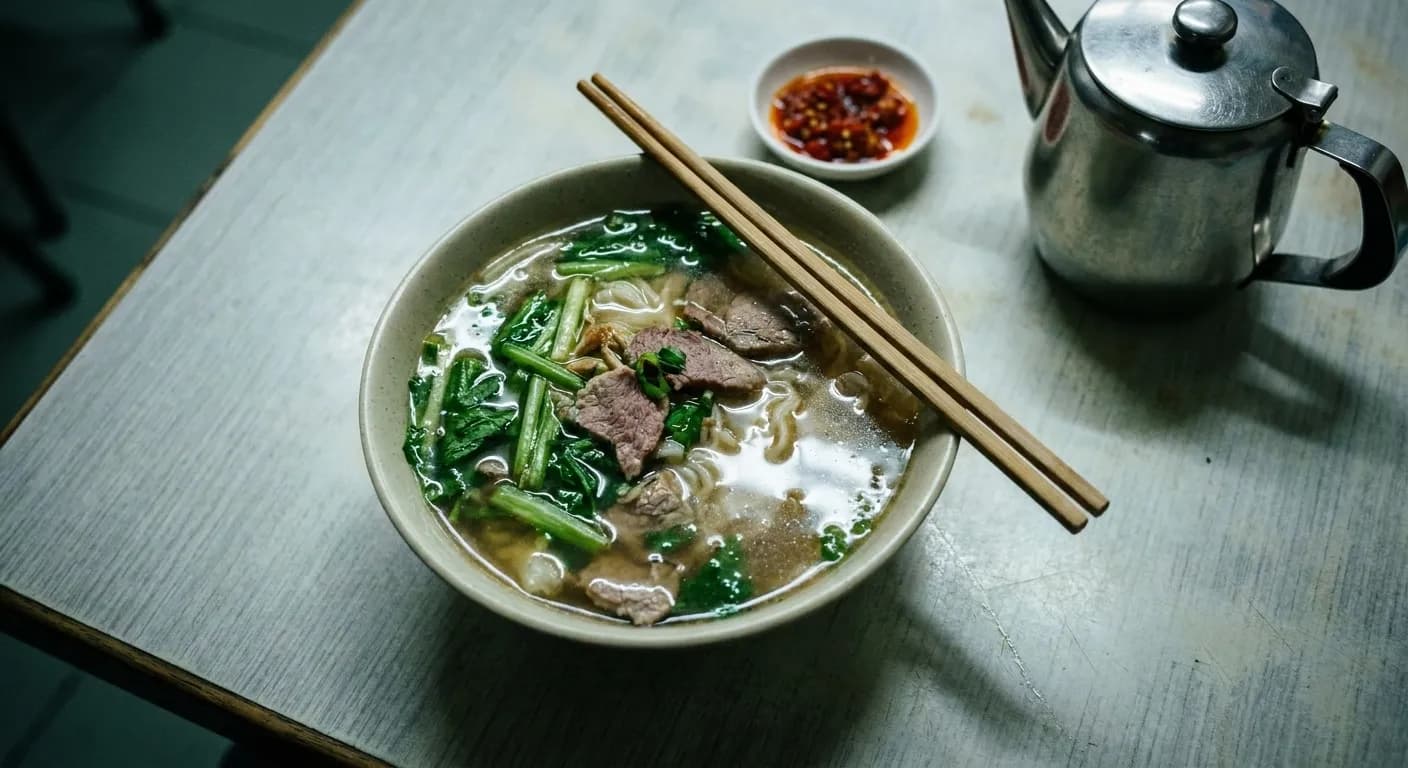
Late food that is still inexpensive tends to come from operations that never had much to shut down in the first place: taquerias with one griddle, slice counters, noodle and congee kitchens, and the small number of diners for which late night is the main shift rather than an extension. These are cheap late because their whole model is late, not because they are stretching for your order.
Weeknights are consistently earlier than weekends, often by an hour or two, and search listings frequently show only the weekend hours. If it is Tuesday, assume the advertised closing time is optimistic and confirm before you walk.
The cheapest late night is a planned one
The version of this that works costs almost nothing: pick a cluster you can reach on foot or with one short transit ride, confirm one kitchen is taking orders right now, and know the second door before you leave. That plan avoids the delivery stack, avoids the surge fare, and gets you a better meal than the app would have brought — usually for less than the fees alone.
Getting home is part of the budget
Late-night transit in San Francisco is thinner than the daytime network but it does exist, and the owl service covers more of the city than most people assume. Working out in advance whether a night route passes near where you are eating turns a surging rideshare into a couple of dollars, and that saving is frequently larger than the meal itself.
If transit is not an option, the cheapest structure is to eat near where you already are and take one ride home rather than a ride to food and a ride back. Two short trips at late-night rates cost more than one longer one, and the walk to a cluster you can reach on foot is usually shorter than the wait for a car.
Tags: #SanFrancisco #SF #BayArea #FreeThingsToDo #CheapEats #BudgetFriendly #SFEats #SFGuide #ExploreSF #SFLocal #SFWeekend #SFNights #SFFood #SFLife
Sources consulted: sfchronicle.com · sfstandard.com · sfmta.com
All trademarks are the property of their respective owners.
Ask Karpo first
Karpo is a proactive AI assistant that lives in iMessage. Ask what is cheap and open near you before the fees start stacking.