Fifteen dollars is a strange number in New York. It is not enough for a sit-down dinner in most of Manhattan below 96th Street, and it is more than enough at several hundred counters that have been feeding the city at that price for decades. The difference is not luck, it is format. Certain kinds of restaurant are structurally cheap — no table service, no reservations, a menu narrow enough that the kitchen buys one thing well — and once you can recognise the format, the price stops being a surprise.
Prices move faster than any published list, and the cheap counters are the ones least likely to update anything. Ask Karpo what is actually under fifteen dollars near you tonight.
The formats that are cheap by design
Four formats do most of the work. The street cart, which has no rent on a dining room and turns over a single protein all day. The basement or second-floor room, where a flight of stairs takes a large percentage off the lease. The counter with no waiters, where the labour cost of a meal is one person at a register. And the single-dish specialist, where the kitchen buys one ingredient in volume and has stopped paying for optionality. A restaurant that fits two of those four will almost always come in under fifteen dollars, whatever the neighbourhood.
The corollary is more useful than any list of names: if you are standing somewhere expensive and need to eat cheaply, look upward and downward rather than along the street. The ground-floor storefront on a busy avenue is the most expensive square footage in the city and the menu will reflect it. The same block frequently has a basement Cantonese room or a second-floor Korean counter charging half as much, and the only reason it is quieter is that nobody looked up.
Carts, and how to read one
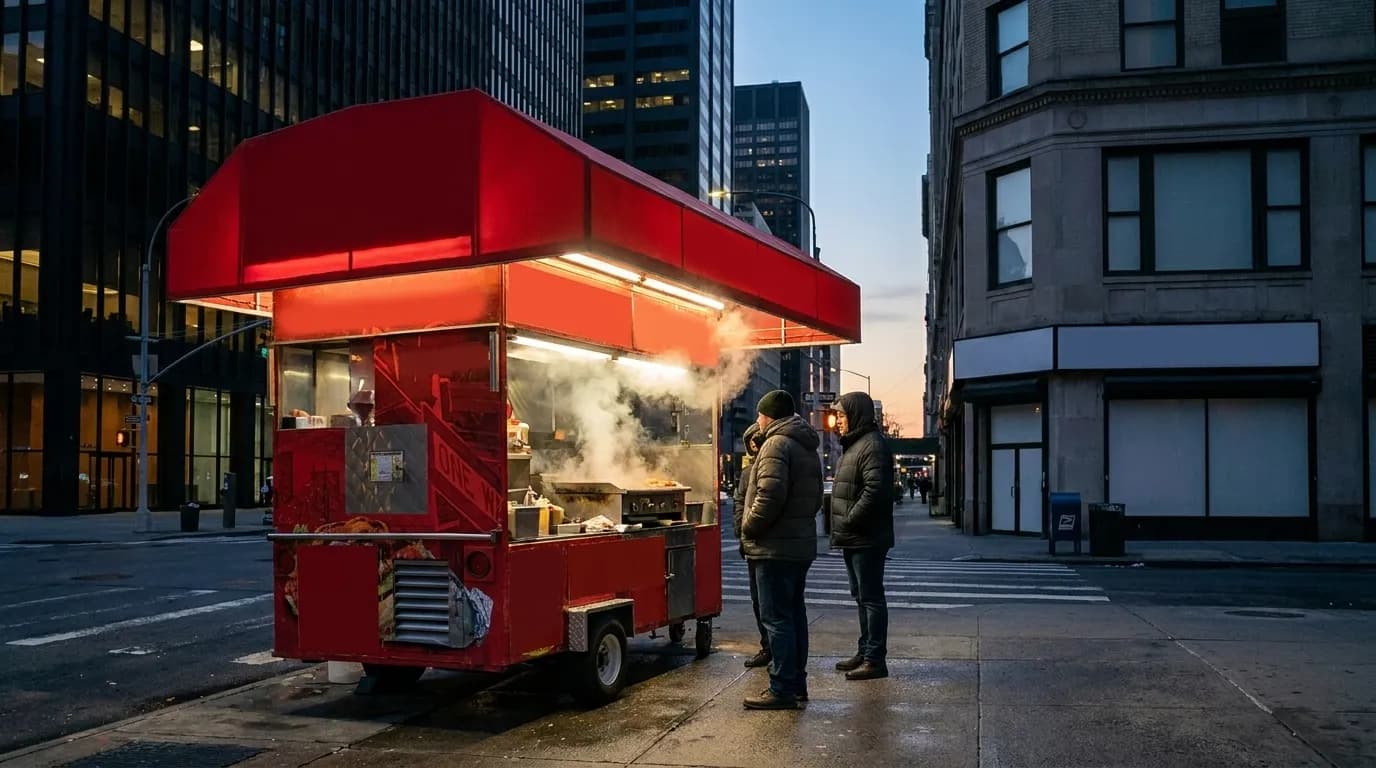
The halal cart is the most visible cheap meal in the city and the quality range is wide. The tell is turnover: a cart with a queue is cooking to order, and a cart with no queue has been holding rice under a lid for an unknown length of time. The 53rd Street and Sixth Avenue corner is the famous one, with lines that form well before the dinner rush, but the point of carts is that a good one exists near almost every hospital, university and late-shift workplace in the city — those are the customers the format was built for.
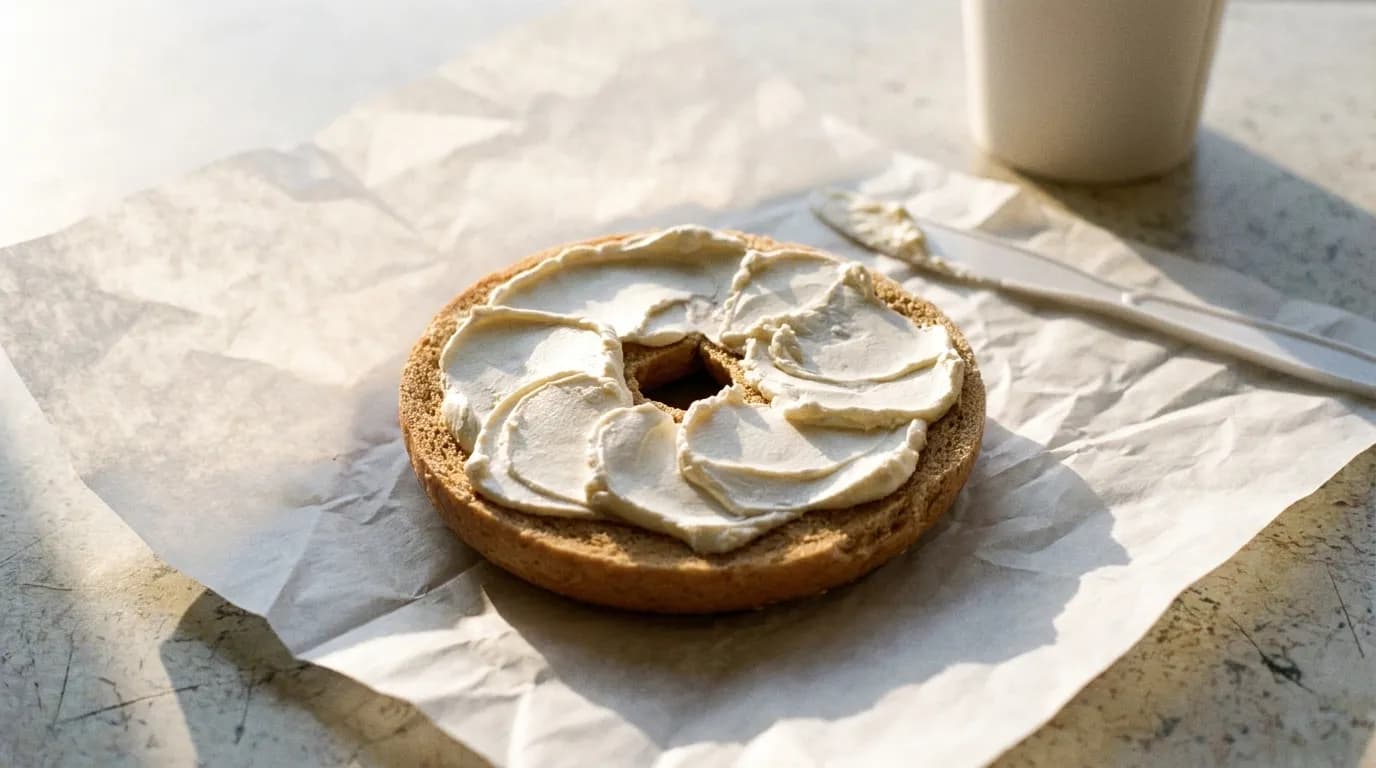
The other cart economy worth knowing is the breakfast one. A bacon-egg-and-cheese on a roll from a corner cart or a bodega griddle remains one of the cheapest hot meals in New York, and it is genuinely better from a bodega with a busy griddle than from anywhere marketing itself on the same sandwich. Bagels sit in the same category: an everything bagel with cream cheese from a shop that boils its own is a five-dollar breakfast that has not meaningfully changed in thirty years.
Where the cheap density actually is
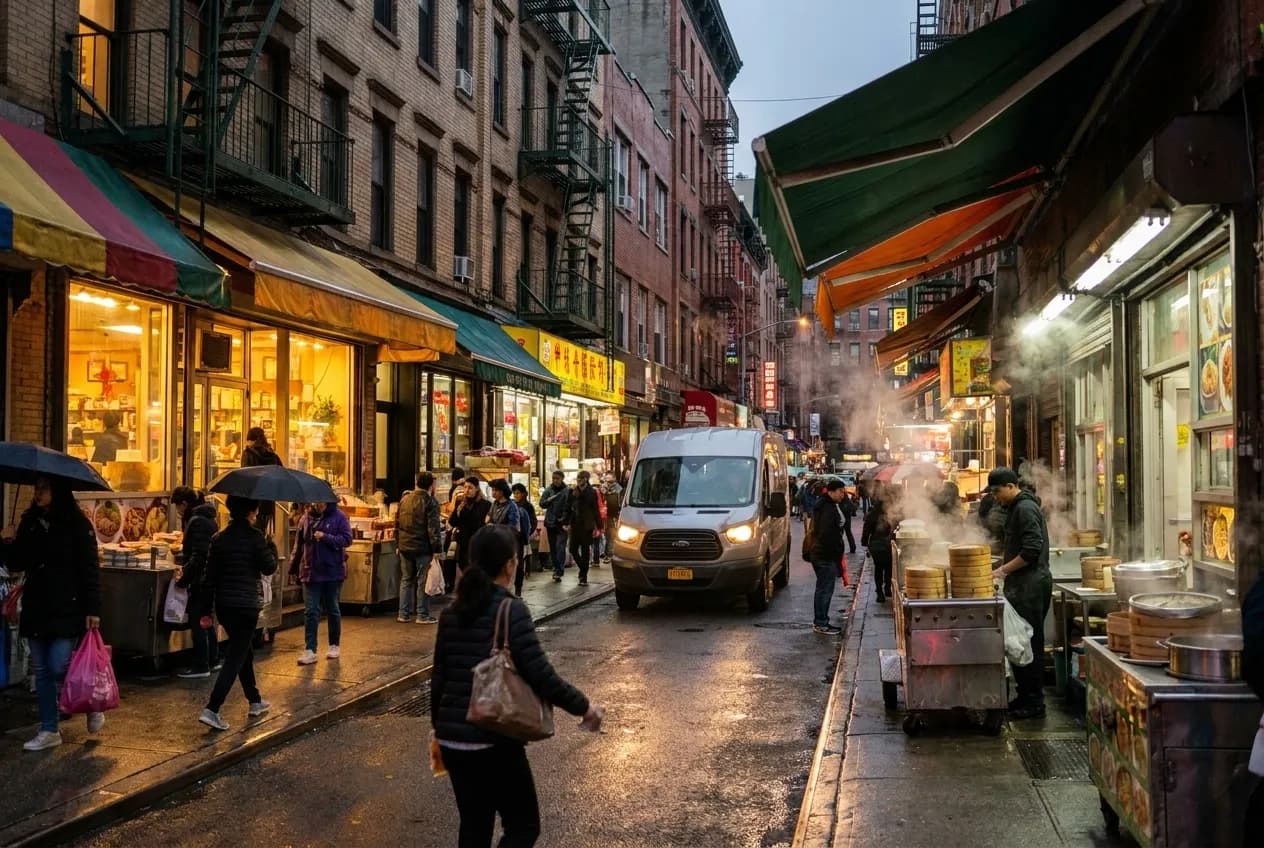
Manhattan's Chinatown, the Roosevelt Avenue corridor through Jackson Heights and Elmhurst, Main Street in Flushing, Sunset Park's Eighth Avenue, and the Bronx's Arthur Avenue are the five neighbourhoods where a full meal under fifteen dollars is normal rather than exceptional. What they share is a resident population that eats out regularly at that price, which is the only thing that reliably keeps a price point alive. Tourist density does the opposite.
Within those, the specific formats change. Chinatown gives you congee, roast meats over rice and hand-pulled noodles. Roosevelt Avenue gives you Colombian, Mexican, Ecuadorian and Nepalese counters within a few hundred metres of each other. Flushing's food courts — the basement halls off Main Street in particular — are the densest concentration of individually-run stalls in the city, and a stall that has been in the same hall for a decade is a stronger signal than any rating.
What to skip
The failure mode of cheap eating in Manhattan is the fast-casual bowl. A build-your-own bowl at a chain will land within a dollar or two of fifteen once you have added a protein, and it will be worse than a nine-dollar plate from a specialist counter three blocks away. The same applies to the salad chains at lunch, which are priced for expense accounts. Cheap food in New York is almost never the food that is marketed as convenient.
The other trap is the tourist-adjacent slice shop. Pizza is the city's genuine cheap meal, but a slice near a major attraction can cost twice what the same slice costs in a residential neighbourhood four stops away, and it will have been sitting under a lamp for longer. If a pizzeria has a photograph of the pizza on the window, keep walking.
The lunch-special loophole
The largest single discount available in New York is not a coupon, it is the clock. A very large number of sit-down restaurants that are expensive in the evening run a set lunch — two or three courses, or a rice plate version of the same kitchen's dinner menu — that lands comfortably under fifteen dollars. Midtown Japanese rooms, Indian buffets in Curry Hill, Korean rooms on 32nd Street and dim sum parlours in Chinatown and Sunset Park all do this. The food is cooked by the same brigade in the same kitchen. Only the hour is different, and lunch is when the older rooms are at their best anyway.
Practical notes
Carry a little cash. Card acceptance is close to universal now, but a handful of carts and older counters still have minimums, and a cash-only room is often a good sign rather than a bad one. Lunch specials are the single biggest lever on price — many sit-down restaurants that are unaffordable at eight in the evening serve the same kitchen's food at a set lunch price that lands under fifteen dollars, typically on weekdays until around three. Check whether a counter closes between services; a lot of the cheapest rooms shut for two or three hours in the afternoon. And in food halls, the stall with the shortest menu is almost always the one to order from.
Tags: #NYC #NewYorkCity #CheapEats #BudgetNYC #FoodNearMe #NYCEats #Chinatown #JacksonHeights #Flushing #SunsetPark #ArthurAvenue #StreetFood #NYCOnABudget #EatCheap
All trademarks are the property of their respective owners.
Ask Karpo first
Want to know which counters near you are still under fifteen dollars, which lunch specials are running today, and which stall in a food hall is the one people actually queue at? Ask Karpo for a cheap-eats route around your block before you head out.