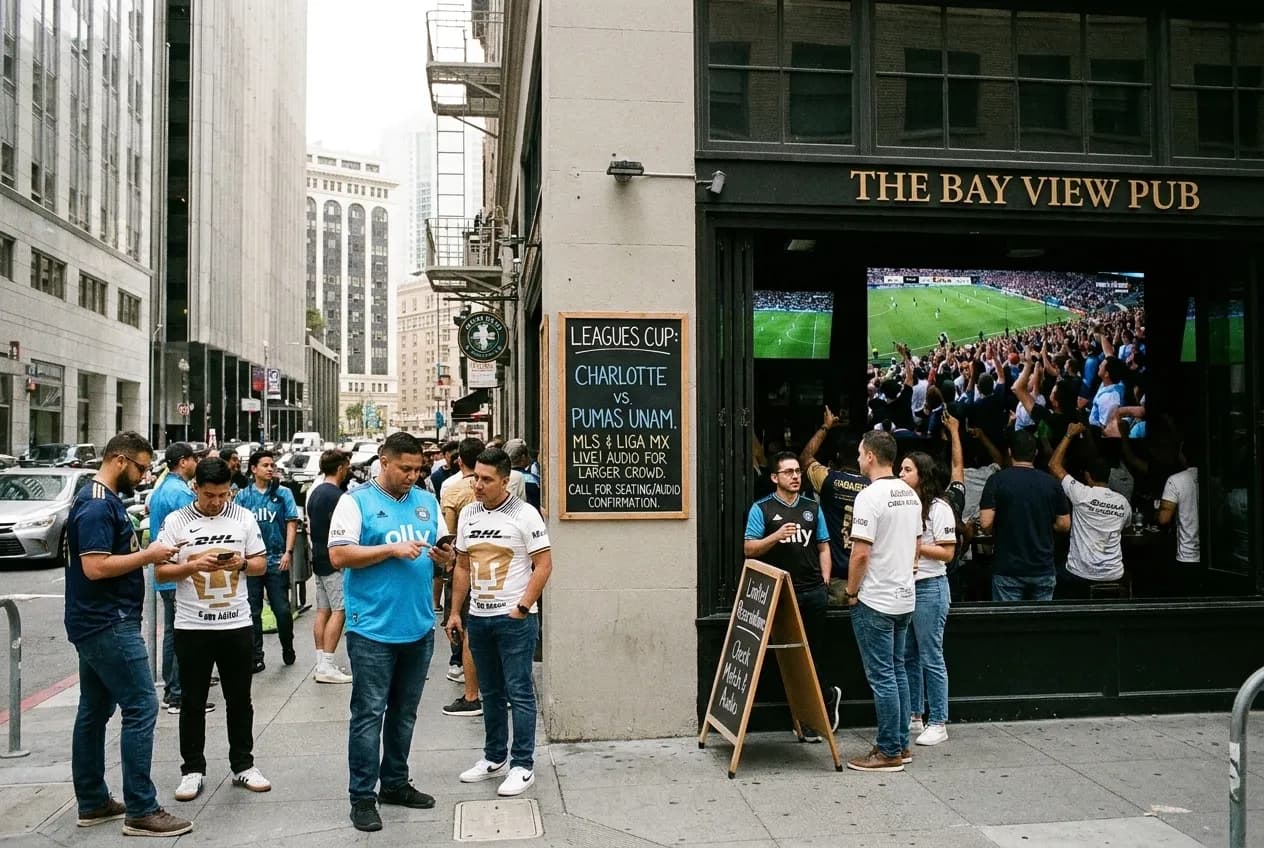
When charlotte vs pumas unam appears on tournament schedules, San Francisco soccer bars face a familiar calculus: which fanbase fills more seats, which league secures the main screen, and whether Spanish or English commentary dominates the audio mix. Liga MX supporters exploring MLS tournament formats during midweek evening kickoffs discover that broadcast priority shifts with crowd composition, not league prestige. A partner joining for competitive curiosity adds social pressure to the venue decision—standing in a packed bar works for derby atmospheres but tests patience during intermediate tournament rounds where rules and stakes require explanation. The city's transit grid, documented through SFMTA's multimodal trip planner, connects neighborhoods to soccer-friendly corridors, yet no public schedule guarantees which match receives featured treatment on any given night.
Text Karpo which team you support, whether you prefer Spanish or English commentary, and your preferred SF neighborhood. We'll send three soccer bars confirming Charlotte vs Pumas UNAM coverage with crowd-size estimates, plus one backup streaming cafe if bars require reservations you can't make.

Broadcast Priority and the Crowd-Size Calculation
Soccer bars allocate screens and audio based on projected attendance, not league hierarchy. A venue expecting thirty Charlotte supporters and eight Pumas fans will default to English commentary and center the MLS feed, regardless of Liga MX's historical prestige. This pragmatic approach protects revenue but frustrates visitors who assume their preferred league commands automatic respect. Bars monitoring social media chatter and reservation requests make these calls hours before kickoff, leaving walk-in groups vulnerable to suboptimal viewing angles or muted secondary screens.
Calling ahead transforms this gamble into negotiation. Ask whether the match will receive main-screen placement, which audio language is planned, and whether the bar accepts reservations for groups of two. Some venues toggle audio between halves if crowds remain balanced; others refuse to switch once the match begins. A partner unfamiliar with tournament formats benefits from venues willing to display bracket graphics or provide printed explainers, services more common in bars courting casual fans than die-hard supporter sections.

Seating Tradeoffs Between Atmosphere and Explanation Space
Standing-room environments amplify competitive energy but complicate the intermediate fan's learning curve. Tournament formats—group stages, aggregate scoring, away-goals tiebreakers—require visual aids or patient conversation, difficult when shoulder-to-shoulder crowds chant over pivotal moments. Seated venues with table service offer explanation space, yet mute the atmosphere that makes neutral viewers care about outcomes. A Liga MX fan bringing a curious partner must choose between immersive chaos and pedagogical comfort.
Midweek evening kickoffs slightly ease this tension. Tuesday and Wednesday crowds skew smaller than weekend fixtures, increasing the odds of claiming a booth near a screen with controllable sightlines. However, bars in neighborhoods well-served by Muni transit—the system's upgraded T Third line, for instance, reduces delays to southeastern corridors—attract spillover crowds from nearby offices, reintroducing density even on off-peak nights. Verify whether the venue holds tables for phone reservations or operates first-come seating; the former rewards planning, the latter punishes late arrivals.
Commentary Language and the Bilingual Bar Dilemma
Spanish-language commentary carries tactical nuance and emotional cadence that English broadcasts often flatten, but San Francisco bars default to English audio unless the room's linguistic majority demands otherwise. A Pumas supporter accustomed to hearing analysts dissect possession sequences in Spanish may find English-language calls reductive, focused on individual moments rather than systemic patterns. Bars with multiple audio zones—one section Spanish, another English—solve this diplomatically but require early arrival to claim the preferred zone before it fills.
Some venues offer closed-captioning on secondary screens, a partial remedy that preserves visual information while sacrificing vocal intensity. Others stream dual-language feeds through tabletop tablets for reserved groups, a premium service that costs nothing but assumes technological cooperation. A partner exploring MLS tournament structures benefits more from English commentary's explanatory asides, creating a linguistic tug-of-war within the same party. Discussing this tradeoff before leaving home prevents mid-match frustration when one person's ideal audio alienates the other.
Transit Routes and Neighborhood Venue Clusters
SFMTA's trip planner maps Muni, bike, walk, and drive options across the city's soccer-bar corridors, though it cannot predict which venues will prioritize a given match. Mission District bars cluster near Valencia Street, accessible via multiple bus lines and the 24th Street BART station, but their Liga MX loyalties vary by ownership and clientele. Marina and North Beach venues lean toward European leagues, making tournament matches between American and Mexican clubs a lower priority unless walk-in demand forces a screen reallocation. Richmond and Sunset neighborhoods, reachable via the 38 Geary or N Judah lines, host bars with rotating broadcast calendars that require day-of confirmation.
Biking to a venue preserves schedule flexibility—if the first bar disappoints, pedaling to a backup takes minutes rather than waiting for the next Muni connection. Walking suits partners debating whether to commit to a full ninety minutes; a venue within strolling distance of dinner alternatives allows graceful exits if the match bores or the crowd overwhelms. Driving trades spontaneity for parking anxiety, particularly in dense neighborhoods where street spots vanish by early evening. The SFMTA site details parking regulations but cannot guarantee availability, making transit or bike the safer midweek choice.
Verification Steps and the Day-of Phone Call
A morning phone call to the intended venue confirms broadcast plans before committing to the trip. Ask four questions: Will the match appear on a main screen? Which audio language is planned? Does the bar accept reservations for two? What time do crowds typically arrive for midweek tournament matches? Front-of-house staff may not know answers until afternoon, requiring a second call closer to kickoff. Bars hedging their bets—waiting to see which fanbase arrives first—offer vague assurances that collapse into disappointment for the smaller crowd.
Backup options matter as much as the primary choice. Identify two additional venues along the same transit line or bike route, then call each to compare broadcast commitments. A bar promising main-screen placement and Spanish audio earns the visit; one offering only a corner TV with uncertain sound loses to competitors. This verification labor feels excessive for a single match, but it separates Liga MX fans who control their viewing experience from those who accept whatever the room provides. A partner's curiosity deserves that effort—tournament soccer's appeal hinges on understanding stakes, impossible when squinting at a muted screen from a bad angle.
Tags: #soccerbars #watchparties #LigaMX #MLS #LeaguesCup #tournamentsoccer #Spanishcommentary #Munitransit #MissionDistrict #sportsviewing #midweekmatches #broadcastpriority #SanFrancisconightlife
Sources consulted: Source 1: sf.gov · Source 2: sfmta.com · Source 3: sfpl.org · Source 4: sf.gov
All trademarks are the property of their respective owners.
Ask Karpo first
Ask Karpo to turn this San Francisco idea into a current plan for your date, budget, companion, transit preference, and energy level. Karpo can narrow the route and flag what to verify before you go.