When social media buzz around cardi b old navy captures attention each August, Miami families face a uniquely local challenge: translating viral fashion inspiration into practical school-year wardrobes that survive relentless humidity, sudden downpours, and strict dress codes while staying within realistic budgets. Unlike temperate climates where layering defines fall fashion, Miami students need breathable fabrics that transition from air-conditioned classrooms to 90-degree afternoon dismissals, all while meeting institutional guidelines that often prohibit popular trends. This guide addresses the real decisions facing style-motivated but budget-conscious shoppers—whether you're a student planning with friends or a parent coordinating weekend retail trips—by mapping the tradeoffs between chain affordability, local boutique uniqueness, transit accessibility, and return flexibility before the school term begins.
Text Karpo your Miami neighborhood, budget, school dress-code constraints, and missing outfit pieces for a shorter shopping route with a weather-proof backup and return-policy checklist.

Decoding Miami Dress Codes Before You Shop
The single most expensive mistake in back-to-school shopping is purchasing items that violate your specific institution's dress code, yet many families skip this verification step until after tags are removed. Miami-Dade public schools, charter academies, and private institutions enforce widely varying policies—some mandate uniform polos in designated colors, others permit logo tees but restrict graphic content, while certain schools ban distressed denim or require specific inseam measurements for shorts. Before visiting any retailer, obtain the current academic year's written dress code (policies often change annually) and photograph or highlight the specific restrictions on sleeve length, neckline depth, logo size, and acceptable color palettes. This documentation becomes your in-store filter, preventing impulse purchases that seem stylish but will never leave the closet.
The verification process matters especially when interpreting trend-driven pieces through institutional rules. A popular oversized graphic tee might technically meet a 'no offensive language' standard but still violate a 'no distracting imagery' clause that administrators interpret subjectively. Similarly, athleisure joggers occupy a gray zone between 'athletic wear prohibited during academic hours' and 'casual pants permitted'—a distinction that varies by school and even by individual teachers. Bring the written code when shopping with friends or family members, since group opinions on what 'probably passes' often prove overconfident. For moderate comparison shoppers, this upfront homework transforms retail trips from guesswork into targeted missions, dramatically reducing the likelihood of costly returns or unworn inventory accumulating at home.
Chain Affordability Versus Local Inventory Realities
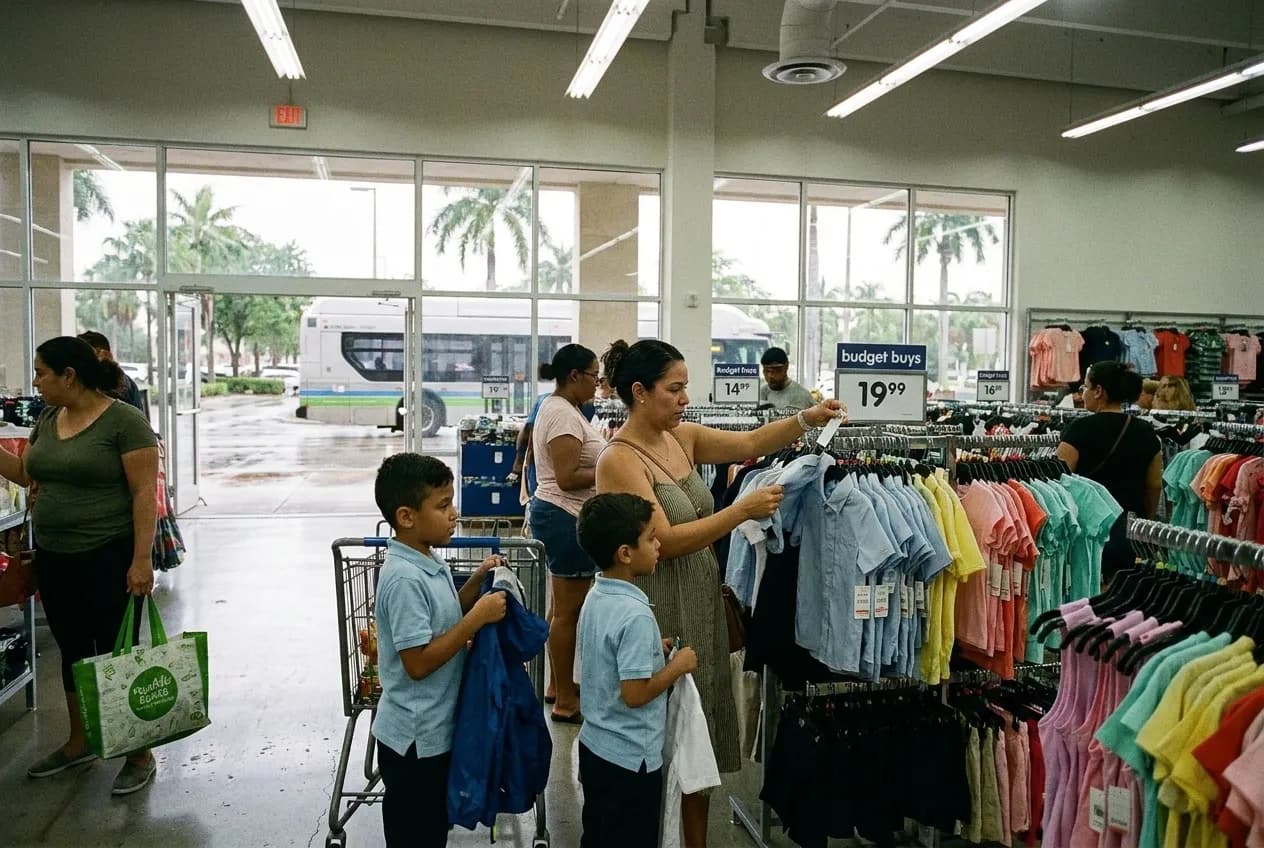
National chains offer predictable pricing structures and frequent promotions—Old Navy's store locator confirms Florida locations and mentions services like Buy Online Pick Up In-Store, with recent promotions advertising jeans sales and extra percentage discounts for online orders over fifty dollars through early August. These retailers excel at volume basics: multipacks of solid tees, uniform-compliant polos, and durable denim at price points that allow purchasing multiple sizes as growing students fluctuate between measurements. The tradeoff lies in limited uniqueness—when twenty classmates own identical khaki shorts, personal style expression depends entirely on accessories, shoes, and the few non-uniform pieces schools permit. For families prioritizing budget predictability and easy returns, chains provide reliable fallback options, though specific Miami store addresses, current inventory levels, and exact local pricing require direct verification since corporate websites rarely guarantee real-time stock.
Local boutiques and regional retailers counter with curated selections that help students stand out within dress code boundaries, offering less common color combinations, regional brands, and pieces that feel distinctive without violating institutional rules. However, these advantages come with narrower size ranges, higher per-item costs, and return policies that may offer store credit rather than refunds—a significant consideration when purchasing for students whose bodies change rapidly during growth spurts. The practical middle ground involves allocating your budget strategically: purchase high-volume basics (undershirts, socks, uniform-required items) from promotional chain sales where per-unit cost matters most, then invest selectively in one or two statement pieces from local sources that express individuality during free-dress days or after-school activities. This hybrid approach maximizes both budget efficiency and personal style, acknowledging that no single retail category solves every back-to-school need.
Transit Routes and Weekend Shopping Logistics
Miami-Dade Transit operates Metrobus, Metrorail, and Metromover services that connect residential neighborhoods to major retail corridors, with the county transportation website offering trip planning tools, real-time tracking through the GO Miami-Dade Transit mobile app, and service alerts that affect weekend schedules. Students shopping with friends rather than parents often rely on these public options, making transit accessibility a practical constraint on which stores become realistic destinations. Metrorail's limited geographic coverage means many suburban retail centers require bus connections that extend total travel time to ninety minutes each direction—a significant investment when comparison shopping across multiple locations. Before committing to a Saturday retail expedition, map the complete door-to-door route including walking segments from stops to store entrances, and check whether return policies require in-person visits to the original purchase location, since a 'convenient' store reached by two bus transfers becomes far less appealing when an exchange is needed.
Weekend shopping timing intersects with both transit schedules and store crowd patterns in ways that affect the entire experience. Metrorail and Metromover begin service at specific morning hours (with occasional modifications for special events), while buses run on weekend frequencies that may mean twenty-minute waits between routes. Arriving at retail locations during mid-morning windows—after opening rush but before afternoon peak—provides better staff availability for sizing questions and fitting room access, yet requires coordinating transit departure times that account for total travel duration. For students planning group shopping trips, establishing a realistic timeline that includes transit buffers, meal breaks, and comparison time across multiple stores prevents the frustration of rushing through decisions or missing return connections. Parents coordinating family shopping should verify whether their preferred stores offer services like BOPIS that allow online browsing and selection before the in-person pickup trip, potentially reducing the time spent navigating crowded aisles with restless children.

Return Policies and the True Cost of 'Deals'
Promotional discounts create urgency that often overrides practical evaluation of whether items actually meet needs, fit properly, or comply with dress codes—a pattern retailers deliberately encourage through limited-time offers and 'extra percentage off' stacking that expires within days. The cardi b old navy search interest exemplifies how viral fashion moments drive traffic toward specific retailers, yet the true cost of any purchase includes the potential need to return or exchange items when they prove unsuitable. Before buying during promotional windows, verify the specific return timeframe (some sales items carry shorter return periods), whether receipts are required (digital or physical), and whether the policy offers refunds or only store credit. For moderate comparison shoppers, a slightly higher per-item price at a retailer with flexible sixty-day returns and full refunds may prove more economical than a steep discount at a store with final-sale restrictions, especially when purchasing for students whose size and style preferences remain uncertain.
The return logistics become particularly relevant for Miami families shopping across multiple locations or using transit. A promotional online order with free shipping over fifty dollars seems economical until you discover the nearest physical store for returns requires an hour-long bus journey, or that return shipping costs effectively negate the original discount. Similarly, purchasing multiple sizes with the intention of returning the non-fitting options works only when return processes are genuinely hassle-free and don't require original packaging that gets discarded during home try-ons. Build return considerations into your initial shopping strategy by prioritizing retailers with in-store return options along your regular transit routes or near other frequent destinations, and photograph receipts immediately since thermal paper fades rapidly in Miami humidity. For group shopping trips, designate one person to track receipts and return deadlines across multiple stores, preventing the common scenario where items become unreturnable simply because the window closed before anyone organized the return trip.
Heat, Humidity, and Fabric Choices That Actually Matter
Miami's August climate—with heat indices regularly exceeding one hundred degrees and afternoon thunderstorms arriving with minimal warning—imposes practical constraints that override purely aesthetic fashion choices. Synthetic fabrics that photograph beautifully often trap heat and moisture against skin, creating discomfort that makes students change clothes immediately after school or avoid wearing items altogether despite their visual appeal. Cotton blends with moisture-wicking properties, lightweight knits, and fabrics with slight stretch accommodate both air-conditioned classroom temperatures and outdoor humidity, though these technical specifications rarely appear in promotional materials or trend discussions. When evaluating any garment, consider the complete daily cycle: morning bus or car ride in air conditioning, outdoor walk from parking to building, fluctuating classroom temperatures, outdoor lunch periods, afternoon dismissal heat, and potential after-school activities. Items that seem acceptable during a brief fitting room try-on may prove miserable during an actual eight-hour school day in tropical conditions.
The rain factor adds another dimension often overlooked during August shopping when focus centers on heat. Miami's wet season extends through November, meaning students need wardrobes that accommodate sudden downpours without requiring complete outfit changes or resulting in dress code violations when white shirts become see-through or light khakis show every water spot. This reality favors darker colors for bottoms, layering options that can be removed if soaked, and fabrics that dry relatively quickly rather than remaining damp through afternoon classes. Backpack and shoe choices intersect with clothing decisions—a perfect outfit loses appeal when the backpack's dye bleeds onto a light shirt during a rainstorm, or when open-toed sandals (if dress code permits) lead to slipping on wet tile floors. For budget-conscious families, investing in one quality water-resistant jacket or compact umbrella that students will actually carry proves more practical than purchasing additional outfit sets to replace rain-damaged clothing, though this preventive cost rarely appears in back-to-school fashion guides focused purely on apparel aesthetics.
Tags: #Miamibacktoschoolshopping #schooldresscodecompliance #budgetfashionplanning #MiamiDadetransitshopping #teenoutfitplanning #humidweatherclothing #retailreturnpolicies #comparisonshoppingstrategies #familyshoppingtrips #studentstyleguide
Sources consulted: Source 1: oldnavy.gap.com · Source 2: oldnavy.gap.com · Source 3: simon.com · Source 4: simon.com · Source 5: miamidade.gov
All trademarks are the property of their respective owners.
Ask Karpo first
Ask Karpo to turn this Miami idea into a current plan for your date, budget, companion, transit preference, and energy level. Karpo can narrow the route and flag what to verify before you go.