The walk to Canarsie Pier begins in a place most people try to leave quickly. You descend into a low-ceilinged concrete underpass beneath the Belt Parkway, where the roar of traffic bounces off hard surfaces and multiplies. The air smells faintly of brine mixed with exhaust. There's no pretense here, no artful renovation or mural softening the transit. It's pure infrastructure, the kind of threshold that urban parkland often requires: a passage through the machinery of the city to reach something quieter on the other side.
The underpass and its acoustics
The underpass itself takes about three minutes to walk through, but the acoustics stretch time. Every footstep echoes, every truck overhead amplifies into a low rumble that feels closer than it is. Locals move through quickly, a practiced clip that avoids lingering in the noise. It's not menacing, just relentless—a reminder that the Belt Parkway was built to move cars, and pedestrians were an afterthought. The concrete is stained and patched, marked by decades of salt and weather.
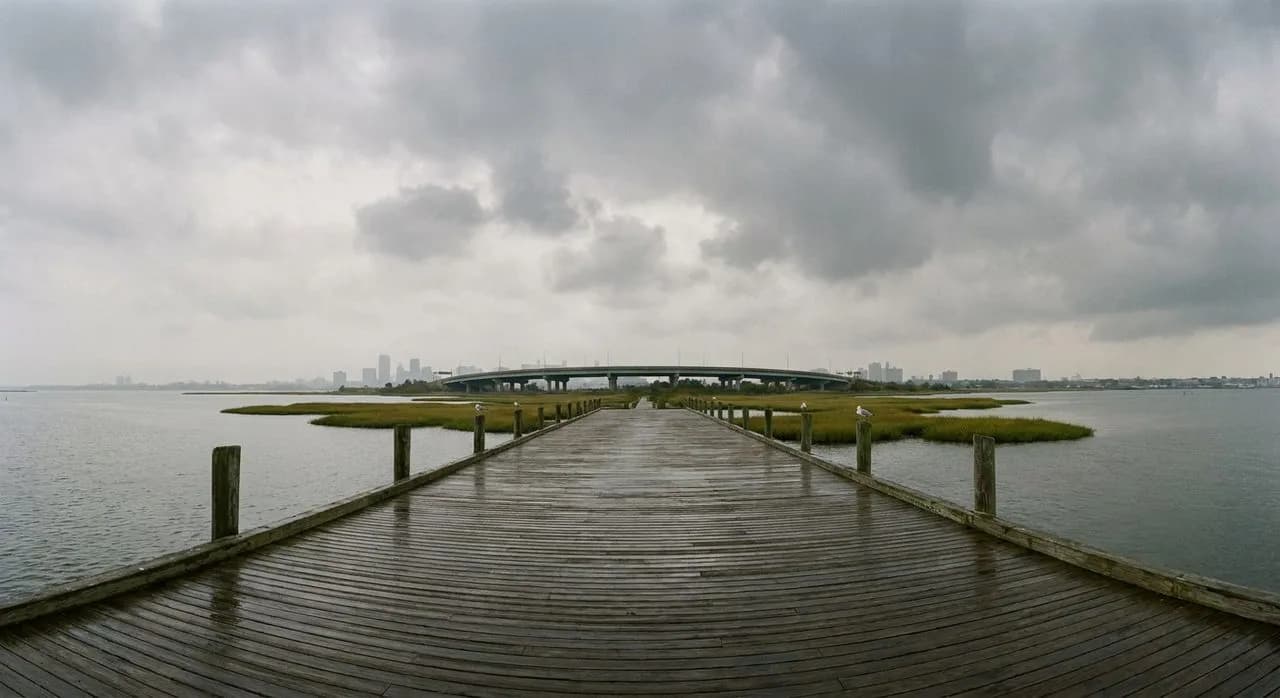
When you emerge on the other side, the shift is immediate. The path opens onto a wooden boardwalk, and the sound softens to wind and water. The pier stretches straight ahead into Jamaica Bay, a long finger of planks that feels improbably peaceful after the tunnel. The contrast is the point. This is one of the free things to do in the city that rewards patience, the kind of walk that asks you to accept an unglamorous entry for the payoff of open sky and marsh.
The pier and its rhythm
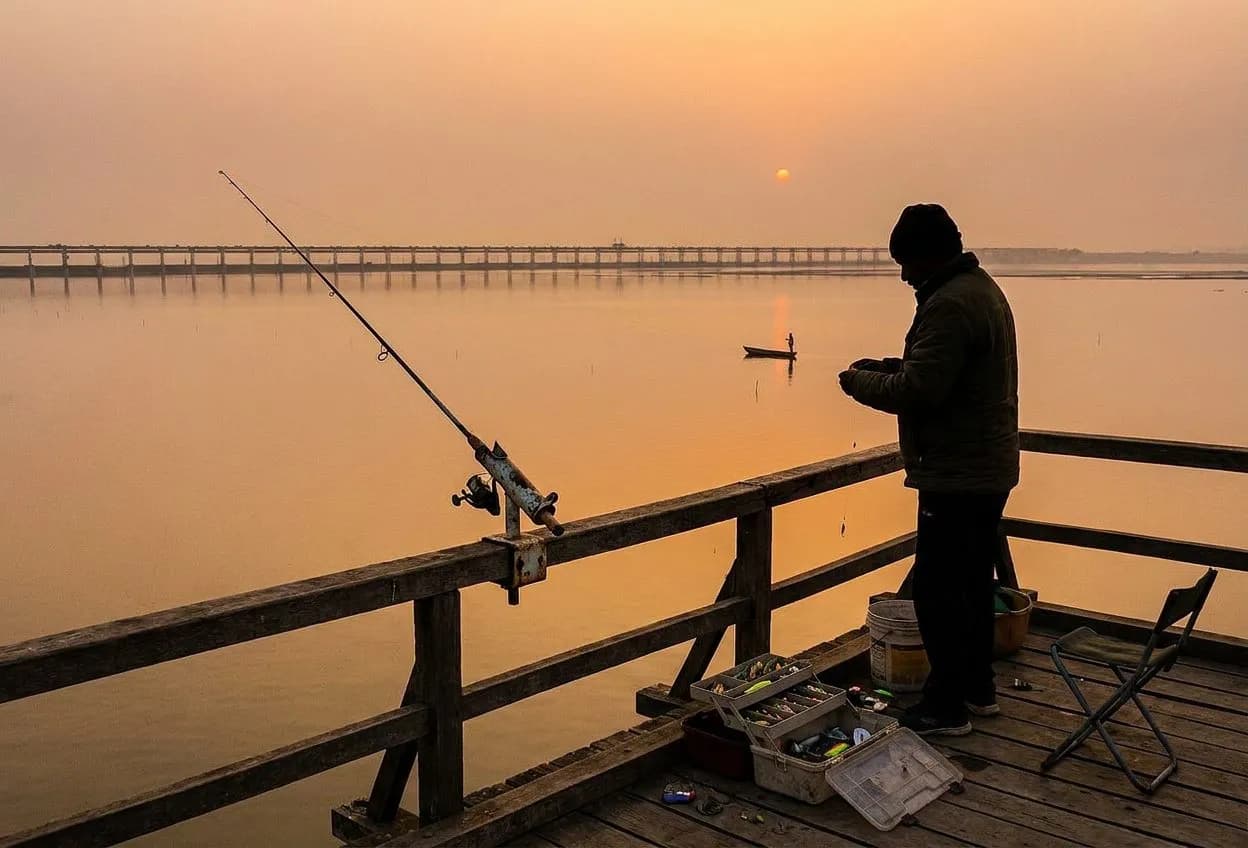
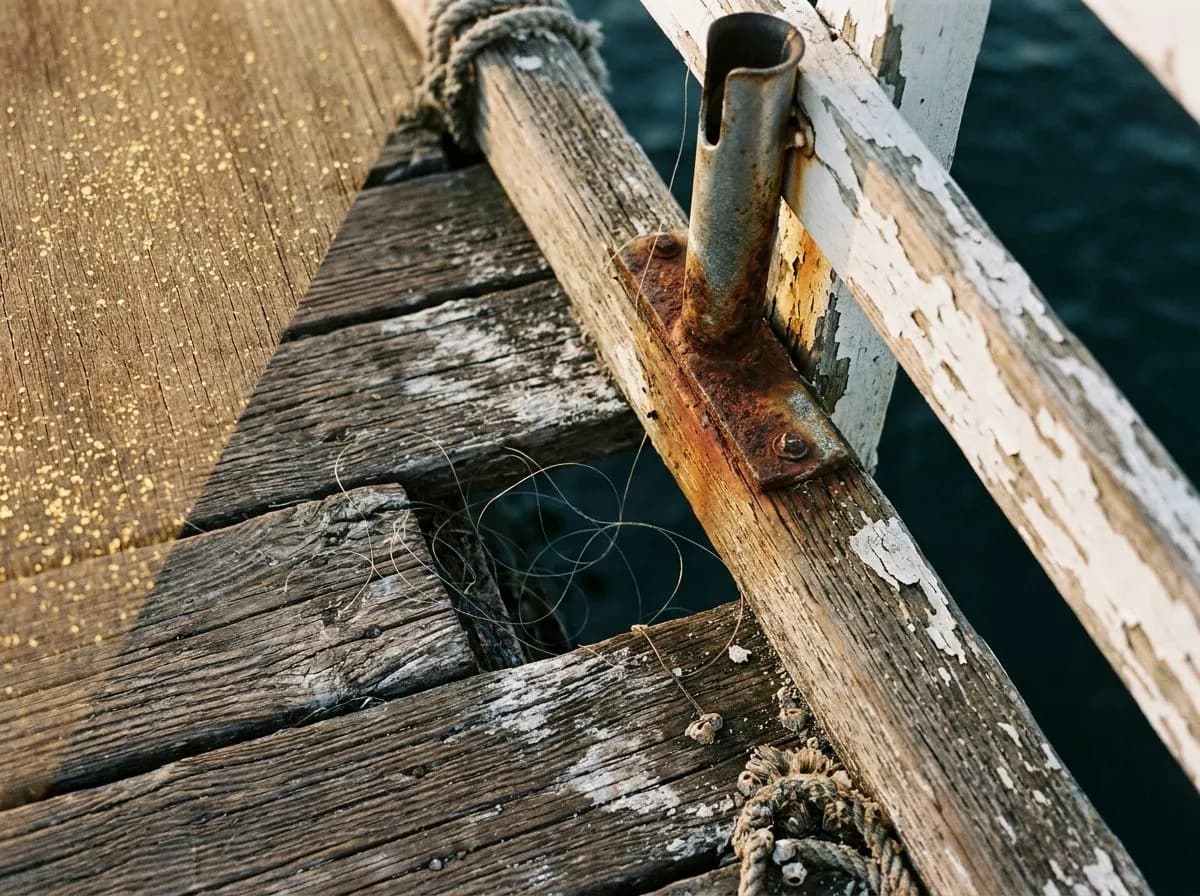
Canarsie Pier is a working pier, not a promenade. Fishing rod holders line the railings, and benches face the water at regular intervals. People come here to fish, to sit, to let time pass without agenda. The wood is weathered gray, splintered in places, functional rather than polished. On weekends it fills with families, coolers, folding chairs, the occasional grill. On weekday mornings it's quieter—retirees, shift workers, people who've found a rhythm with the tides.
The view is flat and wide. Marsh islands dot the bay, low tangles of grass that shift color with the seasons. In late fall, the marsh takes on the muted golds and browns of the season, a palette that stretched to the horizon. Planes descend toward JFK in a steady procession, low enough that you can see the landing gear drop. The water moves slowly, the kind of tidal shift you notice only if you stay long enough to watch a piling go from wet to dry.
Light and the choice of benches
The regulars know which benches to claim, and when. The pier's eastern benches catch morning sun directly, preferred by those who arrive early and want warmth on their backs while the day is still cool. After four in the afternoon, the western side comes into favor as the light shifts and the sun begins its slow descent over Brooklyn. It's an unspoken system, observed more by habit than rule, but you'll notice the migration if you visit at different hours.
The benches themselves are simple wood slats, some with dedications on small plaques, others anonymous. They're spaced far enough apart that you can sit alone without feeling crowded, close enough that conversation drifts between groups on busy days. The light off the water is generous, soft even at midday, diffused by the bay's broad expanse.
The walk from the L train
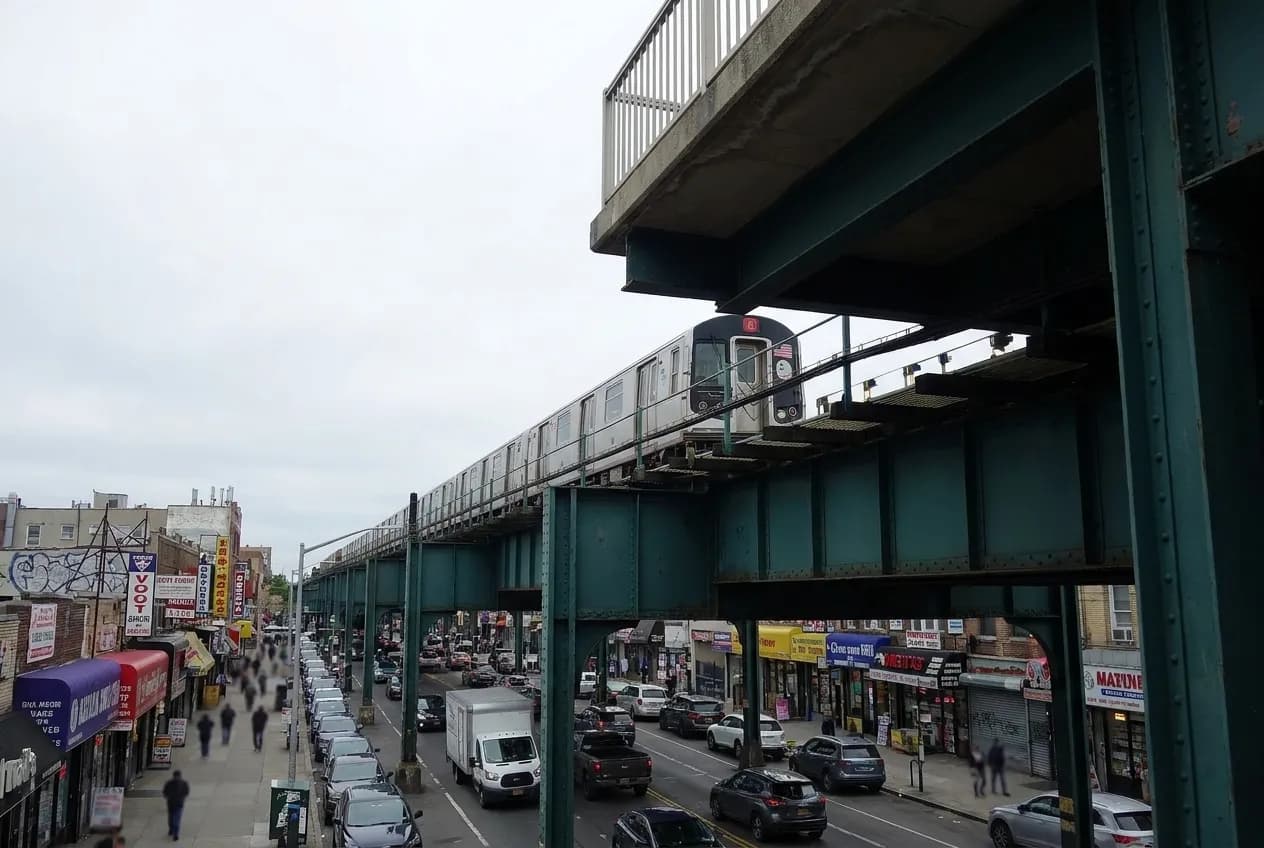
Getting here requires commitment. The closest subway stop is Rockaway Parkway on the L line, but the walk from the station to the pier adds fifteen minutes through residential blocks lined with low houses and chain-link fences. There's no direct sightline to the water during this stretch, no hint of the bay waiting at the end. You navigate by faith and smartphone, past bodegas and parked cars, until the streets dead-end at the park entrance.
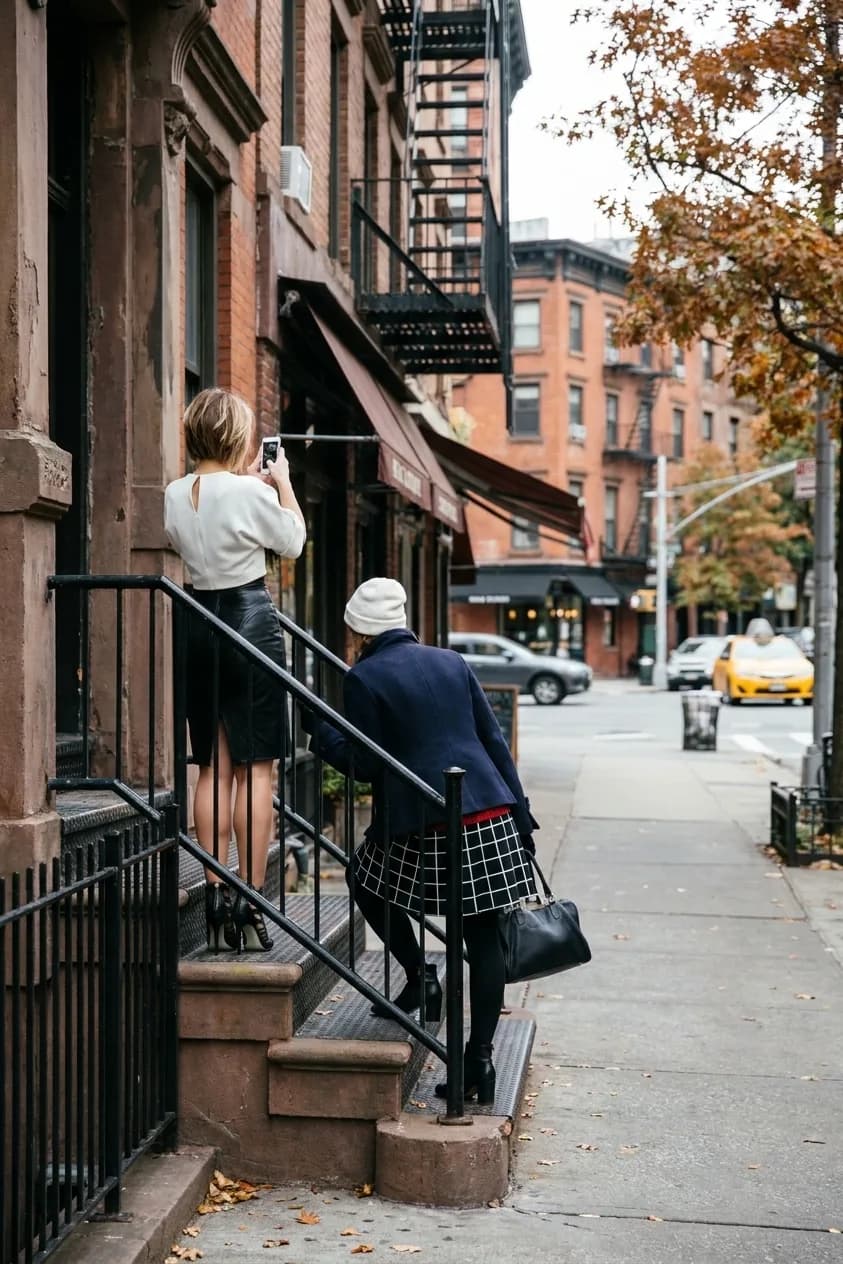
It's a walk that filters out the casual visitor. By the time you reach the pier, you've earned the view, or at least spent enough time getting there to appreciate it. The residential blocks are quiet, lined with trees that soften the grid, and in late 2026 the sidewalks were strewn with leaves, a rustling carpet underfoot.
What the pier offers
Canarsie Pier is a destination only in the sense that it ends at water. The walk itself is the reason to come—the transition from highway shadow to open sky, from noise to the slow rhythm of tides. It's not dramatic. There's no lighthouse, no historic marker, no café at the end selling overpriced lattes. Just benches, water, marsh, and the occasional heron picking its way through the shallows.
The appeal is cumulative. You arrive, you sit, you notice small things. The way the wind carries salt. The way the city feels distant even though it's right behind you. The way the pier's plainness becomes a kind of luxury—space without performance, a public amenity that doesn't ask for anything in return. It's a place to let your attention wander, to read a book between glances at the water, to do nothing in particular and feel no guilt about it.
Who comes here
The pier draws a particular cross-section: longtime Canarsie residents who've claimed it as their own, fishermen with patience and tackle boxes, younger visitors who've read about it online and want to see the edges of Brooklyn, couples looking for a quiet hour away from the apartment. On fall weekends in 2026, you'd see all of them, occupying different sections of the pier, coexisting without much overlap. It's a democratic space, open to whoever makes the trip.
Practical notes
Canarsie Pier is at the eastern end of Canarsie Beach Park, accessible via Belt Parkway service roads. The L train to Canarsie-Rockaway Parkway is the closest subway; exit and walk south approximately 15 minutes. Limited parking is available near the park entrance. The pier is open daily dawn to dusk, though hours vary seasonally—verify before you go. The path and pier are exposed; bring layers, sunscreen, and water. Accessibility is limited: the underpass has no elevator, and the pier surface is uneven wood planking. Restrooms are near the park entrance, not on the pier itself.
Tags: #CanarsiePier #JamaicaBay #BrooklynWaterfront #TheLongWayHome #NYCParks #FreeThingsToDo #LTrainDestinations #BeltParkway #UrbanNature #FallInNYC #NYCHiddenGems #OuterBoroughExploring #QuietPlaces #CityEdges #Fall2026
Sources consulted: Canarsie Pier · Belt Parkway · Jamaica Bay · NYC Parks: Canarsie Pier · Gateway National Recreation Area
All trademarks are the property of their respective owners.