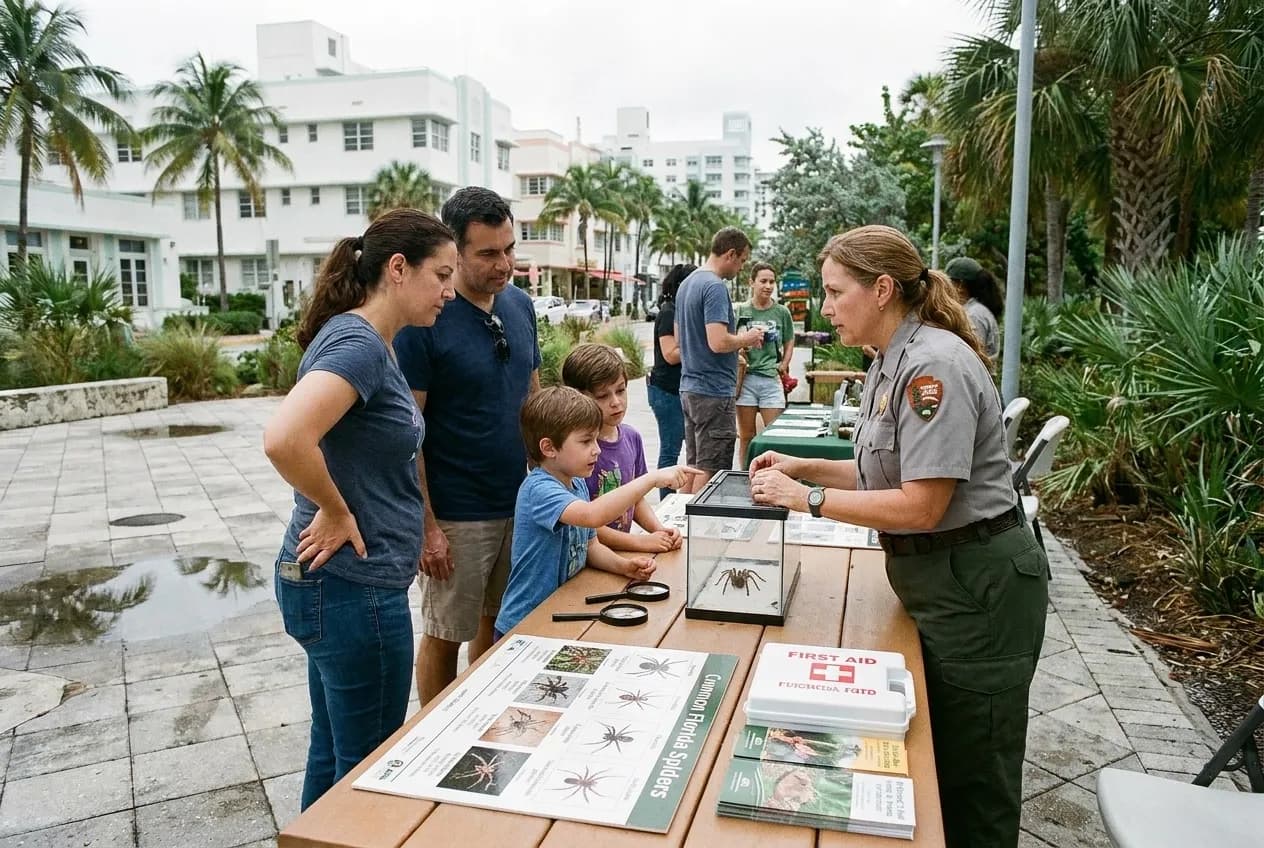
When families gather around campfires in South Florida parks, the risk of campfire spider bites becomes a practical concern that blends outdoor recreation with wildlife safety education. Miami-Dade County's network of more than 200 public parks and nature centers provides the backdrop for free weekend workshops designed to help parents and children identify common Florida spiders, understand bite prevention strategies during outdoor activities, and recognize symptoms that require medical attention. These beginner-friendly sessions typically run on Saturday mornings, offering concerned yet curious families a structured way to build confidence before camping season. The workshops include live spider specimens, visual identification guides, and first-aid demonstrations, though families should verify current scheduling and availability directly with individual nature centers since program dates and locations can shift based on staffing and seasonal demand.
Text Karpo your preferred park location, number of children attending, and whether you want a one-hour session or a full nature-safety series. We'll send a ranked schedule of free spider-identification workshops with registration links and a backup list of downloadable Florida insect guides if in-person sessions are full.

Who Benefits Most from Spider Safety Workshops
These workshops serve families with children who plan to camp, hike, or spend extended time in Miami-Dade parks but lack experience distinguishing harmless spiders from medically significant species. Parents concerned about nighttime encounters near tents or campfire areas find the sessions particularly valuable, as instructors explain which spiders are active after dark and how to inspect gear before settling in. The beginner difficulty level assumes no prior knowledge, making the format accessible to urban families transitioning to outdoor recreation or recent arrivals unfamiliar with Florida's subtropical wildlife.
The family-and-kids companion focus means activities are designed to hold attention spans ranging from elementary age through adult, with live specimens presented in secure containers and identification practiced through laminated field cards participants can take home. Families who prefer structured learning over trial-and-error field experience appreciate the guided format, though the tradeoff is less spontaneous exploration compared to self-directed nature walks. Attendees should consider whether their children respond better to classroom-style presentations or hands-on outdoor discovery when deciding between workshops and independent park visits.

Verification Steps Before Attending a Workshop
Since the Miami-Dade Parks, Recreation and Open Spaces Department manages diverse programs across numerous facilities, families should contact specific nature centers directly to confirm workshop schedules, as the county's general website lists broad program categories but not granular event calendars. The department's main contact at 305-755-7800 can direct inquiries to appropriate nature centers, or families can check the county's online event listings, though these may not capture every location's specialized programming. Requesting accommodation for disabilities requires at least seven days' notice through the county's accessibility coordinator, a step worth planning if family members use mobility aids or need sensory accommodations.
Families should also verify whether workshops require advance registration or operate on a first-come basis, as capacity limits tied to live specimen handling may restrict drop-in attendance. Asking about parking availability at the specific nature center matters for Saturday morning visits, when some parks experience higher traffic from sports leagues and other recreational users. Confirming whether the workshop takes place indoors or outdoors helps families prepare for weather, particularly during South Florida's summer rainy season when outdoor sessions may be relocated or rescheduled.
What the Workshop Format Typically Covers
Instructors usually begin with visual identification of common Florida spiders found in park environments, including species like golden silk orb-weavers, spiny-backed orb-weavers, and wolf spiders that families might encounter near campfire rings or along trails. The focus remains on distinguishing these from the two medically significant species in Florida—the southern black widow and brown recluse—with emphasis on habitat preferences and behavioral cues rather than fearful messaging. Live specimens allow children to observe web patterns, body markings, and movement styles that aid field identification, though handling policies vary by center and species.
First-aid demonstrations address immediate response steps for suspected bites, including wound cleaning, symptom monitoring, and when to seek emergency care versus routine medical follow-up. Instructors clarify that most spider bites cause only minor local reactions, helping families calibrate their concern level while still taking appropriate precautions. The workshop format typically reserves time for questions about specific camping scenarios—such as how to inspect sleeping bags, whether to shake out shoes, and how to minimize spider encounters near food storage areas—making the session practical for upcoming trips rather than purely educational.
Tradeoffs Between Workshop Learning and Field Experience
Attending a structured workshop offers controlled exposure to spider identification without the unpredictability of field encounters, a benefit for families who want foundational knowledge before testing skills during actual camping trips. The tradeoff is that workshop specimens may not perfectly replicate the lighting conditions, web contexts, or surprise factor of real outdoor discoveries, potentially leaving families less prepared for quick decisions when a spider appears near a child at dusk. Some nature educators argue that guided night hikes provide more authentic learning, though these require greater tolerance for uncertainty and may not suit younger children or anxious parents.
The Saturday morning time slot accommodates families with school-age children and working parents, but it competes with youth sports, religious commitments, and weekend errands that fragment family schedules. Families must weigh whether dedicating two to three hours to a workshop delivers enough practical value compared to simply reviewing online identification guides and packing a basic first-aid kit. For those who learn best through expert instruction and peer interaction, the workshop justifies the time investment; for self-directed learners comfortable with digital resources, independent preparation may suffice.
Extending Workshop Knowledge to Camping Trips
After completing a workshop, families can apply identification skills during campsite setup by inspecting firewood piles, checking under picnic tables, and examining tent stakes before anchoring—all common spider hiding spots in Miami-Dade parks. The knowledge helps parents make informed decisions about where to place sleeping areas relative to woodpiles or dense vegetation, reducing nighttime encounters without resorting to excessive pesticide use that nature centers discourage in public spaces. Families should remember that workshops provide baseline competency, not expert-level identification, so photographing any questionable spider for later review remains a sensible backup strategy.
The first-aid skills practiced during workshops translate directly to camping first-aid kits, prompting families to verify they carry appropriate supplies like antiseptic wipes, antihistamines, and ice packs before heading to more remote park areas. Understanding symptom progression helps parents distinguish between normal bite reactions and signs requiring a trip to urgent care, a distinction that reduces both under-response and over-reaction. Families camping in parks with limited cell service should note the location of the nearest ranger station or park office when they arrive, ensuring they know where to seek help if a bite occurs and symptoms concern them despite workshop training.
Tags: #spideridentification #campingsafety #natureworkshops #familyactivities #outdooreducation #Miamiparks #wildlifesafety #firstaid #beginnerworkshops #Saturdayactivities
Sources consulted: Source 1: miamidade.gov · Source 2: miamidade.gov · Source 3: mdpls.org · Source 4: miamibeachfl.gov
All trademarks are the property of their respective owners.
Ask Karpo first
Ask Karpo to turn this Miami idea into a current plan for your date, budget, companion, transit preference, and energy level. Karpo can narrow the route and flag what to verify before you go.