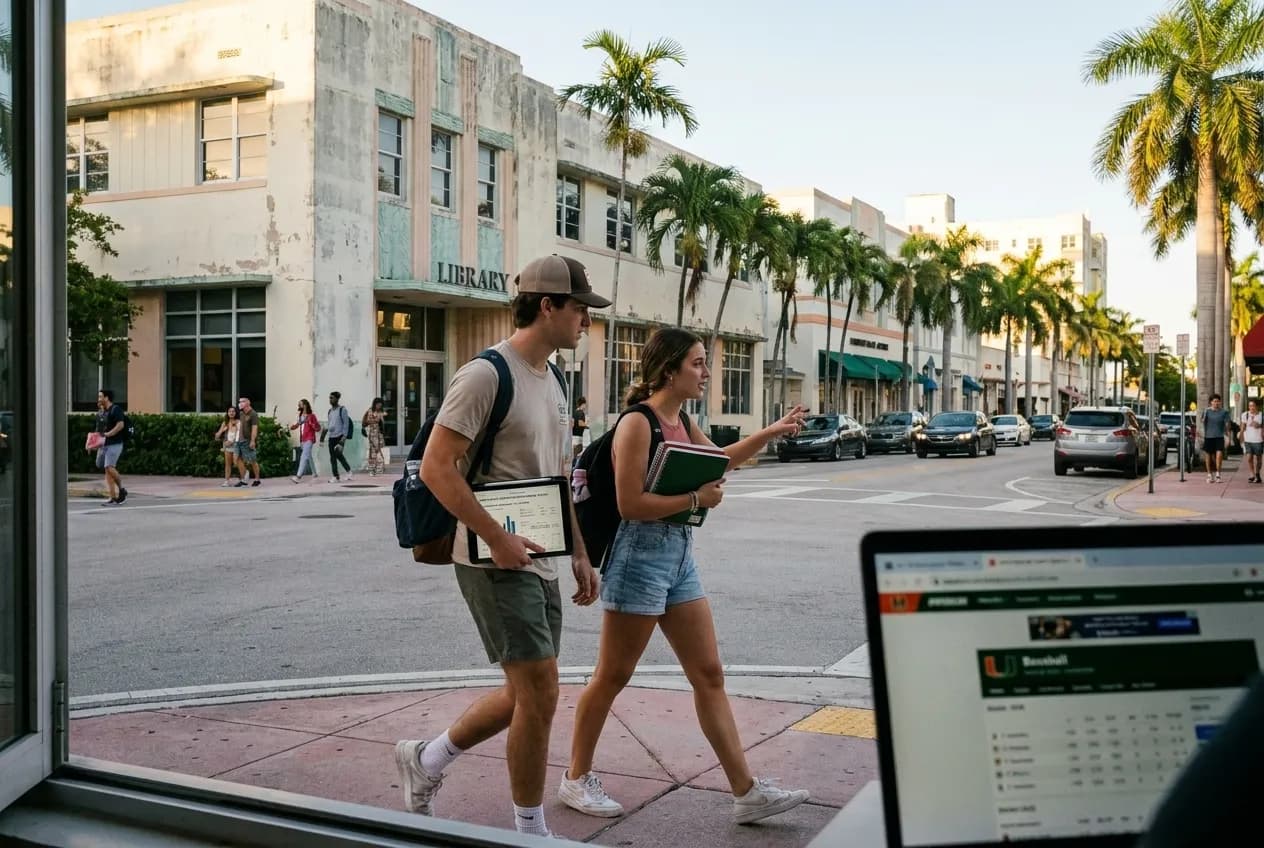
As Miami students prepare fall semester research projects during weekday afternoons with their study groups, verifying prospect information like caleb kilian statistics requires understanding which public databases offer reliable minor league pitcher development data. The decision between school library subscriptions and free MLB resources involves tradeoffs in historical depth, update frequency, and statistical granularity. Student researchers at the beginner level face the challenge of distinguishing between promotional scouting reports and verified performance metrics, making database selection a critical first step before committing to semester-long assignments. Miami-Dade County provides free transit options including Metromover service operating 5:30 a.m. to 10 p.m. seven days weekly, connecting students to library locations and collaborative study spaces across downtown, Omni, and Brickell areas where research verification work happens.
Text Karpo your starting point, timing, group size, and priorities for a Miami plan tailored to this exact situation, with one realistic backup before you leave.

Comparing Free MLB Platforms Against Institutional Database Subscriptions
Student researchers must weigh whether free MLB.com resources provide sufficient historical statistics for academic assignments or if university library subscriptions to specialized baseball databases justify the access complexity. Free platforms typically offer current season data and basic career summaries, while institutional subscriptions may include minor league game logs, pitch-by-pitch data, and historical comparisons spanning multiple organizations. The tradeoff centers on research scope: casual verification projects checking a prospect's recent performance may find free resources adequate, whereas comparative analyses examining developmental trajectories across multiple seasons require subscription database depth.
Miami-Dade Public Library System hosts events and programs that student groups can leverage when determining database access strategies, though specific subscription offerings vary by branch and require direct inquiry. Study groups working weekday afternoons should verify which databases their school library maintains active subscriptions to before assuming access, as institutional licenses fluctuate based on budget cycles. The verification process involves contacting library staff at least one week before project deadlines to confirm login credentials, remote access capabilities, and whether historical minor league statistics fall within subscription coverage or require alternative free sources.

Verification Steps for Minor League Pitcher Development Tracking
Establishing a verification checklist helps beginner student researchers systematically confirm prospect data accuracy across multiple sources before incorporating statistics into academic work. The process starts with identifying which organizations the pitcher has been affiliated with, then cross-referencing performance metrics across at least three independent databases to detect discrepancies in ERA, strikeout rates, or innings pitched. Public databases maintained by MLB and affiliated minor league systems provide official statistics, while third-party aggregators may interpret or calculate advanced metrics differently, creating potential conflicts that require source hierarchy decisions.
Student groups should document which database provided each statistic, noting publication dates and any footnotes explaining calculation methodologies. This documentation trail becomes essential when professors question data sources or when comparing scouting reports that emphasize different performance aspects. The verification difficulty increases for prospects who changed organizations mid-season or played in international leagues before U.S. minor league systems, requiring researchers to decide whether incomplete historical records merit exclusion from analysis or warrant additional investigation through specialized baseball reference sites.
Scouting Report Reliability and Source Hierarchy Decisions
Distinguishing between promotional team content and independent scouting analysis presents a core challenge for students verifying prospect information. Team-affiliated scouting reports often emphasize positive developmental trends and future potential, while independent analysts may provide more critical assessments of mechanical flaws or statistical regression risks. Student researchers must establish source credibility criteria: does the report author have verifiable professional scouting experience, does the analysis include specific game references rather than generalized observations, and does the publication platform maintain editorial standards separating analysis from promotional content.
The hierarchy decision affects which reports students cite as primary sources versus supplementary context in research papers. Beginner researchers working in study groups benefit from collaborative source evaluation, where multiple members independently assess report credibility before the group reaches consensus on inclusion. This verification approach reduces individual bias and helps students articulate why certain scouting perspectives carry more analytical weight than others. Miami students can utilize county park facilities with fitness zones and recreational spaces for in-person study group meetings where collaborative source evaluation discussions happen, though specific park hours and amenities require checking the Parks, Recreation and Open Spaces Department's online park finder tool.
Historical Statistics Access Tradeoffs for Student Assignments
The depth of historical data available through different platforms directly impacts what research questions students can feasibly answer within semester timeframes. Free resources may limit historical access to the past three to five seasons, while subscription databases might offer complete minor league records dating back decades. Student researchers must decide early whether their assignment scope requires comprehensive historical context or if recent performance trends provide sufficient analytical foundation. This decision influences not only database selection but also research question formulation and thesis development.
Tradeoffs extend beyond temporal coverage to include statistical granularity: basic platforms report traditional metrics like batting average against and walks per nine innings, while advanced subscriptions calculate exit velocity, spin rate, and situational splits. Beginner student researchers should assess whether their analytical skills and assignment requirements justify navigating complex statistical interfaces, or if focusing on fundamental metrics through simpler free platforms produces more manageable research projects. Study groups working weekday afternoons benefit from dividing database exploration tasks, with different members testing various platforms and reporting back on interface usability, data completeness, and export functionality for collaborative analysis.
Public Transit Routes to Miami Library and Collaborative Study Locations
Miami students conducting baseball research verification can access library branches and study spaces using Metromover's free service connecting downtown, Omni, and Brickell areas with 21 stations operating 5:30 a.m. to 10 p.m. daily. The system subdivides into three loops—Inner Loop, Omni Loop, and Brickell Loop—with Metromover cars arriving every 90 seconds during rush hours and every three minutes during off-peak periods. Students planning weekday afternoon research sessions should identify which loop serves their destination library branch, noting that Miami Dade College and the Miami-Dade County School Board represent major stops within the system. Priority seating is available at both ends of each car, and the platform digital displays show approaching car destinations.
Study groups preferring outdoor collaborative spaces can utilize Miami-Dade County's network of over 200 public parks, many equipped with fitness zones and family-friendly amenities suitable for informal research discussions. The Parks, Recreation and Open Spaces Department maintains an interactive Park Finder tool helping students locate facilities near transit connections, though specific park hours, available amenities, and permit requirements for group gatherings require verification through the department's contact line at 305-755-7800. Students should plan transit routes accounting for Metromover's modified service periods and confirm library branch hours through Miami-Dade Public Library System resources before committing to specific research session times, as service interruptions and schedule variations affect weekday afternoon accessibility.
Tags: #Miamistudentresearch #baseballstatisticsverification #minorleaguedatabases #scoutingreportanalysis #librarysubscriptionsMiami #MLBfreeresources #studygroupresearch #backtoschoolprojects #prospectdataverification #Miamipublictransit #Metromoverstudentaccess #academicbaseballresearch #MiamiDadelibraries #weekdaystudysessions #researchdatabasecomparison
Sources consulted: Source 1: miamidade.gov · Source 2: miamidade.gov · Source 3: mdpls.org · Source 4: miamibeachfl.gov
All trademarks are the property of their respective owners.
Ask Karpo first
Ask Karpo to turn this Miami idea into a current plan for your date, budget, companion, transit preference, and energy level. Karpo can narrow the route and flag what to verify before you go.