The Bushwick Fermentation Workshop Where Patience, Koji, and Miso Are the Point
Inside a Warehouse Where Mold Is the Main Event
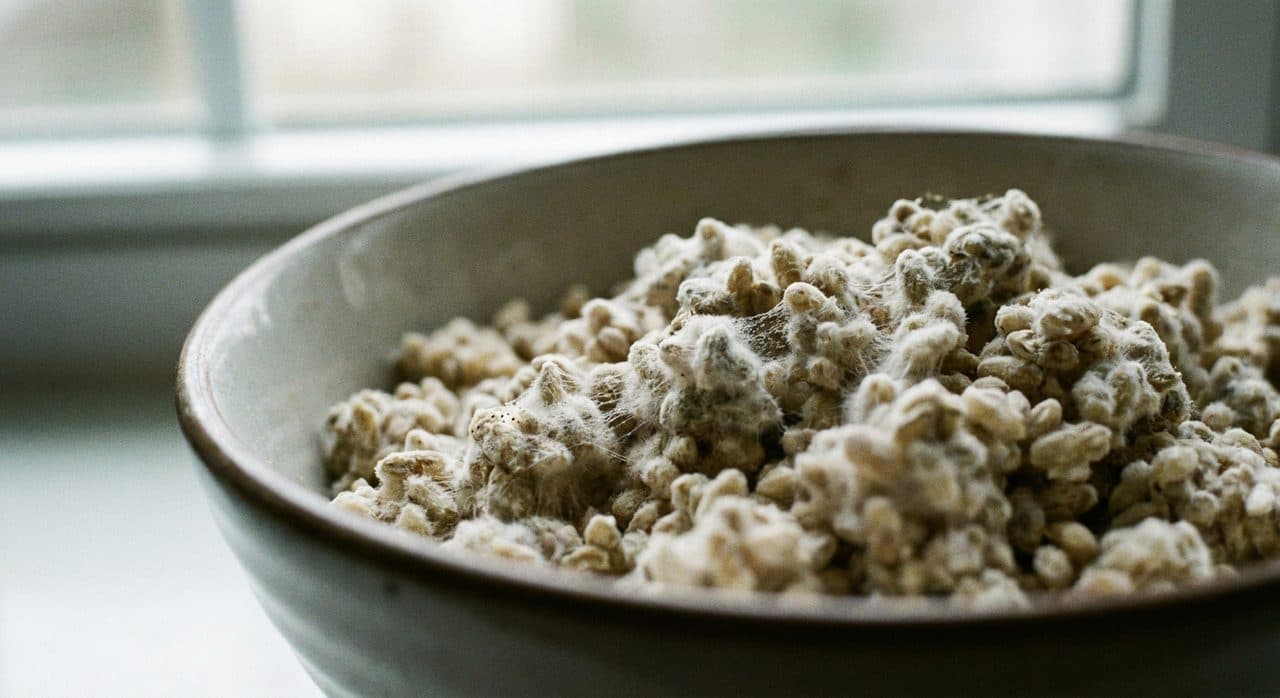
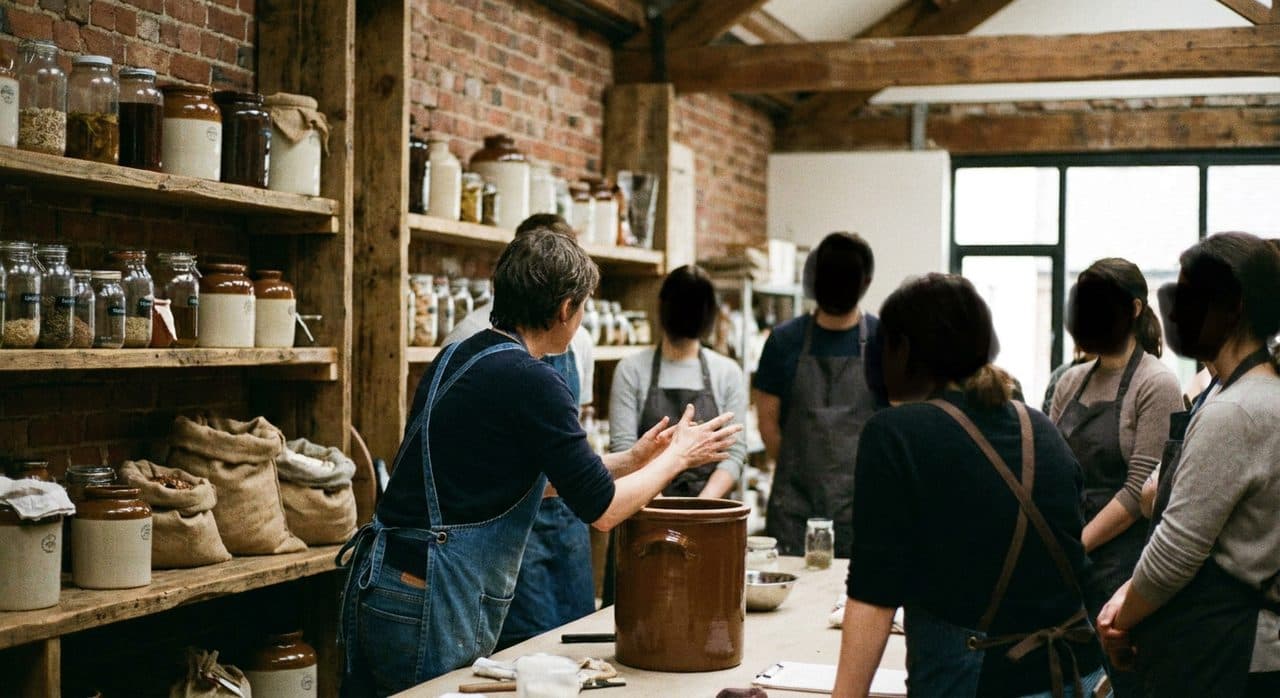
There's a particular smell that greets you when you step into the converted Bushwick warehouse on Troutman Street — something between fresh bread and roasted chestnuts, with an undertone of earthy sweetness that's impossible to place until someone explains it. That's koji, the fungal culture that forms the backbone of Japanese fermentation, and it's been growing here in carefully controlled conditions while most of New York sleeps. The space, stripped down to exposed brick and industrial shelving lined with ceramic crocks and glass jars, operates as both working fermentation lab and teaching kitchen. Monthly workshops draw a mix of home cooks, professional chefs looking to expand their repertoire, and the genuinely curious who've heard whispers about this place through restaurant industry circles or stumbled across it during late-night YouTube spirals about traditional food preservation.
The operation runs lean: one lead instructor with a decade of fermentation experience, a rotating assistant, and a maximum of twelve participants per session. That cap isn't arbitrary. Everyone needs hands-on time with the cultures, and the instructor insists on being able to see what every person is doing with their hands at any given moment. Contamination, after all, is the enemy of good fermentation — and the friend of expensive mistakes.
Where Kyoto Spores Meet Brooklyn Ambition
The koji cultivation portion of the workshop begins with a small glass vial that travels farther than most ingredients in any Brooklyn kitchen. The Aspergillus oryzae spores are sourced directly from a supplier in Kyoto, a company that's been producing starter cultures for over a century. Participants learn to inoculate steamed rice with these spores, working in small batches while the instructor explains the biology — how the mold's enzymes break down starches and proteins, creating the umami depth that defines miso, sake, soy sauce, and dozens of other fermented staples across East Asia.
What makes this workshop different from a cooking class is what you take home. Each participant leaves with a 50-gram starter portion of koji spores, packaged in a CO2-flushed bag that remains viable for up to eight weeks when refrigerated. That's enough to inoculate a full home batch of miso or shio koji, the salt-preserved version that's become a secret weapon in restaurant kitchens for tenderizing proteins and adding depth to marinades. The packaging isn't an afterthought — the CO2 flush prevents oxidation and extends the spores' viability significantly beyond what you'd get from a standard zip-lock bag.
The 30-Degree Room Where Time Does the Work
Behind a heavy door at the back of the main workshop space sits the heart of the operation: a temperature-controlled incubation room maintained at precisely 30°C and 85% humidity. This is where koji cultures spend their 48-hour growth cycle, transforming from inoculated rice into the fuzzy, fragrant mass that fermentation enthusiasts recognize as fully developed koji. The room holds multiple trays at various stages, each labeled with timestamps and batch numbers.
Participants arriving for the afternoon slot at 1pm get a particular advantage here. They're able to observe cultures that were started during the morning session, providing a live illustration of the growth cycle that no amount of reading can replicate. The morning batch, typically six to eight hours into its development, shows the first visible signs of mycelium spreading across the rice grains — delicate white threads that will eventually bloom into the characteristic mold growth. By comparing this to fully mature 48-hour koji ready for harvest, participants gain an intuitive understanding of what they're looking for when they attempt the process at home.
Miso: The Three-Month Commitment You'll Actually Keep
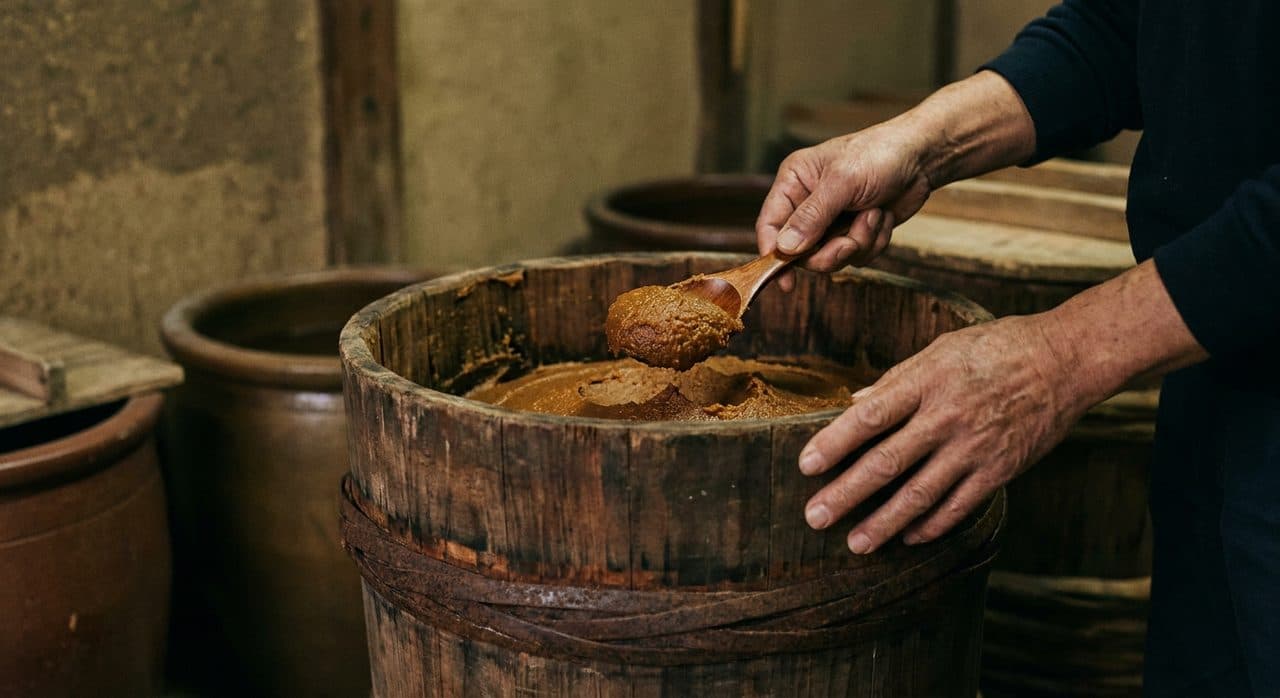
The miso-making portion of the workshop operates on a different timeline than anything else in the modern cooking repertoire. After learning to combine koji with cooked soybeans and salt in the proper ratios, participants pack their mixture into fermentation vessels they'll take home. The instructor is clear about expectations: the miso produced during the workshop requires three to six months of aging at home before it's ready. This isn't a weekend project with instant gratification built in.
What the workshop provides instead is ongoing support for that extended timeline. Participants receive a follow-up email at the 90-day mark with detailed tasting guidance and a troubleshooting checklist compiled by the instructor from years of fielding questions about common home-fermentation errors. The checklist covers everything from surface mold (usually harmless, scrape it off) to off-putting ammonia smells (a sign of protein breakdown from too-warm storage) to the liquid pooling on top (tamari — congratulations, you've made a bonus condiment). This kind of structured follow-up transforms what could be an anxiety-inducing waiting game into a guided process with clear benchmarks.
Lacto-Fermentation: The Gateway Practice
For participants who need something more immediate, the workshop's lacto-fermented vegetable section offers results within days rather than months. Using the same principles that create sauerkraut and kimchi, participants prepare jars of seasonal vegetables — recent sessions have featured kohlrabi, watermelon radish, and Persian cucumbers — in salt brines that encourage beneficial lactobacillus bacteria while suppressing harmful microbes. The science here is more forgiving than koji cultivation, making it an ideal entry point for fermentation beginners.
The instructor frames lacto-fermentation as both a standalone practice and a gateway to more ambitious projects. Once you've successfully fermented vegetables a few times and developed an intuition for how salt concentrations, temperatures, and timing interact, the leap to koji and miso feels less daunting. Several workshop regulars started with the vegetable-focused sessions before graduating to the full koji curriculum, building their confidence and their collection of fermentation vessels along the way.
The Community That Forms Around Waiting
One unexpected byproduct of the workshop's extended timelines is the community that develops among participants. A private online group connects current and former attendees, functioning as both troubleshooting forum and celebration space. Members post photos of their aging miso at various stages, compare notes on koji cultivation in different home environments, and occasionally organize informal tastings when multiple people's batches reach maturity around the same time.
The instructor actively participates in this group, answering questions and occasionally sharing advanced techniques for those ready to move beyond the basics. Recent discussions have covered topics ranging from using koji to make amazake (a sweet fermented rice drink) to experimenting with non-traditional substrates like barley and chickpeas. For a practice that rewards patience, having a community of fellow practitioners makes the waiting more bearable — and the eventual results more meaningful when you have people to share them with.
Practical Notes
The workshop operates out of a converted warehouse space at 234 Troutman Street in Bushwick, accessible via the L train to Jefferson Street (a seven-minute walk) or the M train to Central Avenue (ten minutes). Sessions run on the second and fourth Saturdays of each month, with morning slots beginning at 9am and afternoon slots at 1pm. Each session lasts approximately four hours. Tickets are $185 per person and include all materials, take-home cultures, fermentation vessels for miso, and the 90-day follow-up support. Class size caps at twelve participants, and sessions typically sell out two to three weeks in advance — booking through their website is essential. The space is not climate-controlled beyond the incubation room, so dress in layers during winter months. Street parking is available but limited; the Jefferson Street L station is the most reliable option.
Tags: #BushwickWorkshops #FermentationNYC #KojiCultivation #MisoMaking #FoodWorkshopsNYC #LactoFermentation #BrooklynFoodScene #HandsOnCooking #JapaneseFermentation #SlowFood #CreativeWorkshopsNYC #FoodCrafts #BushwickThingsToDo #CulinaryEducation #LiveCultures
Sources consulted: timeout.com · nymag.com · thrillist.com · eater.com
All trademarks are the property of their respective owners.
Ask Karpo first
Want to know whether the next workshop session has open spots, what equipment you'll need at home to continue the fermentation, and whether beginners without kitchen science experience can follow the process? Ask Karpo for the schedule, a home-fermentation starter kit list, and transit directions to Bushwick before you head out.