The search phrase “burmese python florida spread” is having a moment because South Florida’s invasive snake problem sits at the crossroads of travel curiosity, conservation news, and Everglades trip planning. For New Yorkers flying into Miami, Fort Lauderdale, Palm Beach, or the Keys this summer, the useful question is not whether pythons are “taking over” vacation spots. It is where officials say the established population is concentrated, what visitors are actually likely to encounter, and how to behave if a large snake appears near a road, trail, canal, boardwalk, or rental property. The short version: sightings are possible in parts of South Florida, but official guidance is calm, specific, and centered on distance, reporting, and prevention.
Text Karpo before your South Florida trip if you want a wildlife-aware Everglades plan from NYC that avoids hype and sticks to official guidance. Ask Karpo for a quick checklist of what to save offline before you land.
Where officials say the python population is established
The clearest official map language comes from the U.S. Geological Survey, which says Burmese pythons are distributed across more than a thousand square miles of southern Florida from coast to coast. That area includes Everglades National Park, Biscayne National Park, Big Cypress National Preserve, Francis S. Taylor Wildlife Management Area, Florida Panther National Wildlife Refuge, Fakahatchee Strand Preserve State Park, Collier-Seminole State Park, Rookery Bay National Estuarine Research Reserve, and Crocodile Lake National Wildlife Refuge. For NYC travelers, that means the topic is relevant if your itinerary includes the Everglades, the Upper Keys, Naples-area preserves, Homestead, or canal-side drives west of Miami—not if you are simply changing planes in South Florida.
The South Florida Water Management District says pythons were once more confined to Everglades National Park and Miami-Dade County, but now span much of South Florida, including areas from Monroe to Palm Beach counties and from western Broward County to Collier County. That does not mean every hotel pool, beach, or shopping district is a python zone. It means the regional ecosystem—wetlands, levees, canals, hammocks, and preserve edges—has become the main frame for understanding sightings.
What NYC visitors are actually likely to see
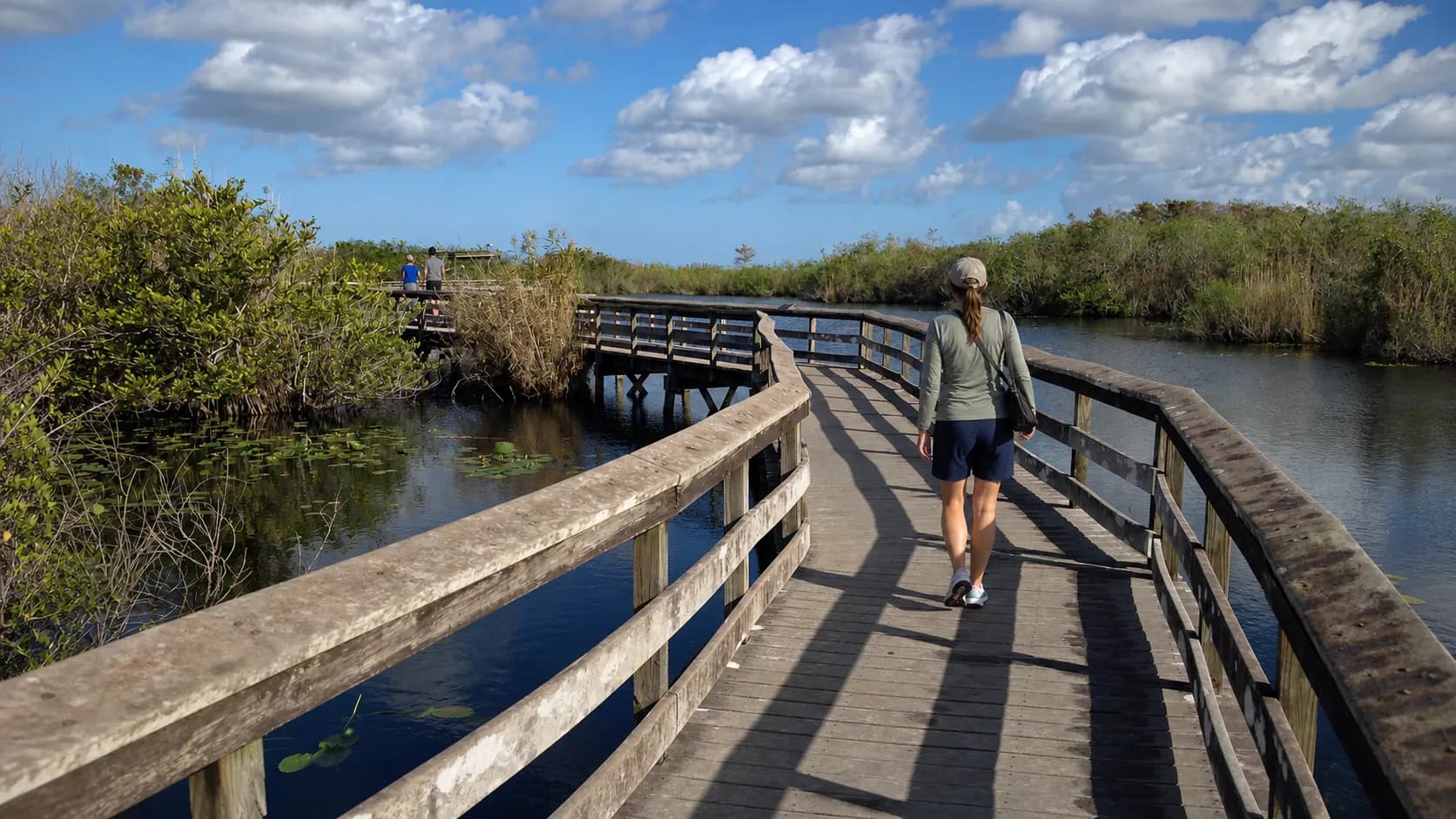
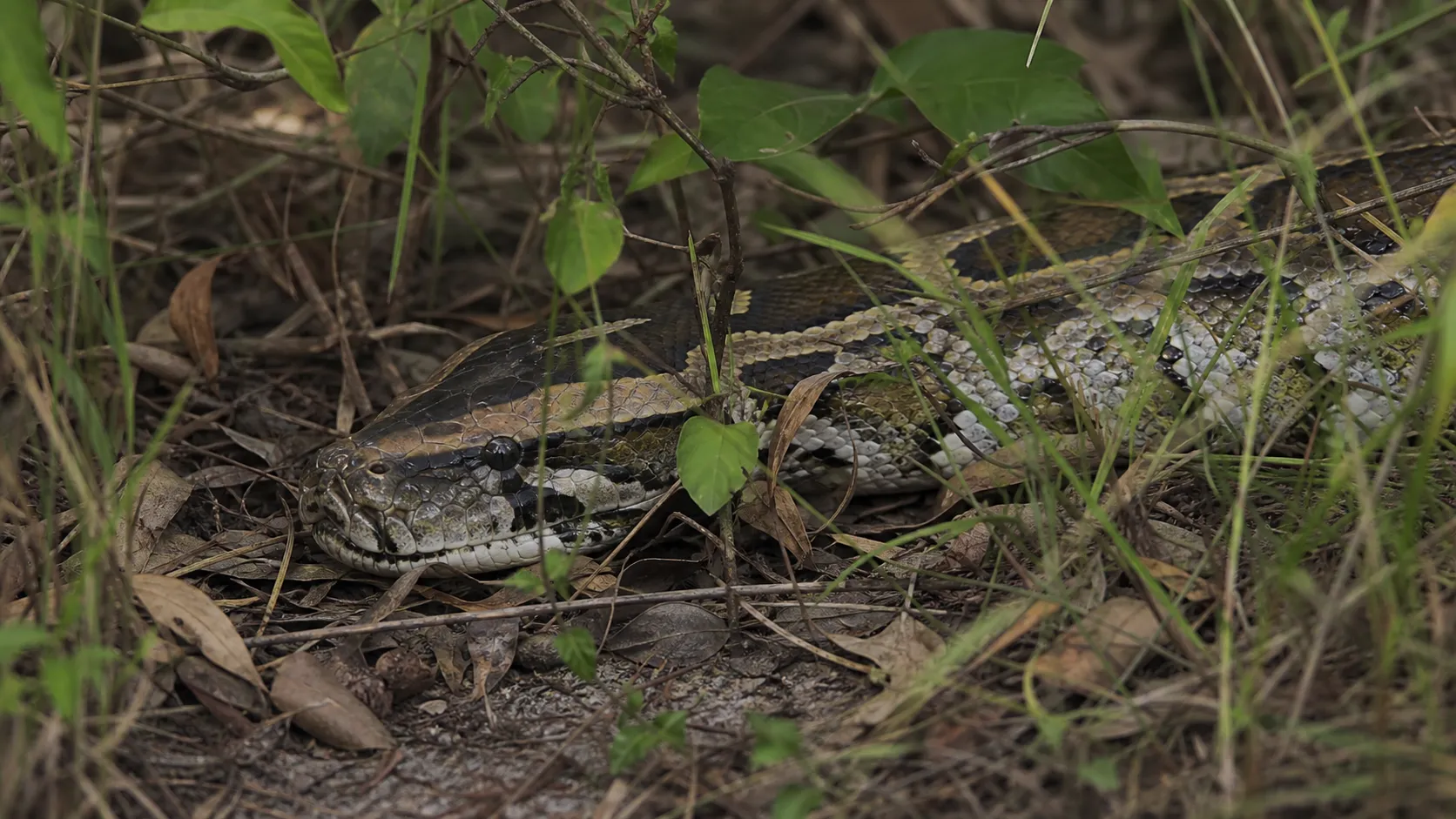
Everglades National Park tells visitors that they are unlikely to see a Burmese python in the wild, even though the snake is the best-known and most problematic nonnative snake in the park. The reason is not that the issue is exaggerated; it is that pythons are secretive, well camouflaged, and difficult to detect. Travelers are much more likely to see alligators, wading birds, turtles, fish, or native snakes on a typical boardwalk stop than a large invasive constrictor posed in the open.
That distinction matters for trip planning. A python sighting is not a theme-park attraction, and chasing one is a poor substitute for a guided naturalist tour. If your group wants Everglades wildlife, choose official visitor areas, licensed tours, and established trails. If your group wants to understand the python issue, visit interpretive exhibits, read agency pages before you go, and ask guides how invasive species are changing mammal, bird, and reptile populations.
Safe behavior if you spot a large snake
The practical rule is simple: do not approach, touch, feed, harass, or try to pose with wildlife. Everglades National Park advises keeping at least 15 to 20 feet from wildlife. That applies whether you are on a boardwalk, beside a rental car, at a marina, or near a canal. If you see a large snake and are not trained to identify it, assume you should back away slowly, keep pets and children close, and give the animal a clear path away from people.
If the snake appears to be a Burmese python, the Florida Fish and Wildlife Conservation Commission asks for observations to be reported to its Exotic Species Hotline at 888-Ive-Got1, or 888-483-4681. Take a photo only if you can do it from a safe distance. Note the exact location as best you can—road name, mile marker, trail, GPS pin, park area, or nearby landmark. Do not block traffic or step into marsh, brush, or water for a better angle.
Why removal is not a tourist impulse activity
Florida does allow removal of Burmese pythons under defined conditions, but official pages make clear that rules vary by land type and program. FWC says pythons may be humanely killed on private land with landowner permission and no bag limit, and on 32 Commission-managed lands under specific rules. The agency also says live transport of pythons is not allowed and pythons must be humanely killed onsite at the time of capture.
That is not casual vacation advice. Identification mistakes can harm native snakes, and improper handling can injure people or animals. The National Park Service’s 2026 Florida Python Challenge rules for Everglades National Park required registered participants to carry official confirmation and an NPS Public Python Agent badge when searching on park property. For most NYC travelers, the responsible action is reporting a sighting, not improvising a capture.
The 2026 Florida Python Challenge has already ended
As of Wednesday, July 22, 2026, the 2026 Florida Python Challenge is over. The official competition page says it ran from July 10 through July 19, 2026. That timing matters because someone arriving from New York this week may see social posts about hunters, training, prize money, and overnight searches, but those competition windows are not open-ended permission slips. Rules, eligible locations, registration requirements, and required training are part of the event structure.
FWC said in its 2026 announcement that Everglades National Park returned as a partner and one of eight official competition locations. The event is intended to raise awareness and remove invasive snakes from public lands, not to send unprepared tourists into remote wetlands. If you are interested in future participation, use official Florida Python Challenge and FWC pages, not viral videos or casual travel forums, to understand eligibility, training, and location rules.
Why agencies focus on ecology more than spectacle
The invasive python issue is serious because of ecological impact, not because visitors face a constant personal threat. A USGS synthesis describes Burmese pythons as established in much of southern Florida’s Greater Everglades Ecosystem and calls the management problem unusually difficult because the habitat is hard to access and the snakes are cryptic and resilient. Everglades National Park says pythons eat mammals, birds, and reptiles, and research links established python areas with sharp mammal declines.
South Florida Water Management District frames removal as Everglades protection. Its program materials say pythons prey on native wildlife, including wading birds, mammals, and reptiles, and reduce prey available to native predators such as panthers, raptors, bobcats, and alligators. For a traveler, that context changes the tone: this is not monster-snake tourism. It is a conservation problem unfolding in one of America’s most unusual wetland landscapes.
What the Keys and coastal routes add to the story
Travelers often connect a Miami or Everglades trip with Key Largo, Islamorada, Marathon, or Key West, so the Keys question is natural. USGS says a number of Burmese pythons have been found on Key Largo and a few in the Lower Keys. Because captive snakes can escape or be released, it can be difficult to know whether an individual snake swam from the mainland or came from captivity on an island. Still, USGS says expansion into neighboring islands is a concern and notes evidence of an established population on Key Largo.
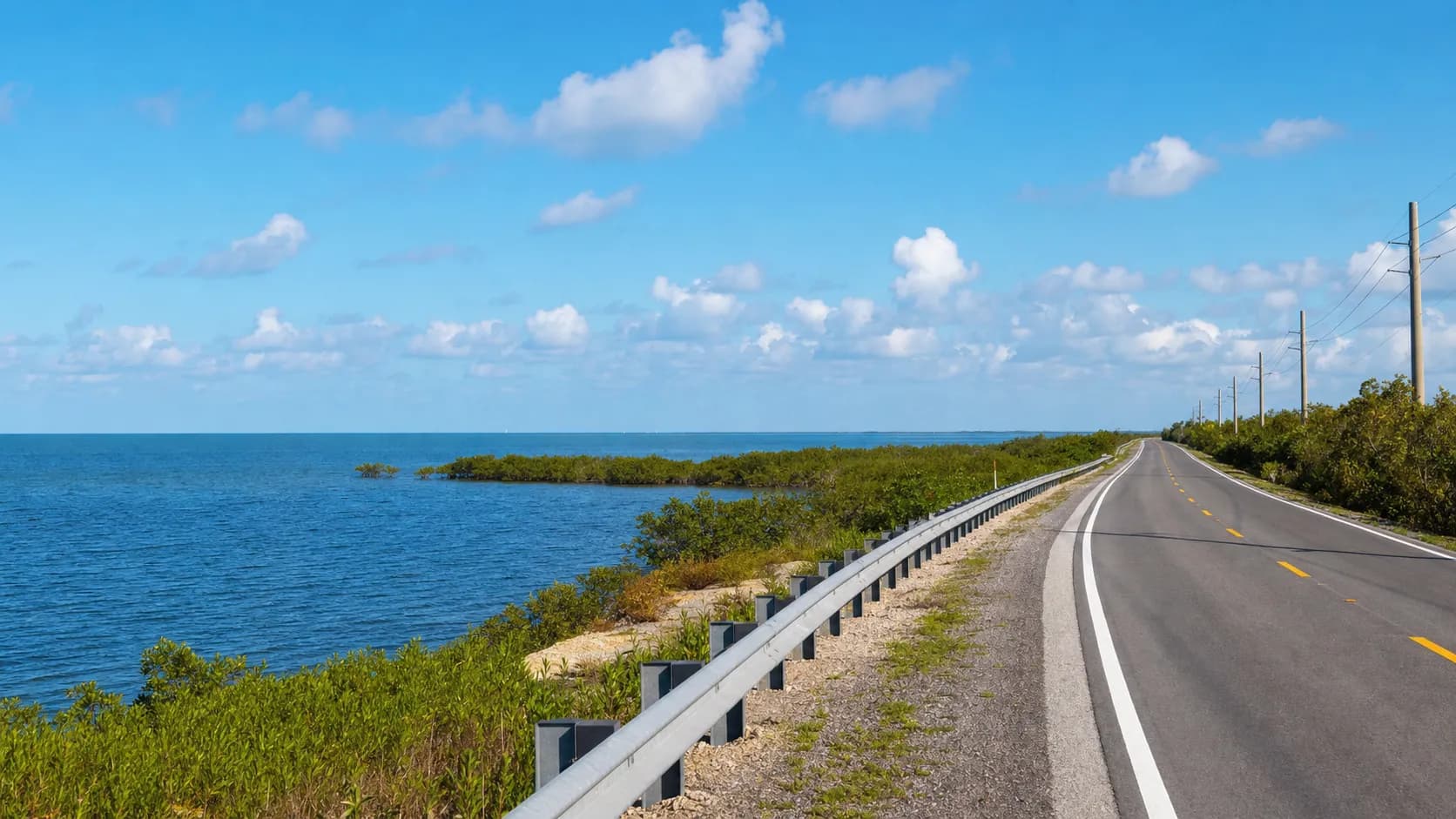
If your South Florida trip includes scenic drives, roadside stops, kayak launches, fishing access, or preserve edges, treat canals and vegetation lines as wildlife habitat. Keep dogs leashed, avoid walking into tall grass at dusk for photos, and be careful when pulling off roads. The best traveler mindset is the same one New Yorkers use around subway tracks or busy bike lanes: stay aware, do not crowd hazards, and let trained responders handle what is not yours to handle.
Practical notes
Practical notes for NYC travelers: before you go, save the FWC Exotic Species Hotline, 888-483-4681, and check the current pages for Everglades National Park, Biscayne National Park, Big Cypress, and any state wildlife areas on your itinerary. Do not rely on old social posts for rules, competition dates, or access points. Wear closed shoes on wetland boardwalks and levee walks, keep pets close, and use a zoom lens rather than stepping toward wildlife. If you see a suspected Burmese python, back away, photograph only from a safe distance, record the location, and report it. Do not transport a live python, do not enter restricted areas, and do not attempt removal unless you are properly trained and operating under the rules for that exact location.
Tags: #BurmesePython #FloridaTravel #NYCTravelers #Everglades #SouthFlorida #WildlifeSafety #InvasiveSpecies #FloridaKeys #MiamiTravel #FortLauderdale #HiddenGemsOddFinds #NatureTravel #Conservation #TravelTips
Sources consulted: Florida Fish and Wildlife Conservation Commission: Removing Pythons in Florida · Florida Fish and Wildlife Conservation Commission: PATRIC python removal program · U.S. Geological Survey: Burmese python distribution in Florida FAQ · U.S. Geological Survey: Burmese pythons in Florida synthesis · National Park Service: Burmese Python in Everglades National Park · U.S. Geological Survey: Burmese pythons and the Florida Keys FAQ · South Florida Water Management District: Python Elimination Program · Florida Python Challenge: 2026 competition information
All trademarks are the property of their respective owners.
Ask Karpo first
Ask Karpo can help turn this into a practical day-by-day plan: which official park pages to check, which family-friendly boardwalks make sense, what to ask a guide before booking, and how to keep a South Florida nature day calm, safe, and memorable without chasing risky sightings.