A phrase like bug fire can make a New Yorker curious, but it should not make anyone cross the city on vibes. Today is Monday, August 10, 2026, and the smarter move is to translate attention into a practical neighborhood plan: where are you actually going, what official page confirms it, how will you enter and exit, and what will you do if the first idea is crowded, closed, delayed, or simply not worth the trip? NYC rewards curiosity, but it punishes loose logistics. This guide does not claim a local sighting, special access, event affiliation, private invitation, endorsement, or guaranteed happening. It treats the search spike as a reminder to plan with public information first.
Want a second set of eyes before you commit to a borough hop? Text Karpo with your starting point, target neighborhood, time window, and backup preference, and ask for a tighter public-route plan.

Translate the headline into a neighborhood question
Start by refusing the most expensive assumption: online attention is not the same as a place-based fact. If you searched bug fire because the phrase is moving around, turn it into a neighborhood question before you turn it into a trip. Are you looking for food, a public attraction, a walkable evening, a museum stop, a park-adjacent plan, or a low-cost activity? NYC Tourism’s public materials frame the city through things to do, eat and drink, maps and guides, events, boroughs, museums, galleries, tours, attractions, shopping, sports, nightlife, and budget activities. That is the right level of planning.
The practical question is not “Where is everyone going?” It is “Which public NYC area fits my actual errand or outing today?” If the answer is dining, note that NYC Restaurant Week Summer 2026 is listed for July 20 through August 16 across all five boroughs, with 2-course lunches and 3-course dinners starting at $30; verify participating restaurants and current details on the official page before building the day around it.
Choose the area by the actual task
Pick the borough because it solves the task, not because it sounds hot. NYC Tourism describes the five boroughs as smaller cities within the metropolis, and that is useful planning language. Manhattan is presented as NYC’s most visited borough, with Broadway, Central Park, and the recognizable skyline. Brooklyn is framed around nightlife and boundary-pushing cuisine, while still having options for all ages. Queens is described as a place of wide-ranging global cuisines and scenic surf. The Bronx is tied to history, culture, hip-hop, baseball legacy, and Little Italy. Staten Island is presented with historic attractions, beach views, global dining, and ferry access.
For a tight plan, choose one borough and one neighborhood cluster inside it. Do not string together a skyline stop, dinner in another borough, and an outdoor backup somewhere else unless your time window can absorb delays. If the goal is culture, NYC Tourism points readers toward museums, galleries, Broadway and performing arts, walking tours, free museums, and arts on a budget. If the goal is food, use the official dining and Restaurant Week pages, then confirm the restaurant’s own availability before moving.
Use transit exits as planning anchors
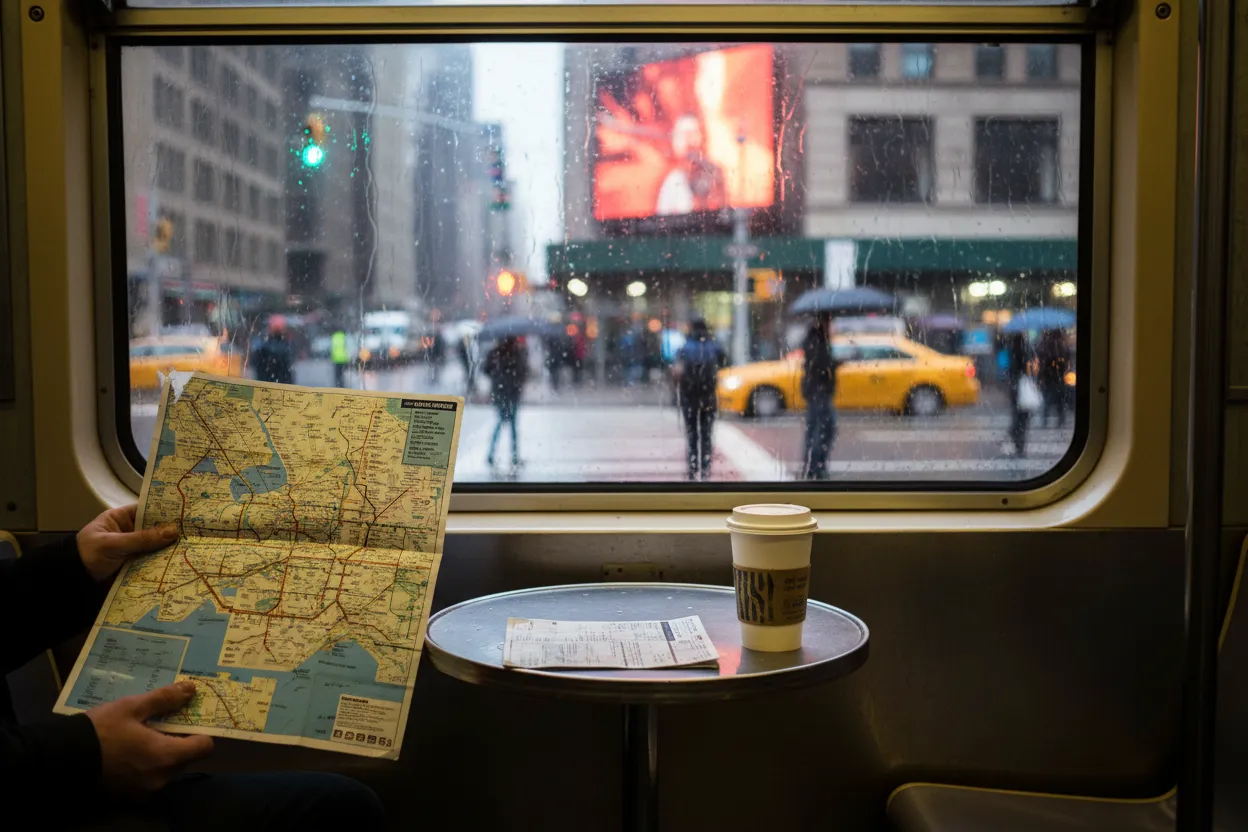
A good NYC plan begins at the exit, not at the attraction. Before leaving, identify the public transit stop, the street exit you intend to use, and the first corner where your group will regroup if the platform or sidewalk is crowded. The official-source extract for the MTA homepage was not available here, so do not treat any route detail in this article as current service information. Check the official MTA source directly before departure for routes, service changes, accessibility details, station notices, and timing.
Once you have the route, build the walk from the exit to the first verified destination. Keep it simple: exit, corner, destination, backup. This matters in Midtown, Downtown Brooklyn, Flushing, the Bronx near major attractions, and ferry-adjacent Staten Island plans because a wrong exit can add confusion even when the trip is technically short. If your group includes kids, older adults, visitors, or anyone who needs elevators or shorter walks, make that the first filter rather than a last-minute accommodation.
Add one indoor and one outdoor backup
Every NYC neighborhood plan needs two backups: one indoors for weather, fatigue, or crowd spillover, and one outdoors for fresh air, pacing, or a quieter reset. NYC Tourism’s official categories make this easy without inventing a secret itinerary. Indoors can mean museums, galleries, Broadway and performing arts, shopping, restaurants, or budget culture activities. Outdoors can mean a walking-tour-style route, a waterfront pause where publicly accessible, a borough stroll, or a park plan after you verify current access on the relevant official source.
Do not rely on parks information without checking it close to departure. The official-source extract for NYC Parks was blocked, so this article cannot confirm park conditions, closures, permits, hours, or amenities. Treat parks as excellent backups only after you verify the official page yourself. For a citywide food plan, Restaurant Week may be useful through August 16, but participating locations, reservations, menus, and availability should be confirmed on the official listing and with the venue.
Avoid treating online attention as a local promise
The phrase bug fire may be timely, but timeliness does not create a public event. Do not assume a celebrity appearance, pop-up, emergency scene, filming location, special installation, restaurant tie-in, brand activation, or neighborhood gathering unless an official source says so. NYC has enough real options that you do not need to chase rumor architecture. Use the attention as a planning hook, then insist on verifiable public information.
This skepticism is especially important in neighborhoods that already carry heavy visitor pressure. Times Square, Broadway-adjacent blocks, major museum corridors, popular food streets, and waterfront viewpoints can feel full even without a special event. NYC Tourism notes that the city has constant energy and a broad supply of sights, attractions, and activities; that abundance is your advantage. If the first block is a mess, move to the verified backup instead of forcing the original plan.

Verify conditions before crossing the city
Run a final five-minute check before you leave: official destination page, official transit source, weather, accessibility needs, reservation or ticket status if applicable, and backup location. If any detail can change, treat it as unconfirmed until you see it on the official page. For events and activities, NYC Tourism directs readers to citywide highlights, annual events, tours, attractions, museums, galleries, nightlife, sports, shopping, and budget options; use those categories as a starting point, not as proof that a specific plan is open right now.
Then decide whether the trip is still worth it. A good NYC outing does not require crossing three boroughs to feel successful. It requires one verified destination, a sensible arrival route, a realistic crowd plan, and a fallback you would actually enjoy. If the official checks are thin, stay closer to your starting point and choose a borough guide, food option, museum, walking route, or low-cost activity that you can confirm today.
Tags: #AskKarpo #BeforeYouGo #NYC #NeighborhoodGuides #BugFire #NYCTransit #NYCPlanning #FiveBoroughs #Manhattan #Brooklyn #Queens #TheBronx #StatenIsland #NYCThingsToDo
Sources consulted: nyctourism.com · new.mta.info · nycgovparks.org
All trademarks are the property of their respective owners.
Ask Karpo first
Ask Karpo first when a phrase is moving fast but the facts are not. Send your starting point, borough preference, time window, mobility needs, and one must-do. Karpo can help turn the noise into a verified NYC plan before you spend the fare, the hour, or the patience.