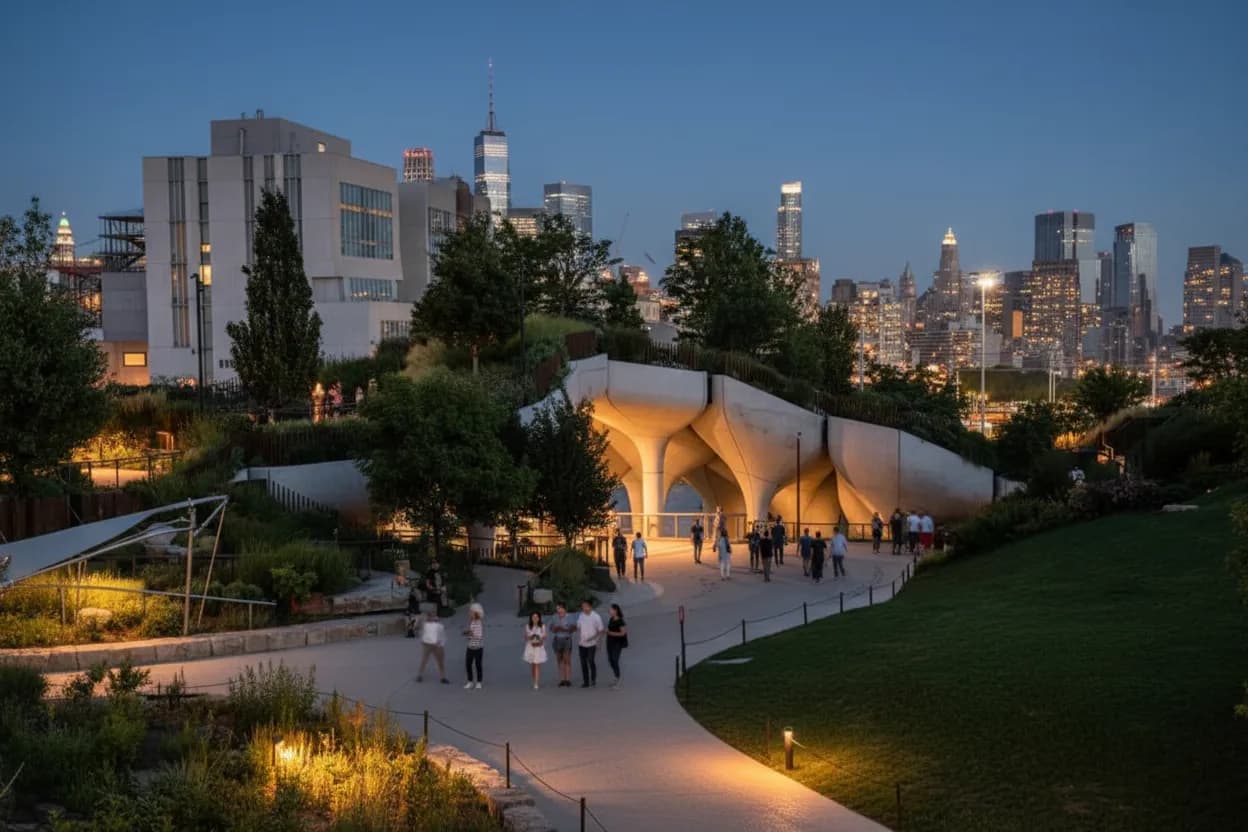
bryce eldridge: A Quieter NYC Culture Route is not a promise that a person, team, broadcaster, or event is waiting for you in New York. Treat the phrase as a reminder that search spikes can be useful without becoming a scavenger hunt. NYC already has plenty of public culture worth your time: official visitor resources point to museums, galleries, walking tours, budget activities, baseball guidance, LGBTQ+ landmarks, Harlem arts institutions, and Brooklyn history. The better move is to use the attention around bryce eldridge to build a low-drama city plan: one primary odd-find stop, one calmer backup, a transit check before leaving, and a rule that no unverified appearance, private address, or social-media rumor gets to control your day.
Want a tighter version for your exact borough, time window, and mobility needs? Text Karpo before you leave, and ask for a verified odd-finds route with a backup built in.

Use the headline to open a more curious detour
The useful way to read a headline like bryce eldridge in NYC is not, “Where can I find him?” It is, “What public city experience can I attach to this moment without inventing facts?” NYC Tourism’s own public-facing materials make that easy because they frame the city as five boroughs of attractions, activities, arts, nightlife, sports, food, walking tours, budget options, and neighborhood histories. That is enough to build a route without pretending a celebrity search term equals a local sighting.
Start by deciding what kind of odd find you actually want. If the search hook came from baseball interest, NYC Tourism has an “NYC Baseball 101” article for people heading to the ballpark. If your curiosity is more cultural than athletic, the same official source points readers toward museums and galleries, free museums, arts and entertainment on a budget, LGBTQ+ landmarks, and neighborhood itineraries. Keep the hook small and the plan public.
A practical timing rule: do not let a trending phrase consume your first hour in the city. Pick a two-to-three-hour window, check official pages before departure, and decide in advance when you will abandon a plan if entry rules, crowd conditions, or transit look wrong. NYC rewards people who pivot early.
Choose a place with a real point of view
For a hidden-gems-and-odd-finds route, choose a stop that has a documented civic or cultural purpose, not just a photogenic doorway. One strong candidate from the official NYC Tourism extracts is the Lesbian Herstory Archives, described as a 50-year-old Brooklyn institution that works to preserve lesbian history. That gives the stop a real point of view: memory, preservation, and community history rather than generic “cool NYC” atmosphere.
Because the extract does not provide current hours, admission procedures, location details, or visitor policies, treat every operational detail as unconfirmed until you check the archive’s own official page. Your plan should include a “go/no-go” moment before you board transit. Confirm whether visitors are being received, whether appointments or special instructions apply, and whether any collections access is limited. If you cannot verify those basics, do not show up expecting entry.
This is where local literacy matters. Archives are not theme parks, and community history spaces are not props. Go because the institution’s mission interests you. Build in time to read, listen, and slow down. If your only goal is to chase a search phrase, pick a broader public museum or walking route instead.
Look for materials archives or hands-on details
The oddest NYC stops are often not odd because they are obscure; they are odd because they ask you to pay attention to material traces. Archives, neighborhood cultural centers, old family businesses, historic landmarks, and locally rooted food corridors all work this way. NYC Tourism’s current public materials point to Chinatown’s multigenerational family businesses, LGBTQ+ landmarks, Harlem arts institutions, cultural institutions in Prospect Heights and Crown Heights, and articles about the city’s timeline and cultural movements.
If you choose the Lesbian Herstory Archives as your primary stop, make your checklist concrete. Before going, verify current visitor access on the official page. On site, follow posted instructions, keep your voice low, and look for the difference between exhibition material, research material, and private working areas. If staff or signage says a collection, room, or document is not available, that is the answer for the day.
If you prefer a less access-sensitive route, use NYC Tourism’s “Founded By NYC” and “From Times Square To The World” materials as a public-facing framework. The extract describes the latter as subway-accessible stories about groundbreaking cultural movements, creative cuisines, and revolutionary ideas starting from Times Square and reaching every borough. That can become a self-guided culture day without depending on a single doorway.
Pair the odd stop with a calmer second option
Every verification-first route needs a backup that is not a consolation prize. If your Brooklyn archive plan cannot be confirmed, shift to a broader official category: museums and galleries, free NYC museums, arts and entertainment on a budget, or cultural institutions in Prospect Heights and Crown Heights. Those categories appear in NYC Tourism’s public materials and give you a way to stay in the culture lane without forcing access where it may not be available.
Another calmer second option is Harlem. NYC Tourism lists “Curated In Harlem” as an itinerary exploring 10 arts institutions and cultural centers in Uptown Manhattan’s historic neighborhood. The extract does not name all stops or guarantee hours, so use it as a direction, not a schedule. Verify the itinerary and each institution’s current entry details before committing to the trip.
For food timing, the current official tourism extract notes NYC Restaurant Week Summer 2026 running from July 20 through August 16, with two-course lunches and three-course dinners across all five boroughs starting at $30. Since today is Wednesday, August 12, 2026, that window is still current according to the extract, but restaurant participation, reservations, menus, and availability should be checked on the official page before you build a meal around it.
Respect access photography and privacy rules
The fastest way to ruin a quiet culture route is to treat public-interest spaces like private-content sets. Do not photograph staff, visitors, researchers, residences, documents, or restricted areas unless the official rules allow it. The available extracts do not state photography policies for the Lesbian Herstory Archives, Harlem institutions, museums, or other stops, so assume you need to verify and follow each site’s current posted guidance.
This also applies to the search hook. Do not ask staff whether bryce eldridge is nearby, whether someone famous visited, or whether they can confirm private information. The premise of this route is public culture, not proximity chasing. If a site has no stated connection to the phrase, do not manufacture one in conversation, captions, or reviews.
Crowd risk is not just about big attractions. A small archive, neighborhood business, or cultural center can feel crowded with only a few extra people. If the space is tight, keep bags close, step aside for regular users, and leave if your presence starts to interfere with the place’s normal function.
Verify current entry details
Your final checklist should be short and strict. First, open the official page for your primary stop and confirm whether it is open to the public today, whether appointments or tickets are required, and whether any access limitations are posted. Second, check the official MTA source for current subway or bus routing before leaving; the provided extract for the MTA page does not supply route details, so do not rely on memory or old screenshots.
Third, confirm your backup before you need it. If you are using NYC Tourism’s museum, gallery, budget, Harlem, LGBTQ+ landmark, or neighborhood-culture materials, click through to the current official listing and then to the institution’s own page where available. Official tourism pages are useful starting points, but day-of rules belong to the operator.
Fourth, decide your crowd threshold. If a line, closure, security instruction, weather issue, or access rule changes the character of the visit, switch plans. A good NYC odd-find day is not measured by how much you force into it. It is measured by whether you saw something public, specific, and real without leaning on rumor.
Tags: #bryceeldridge #NYCHiddenGems #OddFindsNYC #BrooklynCulture #NYCArchives #LesbianHerstoryArchives #HarlemArts #NYCBudgetCulture #NYCItinerary #PublicAccess #TransitCheck #CrowdRisk #AskKarpo #BeforeYouGo
Sources consulted: nyctourism.com · new.mta.info · nycgovparks.org
All trademarks are the property of their respective owners.
Ask Karpo first
Ask Karpo first if your plan depends on an opening time, a special exhibition, a transit transfer, or a rumored appearance. The safer request is simple: “Build me a public NYC culture route with one verified primary stop, one backup, and no hype.”


