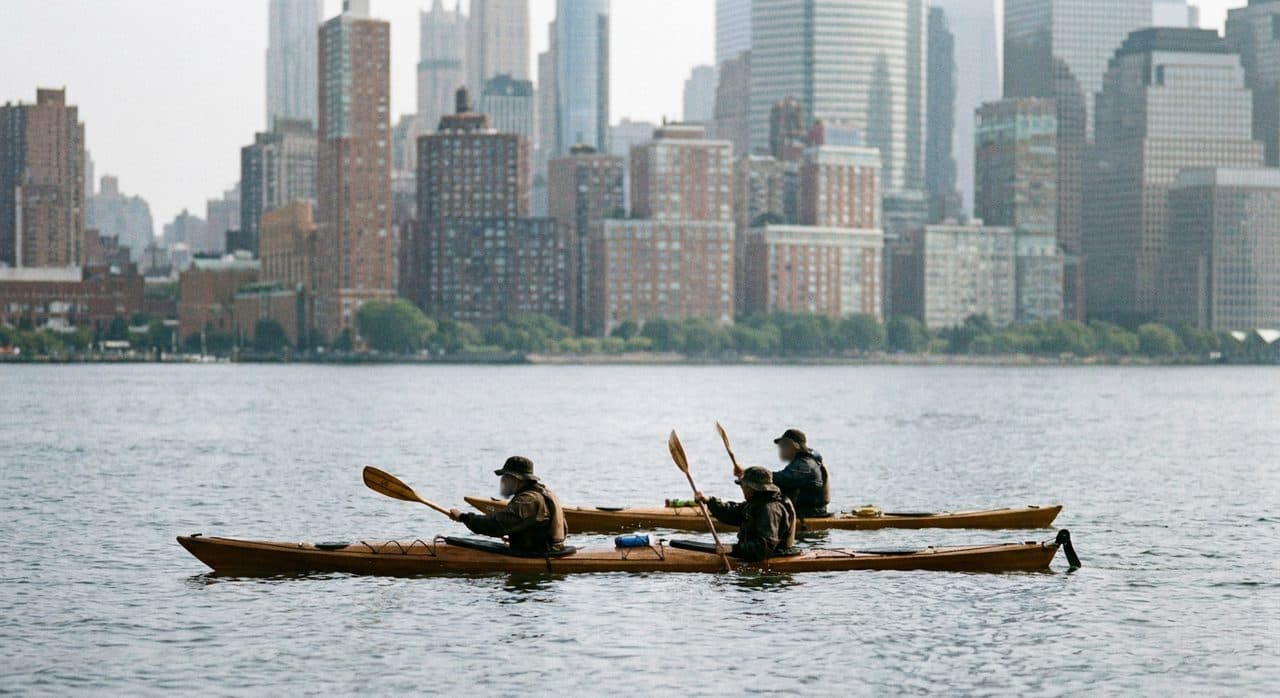
Brooklyn Urban Kayaking: How to Get on the Water for Under $30 This Summer
The city's waterfront revival has given New Yorkers something previous generations couldn't imagine: the ability to paddle through one of the world's busiest harbors without owning a boat, joining an expensive club, or driving to the Adirondacks. Brooklyn's coastline now hosts three distinct kayaking access points, each with its own character, community, and quirks. Between volunteer-run boathouses, member-operated canoe clubs, and commercial rental outfits across the river, getting onto the water costs somewhere between nothing and twenty-eight dollars—depending on where you launch, when you show up, and whether you understand the tides.
The Free Option Everyone Knows About (And Why the Wait Is Worth It)
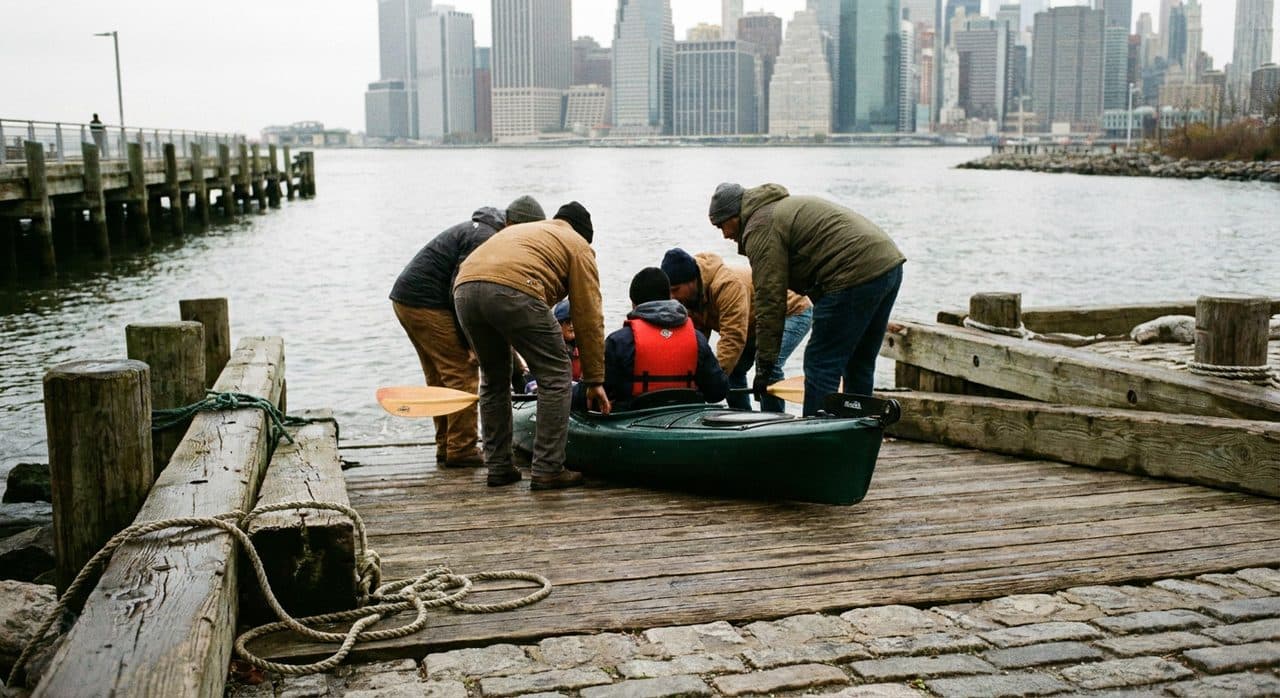
Brooklyn Bridge Park Boathouse has become the city's most accessible entry point to recreational paddling, operating out of a modest facility at Pier 2 that belies the scale of its operation. The boathouse offers free kayaking with no registration required on Friday evenings from 5pm to 6:45pm and Saturday and Sunday mornings from 9am to 1pm, running continuously from late May through mid-September. Sessions last twenty minutes each—long enough to get comfortable with a paddle, short enough to keep the line moving.
The operation runs entirely on volunteer labor, which gives the experience a distinctly communal feel that commercial rentals can't replicate. Experienced paddlers in worn drysuits help nervous first-timers into sit-on-top kayaks, offer quick technique tips, and maintain a cheerful efficiency that keeps dozens of people cycling through the water every hour. Summer weekend waits typically run twenty to thirty-five minutes, though arriving within the first half-hour of a session cuts that time considerably. Friday evenings tend toward shorter lines and better light, with the Manhattan skyline catching golden hour as you paddle beneath the Brooklyn Bridge's stone arches.
The protected embayment at Pier 2 keeps conditions manageable for beginners, though the occasional wake from passing ferries adds a gentle reminder that this is a working harbor. Bring a phone in a waterproof pouch for photos, but leave valuables minimal—the boathouse provides life jackets but no lockers.
Jamaica Bay's Hidden Rookery and the Club That Guards It
Sebago Canoe Club occupies a different universe from the Instagram-friendly waters of DUMBO. Located in Canarsie at the edge of Jamaica Bay, this member-operated club has maintained a low-key presence since 1933, focusing on paddling culture rather than social media clout. For non-members, the club hosts public paddle-share sessions on the second and fourth Sunday mornings of each month, offering access to waters that feel genuinely wild despite sitting within city limits.
The site faces Jamaica Bay's marshy expanse, and the standard route passes through a great blue heron nesting area accessible only from the water side—a rookery completely invisible from any road or walking trail. Paddlers who time their visit during nesting season (roughly April through July, with fledglings appearing in June) can observe dozens of herons tending nests in the low trees, their prehistoric silhouettes unmistakable against the morning sky. The club asks participants to maintain distance from the nesting sites, and experienced members typically lead groups along routes that balance wildlife viewing with habitat protection.
Getting to Sebago requires commitment: the B42 bus from the Rockaway Parkway subway station drops you close, but the final approach involves navigating an industrial stretch of Paerdegat Basin. The remoteness filters out casual visitors, leaving a community of dedicated paddlers who treat the bay as their backyard. Expect a more instructional atmosphere than Brooklyn Bridge Park, with club members genuinely invested in teaching proper stroke technique and water safety.
Understanding the East River's Tidal Personality
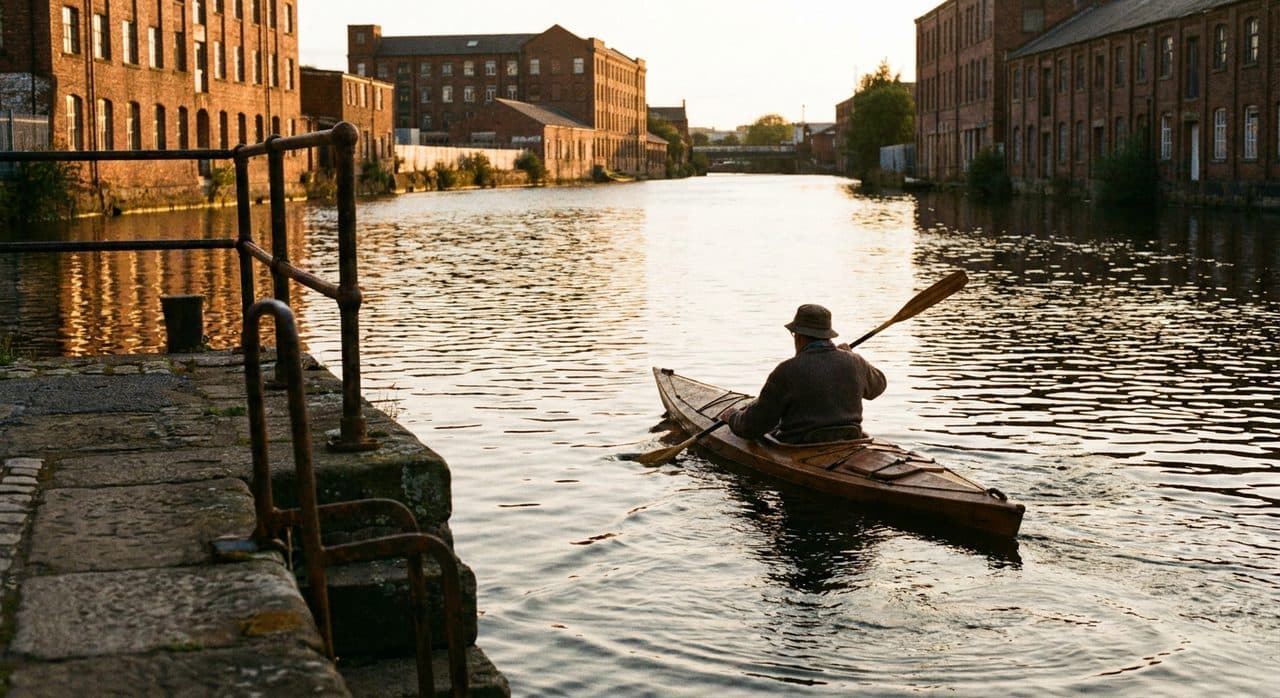
The East River isn't actually a river—it's a tidal strait connecting Upper New York Bay to Long Island Sound, and its currents can exceed four knots during peak flow. This matters enormously for anyone hoping to paddle north from DUMBO toward Greenpoint or beyond. Fighting an outgoing tide in a recreational kayak isn't just exhausting; it's effectively impossible for most paddlers, turning a pleasant excursion into a frustrating battle against physics.
The tidal window for the East River paddle from DUMBO north toward Greenpoint runs upstream only between two hours before and one hour after high tide. Outside this window, the current flows south toward the harbor with enough force to sweep even strong paddlers backward. Planning a paddle requires checking tide tables—NOAA's website provides free predictions for specific locations—and building your launch time around the water's schedule rather than your own.
Commercial rental operations understand this intimately. Wheel Fun Rentals in Long Island City, directly across the river from Midtown, charges twenty-eight dollars per hour for single kayaks and has built its business around helping customers navigate tidal timing. The front desk staff will provide the day's optimal departure time if asked, sparing renters the need to interpret tide charts themselves. This service alone justifies the rental fee for paddlers unfamiliar with current patterns—launching at the wrong time doesn't just waste money, it can create genuinely hazardous situations.
What the Volunteers Know That Google Doesn't
The institutional knowledge at Brooklyn's paddling sites accumulates in the heads of long-term volunteers, and extracting it requires showing up repeatedly and asking questions. At Brooklyn Bridge Park Boathouse, regulars know that the southwest corner of the embayment catches less wake from passing vessels, and that the final Friday session of each month tends toward lighter crowds as summer winds down. They'll tell you which paddle lengths work best for different body types, and why the yellow kayaks track straighter than the red ones.
Sebago's members carry decades of Jamaica Bay knowledge: which channels stay navigable at low tide, where the horseshoe crabs spawn in late spring, how to read the wind patterns that sweep across the bay's open water. This information doesn't appear on any website. It transfers through conversation, through shared paddles, through the slow accumulation of trust that comes from returning season after season.
The commercial operations have their own expertise, focused more on logistics than lore. Wheel Fun's staff know which days draw bachelor parties (avoid Saturday afternoons) and when corporate groups book out inventory (weekday mornings in September). They've watched countless renters struggle against the tide and learned to deliver the current briefing with enough urgency that most people actually listen.
Gear, Clothing, and the Art of Staying Comfortable
Every launch site provides life jackets and basic equipment, but comfort on the water depends on choices you make before arriving. Quick-dry clothing beats cotton in every scenario—wet denim against a kayak seat makes for a miserable experience, while synthetic shorts and a moisture-wicking shirt dry within minutes of returning to shore. Water shoes or old sneakers protect feet during launches; flip-flops inevitably float away.
Sun protection matters more on the water than on land. Reflected UV off the surface effectively doubles exposure, and a two-hour paddle without sunscreen leaves lasting damage. Wide-brimmed hats stay on better than baseball caps in wind, and polarized sunglasses cut glare enough to spot submerged obstacles and wildlife below the surface. The boathouses don't provide these items, and the nearest drugstore to Brooklyn Bridge Park sits a fifteen-minute walk away.
Bring water in a bottle that seals completely—kayak cockpits collect splash, and nothing ruins a paddle faster than a backpack full of river water. A small dry bag (available for under twenty dollars at outdoor retailers) protects phones, wallets, and keys. Most sites offer no secure storage, so traveling light matters.
Practical Notes
Brooklyn Bridge Park Boathouse operates at Pier 2, accessible via the York Street F train or the NYC Ferry's DUMBO stop. Free sessions run Fridays 5pm–6:45pm and weekends 9am–1pm, late May through September. No reservation needed; arrive early to minimize wait times.
Sebago Canoe Club sits at 1400 Paerdegat Avenue North in Canarsie. Take the L train to Rockaway Parkway, then the B42 bus toward the bay. Public paddle-share sessions occur the second and fourth Sundays monthly; check their website for current scheduling and any weather cancellations.
Wheel Fun Rentals operates from Long Island City's Gantry Plaza State Park, reachable via the 7 train to Vernon Boulevard–Jackson Avenue. Single kayaks rent at twenty-eight dollars per hour. Ask staff for optimal tidal departure times before launching.
All three sites require signed liability waivers. Participants under eighteen need guardian signatures at most locations.
Tags: #BrooklynKayaking #NYCOutdoors #UrbanPaddling #BrooklynBridgePark #JamaicaBay #SebagoCanoeClub #FreeNYC #SummerInBrooklyn #EastRiver #WaterfrontNYC #KayakingNYC #OutdoorFitness #WeekendActivities #BudgetNYC #WildlifeNYC
Sources consulted: timeout.com · nymag.com · thrillist.com · eater.com
All trademarks are the property of their respective owners.
Ask Karpo first
Want to know this weekend's free kayak schedule at Brooklyn Bridge Park, whether current conditions are manageable for a first-time paddler, and how to get to the Canarsie launch from Flatbush? Ask Karpo for a tide-adjusted paddle plan, a site comparison, and transit directions before you head out.


