Five Stations, Real Elevators, Actual Dates
Accessibility on the New York City subway has long been more promise than reality, but Brooklyn just got a concrete update. The MTA has moved forward on making five more Brooklyn stations accessible, issuing a request for proposals for elevators and a broad package of repairs — and unusually for a transit announcement, it comes with named stations, elevator counts and a timeline. For riders who use wheelchairs, strollers or simply cannot manage stairs, it is the difference between a station that works for them and one that does not. Here is exactly what is changing and when.
Wondering how this affects your station? Ask Karpo whether your stop is on the list, when the elevators are coming, and how to plan a step-free route across Brooklyn in the meantime.
The project is also a visible test of what congestion pricing is supposed to pay for. The work is funded in part by congestion-pricing revenue, which makes these five stations a tangible answer to the question of where that money actually goes.
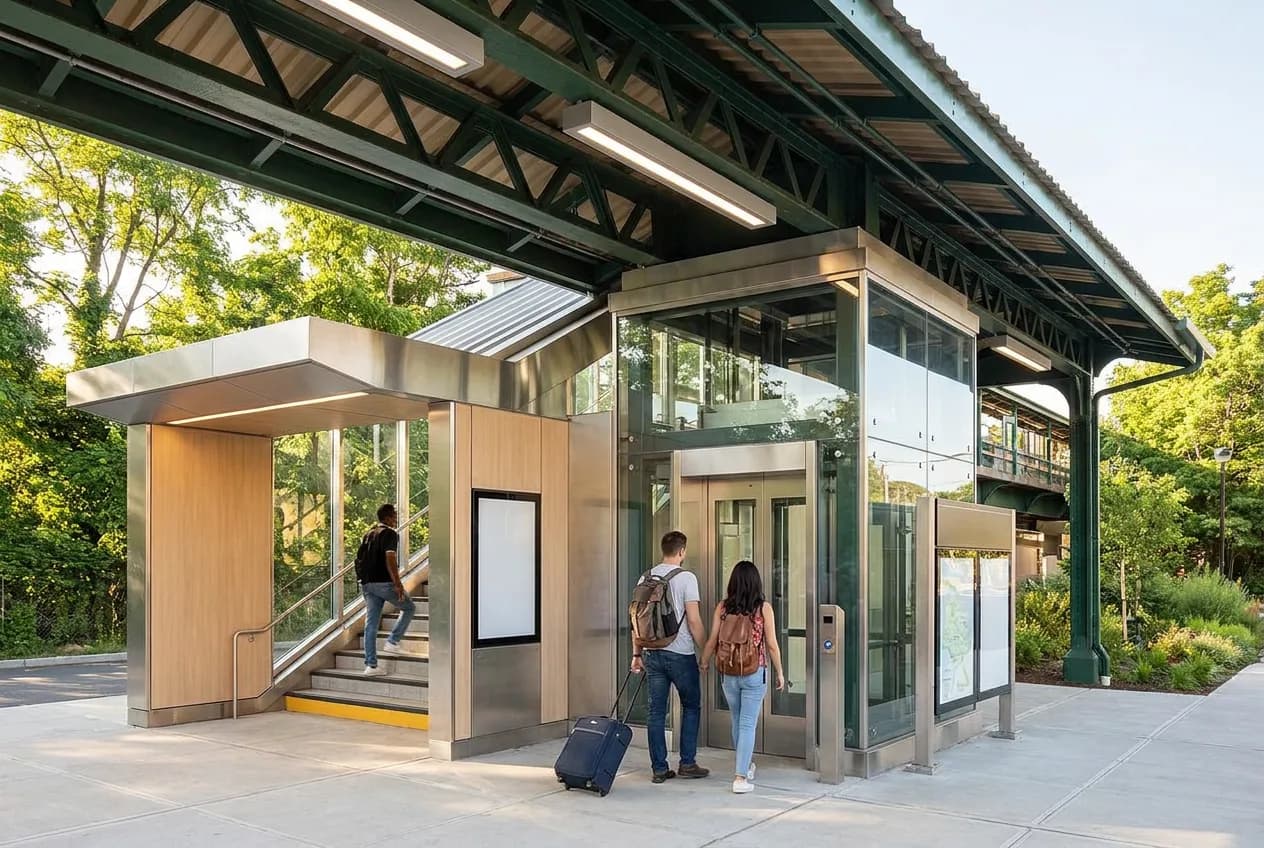
Which Five Stations, and How Many Elevators
The five stations chosen span the borough and several lines: Neptune Av on the F, 18 Av on the N, Jefferson St on the L, Nostrand Av on the C, and Fort Hamilton Pkwy on the D. The elevator counts vary by station's layout — one new elevator at Neptune Av, two at 18 Av, two at Jefferson St, three at Nostrand Av, and two at Fort Hamilton Pkwy. That distribution is the insider tell: Nostrand Av gets the most because its configuration needs three separate vertical connections to make the whole station step-free, which is the kind of detail that separates a genuine accessibility fix from a single token elevator.
The work goes well beyond elevators, too. The contract covers platform repairs, improved fare arrays, staircase replacements, and security and safety upgrades at all five stations — so even riders who never use the elevator should see cleaner, better-maintained stops when the work is done.
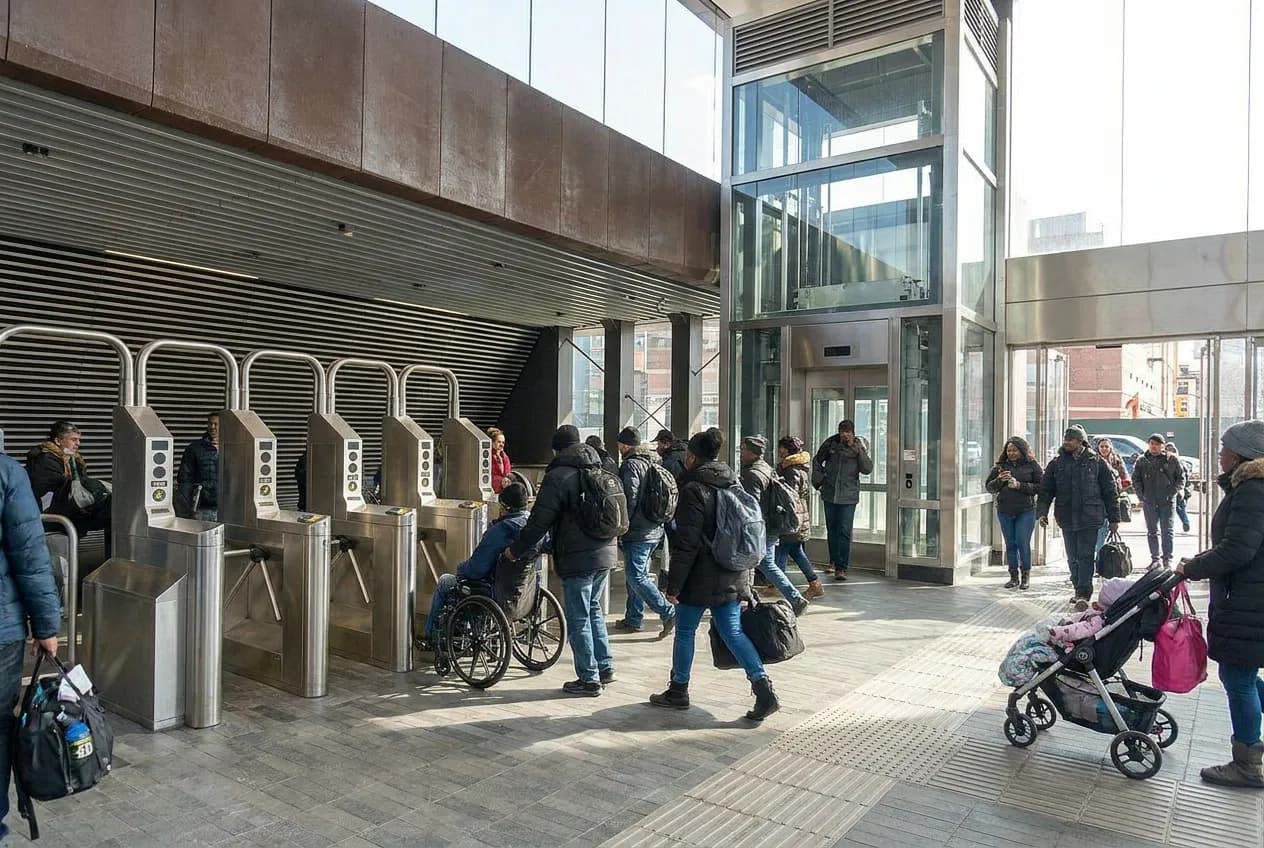
Who This Actually Helps
It is easy to file elevators under a single-issue heading, but station accessibility quietly touches a huge share of riders. The obvious beneficiaries are wheelchair users, for whom an inaccessible station is simply a closed door. But the same elevators serve parents with strollers, older riders who cannot manage a long staircase, travelers with luggage, delivery workers with carts, and anyone recovering from an injury — a rotating cast that, on any given day, is a meaningful slice of a station's traffic. In a borough where many stops were built a century ago with nothing but stairs, adding vertical access is less a niche amenity than a basic upgrade to who can use the system at all.
Choosing these particular five also reflects a network logic, not just individual stations. Spreading the work across the F, N, L, C and D lines widens the map of where a step-free trip is possible, which matters because accessibility only really works as a connected chain — an accessible origin is only useful if you can also exit where you are going. Filling in stops across multiple lines is how a patchwork slowly becomes a usable network.
The Timeline and the Bigger Plan
On timing, the near-term milestone is procurement: the MTA released the RFP this summer, contractors' proposals are due September 14, and the agency expects to award the roughly $100-million-plus contract by the end of the year, with construction to follow. This is one piece of a much larger commitment — the MTA is investing nearly $7.1 billion in station accessibility in its 2025-2029 capital plan to make 60 stations newly ADA-accessible and modernize 45 more elevators, part of a legal agreement to bring 95% of stations to full accessibility by 2055. Brooklyn has also seen recent wins on the ground, including a new entrance and accessibility upgrades unveiled at the Sheepshead Bay station.
For everyday riders, the honest read is patience with direction: the elevators will not appear overnight, but for the first time in a while there is a funded plan, named stations and a public deadline attached to it.
Practical notes
The five Brooklyn stations set for elevators and repairs are Neptune Av (F), 18 Av (N), Jefferson St (L), Nostrand Av (C) and Fort Hamilton Pkwy (D), with elevator counts of one, two, two, three and two respectively. Work also includes platform repairs, improved fare arrays, staircase replacements and safety upgrades. The project is funded partly by congestion pricing; contractor proposals are due September 14, with a contract worth upwards of $100 million expected to be awarded by year's end. It sits within the MTA's $7.1 billion 2025-2029 accessibility investment toward 95% ADA access by 2055. Timelines can shift, so check the MTA for construction updates and any station work notices.
Tags: #Brooklyn #Subway #MTA #Accessibility #ADA #Elevators #NYCTransit #CongestionPricing #NeighborhoodGuides #ThingsToKnowNYC #Nostrand #FortHamilton #NYCsubway #Transit #NYC
Sources consulted: MTA — Five Brooklyn stations to be made accessible via congestion pricing · amNewYork — MTA to add elevators to five more Brooklyn subway stations · MTA — Station accessibility projects
All trademarks are the property of their respective owners.
Ask Karpo first
Want to know whether your station is on the list, when the elevators actually arrive, and how to plan a step-free route in the meantime? Ask Karpo for the latest Brooklyn subway accessibility updates, an accessible route, and current station work notices before you travel.